



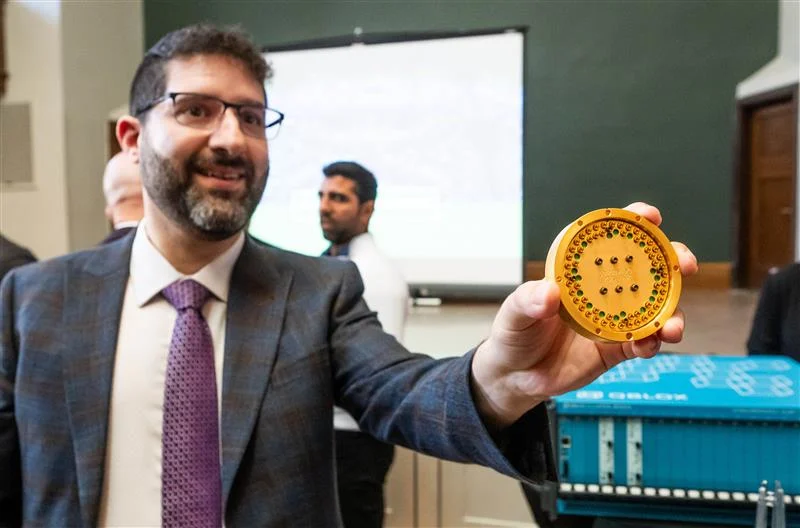
The University of Saskatchewan (USask) is poised to make history by becoming the home of Canada’s first university-owned, fully integrated quantum computer. This groundbreaking acquisition, described as a full-stack, open-architecture system, represents a significant leap forward in Canada’s quantum technology landscape and promises to catalyze transformative research and training across a diverse spectrum of scientific disciplines. The implications extend far beyond academia, with potential applications poised to revolutionize fields such as health sciences, energy, agriculture, and national security.
A New Era of Quantum Research and Development at USask
The arrival of this advanced quantum computing system at USask marks a pivotal moment, solidifying the institution’s role as a leader in cutting-edge scientific exploration. University leaders have lauded the acquisition as a "monumental achievement," emphasizing its capacity to elevate USask’s global standing in quantum research and to nurture the next generation of highly skilled scientists equipped to tackle complex challenges. This initiative is not merely about acquiring new hardware; it signifies a strategic investment in Canada’s future technological competitiveness and its ability to innovate in an increasingly data-driven world.
The full-stack, open-architecture nature of the quantum computer is particularly noteworthy. This design philosophy ensures that researchers will have comprehensive access to the system’s capabilities, from the foundational quantum bits (qubits) to the control software and algorithms. This holistic approach fosters a deeper understanding of quantum mechanics and enables the development of novel quantum applications without proprietary limitations. The open architecture is also crucial for collaboration, allowing researchers to share insights, code, and methodologies, thereby accelerating the pace of discovery.
Funding and Strategic Partnerships: A Collaborative Endeavor
The realization of this ambitious project is underpinned by substantial financial support and strategic collaborations. The initiative has secured $1.93 million in federal funding through Prairies Economic Development Canada’s Regional Innovation Ecosystems program. This significant investment underscores the federal government’s commitment to fostering innovation and positioning Canada at the forefront of emerging technologies. Complementing this federal contribution is an additional $400,000 from Innovation Saskatchewan, highlighting the provincial government’s dedication to advancing the province’s technological infrastructure and economic diversification.
The collaboration extends to key industry partners who have been instrumental in the development and delivery of the quantum computer. These include Rigetti Computing, a leading quantum computing company; Qblox, specializing in quantum control hardware; QuantrolOx, providing quantum control solutions; and Zero Point Cryogenics, offering cryogenic solutions essential for operating quantum hardware. This synergistic partnership between academia and industry is a testament to the growing importance of quantum computing and the recognition of its potential to drive economic growth and societal benefit.
Transformative Potential Across Key Sectors
The implications of this advanced quantum computing capability are far-reaching and hold the promise of addressing some of humanity’s most pressing challenges. In the realm of health sciences, researchers anticipate breakthroughs in areas such as drug and vaccine discovery. Quantum computers can simulate molecular interactions with unprecedented accuracy, potentially leading to the rapid development of new therapeutics and personalized medicine. This could significantly shorten the timelines for bringing life-saving treatments to market.
The energy sector stands to benefit from quantum computing’s ability to optimize complex systems. This could translate into more efficient energy grids, improved resource management, and the development of novel materials for renewable energy technologies. In agriculture, quantum computing can aid in developing more resilient crops, optimizing fertilizer use, and enhancing food security through advanced climate modeling and precision farming techniques.
Furthermore, the technology has profound implications for data security. Quantum-secure data encryption, a direct application of quantum computing principles, is seen as crucial for protecting sensitive information in an era where conventional encryption methods may become vulnerable to quantum attacks. This is particularly relevant for national security, government agencies, and critical infrastructure.
Quantum Computing Explained: A Paradigm Shift in Processing Power
Quantum computing represents a fundamental departure from the classical computing paradigm. Unlike conventional computers that store information as bits representing either 0 or 1, quantum computers utilize quantum bits, or qubits. Qubits leverage the principles of quantum mechanics, specifically superposition and entanglement, to exist in multiple states simultaneously. This inherent capability allows quantum computers to explore a vast number of possibilities concurrently, offering an exponential increase in processing power for certain types of problems.
This remarkable leap in computational ability means that problems that would take conventional supercomputers years, or even millennia, to solve could potentially be tackled by quantum computers in a matter of hours or days. This acceleration is what makes quantum computing so transformative for fields that grapple with immense complexity, such as materials science, financial modeling, and artificial intelligence.
A "Made-in-Canada" Quantum Computer: National Pride and Global Ambition
The development and deployment of this quantum computer are being hailed as a significant national achievement. Evan Solomon, Minister of Artificial Intelligence, articulated this sentiment, stating in a press release, "What’s happening at the University of Saskatchewan is remarkable – a made-in-Canada quantum computer, built with Prairie partners, advancing research that will touch the lives of Canadians." This underscores the government’s vision of fostering domestic innovation and leveraging Canadian expertise to compete on the global stage.
The investment is seen as a strategic move to position Canada at the "leading edge of a technology that is reshaping how quickly we can solve complex challenges," according to Warren Kaeding, the province’s minister responsible for Innovation Saskatchewan. This statement emphasizes the forward-looking nature of the investment and its potential to create new economic opportunities and high-skilled jobs within the province and across the nation.
On-Campus Infrastructure: Direct Access to Quantum Hardware
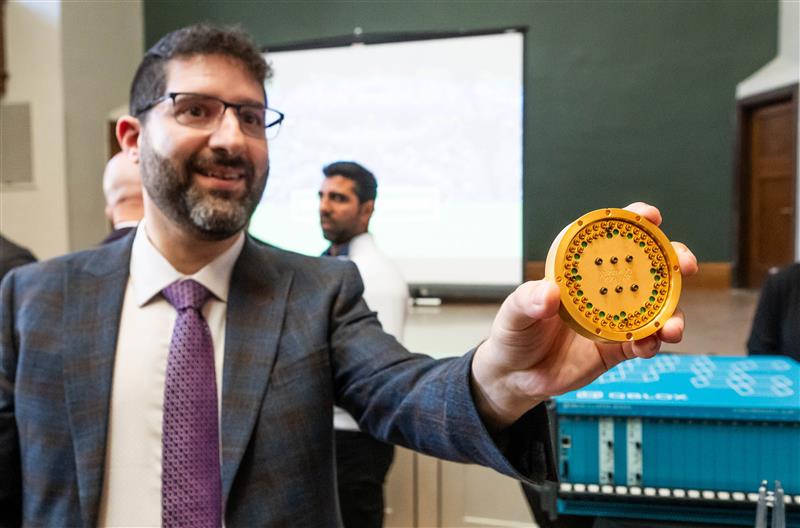
The University of Saskatchewan will be installing the new quantum computer directly on its campus, providing researchers and students with immediate and direct access to this cutting-edge technology. This on-site presence is a critical factor in maximizing the research and educational benefits. The system will feature 14 superconducting quantum bits (qubits) distributed across two chips. This configuration provides researchers with tangible quantum hardware to experiment with, develop new algorithms, and conduct groundbreaking investigations.
Dr. Steven Rayan, Director of USask’s Centre for Quantum Topology and Its Applications (quanTA) and the principal investigator for this project, highlighted the unparalleled value of having this technology readily available. He drew an analogy, stating, "Just like there is no substitute for flying the actual plane, there is no substitute for having novel technology like this on premises." He further emphasized the transformative impact, declaring, "We enter a new world of quantum-accelerated research and training." This direct access is crucial for fostering hands-on learning, nurturing experimental innovation, and driving the iterative process of scientific discovery that is essential in a rapidly evolving field like quantum computing.
Strengthening Regional Collaboration: The Prairie Quantum Corridor
The installation of the quantum computer at USask is also a catalyst for strengthening regional collaboration within the quantum science community. USask has recently formalized its commitment to inter-institutional partnerships by signing a letter of intent with the University of Calgary. This agreement aims to link USask’s quanTA centre with Calgary’s Quantum City initiative, thereby establishing the foundation for a broader "Quantum Corridor" across the Prairies.
This collaborative framework is designed to pool resources, expertise, and research efforts, creating a more robust and interconnected quantum ecosystem. Such initiatives are vital for Canada to maintain its competitive edge in quantum technologies, fostering a critical mass of talent and research capability that can attract further investment and drive innovation. The concept of a "Quantum Corridor" suggests a strategic geographic concentration of quantum research and development activities, enabling seamless knowledge transfer and project collaboration between institutions.
Canada’s Global Quantum Ambitions
Federal officials have framed this investment as a critical component of a broader national strategy to enhance Canada’s competitiveness in emerging technologies. Eleanor Olszewski, minister responsible for Prairies Economic Development Canada, articulated this vision: "Canada’s future prosperity will depend on our ability to lead in the technologies shaping the world ahead." This statement underscores the government’s understanding that leadership in quantum computing is not just about scientific advancement but also about securing Canada’s economic future and its position in the global innovation landscape.
The development of a robust quantum computing infrastructure is seen as essential for unlocking new economic opportunities, creating high-value jobs, and attracting international talent and investment. Canada has already established a reputation for excellence in quantum information science, and this latest development further solidifies its commitment to maintaining and expanding this leadership role.
Future Collaborations and the Path Forward
The newly installed quantum computer is expected to serve as a hub for extensive collaborations involving academic institutions, government agencies, and industry partners. A notable example is the anticipated collaboration with the Vaccine and Infectious Disease Organization (VIDO) at USask. Researchers from VIDO and other health-focused organizations will leverage the quantum computer’s capabilities to explore novel applications in areas such as vaccine development, disease modeling, and the analysis of complex biological data.
The broader implications of this initiative extend to national security, where quantum computing can be applied to develop more sophisticated encryption techniques and to analyze vast datasets for intelligence purposes. The potential for breakthroughs in these critical areas underscores the strategic importance of this investment for Canada’s security and sovereignty.
The timeline for the full operationalization and impact of the quantum computer will unfold over the coming months and years. Initial phases will likely focus on calibrating the system, training researchers, and initiating pilot projects. As researchers become more adept at utilizing the quantum hardware and developing quantum algorithms, the scope and complexity of the problems tackled will undoubtedly grow. The establishment of the "Quantum Corridor" further suggests a long-term vision for quantum development in the region, with potential for expansion and further integration with other Canadian and international quantum initiatives.
In conclusion, the University of Saskatchewan’s acquisition of Canada’s first university-owned, fully integrated quantum computer represents a significant milestone in the nation’s scientific and technological advancement. This initiative, supported by robust funding and strategic partnerships, promises to unlock unprecedented research capabilities, drive innovation across key sectors, and position Canada at the forefront of the global quantum revolution. The impact will be felt not only within academia but also in the tangible benefits it brings to health, energy, agriculture, security, and the overall economic prosperity of the nation.