In a significant expansion of its educational technology portfolio, Microsoft has unveiled a suite of AI-powered tools designed specifically for the academic sector, aiming to streamline administrative burdens for educators while fostering critical thinking skills for students. The announcement, which includes the introduction of the "Teach" platform, the "Study and Learn" student agent, and a newly structured academic pricing model for Microsoft 365 Copilot, represents a pivotal shift in how generative artificial intelligence is integrated into K-12 and higher education environments. These developments come at a time when the 2025 AI in Education Report indicates that over 80% of respondents are already utilizing AI for school-related tasks, highlighting a rapid adoption curve that necessitates more specialized, education-centric solutions.
The Strategic Shift Toward Purpose-Built Educational AI
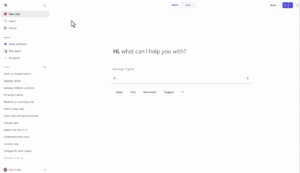
The centerpiece of this rollout is the introduction of "Teach," a dedicated experience within the Microsoft 365 Copilot app. Unlike general-purpose AI chat interfaces, Teach is engineered to mirror the pedagogical workflows of professional educators. The tool allows teachers to generate comprehensive lesson plans, draft rubrics, and create quizzes that are automatically aligned with relevant academic standards. A key differentiator of the Teach platform is its emphasis on customization; educators can instantly modify the language complexity, reading level, and length of materials to suit the diverse needs of their classrooms.
Microsoft’s strategy appears focused on reducing the "administrative tax" that often leads to educator burnout. By automating the foundational work of curriculum preparation, the company posits that teachers can redirect their focus toward direct student engagement and personalized instruction. Teach is currently rolling out to education customers at no additional cost, with future updates planned to integrate directly into Learning Management Systems (LMS).
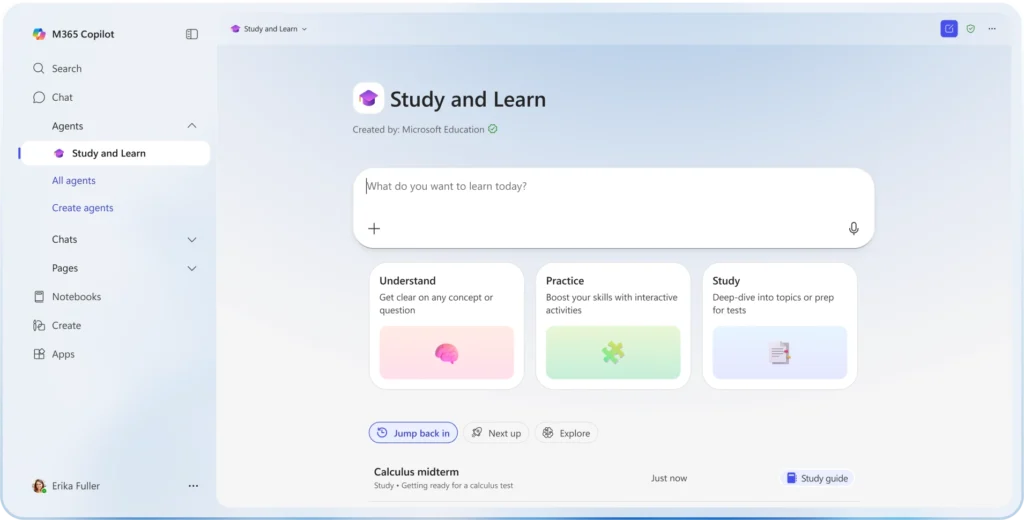
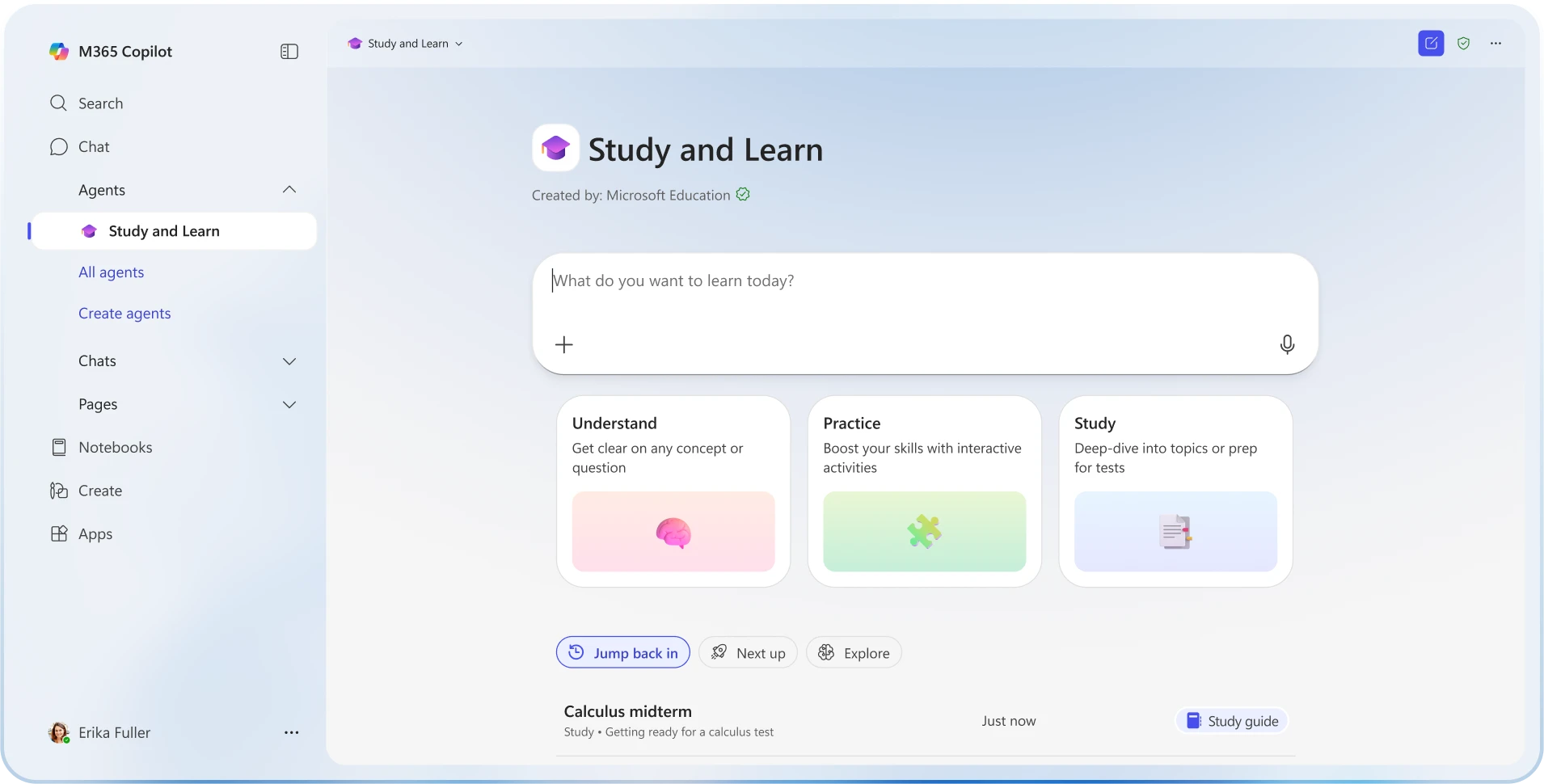
For students, the focus shifts from content generation to skill acquisition through the "Study and Learn" agent. Scheduled for a preview release in November 2025, this tool is grounded in learning science principles. Rather than providing direct answers, the agent is designed to act as a digital tutor, encouraging reflective thinking through interactive activities such as flashcards, matching exercises, and fill-in-the-blank quizzes. This approach addresses a major concern among academic leaders: the potential for AI to be used as a shortcut that bypasses the cognitive effort required for true learning.
Chronology of Implementation and Integration
Microsoft has outlined a clear timeline for the rollout of these features, ensuring that IT departments and academic institutions have a roadmap for deployment.
The integration began immediately with the rollout of Teach and the expansion of Copilot Chat into core applications like Outlook and PowerPoint. This allows staff to utilize AI within their existing daily workflows, such as synthesizing long email threads or drafting presentation outlines. By December 2025, Microsoft plans to bring Copilot Chat to major LMS platforms—including Canvas, Schoology, Brightspace, Blackboard, and Moodle™—through the Microsoft 365 LTI (Learning Tools Interoperability). This move is critical for accessibility, as it places AI tools directly within the digital environments where students and teachers spend the majority of their time.

The most anticipated financial milestone is the launch of the Microsoft 365 Copilot academic offering in December 2025. Priced at $18 per user per month for educators, staff, and students aged 13 and older, this offering is positioned as a more affordable alternative to standard enterprise pricing, which typically starts at $30 per user. This academic SKU includes advanced features such as "Researcher" and "Analyst" modes, as well as the Copilot Control System, which provides the enterprise-grade data protection essential for maintaining student privacy and institutional security.
Supporting Data and Institutional Performance Metrics
The efficacy of these tools is supported by early adoption data from various global institutions. In Australia, Brisbane Catholic Education reported that participating educators saved an average of nine hours per week on administrative and planning tasks. Such a significant reduction in workload suggests that AI can serve as a powerful tool for retention in a profession currently facing a global labor shortage.
In the United States, the University of South Carolina (USC) conducted an internal assessment of Copilot usage. The findings revealed that 84% of users, including students, saved between one and five hours per week. Beyond simple time savings, professors at USC noted an improvement in the quality of academic output, reporting that the AI helped synthesize complex data sets and assisted in the early stages of research development.
Furthermore, the University of South Florida (USF) has demonstrated the potential for "autonomous agents" within the university ecosystem. USF’s IT department has deployed agents to handle routine campus inquiries, such as travel policies and help desk support. Student ambassadors at the university have also built custom agents for departmental use, which has reportedly decreased manual reporting time and expedited inventory analysis. These case studies provide a data-driven foundation for Microsoft’s claim that AI can transform the operational efficiency of large-scale educational institutions.
Official Responses and Academic Sentiment
The response from academic leadership has been largely positive, though tempered by a focus on data security. Leigh Williams, Chief Information Officer at Brisbane Catholic Education, emphasized that the primary value of Microsoft 365 Copilot lies in its ability to empower staff to "focus on the reason they came into education—supporting student learning." This sentiment reflects a broader industry trend where technology is viewed not as a replacement for human educators, but as a scaffold that supports them.
At Broward County Public Schools, administrators are exploring the use of AI for career readiness. By using agents to analyze resumes and job descriptions, the district aims to better prepare students for the modern workforce. This forward-looking application of AI aligns with the 2025 AI in Education Report’s findings that students are increasingly using these tools outside the classroom for side hustles, meal planning, and personal organization.
However, the introduction of these tools also necessitates robust IT controls. Microsoft has addressed these concerns by highlighting the "Copilot Control System," which ensures that institutional data is not used to train public AI models. For many university CIOs, this "walled garden" approach is a prerequisite for any large-scale AI deployment, as it protects intellectual property and sensitive student records.
Broader Impact and Industry Implications
The launch of these specialized academic tools places Microsoft in direct competition with other tech giants like Google and OpenAI, both of whom are vying for dominance in the educational sector. Google’s Gemini for Workspace Education and OpenAI’s ChatGPT Edu offer similar functionalities, but Microsoft’s deep integration with the existing Office 365 ecosystem provides a significant competitive advantage. For institutions already reliant on Teams, OneNote, and Word, the transition to Copilot-enabled workflows is likely to be smoother than adopting a fragmented third-party solution.
There is also a broader socioeconomic implication to the $18 per user price point. While significantly lower than enterprise rates, the cost may still be prohibitive for underfunded school districts or institutions in developing regions. Microsoft’s decision to offer "Teach" and "Study and Learn" at no additional cost for existing education customers appears to be an attempt to mitigate this digital divide, ensuring that even schools that cannot afford the full Copilot suite can still access foundational AI tools.
Furthermore, the emphasis on "Learning Accelerators" like Reading Coach and Minecraft AI Foundations indicates a move toward "AI literacy" as a core competency. As AI becomes ubiquitous in the professional world, the ability to prompt, interact with, and critically evaluate AI-generated content is becoming as essential as traditional literacy and numeracy.
Conclusion and Future Outlook
As Microsoft prepares for the full rollout of its academic AI suite in late 2025, the educational landscape stands at a crossroads. The transition from general-purpose generative AI to specialized agents like "Teach" and "Study and Learn" marks the second phase of the AI revolution in schools. The focus is no longer just on what the technology can do, but on how it can be governed, scaled, and ethically integrated into the pedagogical process.
The success of these initiatives will ultimately be measured by their impact on student outcomes and teacher retention. If the time-savings reported by Brisbane Catholic Education and the University of South Carolina can be replicated at scale, AI may become the most significant tool for educational reform in the 21st century. However, as institutions move toward autonomous agents for IT and administrative tasks, the need for transparent oversight and data protection will remain paramount. For now, Microsoft’s latest offerings provide a comprehensive framework for schools to begin their AI journey, balancing innovation with the practical demands of the modern classroom.