


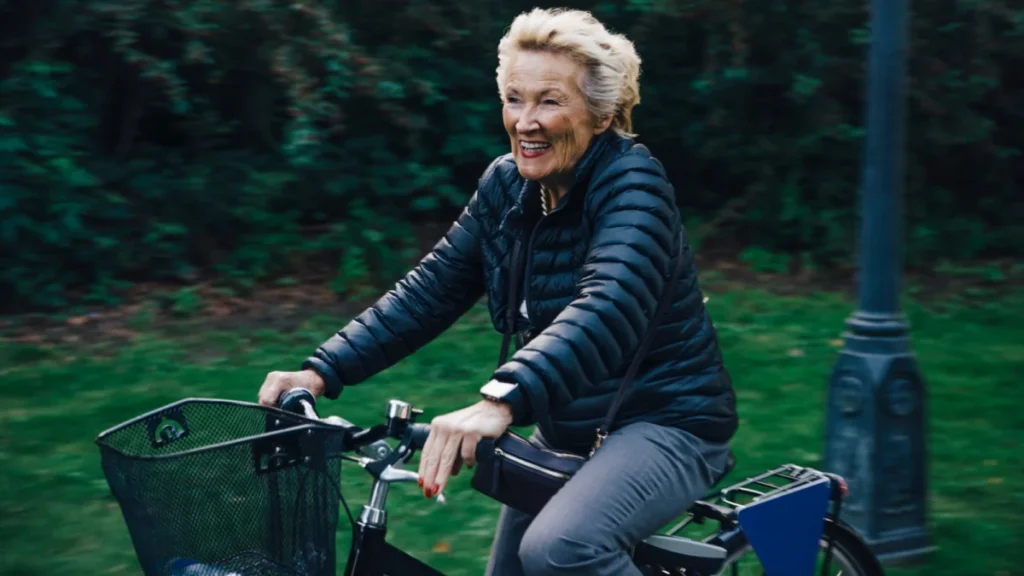
The human brain possesses a remarkable capacity to categorize and store information, often prioritizing physical survival and motor efficiency over the mundane details of daily life. While an individual may struggle to recall the specifics of a meal consumed 48 hours prior or the location of their car keys, that same individual can typically mount a bicycle after a twenty-year hiatus and navigate a suburban street with instinctual ease. This phenomenon, colloquially immortalized in the phrase “it’s like riding a bike,” is not merely a social observation but a testament to the specialized architecture of human memory systems. Recent insights from neurologists and psychologists highlight that the brain does not treat all memories equally; instead, it utilizes distinct neural pathways to ensure that certain fundamental skills remain hardwired even as other cognitive faculties decline.
The Taxonomy of Long-Term Memory
To understand why the mechanics of cycling persist while the names of high school classmates fade, one must examine the three primary categories of long-term memory identified by cognitive science. Dr. Andrew Budson, a professor of neurology at Boston University and co-author of Why We Forget and How to Remember Better, notes that these systems—episodic, semantic, and procedural—are processed and stored in entirely different regions of the brain.
Episodic memory refers to the "autobiographical" record of a person’s life. This system allows individuals to travel back in time mentally to recall specific events, such as a wedding day or a particular childhood summer. Because these memories are tied to specific contexts and emotional states, they are often the most fragile and susceptible to interference or decay over time. Semantic memory, meanwhile, constitutes a person’s "internal encyclopedia." It involves the storage of facts, such as the capital of France or the chemical symbol for gold. While semantic memory is more stable than episodic memory, it still requires periodic reinforcement to remain accessible.
Procedural memory, the third pillar, is the system responsible for "muscle memory." This is the mechanism that allows for the performance of complex motor tasks without conscious thought. When a person learns to ride a bicycle, play a musical instrument, or touch-type on a keyboard, they are engaging procedural memory. Unlike episodic or semantic data, procedural information is encoded in a way that makes it remarkably resistant to the passage of time and even to certain types of brain trauma or neurodegenerative disease.
The Anatomy of the Biking Brain
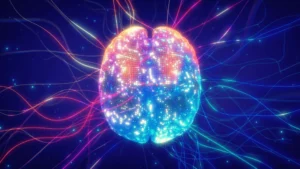
The physical storage of procedural memory involves structures located deep within the brain’s interior, specifically the basal ganglia and the cerebellum. The basal ganglia are a group of subcortical nuclei responsible for motor control, habit formation, and "action selection"—the process of deciding which of several possible behaviors to execute at a given moment. When a novice first attempts to balance on a bicycle, the prefrontal cortex (the seat of conscious planning) is heavily engaged, leading to jerky, over-corrected movements.
However, as the skill is practiced, the responsibility for the movement shifts from the conscious prefrontal cortex to the subconscious basal ganglia. Simultaneously, the cerebellum, located at the back of the brain, begins to fine-tune the motor activity. The cerebellum acts as the brain’s quality-control center, receiving sensory input from the body and comparing it to the intended movement. If the bike tilts too far to the left, the cerebellum sends lightning-fast signals to the muscles to adjust the center of gravity.
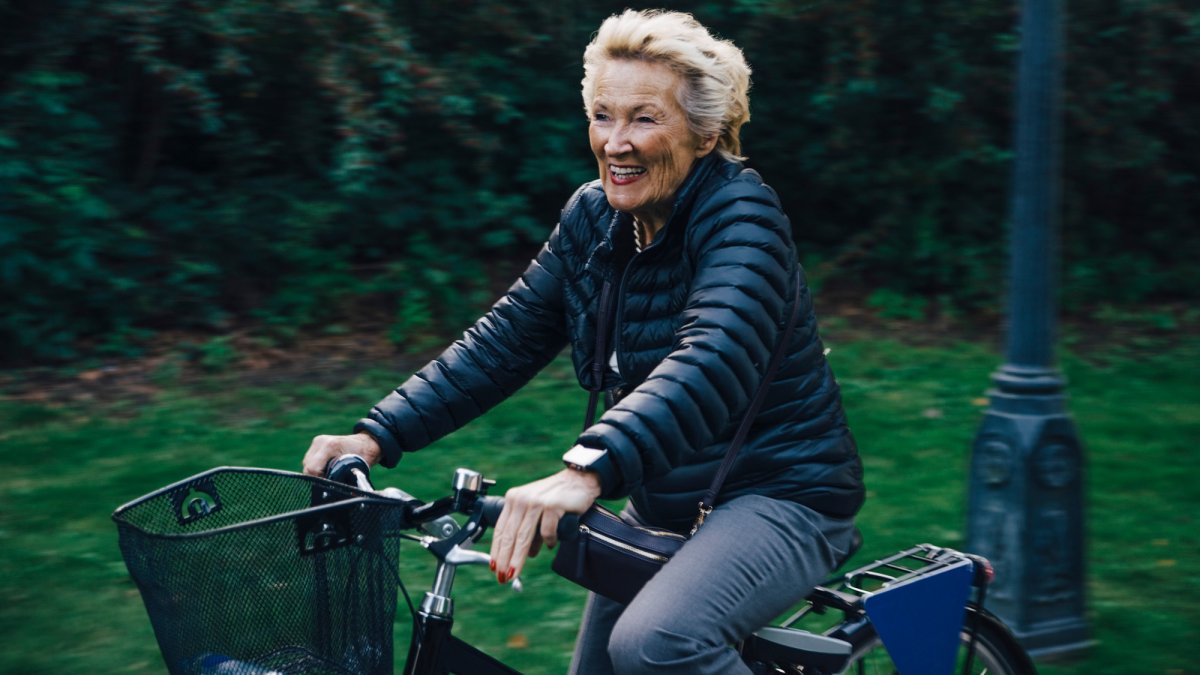
Once these neural circuits are established, they become "hardwired." Research indicates that the physical structure of the neurons in these regions may actually change—a process known as long-term potentiation—creating a permanent or semi-permanent pathway. Because these movements become automatic, they require very little "cognitive load," which is why an experienced cyclist can hold a conversation or solve a mental problem while simultaneously navigating complex terrain.
A Historical Shift: From Swimming to Cycling
The cultural axiom "it’s like riding a bike" has not always been the standard reference for permanent skill retention. Historical linguistic analysis suggests that prior to the 1940s, the most common analogy for a skill one never forgets was swimming. In the early 20th century, swimming was a primary example of a complex motor skill that, once mastered, remained accessible for a lifetime.
The shift in the cultural zeitgeist occurred following World War II, coinciding with the massive explosion in the popularity of cycling as both a recreational activity and a primary mode of transportation in Western societies. As more children learned to ride bicycles during the mid-century suburban boom, the experience became a universal touchstone for the transition from conscious effort to unconscious mastery. This shift illustrates how the scientific understanding of procedural memory is often reflected in the metaphors society uses to describe the human experience.
The Challenges of Direct Scientific Observation
Despite the ubiquity of the phrase, direct scientific research on the act of cycling itself is surprisingly sparse. Dr. Elizabeth Kensinger, a psychology professor at Boston College, explains that the logistical hurdles of studying cycling in a laboratory setting are significant. Modern neuroimaging tools, such as functional Magnetic Resonance Imaging (fMRI), require the subject to remain perfectly still within a narrow tube. It is physically impossible to observe a person’s brain activity while they are actively pedaling and balancing a two-wheeled vehicle.
Furthermore, self-reporting—a common tool in psychological studies—is notoriously unreliable when applied to motor skills. A subject may believe they have forgotten how to ride, only to find their body taking over the moment they touch the handlebars. To circumvent these issues, neurologists often use "proxy tasks" to study procedural memory.
One of the most famous experiments in this field involves mirror-drawing. Subjects are asked to trace a shape, such as a star, while only looking at their hand through a mirror. Initially, the task is frustrating and difficult because the visual input is reversed. However, with repetition, the brain develops a new procedural memory for the movement. Even patients with severe amnesia—who cannot remember having performed the task five minutes prior—show steady improvement in their mirror-drawing speed and accuracy over several days. This proves that the procedural memory system can function independently of the conscious, episodic memory system.
The Necessity of Repetition and "Beefing Up" Neural Pathways
While procedural memories are durable, they are not instantaneous. The "hardwiring" of a motor skill requires significant repetition to move from the prefrontal cortex to the basal ganglia. This process is often referred to as "priming" the neural pathways.

"It’s so much faster for you to learn something the second or the third time than it was for you to learn it the first time," says Kensinger. This is because the initial learning phase creates a blueprint. Even if a person has not ridden a bike in thirty years, the underlying neural architecture remains. The "rustiness" a person feels upon returning to a bike after a long absence is usually not a failure of memory, but a temporary lack of muscular strength or a slight delay in the cerebellum’s fine-tuning. Within minutes, the brain "re-activates" the existing pathways, and the skill returns to its former level of proficiency.
Clinical Implications and the Resilience of the Aging Brain
The resilience of procedural memory has profound implications for geriatric care and the treatment of neurodegenerative disorders like Alzheimer’s disease. Clinical observations have shown that patients in the advanced stages of dementia, who may no longer recognize their own family members (episodic memory loss) or remember the names of common objects (semantic memory loss), can often still perform procedural tasks.
There are documented cases of Alzheimer’s patients who can still play the piano beautifully or ride a bicycle, provided they are safely supervised. This is because the regions of the brain that handle procedural memory—the basal ganglia and cerebellum—are often the last to be affected by the plaques and tangles associated with dementia.
Furthermore, the brain’s ability to form new procedural memories remains relatively intact well into old age. This allows older adults to learn new, essential motor skills, such as operating a motorized wheelchair, using a walker, or navigating the touch-screen interface of a tablet. While it may take an older learner more repetitions to "prime" the pathway than it would a child, the capacity for procedural acquisition remains a lifelong asset.
Evolutionary Advantages of Unconscious Mastery
From an evolutionary perspective, the permanence of procedural memory is a survival mechanism. Early humans who had to consciously think about the mechanics of running, climbing, or throwing a spear would have been at a significant disadvantage compared to those who could perform these actions automatically. By offloading motor skills to the subconscious regions of the brain, the prefrontal cortex is left free to scan the environment for predators, plan a route, or communicate with others.
In the modern context, this allows a cyclist to navigate traffic and watch for obstacles without having to dedicate mental energy to the physics of balance. The "weird neuroscience of memory" ensures that the most essential physical skills are shielded from the daily clutter of information, preserving the body’s ability to move through the world with grace and efficiency, regardless of how much time has passed since the last journey. Thus, the next time a person successfully balances on two wheels after years of neglect, they are experiencing a finely-tuned biological legacy designed to ensure that once a lesson is learned by the body, it is never truly lost to the mind.