


In the ongoing pursuit of enhancing educational outcomes, particularly within the United States, a critical element—student voice—has become increasingly marginalized. The prevailing focus on standardized test scores, top-down curriculum mandates, and quantitative measures of success has frequently overshadowed the holistic development and intrinsic humanity of students. This narrow approach has not only fallen short in its primary objective, as evidenced by recent data indicating a decline in reading scores to new lows on the NAEP in 2025, largely driven by setbacks for struggling students (Schwartz, 2025), but has also yielded broader dissatisfaction within the educational community. A survey conducted in 2025 revealed that nearly half of all educators reported student behavior had deteriorated since before the pandemic, a concerning increase from just two years prior (Stephens, 2025). While pockets of excellence undeniably exist in individual schools across the nation, a systemic failure persists in adequately addressing these profound issues, largely due to an oversight: the exclusion of the very individuals most affected by these challenges—the students themselves.
The Erosion of Student-Centered Education: A Historical Context
The current landscape of U.S. education is a culmination of decades of reform efforts, many of which, despite good intentions, have inadvertently diminished the role of student agency and voice. Beginning in earnest with initiatives like "No Child Left Behind" (NCLB) in the early 2000s and continuing through "Race to the Top," the emphasis shifted dramatically towards accountability frameworks built primarily on standardized testing. The rationale was to identify underperforming schools and ensure all students met specific academic benchmarks. However, this high-stakes testing culture often led to a narrowing of the curriculum, an increased focus on rote memorization over critical thinking, and a de-emphasis on subjects not directly assessed. Teachers, under immense pressure to raise scores, often found themselves with limited autonomy to adapt lessons to student interests or integrate student-led projects.
Concurrently, the rise of prescriptive, "off-the-shelf" curricula, often developed by external entities, further reduced the scope for teachers to incorporate student input into lesson design or classroom management. This top-down imposition of educational directives, while aiming for consistency and quality, often overlooked the diverse cultural backgrounds, learning styles, and personal experiences that students bring to the classroom. The unintended consequence was a learning environment that, for many students, felt disengaging, irrelevant, and disempowering, fostering a sense of being passive recipients rather than active participants in their education.
The COVID-19 pandemic exacerbated these pre-existing vulnerabilities within the educational system. The abrupt shift to remote learning, followed by complex hybrid models and subsequent returns to in-person instruction, placed unprecedented stress on students, educators, and families. Mental health challenges among students surged, social-emotional development was disrupted, and academic gaps widened. The reported decline in student behavior post-pandemic is a stark indicator of the emotional and psychological toll taken, further highlighting the urgent need for approaches that prioritize student well-being, engagement, and a sense of belonging. In this context, the traditional metrics of success seem increasingly inadequate to capture the true health and effectiveness of a school community.
"Street Data": A Groundbreaking Approach to School Improvement
Against this backdrop of systemic challenges and unmet needs, a transformative methodology known as "Street Data" emerged, offering a fundamentally different pathway toward equitable and anti-racist schools. Introduced to a wider audience approximately four years ago through a pivotal book by Shane Safir and Jamila Dugan, "Street Data" champions an approach that diverges sharply from conventional, quantitative data analysis. Instead of relying solely on "suite data"—the aggregated, often decontextualized, numerical data typically found in administrative offices—"Street Data" advocates for deeply qualitative, human-centered inquiry.
The core of the "Street Data" methodology involves conducting slow, thoughtful listening sessions with students, particularly those at the margins whose voices are historically underrepresented and whose needs are consistently overlooked within mainstream educational settings. This deliberate focus on marginalized perspectives—whether due to race, socioeconomic status, learning differences, or other factors—is crucial for uncovering the nuanced realities of students’ experiences. By truly listening to these often-silenced narratives, educators can gain profound insights into the barriers to learning, the sources of disengagement, and the unspoken desires for a more supportive and equitable school environment.

The process is cyclical and iterative: insights gleaned from these deep listening sessions serve as the foundation for developing new solutions. These solutions are then piloted, rigorously iterated upon, and refined through ongoing feedback loops that include further listening sessions. This continuous engagement ensures that interventions are genuinely responsive to student needs, rather than being imposed from above. Unlike many expensive, externally-developed programs that promise quick fixes but often fail to deliver sustainable change, the "Street Data" model is characterized by its organic, adaptive, and deeply embedded nature, making it a compelling and accessible alternative for schools genuinely committed to improvement.
A Movement Takes Hold: The Chronology of "Street Data" Adoption
The impact of the "Street Data" framework began to ripple through the educational community following its initial publication. Recognizing its potential, prominent educational platforms, such as "Cult of Pedagogy," became instrumental in disseminating its principles. Early in the methodology’s public life, Shane Safir and Jamila Dugan were featured on Episode 178 of the "Cult of Pedagogy" podcast, providing an initial, comprehensive overview of their groundbreaking work and its philosophical underpinnings. This podcast served as an accessible entry point for countless educators eager to explore alternative approaches to school improvement.
The engagement deepened further when, not long after the podcast interview, "Cult of Pedagogy" produced a mini-documentary. This visual resource offered an invaluable, "up-close" look at the "Street Data" process in action, showcasing Shane Safir and Jamila Dugan guiding two schools through its implementation. The documentary provided concrete examples of listening sessions, data synthesis, and the collaborative development of student-centered solutions, demystifying the methodology for a broader audience and demonstrating its practical applicability.
Building on this momentum, a year later, an eight-episode video series was launched, further illustrating the nuances and complexities of implementing "Street Data" in diverse school contexts. This comprehensive series allowed educators to delve deeper into specific aspects of the framework, from establishing trust with students to designing responsive interventions. To complement the video series and provide further insight, several participants from the featured schools joined a follow-up podcast conversation on Episode 203, sharing their firsthand experiences, challenges, and successes in integrating "Street Data" into their daily practice. This multi-platform dissemination strategy cultivated a growing community of educators dedicated to centering student voice and agency.
From Systemic Insights to Classroom Practice: The Genesis of "Pedagogies of Voice"
As the "Street Data" methodology gained traction and schools began to embrace its principles for systemic change, a natural and critical question emerged from the field: What does it look like when individual teachers intentionally center student voice and student agency within their daily pedagogy? While "Street Data" provided a powerful framework for school-wide improvement, educators sought practical, classroom-level strategies that could translate these high-level principles into actionable teaching practices.
To address this crucial question, Shane Safir collaborated with three distinguished educators—Marlo Bagsik, Sawsan Jaber, and Crystal Watson—each bringing unique expertise and classroom experience. Together, they co-authored the seminal new book, "Pedagogies of Voice: Street Data and the Path to Student Agency." This publication serves as a vital bridge, connecting the overarching vision of "Street Data" with the granular realities of classroom instruction. It moves beyond theoretical frameworks to provide concrete, replicable practices that empower teachers to cultivate environments where every student feels heard, valued, and capable of influencing their learning journey.
The book is conceived not as a rigid curriculum or a prescriptive manual, but rather as a "seed store" of practices. This metaphor emphasizes its nature as a rich collection of adaptable, context-sensitive strategies designed to foster student voice, nurture agency, and create authentic spaces for meaningful learning. It acknowledges that effective pedagogy is not one-size-fits-all but requires educators to select and modify approaches that resonate with their students’ needs and their specific school culture.

The Agency Framework: Four Pillars of Student Empowerment
"Pedagogies of Voice" organizes its classroom practices around an "Agency framework," structured into four interconnected domains: Identity, Belonging, Inquiry, and Efficacy. This framework provides a comprehensive lens through which educators can evaluate and enhance their teaching practices to maximize student engagement and empowerment.
Practices that Awaken Identity
The Identity domain focuses on creating learning environments where every student can unequivocally affirm, "My ways of being, knowing, and learning are valued here." This domain recognizes that a student’s sense of self, their cultural background, linguistic heritage, and unique cognitive processes are fundamental to their learning experience. When a student’s identity is affirmed, they are more likely to engage authentically, take risks, and connect academic content to their lived realities.
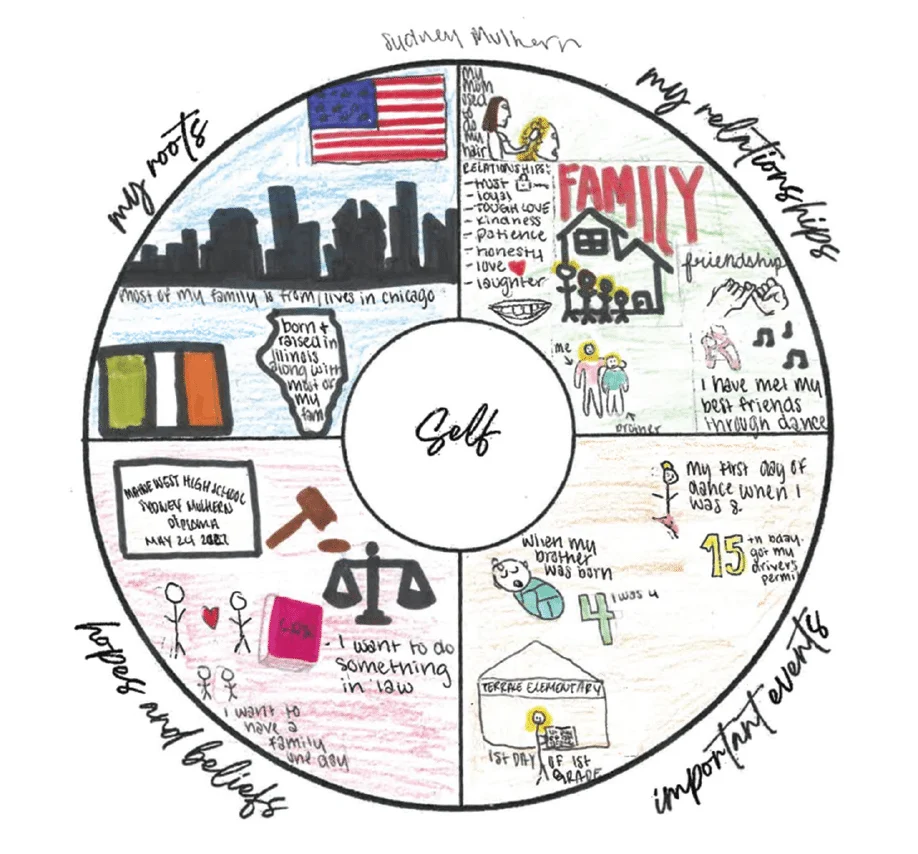
Sawsan Jaber, a co-author, highlights the power of storientation as a key practice within this domain. Storientation leverages personal and collective narratives as a springboard for both learning and identity development. One compelling example is the Identity Mandala, a visual and reflective exercise that invites students to represent various facets of their identity—family, culture, interests, values, dreams—in a circular, interconnected format. This practice encourages introspection and self-expression, allowing students to visually articulate who they are and how these elements contribute to their unique perspective. By sharing their mandalas, students not only deepen their self-understanding but also gain appreciation for the diverse identities within their classroom community. Another aspect of storientation involves using diverse literature, historical accounts, and contemporary media that reflect a wide array of identities and experiences, ensuring that students see themselves and their communities represented in the curriculum. For instance, instead of solely focusing on dominant historical narratives, educators might introduce primary source documents or oral histories from marginalized communities, enabling students to connect with the content on a personal and culturally relevant level. These practices validate students’ individual and collective histories, fostering a stronger sense of self-worth and academic confidence.
Practices that Awaken Belonging
The Belonging domain centers on practices that cultivate a classroom culture where every student feels seen, accepted, and genuinely cared for. A strong sense of belonging is a foundational psychological need that directly impacts a student’s emotional well-being, willingness to participate, and academic success. When students feel they belong, they are more likely to trust their peers and teachers, take intellectual risks, and persist through challenges.
Crystal Watson, another co-author, champions the simple yet profoundly impactful practice of circling up. This involves physically rearranging classroom seating into a circle for various activities, moving away from traditional rows or clustered desks. As Watson articulates, "I just love the fact that when you circle up, you’re all equidistant from the center. At any given time, an identity, an idea, a person can be centered. We’re not centering one or two identities or thoughts or ideals. We can center them all at any given time in our time together." This spatial arrangement inherently promotes equity in participation and perception, fostering a sense of shared space and collective responsibility. In a circle, eye contact is more natural, and non-verbal cues are more readily observed, facilitating deeper connection and empathy.
Watson specifically notes the transformative power of circling up in math education, a subject often perceived as rigid and isolating. She observes that many who express disdain for math often cite the "just sit there and do problems" experience. Circling up directly counteracts this by inviting conversation, collaborative problem-solving, and argumentation. For instance, instead of students silently solving equations, a math circle might involve presenting different solution strategies, debating the most efficient method, or collaboratively dissecting a complex problem. This pedagogical shift transforms math from a solitary, procedural task into a dynamic, communicative, and intellectually stimulating group endeavor, thereby enhancing students’ sense of belonging and confidence in a subject often associated with anxiety. Beyond math, circling up can be utilized for morning meetings, Socratic seminars, peer feedback sessions, and restorative justice circles, all of which strengthen community bonds and ensure every voice has an opportunity to be heard.
Practices that Awaken Inquiry
The Inquiry domain empowers students to ask profound questions, engage in critical thinking, and construct knowledge in increasingly sophisticated ways. Shane Safir laments that "Inquiry has been stripped from the learning environments, so many places." She underscores the importance of fostering the ability for young people "to wrestle with big questions about the world, to be curious, to stay curious, to develop not just literacy, but critical literacy about text, about media, about the world." This domain aims to cultivate students who are not merely consumers of information but active producers of knowledge and critical interpreters of their surroundings.
Practices within this domain encourage students to move beyond surface-level understanding to explore complexities, challenge assumptions, and pursue their own lines of questioning. This might involve designing problem-based learning scenarios where students investigate real-world issues, conducting research projects based on their own curiosities, or engaging in Socratic seminars where deep questions drive philosophical discussions. For example, instead of simply learning historical facts, students might be tasked with investigating why a particular historical event unfolded as it did, drawing on multiple perspectives and primary sources. In science, students could design their own experiments to test hypotheses they generated, fostering a genuine sense of scientific exploration. The emphasis is on developing students’ capacity to formulate incisive questions, gather and evaluate evidence, synthesize information, and articulate well-reasoned conclusions. This process builds intellectual autonomy and prepares students to navigate an increasingly complex information landscape with discernment and critical judgment.
Practices that Awaken Efficacy
The Efficacy domain focuses on cultivating learning spaces where every student develops a profound belief in their capacity to effect positive change concerning issues that genuinely matter to them. This domain transcends academic achievement, aiming to foster students who are not only knowledgeable but also empowered, civic-minded agents of change. It connects learning directly to action and real-world impact.
Marlo Bagsik, the fourth co-author, shares two practices in this domain that effectively "bookend" a week, providing a consistent rhythm for fostering efficacy. While the specific names of these practices are not detailed in the original excerpt, their intent is clear: to establish a framework for reflective action and goal setting. At the beginning of the week, a practice might involve student-led agenda setting or goal articulation, where students identify specific learning objectives or community-oriented actions they wish to pursue. This could involve collaborative brainstorming sessions to identify local issues, followed by individual or small-group planning for how they might contribute to solutions. For instance, students might choose to research local environmental concerns, design awareness campaigns, or propose policy changes within their school or community. This initial practice instills a sense of ownership over their learning and their potential impact.
At the end of the week, the complementary practice would likely focus on reflection, celebration of progress, and planning for future action. This could take the form of student-led "impact showcases" where they present their progress on chosen projects, engage in peer feedback, and collectively analyze the effectiveness of their actions. The focus is not solely on outcomes but on the process of engagement, learning from challenges, and refining strategies for future endeavors. For example, students who designed an awareness campaign might reflect on its reach, gather feedback from their audience, and brainstorm ways to improve it. These bookending practices foster a continuous cycle of inquiry, action, and reflection, nurturing students’ sense of agency and demonstrating that their voices and actions genuinely contribute to making a difference in their world. This domain explicitly links classroom learning to civic engagement and social responsibility, preparing students to become proactive participants in democratic society.
Broader Implications in a Challenging Era
The publication of "Pedagogies of Voice" and the underlying "Street Data" philosophy arrives at a particularly critical juncture in society. Across various regions, there is an observable and concerning trend of aggressive pushback against marginalized voices that had just begun to gain long-overdue recognition. Instances of book banning in school libraries, censorship imposed on teachers regarding certain topics or historical narratives, and broader threats to democratic principles underscore the urgency of empowering the next generation with the tools of critical thought, civic engagement, and resilient self-expression.
For educators who find themselves grappling with frustration and anxiety amidst these socio-political pressures, "Pedagogies of Voice" offers a compelling and actionable response: Teach in a way that deliberately and systematically amplifies student voice. By creating classroom environments where students are encouraged to reflect critically, articulate their perspectives, and translate their insights into meaningful action, schools can become vital incubators of democratic practice. These spaces foster essential skills such as active listening, respectful challenging of differing opinions, and effective collaboration—qualities indispensable for a healthy civil society.
The long-term implications of such a pedagogical shift are profound. Students who are consistently given opportunities to exercise their voice and agency develop stronger self-esteem, enhanced problem-solving skills, and a deeper sense of responsibility towards their communities. They learn to navigate complex social issues, advocate for themselves and others, and contribute constructively to collective decision-making. In a world increasingly fragmented by misinformation and polarization, cultivating students who can think critically, engage empathetically, and act purposefully is not merely an educational goal but a societal imperative. By embracing the principles outlined in "Pedagogies of Voice," educators can empower students to become the kind of informed, engaged, and ethical citizens who are capable of reshaping the world for the better, ensuring that the future is built on a foundation of equity, understanding, and collective agency. The podcast interview with the four authors serves as an accessible resource for educators ready to embark on this transformative journey, offering specific, actionable strategies to implement these crucial practices immediately.