



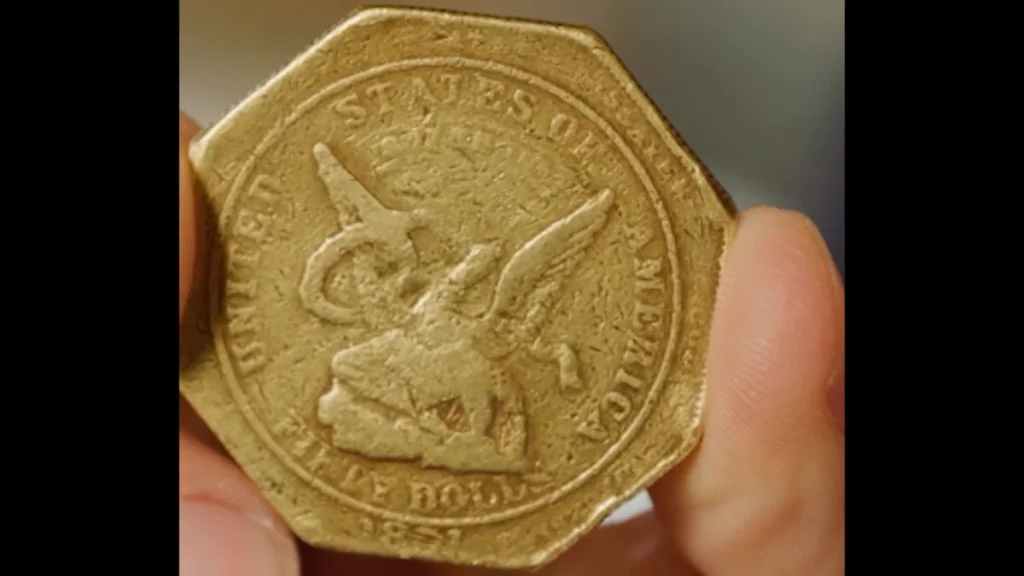
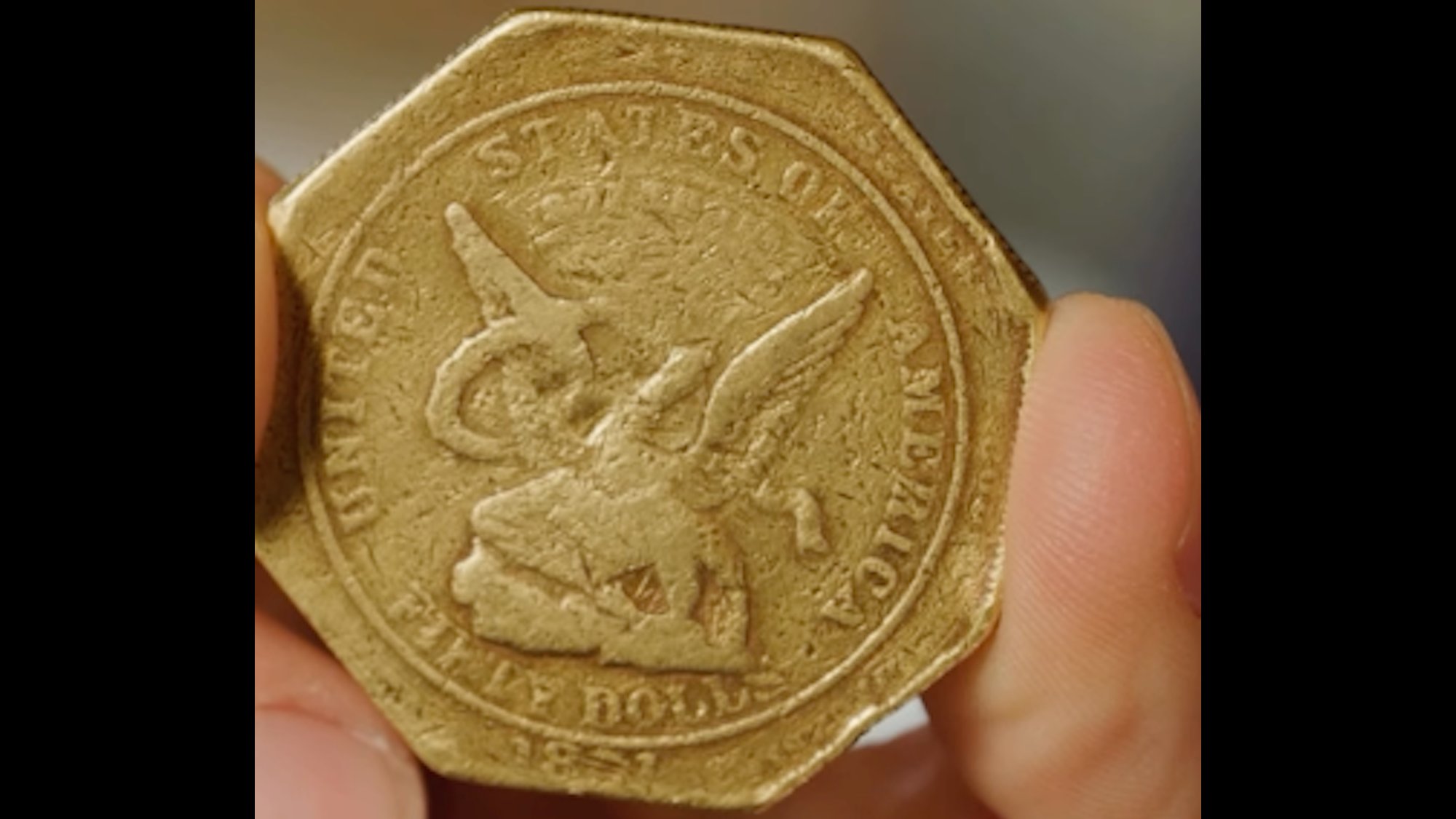
The streets of San Francisco are set to become a literal hunting ground for numismatists and history enthusiasts alike as Witter Coin prepares to launch its third annual city-wide treasure hunt. Scheduled for Saturday, April 25, the event will see the distribution of more than $50,000 worth of rare, collectible currency hidden in various public locations across the city’s iconic neighborhoods. At the heart of this high-stakes scavenger hunt is a grand prize that serves as a direct link to the city’s foundational era: an 1851 Humbert "Slug," a massive $50 gold piece with an estimated market value of $25,000.
This initiative, led by Witter Coin CEO and owner Seth Chandler, aims to revive the adventurous spirit of the mid-19th century while educating the public on the rich, often volatile history of California’s financial evolution. The event has grown significantly in scale since its inception, reflecting a broader trend in "experiential marketing" where local businesses engage with the community through interactive, historical narratives. According to Chandler, the hunt is less about the monetary value and more about reconnecting the modern residents of San Francisco with the tangible artifacts of the Gold Rush—a period that transformed a small outpost into a global maritime and financial hub.
The Grand Prize: The 1851 Humbert Slug
The centerpiece of the 2026 hunt, the 1851 Humbert Slug, is one of the most storied artifacts in American numismatic history. To understand its value, one must look at the specific economic conditions of 1850s California. Following the discovery of gold at Sutter’s Mill in 1848, the region was flooded with raw gold dust and nuggets, but there was a severe shortage of official United States coinage. This created a chaotic economy where merchants struggled to conduct transactions with inconsistent gold weights.
In response, the United States government authorized the establishment of the United States Assay Office of Gold in San Francisco. Augustus Humbert, a New York watchcase maker, was appointed as the United States Assayer. Under his supervision, the office produced octagonal $50 gold pieces, commonly referred to as "slugs" due to their immense weight and size. These pieces were not technically legal tender in the traditional sense, as they were produced before the San Francisco Mint was officially established in 1854, but they were accepted for customs duties and recognized as a reliable medium of exchange.
The specific coin offered by Witter Coin is an octagonal piece containing approximately 2.5 ounces of gold. Its design features a majestic bald eagle perched atop a boulder, clutching an olive branch and arrows, surrounded by the inscription "United States of America." The reverse often features a machine-turned "engine-turned" pattern, a security feature of the time designed to prevent "clipping" or shaving gold off the edges of the coin. Because many of these slugs were eventually melted down when the official San Francisco Mint opened, surviving specimens in high grades are exceptionally rare, making them a "holy grail" for collectors.
A Chronology of San Francisco’s Gold-Driven Expansion
The treasure hunt serves as a commemorative nod to the rapid transformation of the San Francisco peninsula. To appreciate the context of the artifacts being hidden, it is necessary to examine the timeline of the region’s development:
- Pre-1770s: The region is inhabited by the Ohlone people, who maintained complex social and trade networks for over 5,000 years.
- 1776: Spanish explorers establish the Presidio of San Francisco and Mission San Francisco de Asís.
- 1821: Mexico gains independence from Spain, and the territory becomes part of the Mexican province of Alta California.
- 1846: During the Mexican-American War, U.S. forces seize the village of Yerba Buena, which is renamed San Francisco in 1847. At this time, the population is estimated at fewer than 500 residents.
- January 24, 1848: James W. Marshall discovers gold at Sutter’s Mill in Coloma, sparking the California Gold Rush.
- 1849: The "Forty-Niners" arrive in massive numbers. By the end of the year, the population of San Francisco swells to over 25,000. The harbor becomes a forest of masts as hundreds of ships are abandoned by crews heading for the gold fields.
- 1851: Augustus Humbert begins minting the $50 gold slugs to stabilize the local economy. This is the era from which the treasure hunt’s grand prize originates.
- 1854: The San Francisco Mint opens, providing the first official federal coinage in the West and eventually rendering the private and assay office ingots obsolete.
Mechanics of the Modern Treasure Hunt
Witter Coin has structured the event to ensure it is accessible to the general public while maintaining the challenge of a true search. On the morning of Saturday, April 25, the store will begin releasing hourly clues via their official Instagram account. These clues are designed to lead participants to ten specific locations across the city.
In addition to the 1851 Humbert Slug, nine other historic collectible currency pieces will be hidden. These secondary prizes include various gold and silver coins from the 19th and early 20th centuries, representing different eras of American prosperity. To ensure public safety and the preservation of city landmarks, Witter Coin has established strict guidelines for the hunt:
- No Digging: None of the treasures are buried. They are hidden in plain sight or tucked into crevices of existing public structures.
- No Trespassing: All items are located in public spaces or participating business areas. Hunters are prohibited from entering private property or restricted zones.
- Digital Clues: The hunt relies heavily on local knowledge and the ability to decipher riddles related to San Francisco’s landmarks and history.
The use of social media as a delivery mechanism for clues has turned the event into a viral sensation in previous years, drawing thousands of participants from across the Bay Area.
Economic and Numismatic Implications
The decision to hide $50,000 in assets highlights the current strength of the numismatic market. Rare coins have historically served as a hedge against inflation and market volatility. According to data from the Professional Coin Grading Service (PCGS), the market for "territorial gold"—coins minted by private entities or assay offices during the Gold Rush—has remained robust, with high-quality specimens frequently fetching six-figure sums at auction.
By putting a $25,000 coin into the hands of a member of the public, Witter Coin is effectively performing a massive act of historical redistribution. From a business perspective, the event generates significant brand loyalty and foot traffic, but from a cultural perspective, it democratizes the hobby of coin collecting.
"The goal is to get people excited about history," Seth Chandler noted in his address to local media. "When someone holds a gold coin that was struck in this city 175 years ago, they aren’t just holding money; they are holding a piece of the very dirt, sweat, and ambition that built these streets."
Safety and Community Response
While the prospect of finding a $25,000 gold coin can lead to intense competition, the organizers have emphasized the "scavenger hunt" aspect over a "race." Local law enforcement and city officials have been notified of the event to manage potential crowds in popular areas like Union Square, Fisherman’s Wharf, and the Haight-Ashbury district.
Past iterations of the hunt have seen a largely positive community response, with families and students participating alongside professional treasure hunters. The event has also provided a minor economic boost to local cafes and shops near the "iconic neighborhoods" mentioned in the clues, as hunters traverse the city throughout the day.
Analysis of the Event’s Significance
The Witter Coin Treasure Hunt is more than a promotional stunt; it is a reflection of San Francisco’s enduring identity as a city of "boom and bust." Just as the 1849 Gold Rush defined the city’s early architecture and demographic makeup, modern events like this highlight the city’s ongoing relationship with wealth and discovery.
Furthermore, the focus on the 1851 Humbert Slug brings attention to a niche but vital part of American history: the period of "Provisional Government" coinage. These coins are physical evidence of a time when the Western United States was functioning almost independently of the federal government in Washington D.C., necessitated by the vast distances and slow communication of the era.
As the hunt commences this April, the eyes of the numismatic world will be on San Francisco. Whether found by a seasoned collector or a lucky passerby, the 1851 Humbert Slug will once again change hands in the city where it was first struck, continuing a cycle of commerce and discovery that began over a century and a half ago. For the residents of San Francisco, the message is clear: history is not just found in books or museums—sometimes, it is hidden right around the corner.