

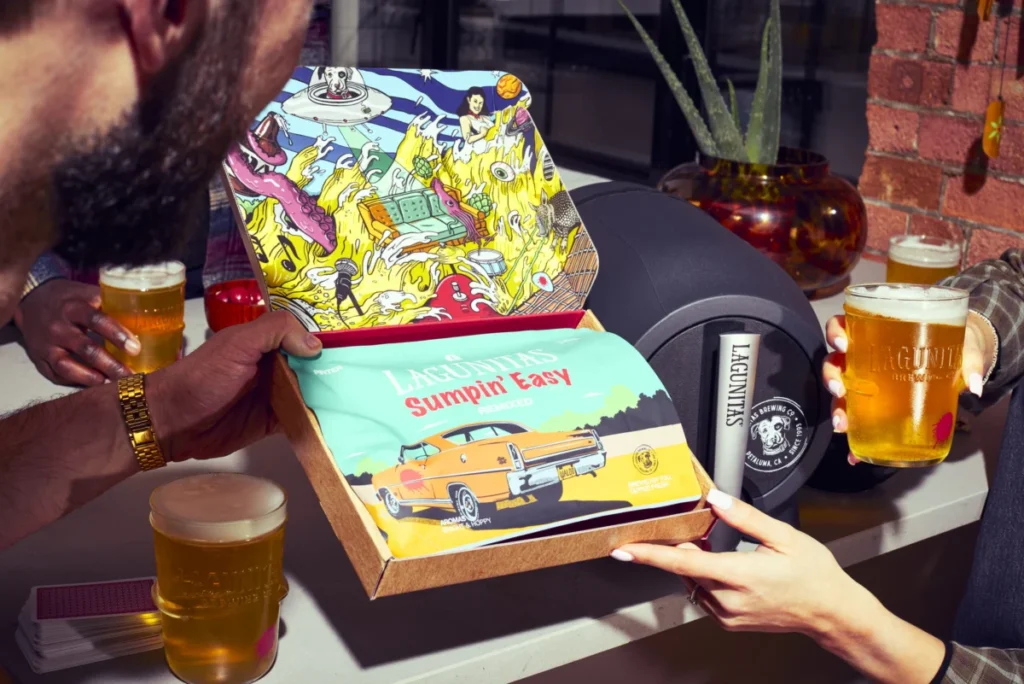
The craft brewing industry and the home appliance sector have converged in a significant new partnership as Lagunitas Brewing Company, a pioneer in the American craft beer movement, announces a strategic collaboration with Pinter, the manufacturer of an innovative countertop brewing system. This partnership aims to bridge the gap between professional-grade craft beer and the convenience of at-home production, beginning with the release of a specialized "Fresh Press" version of Lagunitas’ popular Sumpin’ Easy, an American Pale Wheat Ale. The move represents a shift in the homebrewing landscape, moving away from the complex, laboratory-style requirements of traditional methods toward a streamlined, technology-driven experience.
For decades, homebrewing has been characterized by its steep learning curve and significant equipment requirements. Traditional hobbyists often navigate a landscape of carboys, airlocks, hydrometers, and wort chillers, where the risk of batch failure due to oxidation or contamination is high. By partnering with Pinter, Lagunitas is leveraging a system that automates the most volatile stages of the brewing process, potentially expanding the brand’s reach to consumers who desire the quality of a craft taproom experience without the technical hurdles of conventional brewing.
The Evolution of the Pinter Brewing System
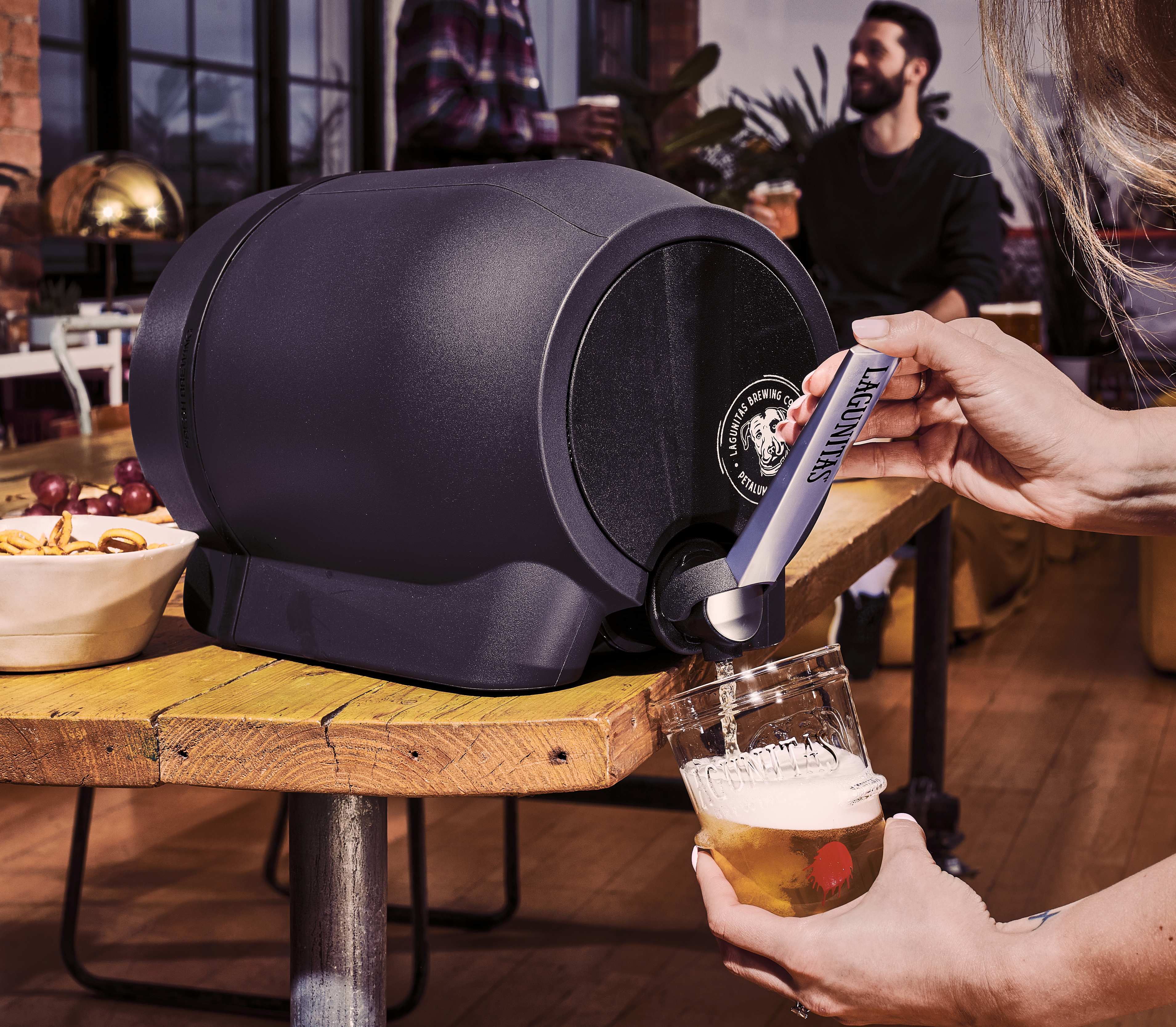
The Pinter system represents a departure from the "all-grain" or "extract" brewing kits that have dominated the hobbyist market since the 1970s. At its core, the device is a single-vessel system designed to handle fermentation, carbonation, and dispensing within one sealed environment. This design addresses the primary pain point of homebrewing: the "racking" process. In traditional setups, beer must be transferred from a fermentation vessel to bottles or a keg, a stage where the liquid is highly susceptible to oxygen exposure and bacterial spoilage.
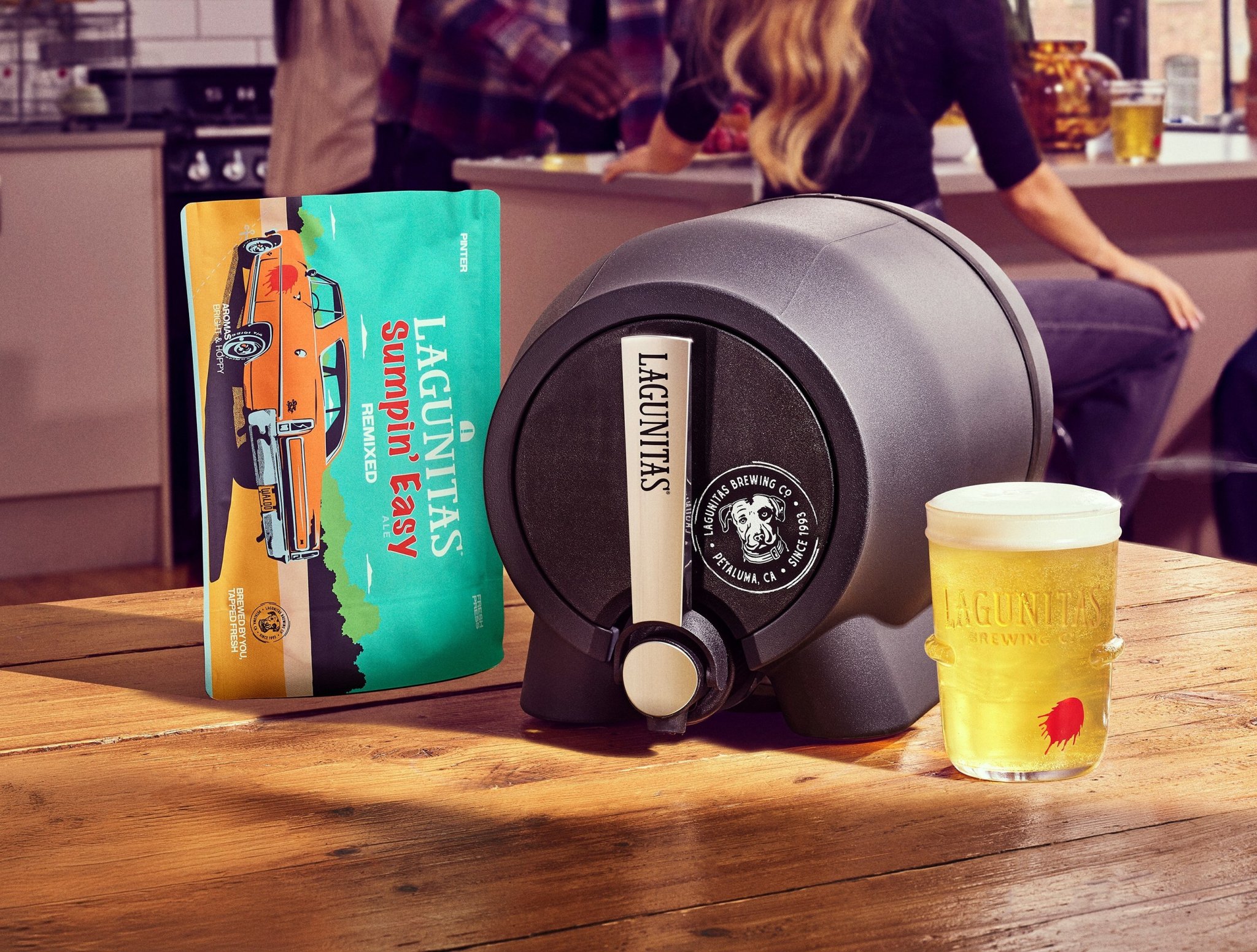
The Pinter unit utilizes "Fresh Press" packs—pre-measured, shelf-stable canisters containing malt extract, hop oils, and specific yeast strains. When combined with water and sealed within the Pinter vessel, the ingredients undergo a pressurized fermentation process. Because the vessel remains sealed from the moment of inception to the moment of pouring, the risks associated with external contaminants are virtually eliminated. Each pack produces approximately 12 pints of beer, positioning the device as a middle ground between single-serving kitchen appliances and industrial-scale brewing equipment.
Decoding the Recipe: Sumpin’ Easy
The inaugural offering from this collaboration is Sumpin’ Easy, a recipe selected from the Lagunitas archives for its specific flavor profile and fermentation resilience. Sumpin’ Easy is categorized as a Pale Wheat Ale, distinguished by its use of Ekuanot hops, which provide a complex aromatic profile of citrus, fruit, and pine. Unlike the flagship "A Little Sumpin’ Sumpin’," which is a heavier, higher-alcohol IPA, Sumpin’ Easy was developed to be a more approachable, "sessionable" beverage.
From a technical standpoint, the choice of a wheat-based ale for the Pinter’s first branded collaboration is strategic. Wheat ales are generally more forgiving regarding temperature fluctuations—a common variable in home environments. While professional breweries utilize glycol-jacketed tanks to maintain temperatures within a fraction of a degree, home units often sit on kitchen counters where temperatures can swing based on HVAC settings or sunlight. The yeast strains selected for the Sumpin’ Easy Fresh Press are engineered to produce a clean profile even in these less-than-ideal conditions, ensuring that the final product maintains the "citrus-forward" identity of the original Lagunitas brew.
The Science and Challenge of Scaling Down
Adapting a commercial recipe for a 12-pint countertop unit involves more than simple division. Brewing at a commercial scale, such as at Lagunitas’ primary facilities in Petaluma, California, and Chicago, Illinois, involves massive thermal mass. A 1,000-gallon fermentation tank retains its own heat and provides a stable environment for yeast metabolism. In contrast, a 1.5-gallon unit loses heat rapidly and is highly sensitive to the mineral content of local tap water.
To ensure consistency, the engineers at Pinter and the brewers at Lagunitas had to rework the hop addition schedule. In a commercial kettle, hops are added at various stages of the boil to achieve specific levels of bitterness (IBUs) and aroma. Because the Pinter system skips the traditional boiling stage—relying instead on the pre-processed Fresh Press packs—the hop character must be chemically balanced beforehand. This ensures that the essential oils of the Ekuanot hops are preserved and properly isomerized to mimic the "bite" of a fresh pour from a commercial keg.
Chronology of the Partnership and Market Context
The collaboration between Lagunitas and Pinter comes at a pivotal moment for the beverage industry. The following timeline outlines the development of this trend:
- 2013–2015: Homebrewing reaches a peak in the United States, with the American Homebrewers Association reporting over 1.2 million hobbyists.
- 2017–2019: The rise of "convenience brewing" begins with the launch of several automated systems, though many struggle with high price points and complex cleaning cycles.
- 2020–2022: The global pandemic sees a resurgence in at-home craft activities. Pinter gains significant traction in the UK market, leading to its expansion into North America.
- 2023: Lagunitas, under the ownership of Heineken, seeks new ways to engage with the "prosumer" market, leading to initial talks with Pinter’s product development team.
- 2024: The official launch of the Lagunitas X Pinter partnership, marked by the release of Sumpin’ Easy, with plans for additional IPAs and seasonal releases later in the year.
The broader market for home beverage appliances has seen similar trajectories in other sectors, most notably with the "Nespresso-ification" of coffee and the success of SodaStream in the carbonated water market. The Lagunitas-Pinter partnership is a clear attempt to apply this model to the craft beer world, where brand loyalty is high but the barrier to entry for DIY production has historically been prohibitive.
Industry Implications and Brand Strategy
For Lagunitas, this move is an exercise in brand extension and consumer data collection. By entering the "Fresh Press" ecosystem, Lagunitas can maintain a presence in the consumer’s kitchen long after they have left the liquor store. It also allows the brewery to revitalize "vaulted" recipes that may no longer be viable for mass-market distribution in cans or bottles but have a dedicated following among enthusiasts.
From Pinter’s perspective, the endorsement of a brand as recognizable as Lagunitas provides much-needed legitimacy to the automated brewing category. Critics of automated systems often argue that the resulting beer is "soulless" or lacks the depth of traditional brewing. By using the exact ingredient specifications approved by Lagunitas’ master brewers, Pinter can argue that their technology is a valid vessel for high-end craft recipes.
Technical Data and Specifications
To understand the scope of this partnership, it is necessary to examine the technical parameters of the Pinter system in comparison to traditional homebrewing:
| Feature | Pinter (Lagunitas Collaboration) | Traditional Homebrewing |
|---|---|---|
| Active Labor Time | ~15 minutes | 4–6 hours |
| Total Process Time | 7–10 days | 3–6 weeks |
| Cleaning Requirement | Single vessel, dishwasher safe components | Multiple vessels, siphons, and bottles |
| Batch Size | 12 pints (approx. 1.5 gallons) | 5 gallons (standard) |
| Oxidation Risk | Low (Closed system) | High (Multiple transfers) |
| Ingredient Format | "Fresh Press" concentrated pack | Raw grain, pellet hops, liquid/dry yeast |
Environmental and Economic Considerations
The partnership also addresses emerging concerns regarding the environmental footprint of beer distribution. Glass bottles and aluminum cans are heavy and energy-intensive to transport. By shipping concentrated "Fresh Press" packs instead of finished beer, the carbon footprint associated with logistics is significantly reduced. One Fresh Press pack weighs a fraction of a 12-pack of bottles, yet produces the same volume of liquid, utilizing the consumer’s local water source.
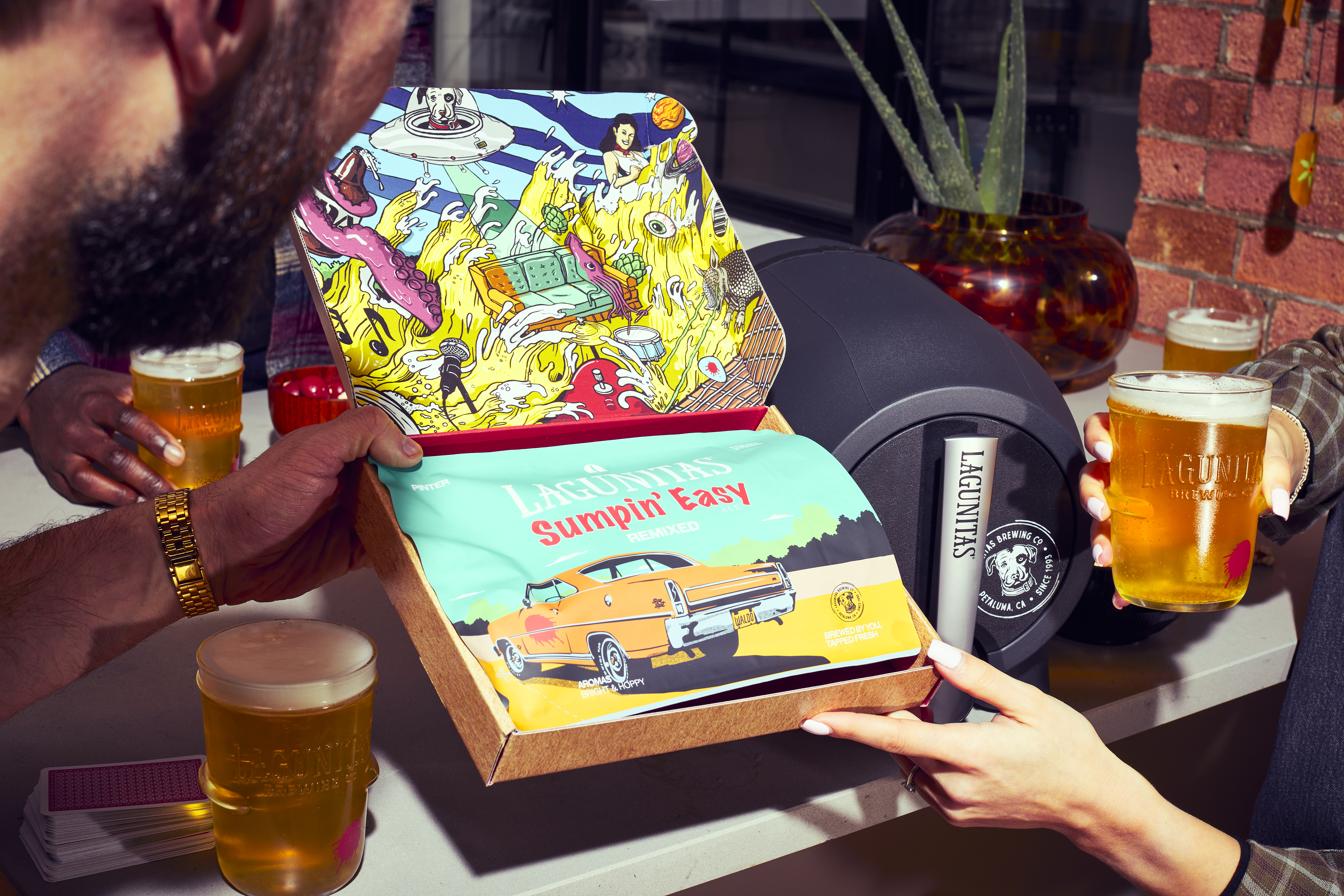
Economically, the system offers a "razor and blade" model. While the initial investment in the Pinter hardware is a hurdle for some, the cost per pint of the Lagunitas Sumpin’ Easy remains competitive with premium six-pack pricing at retail. For the consumer, the value proposition lies in the freshness; the beer is carbonated and consumed at its peak, without the degradation that can occur during months of storage on a warehouse floor or a warm retail shelf.
Future Outlook
The launch of Sumpin’ Easy is widely regarded as a test case for future collaborations. If successful, industry analysts expect to see more "heritage" craft brands entering the space. Lagunitas has already signaled that more recipes are in development, likely focusing on their signature high-IBU (International Bitterness Units) IPAs, which are notoriously difficult to keep fresh in traditional retail channels.
As the technology behind countertop fermentation improves—specifically regarding precision pressure sensors and integrated cooling—the line between "homemade" and "professional" beer will continue to blur. The Lagunitas and Pinter partnership serves as a landmark event in this evolution, signaling that the future of craft beer may not just be found in the taproom or the bottle shop, but on the kitchen counter.