



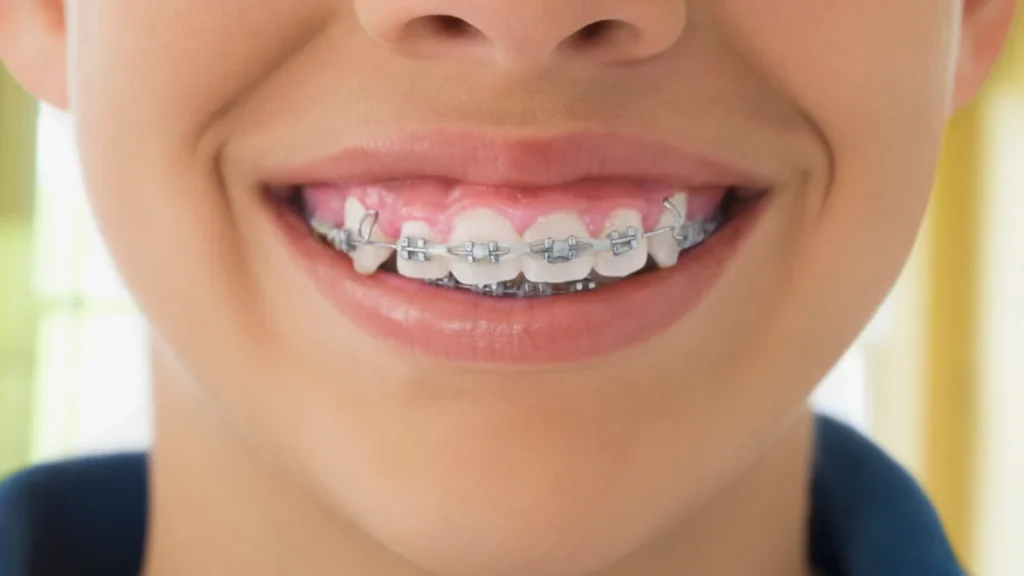
For the vast majority of human history, the concept of "crooked teeth" was virtually non-existent. Archaeological records of prehistoric hunter-gatherers consistently reveal skeletal remains with perfectly aligned dental arches and ample room for third molars, commonly known as wisdom teeth. Yet, in the modern era, malocclusion—the misalignment of teeth—has become a near-universal condition in industrialized societies, necessitating the multi-billion-dollar global orthodontics industry. Scientific inquiry into this phenomenon suggests that the need for braces is not a result of genetic degradation, but rather a profound "evolutionary mismatch" between our ancient biological blueprints and our modern lifestyle, specifically our diet.
The Biological Foundation of the Jaw Mismatch
The primary driver behind the modern need for orthodontic intervention is a disparity in the growth rates of the human jaw compared to the size of human teeth. Anthropological research indicates that while human teeth have remained relatively consistent in size for hundreds of thousands of years, the human jaw has undergone a significant reduction in dimensions. This reduction is not the result of a slow genetic mutation, but rather an epigenetic response to the lack of mechanical stress during childhood development.
Biologists point to a principle known as bone remodeling or "Wolff’s Law," which states that bone grows and strengthens in response to the physical loads placed upon it. For our ancestors, every meal served as an intensive "jaw workout." Diets consisting of raw plants, tough roots, and wild game required vigorous mastication. This constant mechanical pressure stimulated the growth of the mandible (lower jaw) and maxilla (upper jaw), ensuring they grew large enough to accommodate a full set of 32 teeth without crowding.
In contrast, the modern diet is characterized by highly processed, soft foods. From infancy, humans are transitioned from milk to soft purees, applesauce, and eventually bread, pasta, and cooked meats. This lack of resistance means the jaw does not receive the necessary biological signals to reach its full potential size. Consequently, when adult teeth—which are genetically programmed to be a certain size—begin to erupt, they find themselves competing for space in a dental arch that is roughly 10% to 15% smaller than those of our Paleolithic ancestors.
A Chronology of Dental Health and Intervention
The history of dentistry reveals a long-standing struggle to address the consequences of this jaw shrinkage, even before the mechanism was fully understood.
7000 BC – The Indus Valley: The earliest evidence of dental intervention dates back to the Neolithic period. Excavations in modern-day Pakistan show that early humans used flint drills to remove decayed tooth tissue, suggesting that even with straighter teeth, dietary changes related to the dawn of agriculture were already introducing tooth decay.
500 BC – Ancient Greece: Hippocrates and Aristotle wrote extensively about dental health, including the treatment of gum disease and the extraction of painful teeth. During this era, the "tooth worm" theory—the belief that tiny worms bored holes into teeth—became the prevailing explanation for cavities, a myth that persisted in various cultures for nearly two millennia.
1728 – The Birth of Modern Dentistry: French surgeon Pierre Fauchard published "The Surgeon Dentist," the first comprehensive scientific work on dental care. Fauchard was the first to identify sugar as a primary cause of tooth decay and invented the "Bandeau," a horseshoe-shaped metal device designed to expand the palate. This served as the precursor to the modern orthodontic expander.
1800s – Professionalization: Dentistry transitioned from a trade practiced by "barber-surgeons" to a regulated medical profession. The first dental schools were established, and the development of vulcanized rubber allowed for more comfortable dentures and early orthodontic appliances.
1900 – Standardization of Orthodontics: Edward Angle, often called the father of modern orthodontics, developed a classification system for malocclusion that is still used today. He standardized the use of brackets and wires, moving the field from experimental "straightening" to a predictable clinical science.
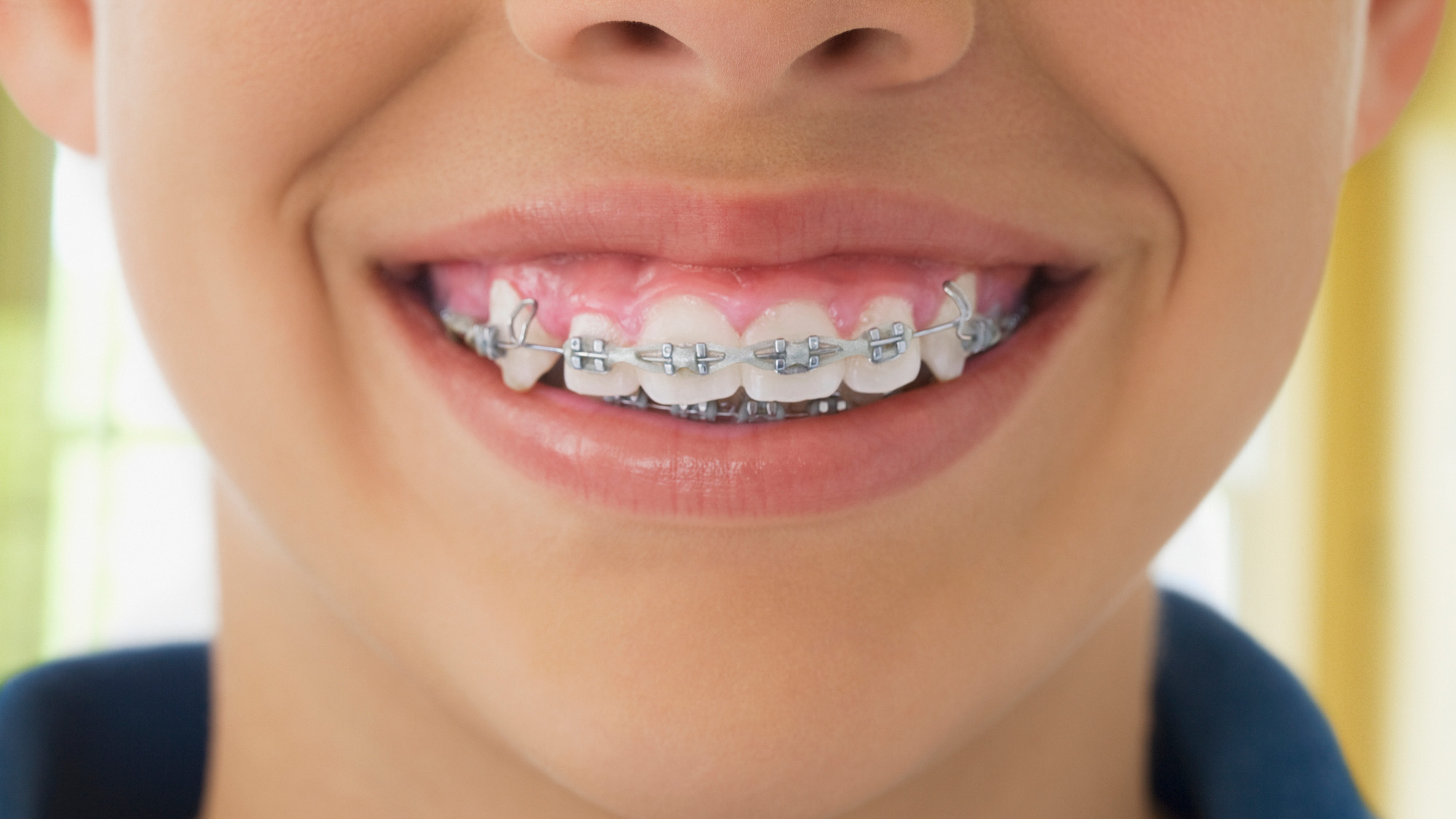
The Role of the Industrial Revolution and "Soft Food" Culture
The spike in orthodontic issues correlates directly with the Industrial Revolution. As food production became centralized, the texture of the human diet shifted dramatically. The milling of fine flours and the mass production of sugar meant that for the first time in history, humans could consume a high-calorie diet with almost no chewing effort.
Data from the Smithsonian Institution and other anthropological archives show a marked change in skull shapes starting in the mid-19th century. Pre-industrial skulls typically feature wide, robust jaws and straight teeth. Post-industrial skulls show a narrowing of the face and a receding chin, features directly linked to the crowding of teeth.
This shift has had implications beyond aesthetics. Smaller jaws often result in a narrower palate, which can restrict the nasal airway. Medical researchers have linked the modern "crooked tooth" epidemic to the rise of obstructive sleep apnea (OSA) and other breathing disorders. Because the tongue has less room in a cramped mouth, it is more likely to fall back and obstruct the airway during sleep. Thus, braces and palate expanders are increasingly viewed not just as cosmetic tools, but as essential interventions for respiratory health.
Fluoride and the Prevention of Secondary Dental Issues
While orthodontics addresses the structural mismatch of the jaw, modern dentistry has also had to contend with the chemical impact of the modern diet. The discovery of fluoride’s benefits provides a parallel narrative of how humans have adapted to environmental changes to preserve dental health.
In the early 20th century, researchers in Colorado Springs noticed a phenomenon known as the "Colorado Brown Stain." Residents had mottled, brownish teeth, but curiously, they had almost no cavities. It was eventually discovered that the local water supply contained naturally high levels of fluoride—up to 12 parts per million.
By the 1940s, scientists determined that at lower concentrations (approximately 0.7 parts per million), fluoride could prevent tooth decay by remineralizing enamel without causing staining. This led to the widespread fluoridation of public water systems, a move the Centers for Disease Control and Prevention (CDC) named one of the 10 great public health achievements of the 20th century. This intervention has mitigated the damage caused by the high-sugar, soft-food diet that necessitated braces in the first place.
Broader Impact and Modern Implications
The necessity of braces in the 21st century serves as a prominent example of how human culture can outpace biological evolution. Our bodies are still optimized for a lifestyle that disappeared thousands of years ago. The consequences of this mismatch are visible every time a teenager visits an orthodontist to have wisdom teeth extracted or brackets applied.
From a public health perspective, the "smaller jaw" epidemic is being met with new approaches in "functional orthodontics." Some practitioners now advocate for "mewing" or the use of specialized chewing gums to stimulate jaw growth in children, attempting to mimic the mechanical stress of an ancestral diet. However, for most of the population, the structural changes are already set by the time permanent teeth arrive, leaving braces as the only viable solution.
The economic impact is also substantial. The global orthodontics market was valued at approximately $5.9 billion in 2022 and is projected to grow significantly. This growth is driven not only by a desire for "perfect" smiles in a media-saturated world but by a genuine biological need to correct the functional failures of a shrinking jaw.
Conclusion: A Biological Legacy
Ultimately, the need for braces is a testament to the plasticity of the human body. Our bones respond to our environment, and our environment has changed more in the last 200 years than in the previous 200,000. While the "applesauce diet" of modern childhood has spared us the difficulty of foraging and processing tough foods, it has left us with a structural legacy that requires metal, ceramic, and plastic intervention to correct.
As we move forward, the focus of dentistry is shifting from merely straightening teeth to understanding the holistic relationship between the jaw, the airway, and the diet. Braces are no longer just a rite of passage for adolescents; they are a necessary corrective measure for a species whose culture has moved faster than its bones can follow. The "straight chompers" of our ancestors may be a thing of the past, but through modern science, we are finding new ways to fit ancient teeth into a modern world.