



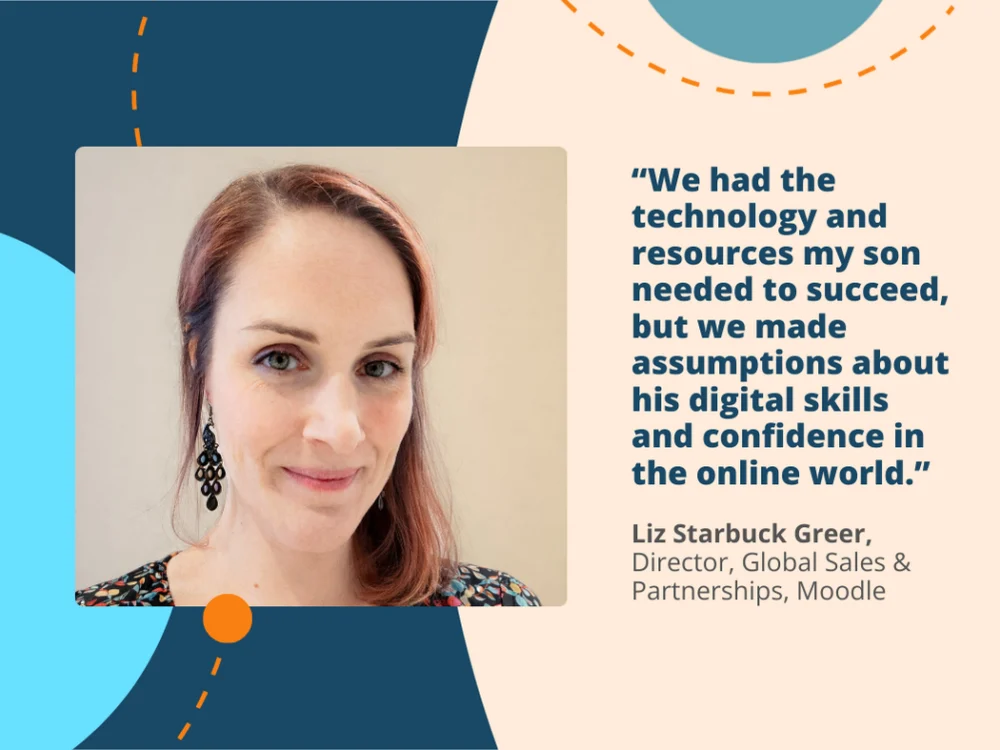
Liz Starbuck Greer, a prominent figure in educational technology and a speaker at MoodleMoot Global 2025, has shared a deeply personal account that illuminates a critical, often overlooked, distinction in the digital age: the difference between digital confidence and digital competence. Her experience, particularly during the unprecedented shift to emergency online learning triggered by the COVID-19 pandemic, serves as a powerful case study for educators, instructional designers, and parents alike, underscoring the concept of "digital capital" and its profound impact on learner outcomes. Greer’s insights, first presented at MoodleMoot Global 2025 and further elaborated in a recent Moodle podcast, highlight how assumptions about a learner’s digital prowess can inadvertently create significant barriers to educational success.
The Unforeseen Challenges of Emergency Online Learning
The global onset of the COVID-19 pandemic in early 2020 precipitated a seismic shift in educational delivery worldwide. As lockdowns became the norm, schools and universities scrambled to transition from traditional in-person instruction to remote learning models. This rapid pivot, while necessary, often caught institutions, educators, and students unprepared. In the United Kingdom, Greer’s son found himself navigating the transition to high school precisely as the nation entered its first major lockdown. This period, already fraught with the anxieties of a new academic environment, was compounded by the abrupt move to online education, a format with which many students were unfamiliar.
Greer, who holds a professional position requiring daily technological engagement and has extensive experience in designing and building online courses, including an MBA program, found herself managing a high-stakes professional environment while simultaneously supporting a younger child and attempting to guide her son through his sudden, compulsory immersion in digital learning. Despite possessing what she describes as a family "high on the digital capital scale"—characterized by robust internet connectivity, multiple devices, technical know-how, and a cultural familiarity with digital communication through overseas upbringing—the family encountered a significant educational hurdle.
When Access and Familiarity Fall Short: The "Untitled Document" Crisis
The first indication that something was amiss came not from the student himself, but from an external source: a concerned teacher alerted Greer that her son was falling behind in his coursework and had been absent from scheduled online classes. This revelation was met with initial disappointment and a sense of personal failure, as Greer admitted they had "made assumptions about his digital skills and confidence in the online world."
A subsequent attempt to address the academic deficit revealed the depth of the misunderstanding. When asked to retrieve his work, Greer’s son presented a bewildering array of "Untitled Documents" on his school drive. This discovery unmasked a fundamental lack of digital competence in an academic context. His difficulties extended beyond mere disorganization; he struggled with basic digital literacy skills crucial for online learning, such as titling documents, creating folders, and locating assignments. Furthermore, he lacked the proficiency to communicate effectively via email for academic queries, a foundational skill for remote education.
The inconsistent implementation of online learning protocols across different teachers—varying methods for distributing assignments and receiving submissions—exacerbated his confusion. Greer realized that her son’s comfort and expertise in social digital interactions, such as gaming, did not translate into the structured, task-oriented demands of academic online learning. The skills required to navigate an educational platform were as foreign to him as the intricacies of a complex game like Fortnite were to her. This disparity, she observed, was a direct consequence of inconsistent processes and expectations from the school, which, in turn, made him more confused and less likely to engage, ultimately leading him to "give up."
Digital Capital: A Deeper Understanding of Learner Readiness
Greer’s experience powerfully illustrates the concept of "digital capital," a term she explored in her MoodleMoot presentation and podcast. Digital capital, she defines, is the aggregate of access, skills, experience, and social support that collectively determines an individual’s capacity to effectively utilize digital tools and participate in online environments. This framework moves beyond the simplistic notion of the "digital divide," which often focuses solely on access to technology, to encompass a more nuanced understanding of the diverse digital advantages or disadvantages learners bring to virtual learning spaces.
While access to technology is undeniably a prerequisite, it is insufficient on its own to ensure equitable educational outcomes. The way technology is used, the purpose for which it is employed, and the benefits derived from its usage are all critical components of this broader digital capital. Greer’s narrative demonstrates that even with ample technological resources and a family with significant digital literacy, a learner can still falter if their digital capital is insufficient for the specific demands of the learning environment.
Implications for Instructional Design and Pedagogy
The implications of Greer’s personal story for the field of education are profound. Her reflections urge educators and instructional designers to critically re-evaluate their assumptions about learners’ digital capabilities. The ease with which a student navigates social media or plays video games does not automatically equip them for the rigors of online academic work. The skills and norms required for educational technology use are distinct and must be explicitly taught and supported.
Greer emphasizes that "strength in one digital arena doesn’t promise success in another." This realization is crucial, especially as online and blended learning models continue to be integral to modern education, even post-pandemic. Many learners may not have chosen online learning and their proficiency in social digital contexts does not guarantee success in academic ones. They often don’t know what they don’t know until they begin to engage with the learning tasks.
The inconsistent approaches employed by Greer’s son’s teachers, while perhaps born of necessity during an unprecedented crisis, highlighted the importance of clarity and consistency in online learning design. Educators have considerable freedom in structuring their courses, but this freedom can inadvertently create additional challenges for learners, particularly those with lower levels of digital capital.
To mitigate these issues, Greer suggests several pedagogical strategies:
- Clear Instructions: Providing explicit, step-by-step instructions for all digital tasks can demystify complex processes.
- Modeling Expectations: Demonstrating how learner interactions should occur within the digital space sets clear norms and reduces ambiguity.
- Proactive Support: Regularly checking in with students, especially those who appear to be struggling or disengaging, can prevent them from falling too far behind.
- Consistent Design: Standardizing the structure, navigation, and submission processes across a course, or even across an institution, can significantly reduce cognitive load for learners, allowing them to focus on content rather than technical hurdles.
The Role of Community and Continuous Improvement
Fortunately, Greer’s son was able to overcome his challenges and move forward. However, his experience serves as a potent reminder of the hidden learning gaps that can emerge when digital capital is not adequately considered. Greer concludes by emphasizing the power of the Moodle community, a network of supportive colleagues dedicated to improving learning experiences. This collaborative spirit is essential for sharing best practices, developing innovative solutions, and ensuring that all learners have the opportunity to succeed in the increasingly digital landscape of education.
The lessons learned from Greer’s personal journey are not confined to the emergency remote learning of the pandemic era. They are directly applicable to the ongoing evolution of educational technology and the design of effective online learning environments. By acknowledging the multifaceted nature of digital capital and designing with intentionality and empathy, educators can build learning environments where every student, regardless of their prior digital experience, can thrive and achieve their full potential. The call to action for educators and institutions is clear: move beyond assumptions and actively cultivate the digital competence that underpins true digital inclusion and academic success.







