


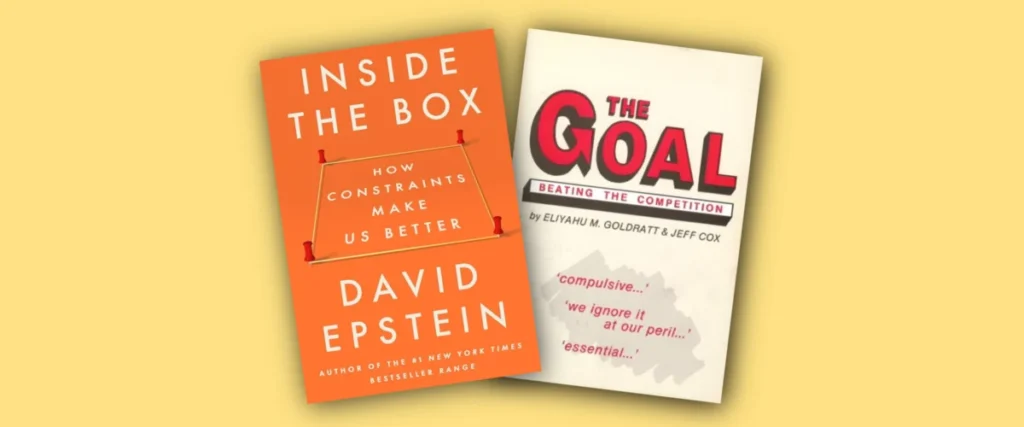
The landscape of modern productivity is being re-evaluated through the lens of a classic management theory, brought to contemporary attention by #1 New York Times bestselling author David Epstein. In his latest work, Inside the Box, Epstein delves into the profound insights of Eliyahu Goldratt’s "theory of constraints," a framework that, while initially conceived for industrial optimization in the 1980s, offers potent lessons for navigating the complexities of personal and organizational efficiency in the digital age. This re-examination, championed by productivity thought leaders, suggests that merely adding speed or new tools without addressing fundamental limiting factors can paradoxically hinder rather than enhance true output.
David Epstein, renowned for his investigative prowess in books like The Sports Gene, which explored the interplay of genetics and athletic prowess, and Range, which argued for the advantages of broad experience over early specialization, continues his exploration of unconventional wisdom in Inside the Box. His narrative approach, often blending compelling stories with rigorous research, makes complex ideas accessible. In his newest book, Epstein turns his attention to the power of constraints, a theme that resonates deeply with the challenges faced by individuals and organizations striving for greater effectiveness amidst an ever-increasing array of digital tools. The particular chapter dedicated to Goldratt’s work serves as a pivotal bridge, connecting decades-old industrial management principles to the contemporary discourse on work efficacy, as highlighted in a recent blog post by productivity expert Cal Newport.
The Genesis of the Theory of Constraints: Eliyahu Goldratt’s Vision
The core tenets of the "theory of constraints" (TOC) originated with Eliyahu Goldratt, an Israeli physicist who transitioned into a management consultant and author. In the 1980s, Goldratt revolutionized thinking about industrial productivity through his seminal novel The Goal: A Process of Ongoing Improvement. Far from a dry textbook, The Goal presented TOC as a gripping business narrative, making its principles accessible to a broad audience by illustrating them through the struggles of a fictional factory manager trying to save his plant. Goldratt’s genius lay in simplifying complex systems into identifiable bottlenecks, asserting that "Every system has a limiting factor or constraint. Focusing improvement efforts to better utilize this constraint is normally the fastest and most effective way to improve profitability."
Goldratt’s theory posits that within any system – be it a manufacturing plant, a project workflow, or even an individual’s daily tasks – there is a single element that limits the overall output. This "constraint" or "bottleneck" dictates the pace of the entire system. Improving non-constraint elements, while seemingly productive, often leads to undesirable outcomes such as increased work-in-progress, inventory build-up, and wasted resources, without actually boosting the final throughput. This concept was a radical departure from traditional efficiency models that sought to optimize every single step equally, often leading to localized efficiencies that did not translate into overall system improvement.
To illustrate this foundational principle, Goldratt famously used the analogy of a small assembly line manufacturing chicken coops. Imagine a multi-step process: building the frame, attaching the roof, adding wire mesh, and so on. If attaching the roof is the slowest step, it becomes the bottleneck. Increasing the speed of earlier steps, such as frame building, will not produce more finished chicken coops. Instead, it will only create a backlog of partially built frames accumulating at the roofing station, leading to inefficiency, wasted space, and frustration. To genuinely accelerate production, resources and attention must be directed to improving the roofing process. This might involve adding more skilled workers, better tools, or redesigning the roofing method itself, thereby "elevating" the constraint.
The Five Focusing Steps of TOC
Goldratt formalized the practical application of TOC into a systematic, cyclical process known as the Five Focusing Steps, designed to help organizations and individuals continuously identify and address their constraints:
- Identify the Constraint: The first and most crucial step is to accurately pinpoint the specific bottleneck that limits the system’s output. This requires careful analysis and often involves looking beyond obvious symptoms to find the true limiting factor. It’s not always the busiest person or machine, but the one whose slowdown impacts everything else.
- Exploit the Constraint: Once identified, the next step is to make the most of the constraint with existing resources. This means ensuring the bottleneck is never idle, operating at maximum efficiency, and not being fed defective work from earlier stages. For the chicken coop example, this would mean ensuring the roofing station always has frames to work on, that its workers are not interrupted by non-essential tasks, and that all materials are readily available.
- Subordinate Everything Else to the Constraint: All other non-constraint activities in the system must be adjusted to support the constraint’s optimal performance. This often means deliberately slowing down or pacing non-bottleneck steps to match the constraint’s speed, preventing upstream pile-ups and wasted effort. In essence, the entire system marches to the beat of the slowest drum. For instance, frame builders might be instructed to produce only as many frames as the roofing station can handle.
- Elevate the Constraint: If exploiting and subordinating are insufficient to meet desired output, then the constraint itself must be elevated. This involves investing additional resources to increase its capacity. For the chicken coop, this might mean purchasing a new, faster roofing machine, hiring more roofing specialists, or training existing staff to improve their roofing speed. This is the point where capital investment or significant structural changes are considered.
- Prevent Inertia and Repeat the Process: Once a constraint is successfully elevated, it may cease to be the primary limiting factor, and a new constraint might emerge elsewhere in the system. The final step is to avoid complacency and continuously return to step one to identify and manage the new bottleneck, ensuring ongoing improvement. This cyclical approach emphasizes that optimization is not a one-time fix but a continuous journey of identifying, managing, and resolving limitations.
Bridging the Gap: From Industrial Production to Personal Productivity
While Goldratt’s initial focus was on manufacturing and supply chain management, the universality of his principles extends remarkably well to personal and knowledge work productivity. Productivity thought leaders, including Cal Newport, have long observed a paradoxical effect in the digital realm: the very tools designed to make us more efficient often leave us feeling busier, more fragmented, and ultimately less impactful. The theory of constraints provides a compelling explanation for this modern predicament.
In many professional settings, the "system" is an individual’s workflow, and the "output" is high-value, impactful work. Digital tools, such as email, instant messaging, project management software, and generative AI, are introduced with the promise of speeding up various steps within this workflow. However, if these tools target non-bottleneck activities, they fail to enhance overall productivity and can even exacerbate existing problems. They merely create more "work-in-progress" upstream of the true constraint, without increasing actual throughput of valuable outcomes.
Consider the pervasive impact of email. Designed to accelerate communication, email has, for many, become a significant drain on attention and time. If the actual bottleneck in a knowledge worker’s process is the time required for deep, focused creative thinking, problem-solving, or strategic planning, then speeding up communication (a non-bottleneck) simply means more information arrives faster, creating a larger "pile-up" in the inbox and demanding more superficial processing time. The core, high-value work remains constrained, while the periphery swells, leading to a feeling of being constantly busy without commensurate progress on critical tasks. Data consistently shows that the average office worker spends a significant portion of their day on email, with many reporting feelings of overwhelm and distraction due to its constant demands. A 2023 survey by Adobe, for instance, found that US workers spend an average of 3.1 hours a day on work email, translating to over 15 hours a week – time that could be redirected if email management wasn’t merely accelerating a non-bottleneck. This phenomenon explains why "email ended up an accidental disaster" for productivity, as Newport and others have noted.
Similarly, the advent of generative AI tools, lauded for their ability to quickly draft content, summarize information, or create presentations, presents a comparable challenge. If the bottleneck in a project is not the initial generation of content, but rather the subsequent stages of critical evaluation, fact-checking, refinement, ethical considerations, or the nuanced integration of human insight, then AI-generated "sloppy slide presentations" merely shift the workload. They might accelerate an early step, but they create a new, potentially more demanding, bottleneck in the form of rigorous review and correction. Early returns on AI office tools have indeed been mixed, with some reports indicating that while initial drafts are quicker, the overall project timeline doesn’t necessarily shorten, as more time is then spent on quality control and ensuring the AI output aligns with human judgment and organizational standards. A 2024 Harvard Business Review article highlighted this, noting that unchecked AI usage can lead to "workslop" – a proliferation of low-quality output requiring significant human intervention, thus negating potential efficiency gains.
Strategic Implications for Enhanced Productivity
The theory of constraints compels a fundamental shift in how individuals and organizations approach productivity improvements. Instead of a scattergun approach of adopting every new tool or technique promising marginal gains in various areas, TOC advocates for a highly targeted strategy:
- Identify Your Personal Bottleneck: For an individual, this means introspectively identifying what truly limits their most impactful work. Is it lack of uninterrupted focus time? Decision paralysis? Difficulty in communicating complex ideas? Too many meetings? Excessive administrative overhead? Once identified, this becomes the primary target for improvement. This requires honest self-assessment, potentially using time tracking or activity logs to gain objective insights.
- Exploit and Subordinate: Maximize the efficiency of this bottleneck with existing resources. This could mean rigorously scheduling "deep work" blocks and defending them fiercely, saying no to non-essential meetings or commitments, or streamlining decision-making processes by setting clear criteria. All other tasks should then be subordinated to protect and support this bottleneck. For example, if deep work is the bottleneck, email checks should be batched to specific times, not allowed to interrupt focused efforts, and notifications should be turned off.
- Elevate Strategically: If exploiting and subordinating aren’t enough, consider strategic investments to elevate the bottleneck. This might involve professional development courses to improve a specific skill, delegating specific tasks to free up critical time, or even advocating for organizational changes that protect focus time, such as designated no-meeting days. For instance, if a lack of specific technical expertise is the bottleneck for a project, investing in training or hiring a specialist directly addresses the constraint.
- Continuous Improvement: Recognize that productivity is not a static state. As one bottleneck is addressed, another will likely emerge, or the existing one may shift its nature. A commitment to continuous self-assessment and adaptation, akin to Goldratt’s Fifth Focusing Step, is crucial. This iterative process ensures that efforts remain targeted and effective over time.
For organizations, the implications are equally profound. Instead of deploying new technologies across the board in the hope of general efficiency boosts, leaders should identify the systemic bottlenecks that hinder critical value creation. This might be a particular team’s capacity, a specific approval process, a legacy IT system that creates data silos, or even a cultural issue that prevents effective collaboration. Focusing resources to optimize this constraint, rather than superficially enhancing non-critical processes, will yield far greater returns. A 2020 McKinsey report on organizational productivity highlighted that companies that systematically identify and address core process bottlenecks outperform those that adopt a more generalized approach to digital transformation, often seeing a 10-15% increase in throughput.
The Enduring Wisdom of Focused Effort
In an era saturated with distractions and an overwhelming array of "productivity hacks," Goldratt’s theory, as illuminated by David Epstein and applied by contemporary thinkers like Cal Newport, offers a refreshingly clear directive. It shifts the focus from merely "doing more" or "doing things faster" to "doing the right things better." What ultimately matters more than generic speed or the avoidance of challenging tasks is the meticulous, high-quality performance of the "deep steps" that genuinely advance goals and produce significant value. This perspective aligns with a growing body of research suggesting that strategic attention and deliberate practice on high-leverage activities are far more impactful than merely increasing activity levels.
The journey toward true productivity, whether personal or organizational, is not about eliminating all constraints – an impossible task – but about intelligently identifying and managing the most critical ones. By understanding and strategically addressing our bottlenecks, we can move beyond the illusion of busyness to achieve genuine, sustainable progress, transforming our efforts from chaotic motion into purposeful momentum. This timeless principle, derived from the world of industrial physics and management science, proves to be an indispensable guide in navigating the complex demands of the 21st-century knowledge economy, offering a structured path to not just work harder, but to work smarter and more effectively.