


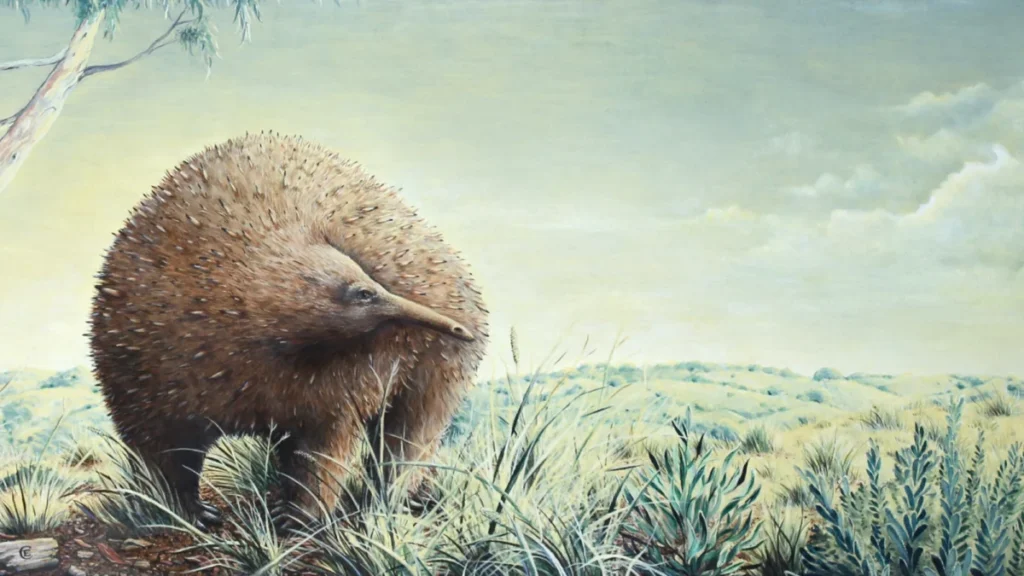
The landscape of prehistoric Australia was once home to a diverse array of megafauna, ranging from rhinoceros-sized wombats to predatory marsupial lions. Among these strange inhabitants was the Owen’s giant echidna, a creature that has remained largely elusive in the fossil records of certain regions until now. A breakthrough discovery, facilitated by the meticulous re-examination of a century-old museum collection, has finally confirmed the presence of this extinct monotreme in Victoria, Australia. This finding not only fills a significant geographical gap in the species’ known distribution but also highlights the immense scientific value of "dark data" stored within museum archives.
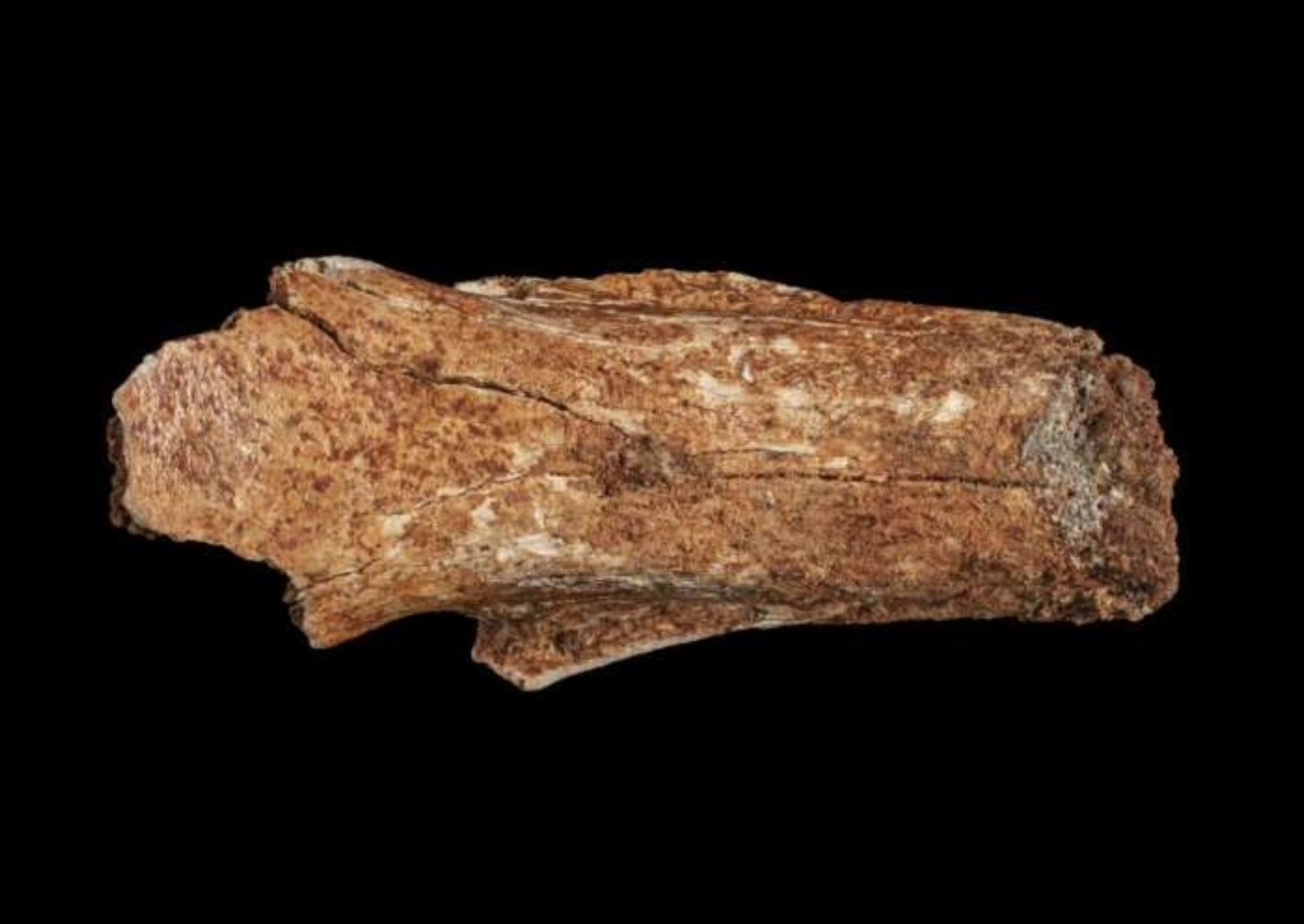
The fossil in question, a partial skull of the species Megalibgwilia owenii, was originally unearthed in 1907 but remained unrecognized for over 114 years. It was recently identified by Tim Ziegler, the collection manager of vertebrate palaeontology at the Museums Victoria Research Institute, and Jeremy Lockett, a vertebrate palaeontology student at Deakin University. Their research, published in the journal Alcheringa: An Australasian Journal of Palaeontology, reconciles a long-standing mystery regarding the dispersal of giant echidnas across the Australian continent during the Pleistocene epoch.
The Discovery and Identification Process
The identification of the fossil began in 2021 when Tim Ziegler was conducting a routine survey of the Museums Victoria’s Palaeontology Collection. He encountered a specimen that had been retrieved from the Foul Air Cave in Buchan, Victoria, during an expedition led by naturalist and museum officer Frank Spry in 1907. At the time of its excavation, the partial skull was cataloged but not definitively identified as belonging to the Megalibgwilia genus.
To confirm the identity of the specimen, Ziegler and Lockett engaged in a comparative anatomical study. They examined modern echidna skeletal structures alongside fossilized remains of other known extinct monotremes housed in various Australian museum collections. The defining feature of the Buchan specimen was its characteristic straight-beaked snout. Unlike the curved beaks of some other extinct relatives, the straight beak of Megalibgwilia owenii was a specialized tool used for crushing large insects and foraging through the dense, potentially frozen soils of Ice Age Australia.
The genus name Megalibgwilia is a linguistic hybrid, combining the Ancient Greek "mega" (meaning great or mighty) with "libgwil," the word for echidna in the Wemba Wemba language of the Indigenous people of the Murray-Lower Darling region. This nomenclature reflects both the physical stature of the animal and the deep cultural history of the land it once inhabited.
Anatomical Profile of a Pleistocene Giant
The Owen’s giant echidna was a formidable version of its modern descendants. While the contemporary short-beaked echidna (Tachyglossus aculeatus) typically weighs between 5 and 15 pounds, Megalibgwilia owenii was significantly larger. Estimates based on the Buchan fossil and other regional finds suggest the creature weighed approximately 33.1 pounds (15 kilograms) and could reach lengths of up to 3.3 feet (1 meter).
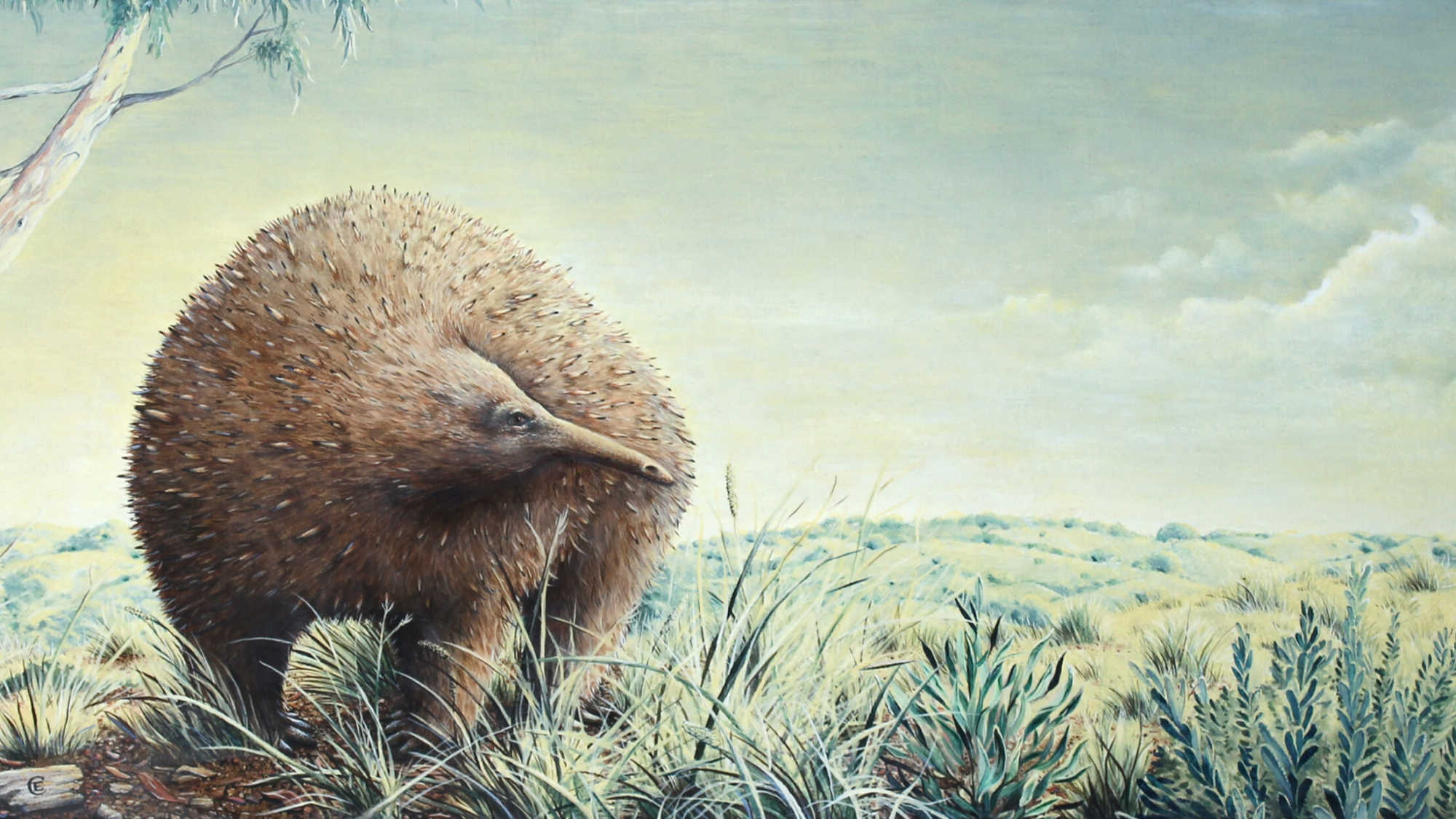
Unlike the modern Long-beaked echidnas (Zaglossus) currently found in the highlands of New Guinea, which possess a downward-curving snout, the Owen’s giant echidna featured a robust, elongated, and straight rostrum. This anatomical adaptation suggests a diet that may have been more varied than that of modern echidnas. While contemporary species primarily consume ants and termites, the size and strength of Megalibgwilia likely allowed it to tackle larger invertebrates and perhaps even small vertebrates or larvae found deep within the earth.
As a monotreme, the Owen’s giant echidna belonged to the most ancient lineage of mammals. Like the platypus and the modern echidna, it laid leathery eggs and fed its young through mammary gland patches rather than teats. The discovery of such a large monotreme in Victoria provides essential data on how these egg-laying mammals adapted to the varying climates of the Pleistocene.
A Chronology of the Buchan Fossil
The timeline of this discovery spans more than a century of Australian scientific history, illustrating the evolution of paleontological methods and the importance of archival preservation.
- 1907: Frank Spry, a dedicated naturalist and museum officer, leads an expedition into the Foul Air Cave in Buchan, Victoria. Using primitive equipment, including kerosene lamps and hemp ropes, the team retrieves several fossilized remains from the limestone caverns.
- 1907–2020: The fossil remains in the Museums Victoria collection. During this period, other specimens of Megalibgwilia owenii are identified in New South Wales, South Australia, and Tasmania, but Victoria remains a "blank spot" on the map for this specific species.
- 2021: Tim Ziegler initiates a review of the museum’s vertebrate fossils. He recognizes the unique morphology of the Buchan skull and begins a collaboration with Jeremy Lockett to verify its species.
- 2021–2023: The researchers conduct a comprehensive comparative analysis, visiting other institutions and utilizing modern imaging techniques to confirm the fossil’s identity.
- 2024: The findings are officially published in Alcheringa, providing the first documented evidence of Owen’s giant echidna in Victoria.
Geographical Significance and Environmental Context
Prior to this identification, the distribution of Megalibgwilia owenii was considered "disjunct." Fossils had been found in the northern and southern reaches of the continent’s east, but the absence of records in Victoria was a source of confusion for paleontologists. Victoria’s landscape during the Pleistocene was a mix of open woodlands and cooler, mountainous terrain, which theoretically should have supported the giant echidna.
The Buchan Caves, located in the East Gippsland region, are renowned for their limestone formations and their ability to preserve skeletal remains. These caves often acted as natural "pitfall traps," where animals would accidentally fall in and their remains would be protected from scavengers and weathering by the stable, calcium-rich environment.
The confirmation of Megalibgwilia owenii in Victoria suggests that the species was widely distributed across the diverse ecosystems of southeastern Australia. This widespread presence indicates a high level of environmental adaptability, allowing the giant echidna to thrive in both the temperate forests of the coast and the harsher, more arid conditions of the interior.
Broader Implications for Megafauna Extinction
The extinction of Australia’s megafauna remains one of the most debated topics in paleontology. Most of these large species vanished between 40,000 and 60,000 years ago, a period that coincides with both significant climate shifts and the arrival of humans on the continent.
However, the Megalibgwilia genus appears to have been more resilient than many of its contemporaries, such as the Diprotodon (a giant wombat-like creature) or the Thylacoleo (marsupial lion). Fossil evidence suggests that some species of giant echidna may have survived until the late Pleistocene, roughly 20,000 years ago. The discovery in Victoria provides a new data point for modeling the decline of these creatures. By understanding where they lived and what they ate, scientists can better determine whether their extinction was driven by the loss of specific habitats, overhunting, or a combination of ecological pressures.
The Owen’s giant echidna represents a "middle ground" in the extinction narrative—an animal that was larger than modern survivors but smaller than the truly massive megafauna that were the first to disappear. Its eventual extinction marked the end of the giant monotreme lineage, leaving only the smaller, more specialized echidnas we see today.
The Role of Museums in Modern Science
This discovery underscores the critical role that museum collections play in contemporary research. Often, fossils are collected faster than they can be analyzed, leading to a backlog of "unidentified" specimens that can sit in drawers for decades. As technology advances and new researchers bring fresh perspectives, these old collections can yield "new" discoveries without the need for expensive new excavations.
Tim Ziegler noted that museum collections preserve the vital link between science, heritage, and the public. The work of early naturalists like Frank Spry laid the foundation upon which modern scientists build. Ziegler emphasized that the next major breakthrough in understanding Australia’s prehistoric past could easily come from a citizen scientist or a researcher looking into a drawer that hasn’t been opened in a generation.
Conclusion and Future Research
The identification of the Owen’s giant echidna in Victoria is more than just the naming of an old bone; it is a reconstruction of a lost world. It provides a clearer picture of the Pleistocene biodiversity of southeastern Australia and confirms that the giant echidna was a staple of the regional fauna.
Moving forward, paleontologists hope to find more complete postcranial remains of Megalibgwilia owenii in the Buchan Caves or similar geological formations. Such finds would allow for a more accurate reconstruction of the animal’s locomotion and physical capabilities. Furthermore, DNA extraction from younger fossils, though difficult in Australia’s climate, remains a goal for researchers seeking to map the genetic transition from the giants of the Ice Age to the endangered echidnas of the 21st century.
As modern echidnas face increasing threats from habitat loss and climate change, studying their extinct ancestors provides perspective on the fragility of even the most resilient lineages. The story of the Owen’s giant echidna is a reminder that the history of life is written in the earth, and sometimes, the most important chapters are found exactly where we left them over a century ago.