


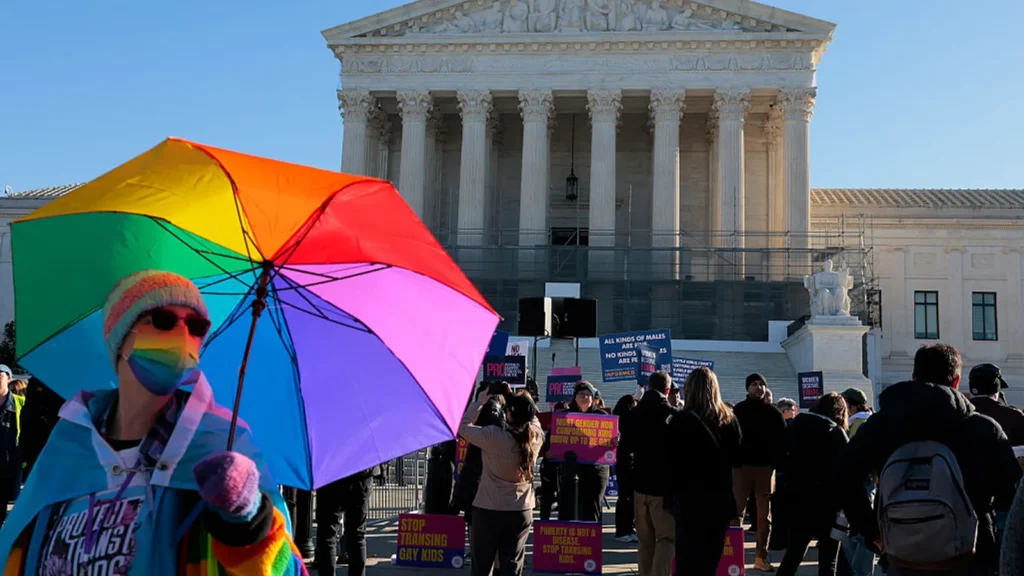
The United States Supreme Court has agreed to review a significant case originating from Colorado, centering on whether private religious schools participating in a state-funded universal preschool program are exempt from a non-discrimination provision that mandates the admission of children from same-sex couples. This decision to hear the case, formally titled St. Mary Catholic Parish v. Roy, signals a potentially far-reaching impact on the intersection of religious freedom, state funding, and LGBTQ+ rights in educational settings across the nation.
At the heart of the legal challenge is Colorado’s universal preschool program, designed to offer all families 15 hours of free preschool per week, a benefit valued at approximately $6,000 per child annually. This program stipulates that any educational institution receiving public funds must adhere to a strict non-discrimination clause. This clause requires schools to provide eligible children an equal opportunity for enrollment, irrespective of a range of protected characteristics, including race, religious affiliation, sexual orientation, and gender identity.
The plaintiffs in the case comprise parents of preschool-age children and two religious parishes that operate affiliated preschools. They contend that this non-discrimination provision unconstitutionally compels religious preschools, such as those within the Archdiocese of Denver, to violate their deeply held religious tenets. Specifically, these tenets prohibit the enrollment of children raised by same-sex couples, which the parishes argue conflicts with their interpretation of Catholic teachings on marriage and family. The plaintiffs have asserted their claims under the First Amendment’s Free Exercise Clause, which protects individuals’ right to practice their religion freely.
The Becket Fund for Religious Liberty, a prominent law firm representing the plaintiffs, articulated their position in a petition for high court review filed in November. The petition states that Colorado’s program, while ostensibly universal, effectively excludes the Archdiocese of Denver’s Catholic preschools. The reason for this exclusion, according to the petition, is Colorado’s assertion that the preschools’ religious practice of admitting only families who uphold Catholic teachings, including those concerning sex and gender, constitutes "discrimination."
Court documents reveal that at least one of the plaintiff schools, Wellspring Catholic Academy, had previously declined to admit an elementary school student due to the student’s same-sex parents. This incident, documented in court filings from the 10th U.S. Circuit Court of Appeals, formed part of the basis for the lawsuit, which was initially filed in 2023. The plaintiffs’ legal action followed the state’s denial of the Archdiocese of Denver’s request for a religious accommodation that would have exempted them from the non-discrimination requirement. The 10th Circuit, in September, ruled against the plaintiffs, a decision that paved the way for their appeal to the Supreme Court. The Supreme Court is anticipated to hear arguments in the case during the fall term.
Background of the Universal Preschool Program and the Legal Challenge
Colorado’s commitment to expanding early childhood education took a significant step forward with the implementation of its universal preschool program. The program aims to ensure that all families, regardless of income, have access to quality preschool education, recognizing its profound benefits for child development and long-term educational outcomes. By offering public funding to a wide array of providers, including private and religious institutions, the state sought to maximize parental choice and leverage existing educational infrastructure.
However, the inclusion of a robust non-discrimination clause in the program’s funding agreements has ignited a legal firestorm. Advocates for LGBTQ+ rights and civil liberties argue that public funds should not be channeled to institutions that discriminate based on sexual orientation or gender identity, asserting that such discrimination undermines the principle of equal opportunity. Conversely, religious institutions argue that being forced to compromise core religious beliefs in exchange for public funding infringes upon their fundamental right to religious freedom, as enshrined in the First Amendment.
The legal dispute in St. Mary Catholic Parish v. Roy is not an isolated incident. It is part of a broader national conversation and ongoing legal battles concerning the extent to which religious organizations can receive government funds while maintaining policies that conflict with anti-discrimination laws. This case, in particular, probes the boundaries of religious exemptions when state funding is involved, and whether such exemptions can extend to refusing services or enrollment based on the sexual orientation or gender identity of prospective students or their families.
The Trump Administration’s Involvement and Broader Legal Precedents
The case attracted significant attention from the previous administration, with the Trump administration filing a "friend-of-the-court" brief in January. This filing highlighted the government’s stated interest in both preserving the free exercise of religion and enforcing anti-discrimination rules for recipients of government funding. The administration pointed to other instances where the state had granted exceptions to the non-discrimination rule, such as reserving spots for students with disabilities or for low-income children enrolled in Head Start programs. The U.S. Department of Justice, in its filing, acknowledged its "substantial interest" in both the preservation of religious freedom and the enforcement of anti-discrimination measures for government funding recipients.
The Supreme Court’s decision to hear St. Mary Catholic Parish v. Roy places it within a recent line of cases that have grappled with the complex interplay between religious rights and public funding. Landmark decisions such as Espinoza v. Montana Department of Revenue (2020) and Carson v. Makin (2022) have established precedents that generally prohibit states from excluding religious schools from public funding programs solely because of their religious beliefs or practices. In Espinoza, the Court ruled that states cannot disqualify religious schools from voucher programs simply because they are religious. In Carson, the Court further clarified that states cannot deny funding to religious schools that discriminate in their hiring practices if other private schools in the program do not face similar restrictions.
These prior rulings suggest a judicial inclination to protect religious institutions’ access to public funds, provided those funds are distributed neutrally. However, the Colorado case introduces a new dimension by focusing on discrimination against students based on their parents’ sexual orientation, rather than solely on the school’s religious identity or employment practices. This distinction may prove crucial as the Supreme Court considers the scope of religious exemptions in the context of student enrollment policies.
Broader Implications and Potential Outcomes
The Supreme Court’s ruling in this case could have significant implications for both religious freedom and LGBTQ+ rights. If the Court sides with the religious schools, it could broaden the scope of religious exemptions, potentially allowing other religiously affiliated institutions receiving public funds to discriminate based on sexual orientation or gender identity. This could lead to a patchwork of access to publicly funded educational programs, where LGBTQ+ students and families might be excluded from certain schools based on their identity.
Conversely, a ruling in favor of Colorado’s non-discrimination provision could affirm the principle that public funds come with obligations to serve all members of the public equally, regardless of their protected characteristics. This would reinforce the idea that access to education, even through private religious institutions, should not be contingent on the sexual orientation or gender identity of students or their families.
The case also raises questions about the definition of "discrimination" in the context of religious practice. Religious organizations often argue that their doctrines are integral to their identity and mission, and that adhering to them, even if it results in differential treatment, is not discriminatory in the same way as secular discrimination. The Court will need to balance these claims of religious liberty against the state’s interest in promoting equal opportunity and preventing discrimination.
Related LGBTQ+ Cases and the Broader Legal Landscape
The Supreme Court’s decision to take up the Colorado case came on the same day it declined to hear another case with implications for LGBTQ+ youth in K-12 education. The Court rejected an appeal from Massachusetts parents who argued that a policy in Ludlow Public Schools violated their rights. This policy required students’ consent before notifying parents about their preferred names or pronouns at school. Such policies, common in more liberal-leaning areas, are intended to protect LGBTQ+ students from potentially hostile home environments. However, they stand in stark contrast to laws enacted in several Republican-led states that mandate parental notification regarding a student’s gender identity or pronoun usage.
Looking ahead, the Supreme Court is expected to issue rulings in the coming weeks on two other significant LGBTQ+ cases: Little v. Hecox and West Virginia v. B.P.J.. The B.P.J. case, in particular, directly addresses whether transgender girls can participate in girls’ sports teams, a matter that also probes the extent to which Title IX, the federal anti-sex discrimination statute, protects LGBTQ+ students in educational programs. These cases, collectively, highlight a period of intense judicial scrutiny over the rights and protections afforded to LGBTQ+ individuals, particularly within educational contexts. The outcome of the Colorado preschool case will undoubtedly add another crucial layer to this evolving legal landscape, with far-reaching consequences for religious freedom, anti-discrimination principles, and the inclusivity of educational opportunities for all children.