


The ambition of establishing a permanent human presence on the lunar surface represents one of the most significant engineering and scientific challenges of the 21st century. As NASA and its international partners accelerate the Artemis program, the focus has shifted from mere exploration to long-term sustainability and infrastructure development. Central to this transition is the need to quantify the environmental hazards of the lunar environment, specifically the frequency and intensity of meteorite strikes. To address this, NASA is enlisting the help of the global community through the Impact Flash project, a citizen science initiative designed to monitor the moon’s dark side for the telltale signs of high-velocity cosmic collisions.
The Reality of Lunar Bombardment
Unlike Earth, which is shielded by a thick, protective atmosphere that incinerates the vast majority of incoming space debris, the moon possesses only a tenuous exosphere. This lack of atmospheric friction means that even the smallest fragments of interstellar rock reach the lunar surface at full cosmic velocity, often exceeding 20 kilometers per second. While Earth experiences "shooting stars" as debris burns up in the mesosphere, the moon experiences direct kinetic impacts.
Current astronomical estimates suggest that the moon is struck by approximately 100 meteoroids the size of ping-pong balls every single day. While these objects may seem inconsequential, their velocity transforms them into potent explosive devices. A single ping-pong ball-sized meteoroid striking the lunar regolith can release energy equivalent to seven pounds of TNT. On a larger scale, the moon is hit by meteoroids with diameters of eight feet or more roughly once every four years. These larger events release energy equivalent to a kiloton of TNT, comparable to a small tactical nuclear weapon. For future lunar habitats, such strikes represent a significant risk to structural integrity and astronaut safety.
The Role of the Artemis II Mission and Recent Observations
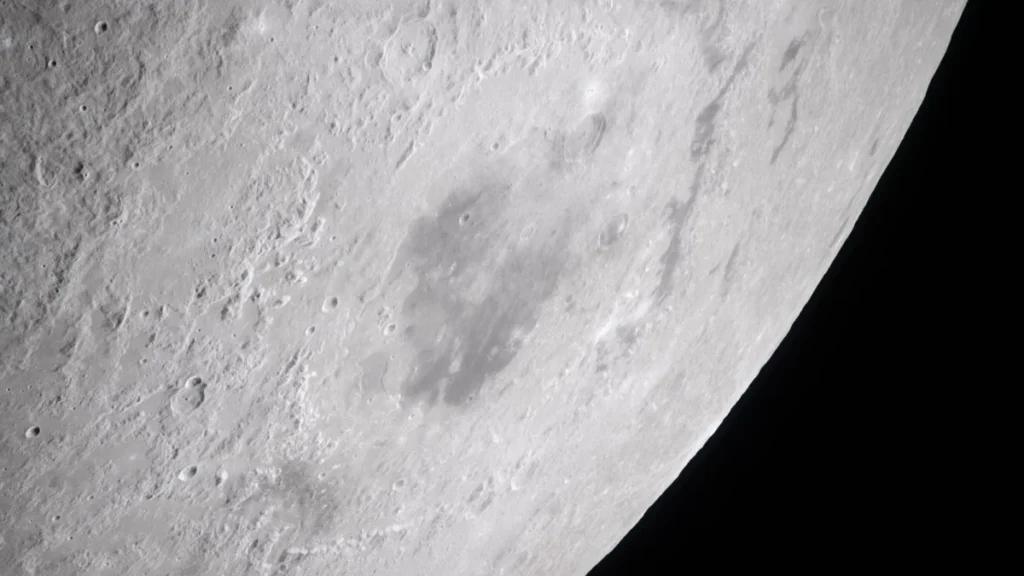
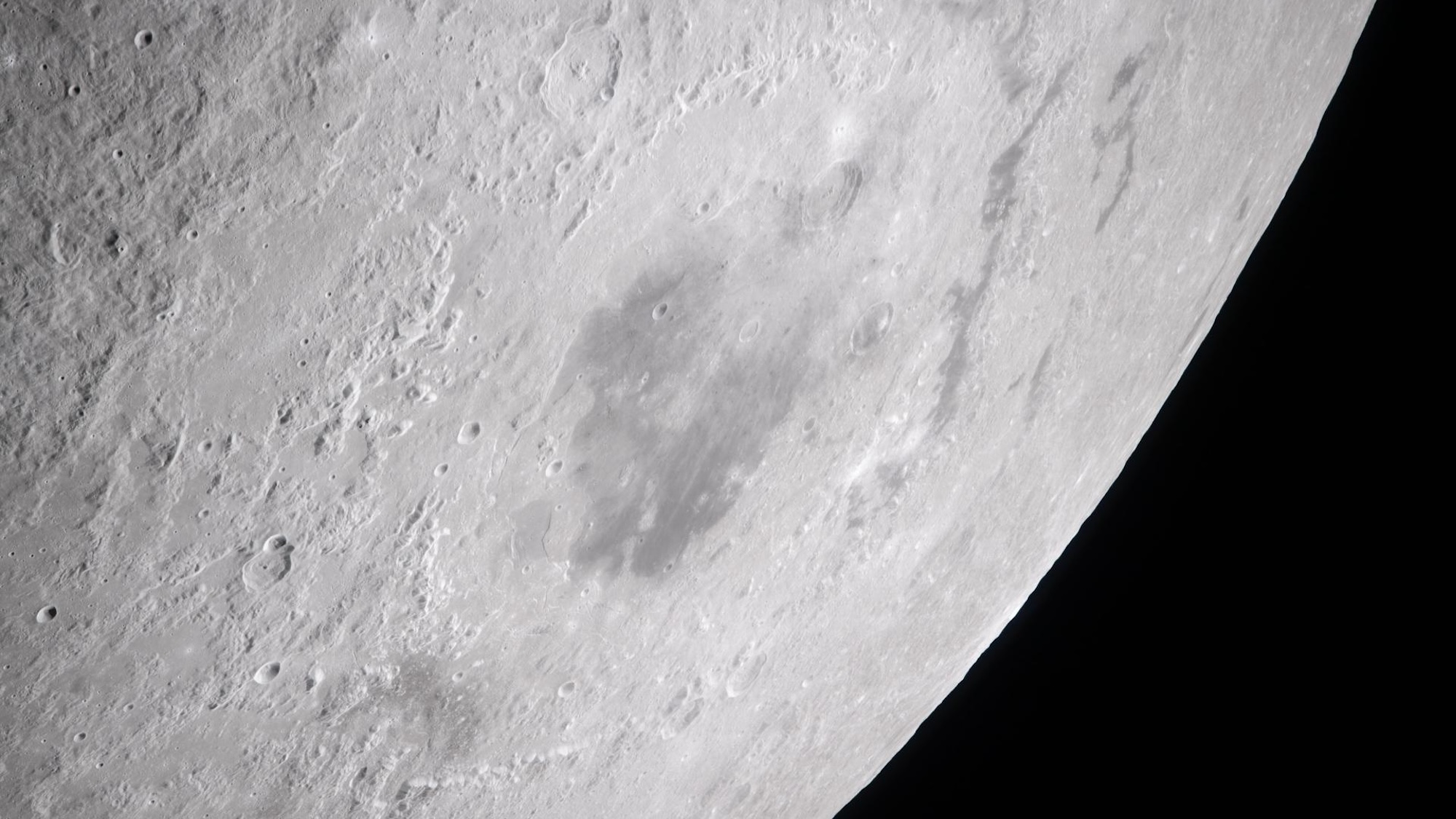
The urgency of the Impact Flash project was highlighted during the recent Artemis II mission. On April 6, 2026, as the crewed Orion spacecraft conducted its historic lunar flyby, the four-person crew—Commander Reid Wiseman, Pilot Victor Glover, and Mission Specialists Christina Koch and Jeremy Hansen—witnessed the lunar environment firsthand. During their transit, the crew and the spacecraft’s high-resolution monitoring equipment recorded several impact flashes on the lunar surface.
These observations provided a rare, high-fidelity dataset of contemporary lunar impacts. The visual and sensor data collected by the Artemis II mission are currently being analyzed to refine existing models of impact rates. However, a single mission cannot provide the continuous, long-term monitoring required to build a statistically significant map of lunar vulnerability. This is where the Geophysical Exploration of the Dynamics and Evolution of the Solar System (GEODES) group at the University of Maryland comes in. By partnering with NASA, GEODES is leveraging the power of distributed observation to fill the gaps in professional orbital and ground-based data.
The Mechanics of an Impact Flash
An "impact flash" is a brief, intense burst of light generated when a meteoroid strikes the moon’s surface. Because the moon lacks an atmosphere to slow the object down, the entirety of the meteoroid’s kinetic energy is converted into heat and light upon impact. This process vaporizes both the projectile and a portion of the lunar regolith, creating a small crater and a momentary flare that can be seen from Earth using relatively modest equipment.
These flashes are most visible when they occur on the "dark side" of the moon—the portion of the lunar disk not currently illuminated by the sun. Monitoring this region allows astronomers to distinguish the faint light of an impact from the overwhelming brightness of reflected sunlight. By recording the timing, duration, and intensity of these flashes, scientists can calculate the mass and velocity of the incoming meteoroid, providing critical data on the population of space debris in the Earth-Moon system.
Guidelines for Citizen Scientists and Technical Requirements
The Impact Flash project is designed to be accessible to experienced amateur astronomers, yet it requires a specific technical setup to ensure the data is scientifically valid. Organizers have outlined several requirements for participants:
- Optical Equipment: A telescope with a mirror or lens diameter of at least 4 inches (100mm) is recommended to capture the faint light of smaller impacts.
- Tracking Systems: Because the observations require long-duration monitoring of the lunar disk, an equatorial or alt-azimuth mount with automatic tracking is essential to keep the moon centered in the field of view.
- Video Capture: Participants must use a video camera capable of recording at 25 to 30 frames per second. High-speed recording is necessary because impact flashes often last only a fraction of a second.
- Software and Reporting: NASA encourages the use of the Analysis of Lunar Flash Images (ALFI) software, which is publicly available. Once a potential flash is identified, the footage must be uploaded to the official Lunar Impact Flash database, managed by the Institute of Applied Mathematics and Information Technologies (IMATI).
By standardizing the data collection process, NASA ensures that observations from backyard telescopes in various parts of the world can be synthesized into a single, cohesive dataset. This global network provides 24-hour coverage, accounting for the Earth’s rotation and local weather conditions that might otherwise hinder a single professional observatory.
Beyond Safety: Probing the Lunar Interior
While the primary goal of the Impact Flash project is to assess surface hazards for future bases, the data serves a secondary, equally vital scientific purpose: lunar seismology. Ben Fernando, a planetary scientist at Los Alamos National Laboratory and the lead for the Impact Flash project, has emphasized that these impacts act as natural seismic probes.
"We are planning to send seismometers to the moon to measure how the ground shakes," Fernando explained in a recent statement. "Your measurements of impact flashes will help us work out the sources of moonquakes we detect. This will help us work out what the moon’s interior looks like."
When a meteoroid strikes the moon, it sends shockwaves through the lunar crust and mantle. These "impact-induced moonquakes" allow scientists to perform a type of celestial ultrasound. By knowing exactly when and where an impact occurred (thanks to the flashes recorded by citizen scientists), researchers can analyze the seismic data to determine the thickness of the crust and the composition of the lunar core. This method is crucial because the moon does not have the same level of tectonic activity as Earth, making external "hammers"—like meteoroids—the best tool for studying its internal structure.
Chronology of Lunar Observation Efforts
The Impact Flash project is the latest evolution in a long history of lunar monitoring. The foundation for this work was laid during the Apollo era (1969–1972), when astronauts deployed the Passive Seismic Experiment Package (PSEP) on the lunar surface. These instruments recorded thousands of seismic events, including meteoroid impacts, until they were decommissioned in 1977.
In the decades following Apollo, ground-based monitoring became more sophisticated. In the late 1990s and early 2000s, NASA’s Meteoroid Environment Office (MEO) began systematic observations of the moon during major meteor showers, such as the Leonids and Geminids. The current initiative represents a significant scaling up of these efforts, moving from sporadic observation to a continuous, crowdsourced surveillance network. This shift coincides with the upcoming Artemis III mission, which aims to land humans near the lunar South Pole—a region where understanding the impact environment is paramount for the safety of the planned Artemis Base Camp.
Implications for Future Lunar Infrastructure
The data derived from the Impact Flash project will have direct applications in the field of lunar architecture and engineering. If the frequency of "kiloton-level" impacts is found to be higher than previously thought, the design of lunar habitats will need to incorporate thicker layers of protective shielding.
One proposed solution is the use of lunar regolith—the moon’s own soil—as a building material. By covering pressurized modules with several meters of regolith, engineers can protect astronauts not only from micrometeoroids but also from solar radiation and extreme temperature fluctuations. Furthermore, the data will influence the placement of critical infrastructure, such as nuclear power reactors and communication arrays, which must be situated in areas with lower statistically modeled impact risks.
A Global Scientific Endeavor
The Impact Flash project underscores a broader trend in modern space exploration: the democratization of science. No longer is deep-space research the exclusive domain of government agencies with multi-billion-dollar budgets. By integrating the observations of thousands of volunteers, NASA is fostering a global community of "lunar sentinels."
As the Artemis program moves forward, the collaboration between professional astronomers and citizen scientists will remain a cornerstone of lunar safety. The insights gained from a 4-inch telescope in a suburban backyard may one day be the reason a future lunar colony survives a meteor shower, ensuring that humanity’s return to the moon is not just a brief visit, but a permanent expansion of our civilization into the stars.