



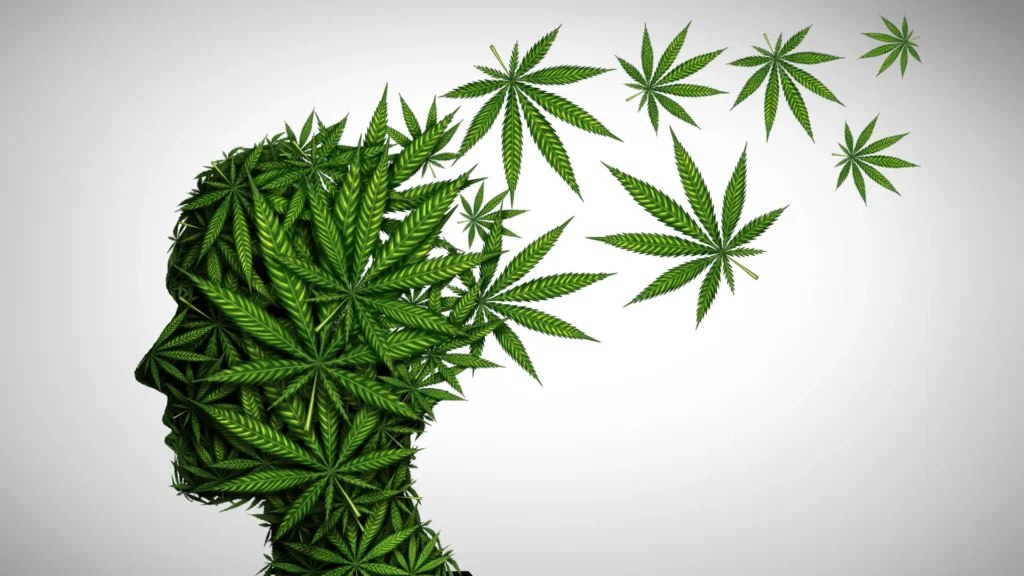
A groundbreaking study from Washington State University (WSU) has unveiled that smoking cannabis does more than simply make memories fuzzy; it fundamentally alters how memories are formed and retrieved, impacting a wide array of cognitive functions essential for daily life. The research, published in the Journal of Psychopharmacology, represents one of the most comprehensive examinations to date on how acute cannabis intoxication influences various memory systems, challenging prior assumptions and highlighting significant implications for public health and safety.
The WSU study, led by senior author Carrie Cuttler, an associate professor of psychology, and co-author Ryan McLaughlin, an associate professor in the Department of Integrative Physiology and Neuroscience, found that individuals under the influence of tetrahydrocannabinol (THC), the primary psychoactive compound in cannabis, were not only more prone to recalling words they had never encountered but also struggled significantly with everyday memory tasks. These tasks included remembering future appointments, tracking conversations, and accurately identifying the origin of information. A particularly striking finding was the lack of substantial difference in memory impairment between participants who consumed 20 milligrams of THC and those who consumed 40 milligrams, suggesting that even moderate amounts of THC can profoundly interfere with memory processes.
Unprecedented Scope: Examining Multiple Memory Systems
"Most previous studies have only looked at one or two types of memory, like recalling lists of words," explained Dr. Cuttler. "This is the first study to comprehensively examine many different memory systems at once, and what we found is that acute cannabis intoxication appears to broadly disrupt most of them." This broad disruption underscores the pervasive nature of cannabis’s impact on cognition, moving beyond anecdotal observations to provide robust scientific evidence.
To conduct this detailed investigation, the research team recruited 120 regular cannabis users. Participants were randomly assigned to a double-blind experiment where they vaporized either a placebo cannabis, 20 milligrams of THC, or 40 milligrams of THC. The double-blind design, where neither participants nor researchers knew who received which substance, is a critical component for ensuring the objectivity and reliability of the study’s results, minimizing bias. Following the consumption of their assigned substance, participants engaged in approximately an hour of rigorous memory tests. These assessments were meticulously designed to measure a diverse range of memory types, including verbal, visuospatial, prospective, source, false, episodic content, and temporal order memory. This multifaceted approach allowed the researchers to paint a far more complete picture of cannabis’s cognitive effects than previous, more narrowly focused studies.
The results were unequivocal: participants who consumed cannabis performed significantly worse than those who received the placebo across the majority of the tests. In total, cannabis acutely affected 15 out of the 21 memory measures, demonstrating a widespread impairment across different facets of memory function. This comprehensive impairment suggests that cannabis doesn’t just selectively target one type of memory but rather creates a general state of cognitive disruption.
Cannabis Linked to False Memories and Source Confusion
Among the most alarming findings were the pronounced effects on false memory and source memory. These two systems are critical for accurate information recall and for discerning the reliability and origin of that information – fundamental processes for navigating a complex world.
In one particularly illustrative test designed to assess false memory, participants listened to lists of thematically related words. Crucially, the central keyword linking these words was intentionally omitted. For example, a list might include "bed," "rest," "dream," and "snore," but the word "sleep" would never be spoken. Later, individuals who had consumed cannabis were significantly more likely to erroneously report having heard the central, unpresented word. "I found it was really common for people to come up with words that were never on the list," Dr. Cuttler observed. "Sometimes they were related to the theme of the list, and sometimes they were completely unrelated." This phenomenon of generating false memories has profound implications for the reliability of recall, particularly in high-stakes situations.
Compounding this, participants under the influence of cannabis also exhibited greater difficulty in identifying the origin of previously learned information, a deficit known as impaired source memory. This means they struggled to recall whether a piece of information came from a trusted news source, a casual conversation with a friend, or perhaps a dubious online forum. Such a breakdown in source memory can severely compromise critical thinking and decision-making, making it harder to evaluate the veracity and context of information.
These types of memory distortions — the creation of false memories and the confusion of information sources — carry serious implications, especially in contexts where precise and accurate recall is paramount. Consider, for instance, eyewitness testimonies in legal proceedings. Errors in memory, or the susceptibility to suggestive questioning, can dramatically influence how events are remembered and recounted, potentially leading to miscarriages of justice. The WSU study provides empirical evidence that acute cannabis use could exacerbate these vulnerabilities.
Impacts on Everyday Memory Tasks and Daily Functioning
Beyond the more abstract memory systems, the researchers also documented significant impairments in prospective memory – the ability to remember to perform specific actions in the future. This form of memory is intimately woven into the fabric of daily life, governing mundane yet crucial responsibilities such as remembering to take medication at a specific time, attending scheduled meetings, or picking up groceries on the way home.
"These are things we rely on constantly in our day-to-day lives," Dr. Cuttler emphasized. "If you have something you need to remember to do later, you probably don’t want to be high at the time you need to remember to do it." The study’s findings suggest that individuals under acute cannabis intoxication may face increased challenges in managing personal schedules, adhering to routines, and fulfilling commitments, potentially leading to missed appointments, forgotten tasks, and overall reduced personal effectiveness.
Interestingly, one specific form of memory, episodic content memory, which involves recalling personal experiences and the details surrounding them, did not show a significant effect in this particular study. However, Dr. Cuttler cautioned that additional research is necessary before drawing definitive conclusions about this type of memory, as other studies have sometimes indicated impacts. The complexity of memory systems means that while some may be broadly affected, others might exhibit more nuanced responses or require different testing methodologies to reveal impairments.
The Evolving Landscape of Cannabis: Research Gaps and Public Health Needs
This pivotal study emerges at a critical juncture, as cannabis use becomes increasingly normalized and widespread across various regions, including states like Washington where it is legal for recreational use. Despite the rapid expansion of cannabis legalization throughout North America over the past decade, a significant knowledge gap persists regarding the acute and long-term cognitive effects of cannabis. This scientific vacuum leaves both consumers and policymakers without comprehensive data to make fully informed decisions.
Chronology of Cannabis Legalization and Research Barriers (Selected Milestones):
- 1970: Controlled Substances Act classifies cannabis as a Schedule I drug, defining it as having "no currently accepted medical use and a high potential for abuse." This classification severely restricts research.
- 1996: California becomes the first state to legalize medical cannabis.
- 2012: Washington and Colorado become the first states to legalize recreational cannabis.
- Present Day: Over 38 states have legalized medical cannabis, and 24 states, plus D.C., have legalized recreational cannabis. This rapid legislative shift has outpaced scientific research into its full effects.
- Ongoing: Despite state-level legalization, federal Schedule I classification continues to pose significant hurdles for researchers seeking funding, access to cannabis for studies, and navigating regulatory approvals.
One primary reason for the historical limitation in cannabis research stems directly from its federal classification as a Schedule I substance under the Controlled Substances Act. This designation, shared with drugs like heroin and LSD, implies a high potential for abuse and no accepted medical use, thereby creating substantial administrative, financial, and logistical barriers for scientists seeking to conduct rigorous studies. Researchers often face prolonged approval processes, limited access to federally approved cannabis for research (which can differ significantly from commercially available products), and difficulties securing funding.
"We’re living in a state where cannabis use is very common, but there’s still a lot we don’t know about its acute effects," Dr. Cuttler remarked. "The goal is to help people make informed decisions about the risks and benefits." This statement underscores the public health imperative driving such research. As societal attitudes and legal frameworks evolve, the scientific community bears the responsibility of providing objective, evidence-based information to guide both individual choices and public policy.
The Science Behind the Impairment: The Endocannabinoid System
The mechanism by which THC disrupts memory is rooted in its interaction with the brain’s endocannabinoid system (ECS). The ECS is a complex cell-signaling system that plays a crucial role in regulating a wide range of functions and processes, including sleep, mood, appetite, pain, and, notably, memory. THC mimics the body’s natural endocannabinoids and binds to cannabinoid receptors, particularly CB1 receptors, which are abundantly concentrated in areas of the brain vital for memory, such as the hippocampus, prefrontal cortex, and amygdala.
When THC activates these CB1 receptors in the hippocampus, it can interfere with long-term potentiation (LTP), a process essential for strengthening synaptic connections between neurons, which is the cellular basis for learning and memory formation. This interference can impede the brain’s ability to encode new memories, retrieve existing ones, and consolidate information from short-term to long-term storage. The WSU study’s findings align with this neurobiological understanding, demonstrating how acute THC exposure can directly impair these fundamental cognitive processes.
Broader Implications and Future Directions
The comprehensive findings from the WSU study carry significant implications across several domains, necessitating a re-evaluation of responsible cannabis use guidelines and public health messaging.
Public Health and Safety: The observed impairments in prospective memory, false memory generation, and source confusion have direct relevance to public safety. Individuals under the influence may struggle with critical tasks, such as remembering to take essential medication, adhering to complex instructions, or performing duties in professions that demand high levels of attention and precision. While this study did not directly assess driving, memory is a crucial component of safe driving and operating machinery. The findings suggest an increased risk of accidents or errors in situations requiring intact cognitive function. For students, these impairments could hinder learning and academic performance.
Legal and Forensic Context: The most pronounced effects on false memory and source memory have profound implications for legal settings. Eyewitness testimony, already known to be fallible, could be further compromised if witnesses are under the influence of cannabis, potentially leading to inaccurate recollections or increased susceptibility to suggestive questioning. This necessitates careful consideration in forensic investigations and judicial processes.
Consumer Education and Informed Decision-Making: As cannabis products become more diverse in potency and form, it is crucial for consumers to understand the acute cognitive effects. The finding that even moderate doses (20mg THC) produced significant impairment, with little additional effect at higher doses, suggests a threshold effect where even seemingly "light" use can have substantial cognitive consequences. Public health campaigns should aim to educate users about these risks, particularly concerning activities requiring full mental acuity.
Policy and Regulation: These results provide valuable data for policymakers considering or refining cannabis regulations. Warning labels on cannabis products, public awareness campaigns, and guidelines for responsible use (e.g., "don’t drive high," "don’t work high") can be strengthened by this evidence. Regulations might also consider setting limits on THC content for certain products or providing clearer guidance on impairment periods.
Future Research Avenues: The WSU study, while comprehensive, also opens doors for future research. Long-term studies are needed to understand if chronic cannabis use leads to persistent memory deficits or if cognitive functions fully recover after cessation. Research into the effects of different cannabinoids (e.g., CBD, CBG) and their potential mitigating or synergistic effects with THC is also vital. Furthermore, investigating the impact of various consumption methods (edibles vs. inhalation), different strains, and individual physiological differences on memory would add further nuance to our understanding.
In conclusion, the Washington State University study provides compelling evidence that acute cannabis intoxication broadly and significantly impairs multiple memory systems essential for daily functioning. By meticulously examining a wide range of memory types, from recalling lists of words to remembering future tasks and identifying information sources, the research underscores the pervasive cognitive impact of THC. As society continues to grapple with the evolving legal and social landscape of cannabis, such rigorous scientific inquiry is indispensable for ensuring public safety, promoting informed decision-making, and guiding responsible policy development in an era of expanding cannabis access. The findings serve as a stark reminder that while cannabis may offer certain benefits, its acute effects on memory warrant serious consideration and further investigation.