

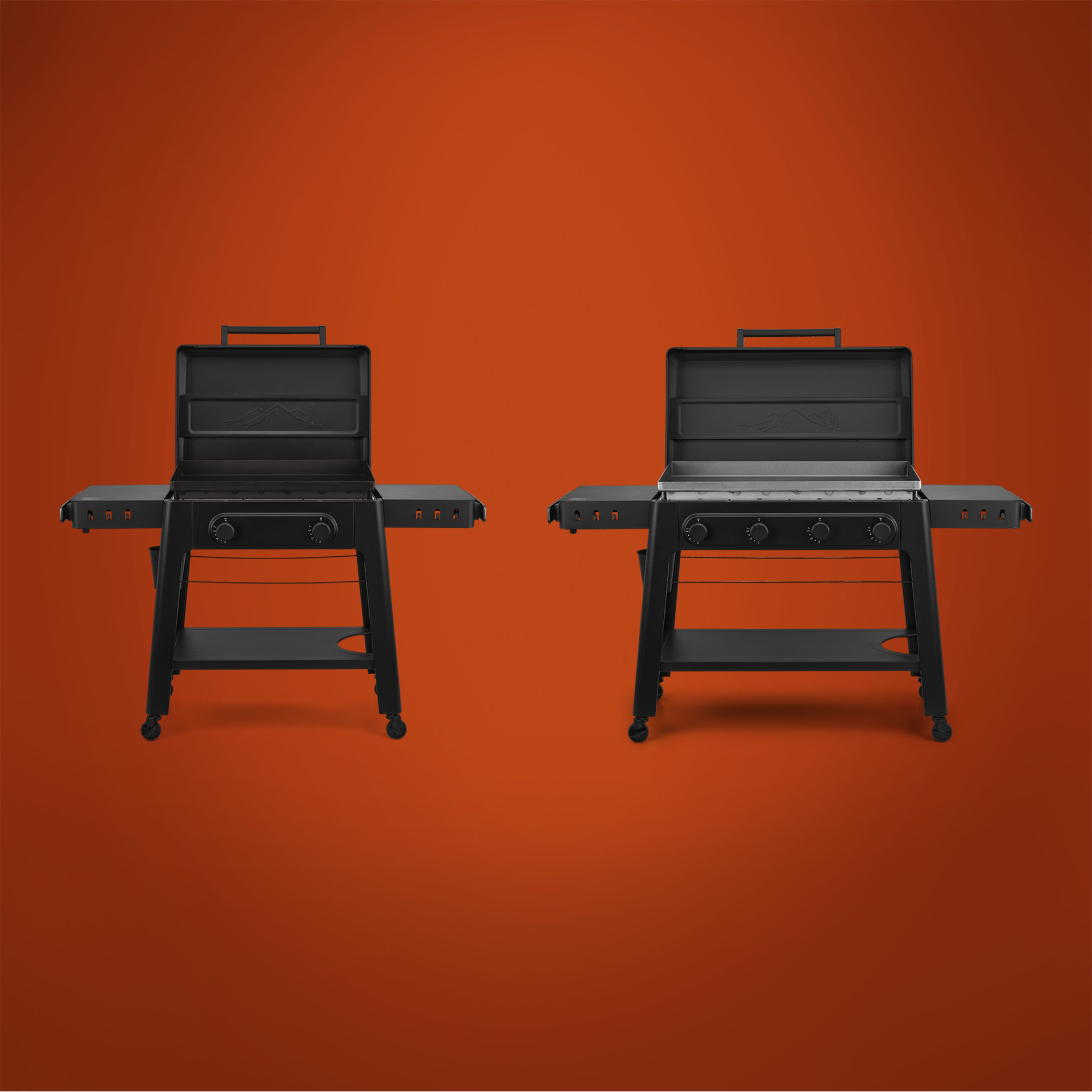
Traeger, the manufacturer that pioneered the wood-fired pellet grill industry, has officially announced the launch of its Irontop griddle line, marking a significant strategic expansion into the high-volume, entry-level flat-top grill market. This new series, comprising a two-burner and a four-burner model, is designed to bring premium heating technology to a broader consumer base with starting prices of $499 and $599, respectively. By introducing the Irontop series, Traeger is directly challenging established market leaders like Blackstone and Pit Boss, signaling a shift in the company’s long-term strategy to diversify its product portfolio beyond its traditional wood-pellet ecosystem. The Irontop series utilizes the "edge-to-edge" heating technology originally developed for the premium Traeger Flatrock, which debuted in 2023, but reconfigures it for a more accessible price point without sacrificing the core engineering that prevents common griddle issues such as hot spots and thermal inconsistency.
The Technical Engineering of the Irontop Series
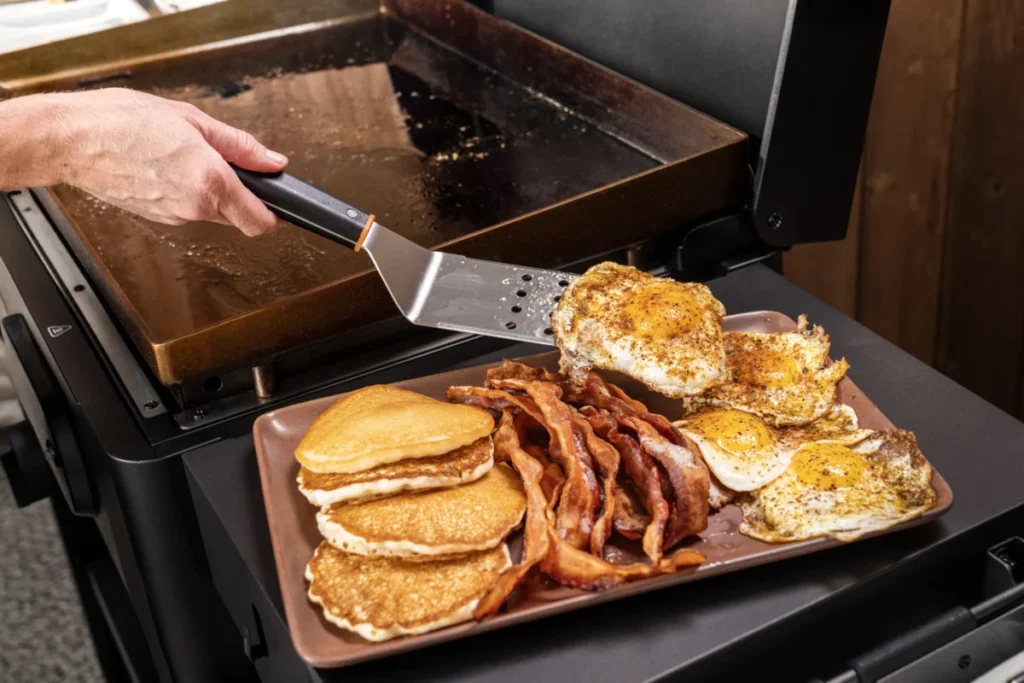
The primary engineering challenge in the gas griddle category has historically been the management of "thermal variance." In traditional, lower-cost griddles, the burners often create concentrated zones of intense heat directly above the flame, leaving the areas between burners and the edges of the cooktop significantly cooler. This discrepancy often forces outdoor cooks to rotate food constantly to ensure even doneness, a process that becomes increasingly difficult when managing high-volume meals like breakfast for a large group or a dozen "smashburgers" simultaneously.
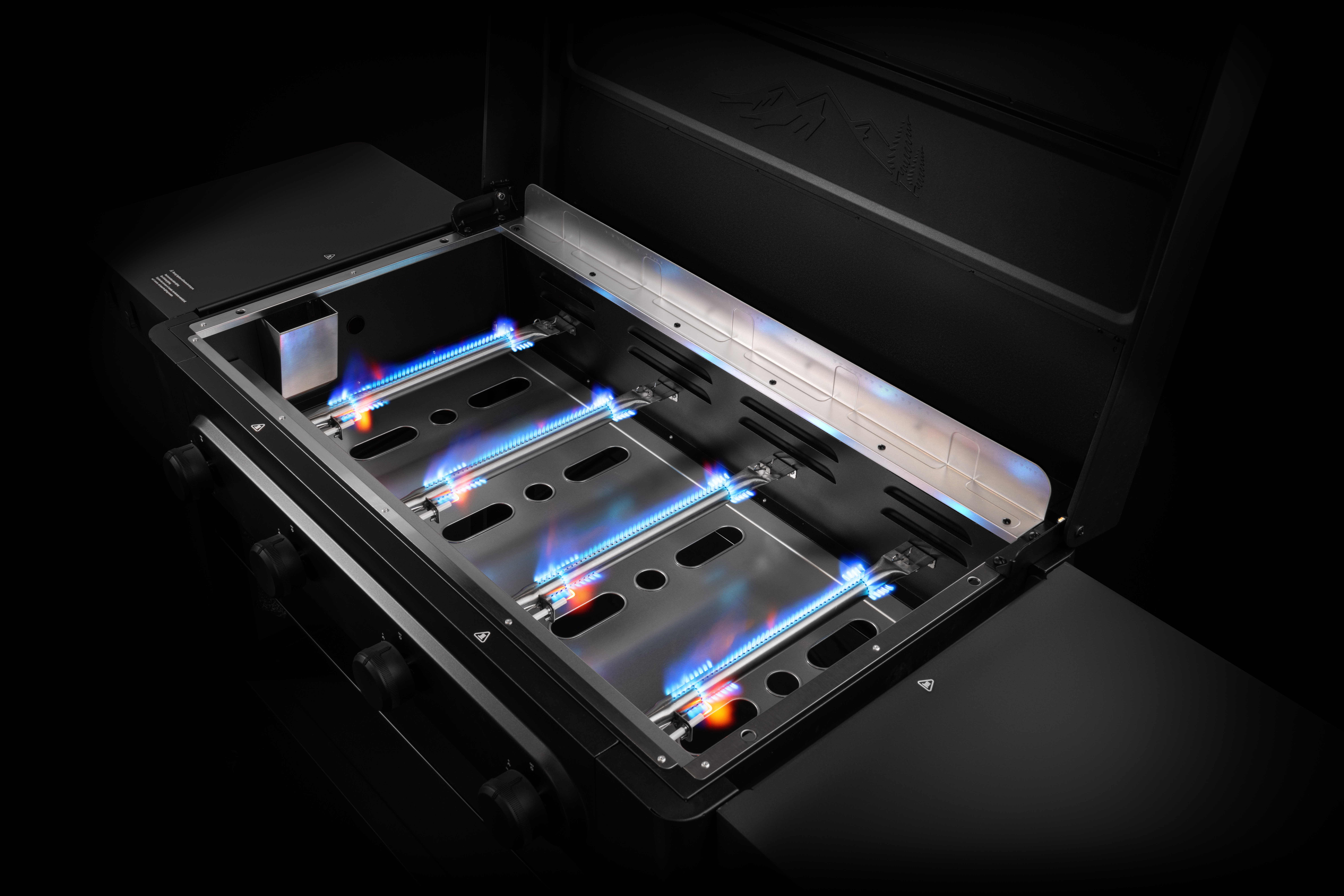
Traeger’s Irontop series addresses this through a recessed burner design and a specific cooktop architecture that promotes uniform heat distribution. The "edge-to-edge" heating system ensures that the temperature remains consistent across the entire steel surface, allowing users to utilize every square inch of the cooking deck. This is particularly vital for the 4-burner model, which offers 648 square inches of cooking space, and the 2-burner model, which provides 504 square inches.
Furthermore, the Irontop line incorporates integrated wind guards on the back and sides of the unit. In outdoor cooking environments, crosswinds are a leading cause of heat loss and fuel inefficiency, as they can strip heat away from the bottom of the cooking plate. By shielding the burners, Traeger claims the Irontop maintains a more stable temperature even in inclement weather, a feature that was once reserved for the higher-end Flatrock model. The cooking surface itself is made of cold-rolled steel treated with a rust-resistant, food-safe coating, designed to simplify the initial seasoning process and enhance long-term durability against the elements.
Chronology of Traeger’s Market Evolution
To understand the significance of the Irontop launch, it is necessary to examine Traeger’s trajectory over the last four decades. Founded in the 1980s, the company held a monopoly on pellet grill technology due to its original patents. For decades, the brand was exclusively associated with "low and slow" smoking and wood-fired flavor. However, as those patents expired and competition flooded the pellet grill market, Traeger began to innovate in adjacent categories.
In 2023, Traeger made its first major departure from wood-pellet fuel with the introduction of the Flatrock. This was a premium gas-powered griddle priced at $899, aimed at the "prosumer" market. While the Flatrock received positive reviews for its build quality and heat consistency, its price point kept it out of reach for the average consumer who typically looks at griddles in the $300 to $600 range.
The introduction of the Irontop in early 2025 represents the second phase of this evolution. By stripping away some of the luxury aesthetics of the Flatrock while retaining the internal heating mechanics, Traeger has created a mid-tier product that fills the gap between "disposable" entry-level griddles and high-end outdoor kitchen appliances. This move suggests that Traeger is no longer content being a niche "pellet grill company" and is instead positioning itself as a comprehensive outdoor cooking brand capable of competing in the gas, wood, and charcoal segments.
Market Context and Consumer Trends
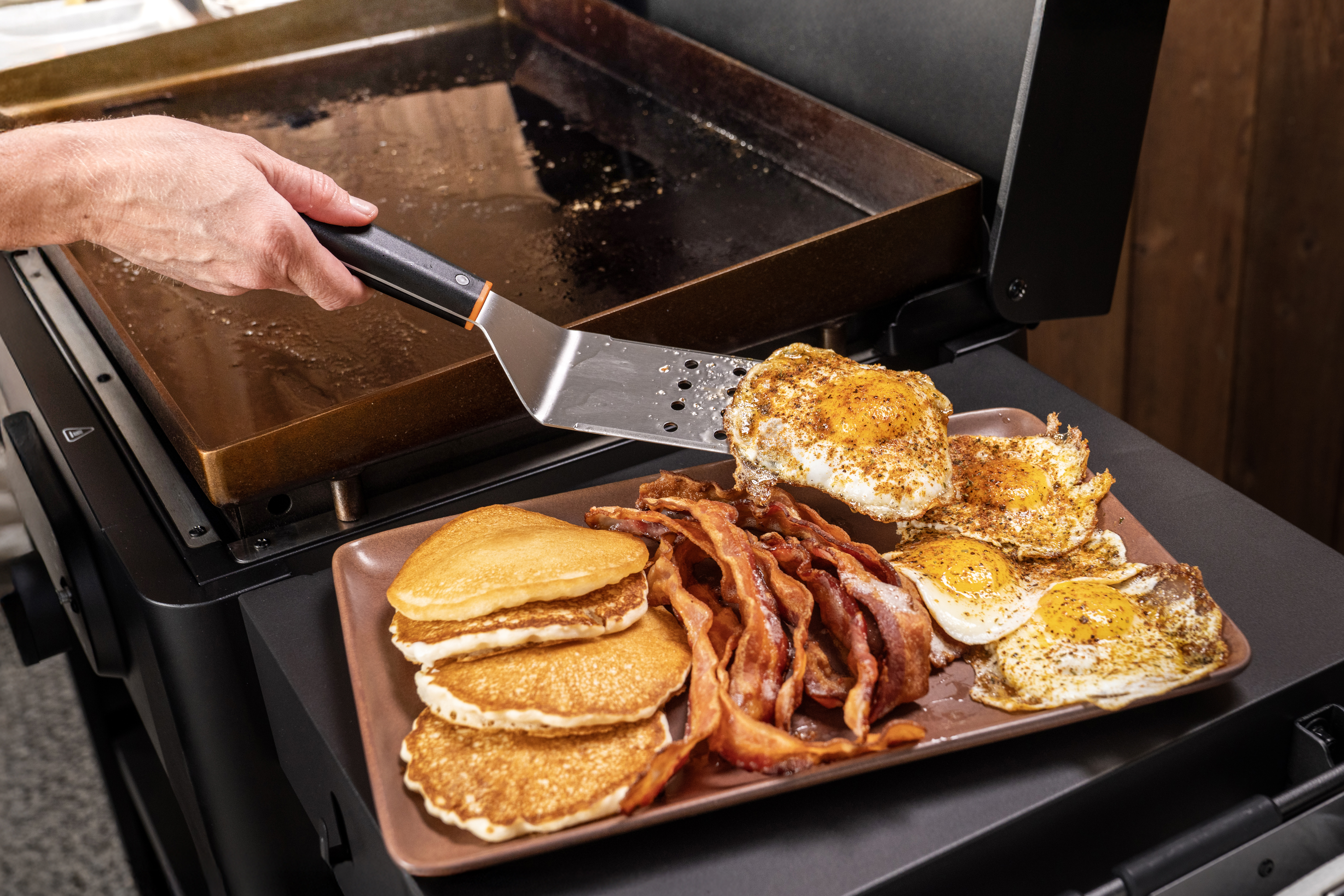
The launch of the Irontop series arrives at a pivotal moment for the outdoor living industry. Data from the Hearth, Patio & Barbecue Association (HPBA) indicates that griddles have been the fastest-growing sub-segment of the outdoor cooking market over the last five years. Unlike traditional grills, which are often limited to dinner-time proteins, griddles offer "three-meal-a-day" versatility, enabling users to cook eggs, pancakes, stir-fry, and delicate seafood that would otherwise fall through a standard grill grate.
The "smashburger" trend, popularized by social media and high-end burger chains, has also fueled the demand for flat-top cooking. Achieving the Maillard reaction—the chemical reaction between amino acids and reducing sugars that gives browned food its distinctive flavor—requires a high-temperature, flat surface that maximizes contact area. Traeger’s focus on edge-to-edge heat is a direct response to this consumer desire for professional-grade searing capabilities at home.
Economically, the $499 to $599 price bracket is the "sweet spot" for the American consumer. By pricing the Irontop 2-burner at $499, Traeger is targeting urban and suburban dwellers with limited patio or balcony space. The 4-burner model at $599 is aimed at the "family-and-tailgate" demographic, where the ability to manage multiple heat zones—such as a high-heat zone for searing steaks and a low-heat zone for sautéing onions—is a critical requirement.
Comparison of Irontop Models
The Irontop series is divided into two distinct configurations to meet different spatial and culinary needs:
- The Irontop 2-Burner ($499): Featuring 504 square inches of cooking space, this model is designed for portability and efficiency. It is the ideal choice for small families or those with restricted outdoor space. Despite its smaller footprint, it retains the same heavy-duty construction and wind-shielding technology as the larger unit. It is engineered to reach cooking temperatures quickly, making it a viable option for weeknight meals.
- The Irontop 4-Burner ($599): This model expands the cooking surface to 648 square inches and doubles the number of burners. The primary advantage of the four-burner setup is "zonal cooking." With four independent burners, a cook can create a temperature gradient across the surface. For example, the far-left burner can be set to "high" for searing meat, while the far-right burner remains on "low" to keep finished food warm or to gently cook vegetables. This level of control is often what separates professional-grade equipment from budget alternatives.
Strategic Implications and Industry Reactions
Industry analysts view the Irontop launch as a defensive and offensive maneuver. Defensively, Traeger is protecting its brand loyalty by providing an "all-Traeger" solution for customers who already own a pellet grill but want to add a griddle to their setup. Offensively, Traeger is using its brand prestige to lure customers away from Blackstone, which has dominated the griddle space with aggressive pricing but has occasionally faced criticism regarding build quality and heat distribution.
While official statements from competitors are rarely issued during a rival’s product launch, retail partners have noted that the "griddle wars" are intensifying. Sources within the retail sector suggest that Traeger’s entry into the $500 price point will likely force other manufacturers to upgrade their features—specifically regarding wind protection and surface coating—to remain competitive.
The broader implication for the consumer is a "trickle-down" of technology. Features that were once exclusive to $1,000+ units are now becoming standard in the mid-market. Traeger’s decision to include its premium rust-resistant coating and recessed burners in the Irontop line sets a new baseline for what consumers can expect for under $600.
Future Outlook for the Outdoor Cooking Category
As Traeger begins shipping the Irontop series through its website and authorized retailers, the company is also expanding its "Goods" line, which includes specialized griddle spatulas, scrapers, and seasoning oils. This "ecosystem" approach—selling the hardware, the accessories, and the consumables—is a proven model that Traeger perfected with its pellet grills and wood pellets.
Looking forward, the success of the Irontop will likely determine if Traeger continues to move down-market or if it will maintain its position as a "premium-entry" brand. If the Irontop captures significant market share, it could lead to further innovations in portable gas cooking or perhaps even electric griddling, as indoor-outdoor hybrid appliances continue to gain traction.
For now, the Irontop series represents a calculated bet that consumers are willing to pay a slight premium over the absolute cheapest options in exchange for better engineering, more reliable heat, and the brand assurance that comes with the Traeger name. With the outdoor cooking season approaching, the Irontop is positioned to be a central figure in the evolving landscape of the American backyard.