
The modernization of linguistic educational frameworks has highlighted the critical role of functional fluency in fostering international diplomacy and economic stability within the Mediterranean basin. As Greece continues to serve as a primary hub for global tourism and maritime trade, the acquisition of foundational Greek phrases has transitioned from a mere academic pursuit to a strategic necessity for travelers and expatriates alike. Modern Greek, or Demotic Greek, represents the final stage in a 3,400-year linguistic evolution, serving as the official language of the Hellenic Republic and Cyprus, while also functioning as a vital cultural bridge for a global diaspora exceeding seven million people.
The Historical and Social Context of Modern Greek
To understand the current linguistic landscape of Greece, one must examine the 1976 transition when Demotic Greek (Dimotiki) officially replaced Katharevousa, a purist form of the language that had created a state of diglossia for over a century. This shift toward a more accessible, vernacular-based standard has simplified the learning curve for non-native speakers, though the language retains its unique 24-letter alphabet and complex grammatical structures derived from ancient roots.
In the contemporary era, the Greek language serves as the backbone of an economy where tourism accounts for approximately 18% to 20% of the national Gross Domestic Product (GDP). According to data from the Bank of Greece, the country welcomed over 32 million international visitors in 2023, a record-breaking figure that underscores the importance of cross-cultural communication. While English proficiency is high in urban centers like Athens and Thessaloniki, the Greek National Tourism Organization (GNTO) has frequently noted that even a basic command of the local vernacular significantly enhances the quality of service and social integration for visitors.
Standardized Protocols for Social Interaction
In the Greek social hierarchy, the distinction between formal and informal address is paramount. This linguistic nuance, often referred to in linguistics as the T-V distinction, dictates the use of specific verb forms and pronouns based on the relationship between speakers.
The primary greeting, "Hello," is bifurcated into Yassas (Γεια σας) for formal or plural settings and Ya sou (Γεια σου) for informal interactions. Experts in sociolinguistics suggest that utilizing the formal Yassas when addressing elders, service staff, or strangers is a vital sign of "filoxenia"—the ancient Greek concept of hospitality toward strangers.
Supporting these greetings are the essential functional words:
- Yes: Ne (Ναι) – Often confusing for English speakers due to its phonetic similarity to "Nay."
- No: Ochi (Όχι) – Accompanied frequently by a subtle upward head tilt in non-verbal communication.
- Please/You’re Welcome: Parakalo (Παρακαλώ) – A versatile term used in both request and response.
- Thank you: Efcharisto (Ευχαριστώ) – Derived from the same root as "Eucharist."
- Sorry/Excuse me: Signomi (Συγγνώμη).
Temporal Greetings and Seasonal Etiquette
Communication in Greece is heavily influenced by the time of day, with specific greetings assigned to morning, afternoon, and evening slots.
- Good morning: Kalimera (Καλημέρα) – Generally used until 12:00 PM or 1:00 PM.
- Good evening: Kalispera (Καλησπέρα) – Used upon arrival in the late afternoon or evening.
- Have a good afternoon: Kalo apogevma (Καλό απόγευμα).
- Good night: Kalinihta (Καληνύχτα) – Exclusively used when departing or going to sleep.
The informal parting Ta leme (Τα λέμε), meaning "we’ll talk," has become the standard colloquialism for "see you later" among the younger demographic and in professional circles with established rapport.
Economic Implications and Survival Lexicon for Travelers
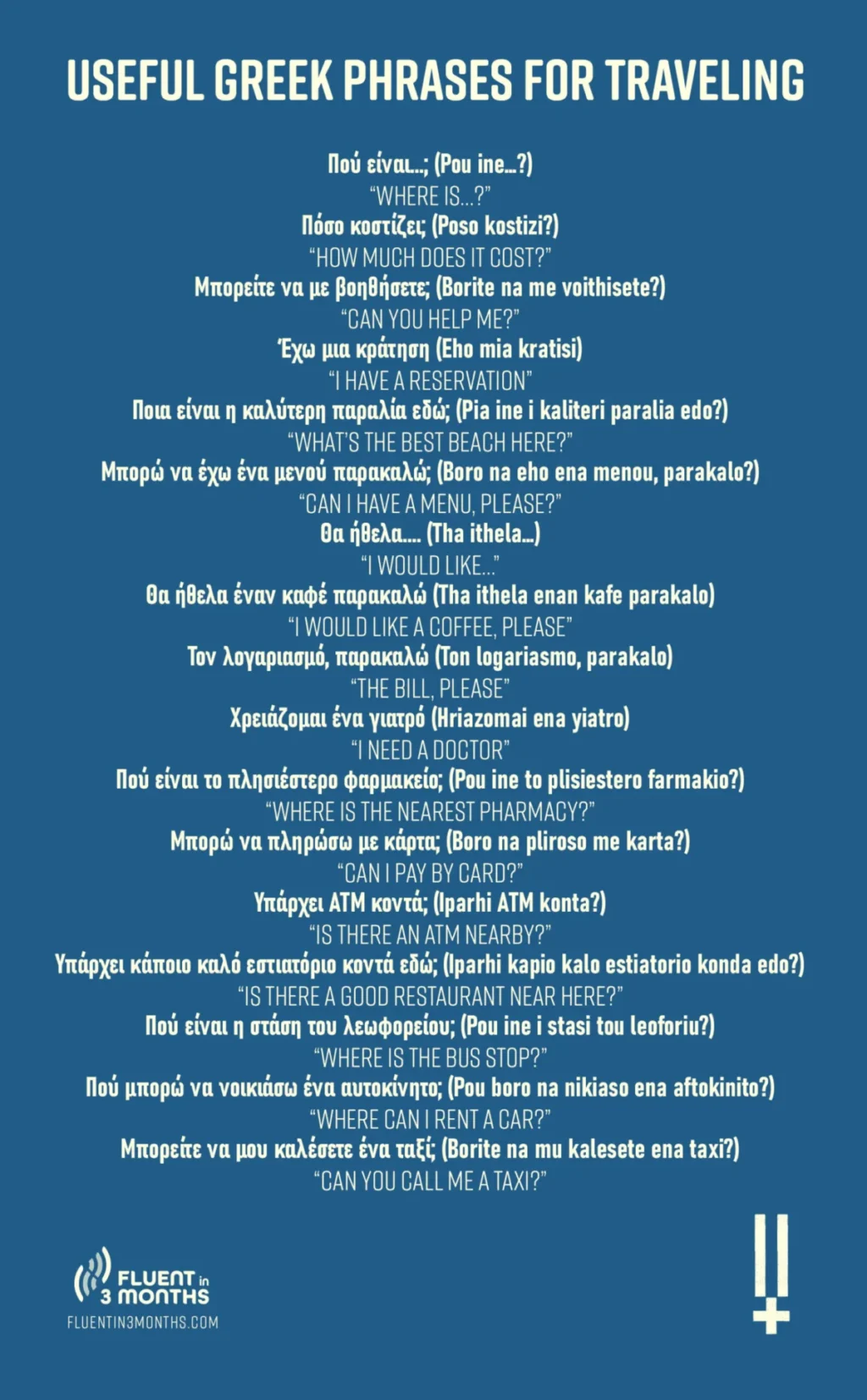
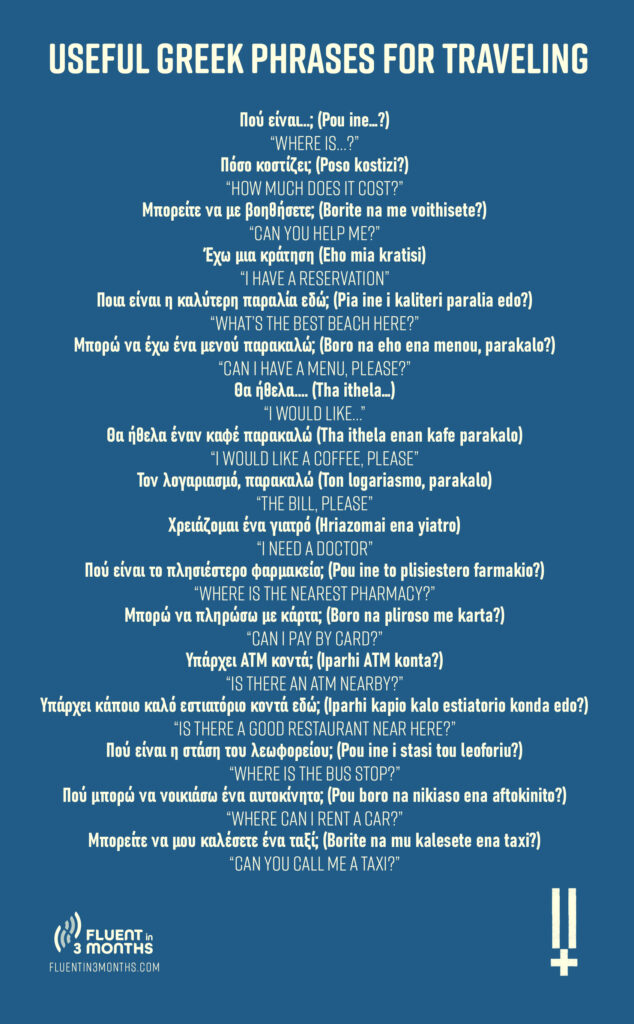
For the millions of travelers navigating the Greek islands and archaeological sites, survival phrases act as a form of social insurance. The ability to ask "How much is it?" (Poso kani?) or locate a pharmacy (Pou ine to plisiestero farmakio?) is essential for personal safety and consumer protection.
In the hospitality sector, dining is a cornerstone of the Greek experience. Standardized requests such as "Can I have the bill, please?" (Boro na eho ton logariasmo, parakalo?) or "I would like a coffee" (Tha ithela enan kafe) are the most frequently utilized phrases in the Athenian service industry. Data from hospitality surveys suggest that tourists who attempt these phrases are often met with higher levels of personalized service and cultural appreciation.
The integration of technology has also changed how these phrases are deployed. The rise of digital payment systems in Greece, mandated by recent tax reforms, has made the phrase "Can I pay by card?" (Boro na pliroso me karta?) a daily necessity. Despite the ubiquity of Point of Sale (POS) terminals, the question "Is there an ATM nearby?" (Iparhi ATM konta?) remains relevant in more remote mountainous regions or smaller island villages.
Personal Identity and Linguistic Diplomacy
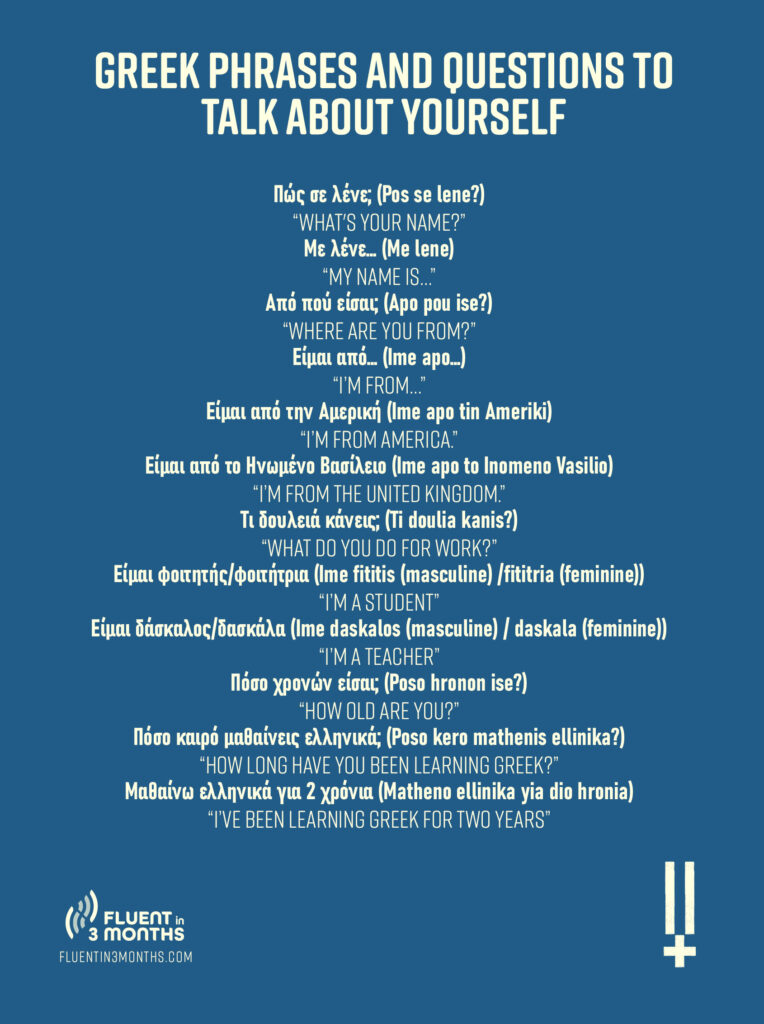
Language learning is fundamentally an exercise in identity. When a foreigner states "I am from…" (Ime apo…), they are engaging in a form of linguistic diplomacy that invites further conversation.
- I’m from America: Ime apo tin Ameriki (Είμαι από την Αμερική).
- I’m from the United Kingdom: Ime apo to Inomeno Vasilio (Είμαι από το Ηνωμένο Βασίλειο).
The inquiry into one’s profession—Ti doulia kanis?—and the duration of their language studies—Poso kero mathenis ellinika?—are common "ice-breaker" questions in Greek social circles. These interactions are often punctuated by the phrase Yamas! (Γεια μας!), meaning "to our health," the standard toast used during social drinking.
The Evolution of Colloquialisms and Modern Slang
A significant portion of modern Greek communication occurs in the realm of slang, which reflects the resilient and often ironic nature of the contemporary Hellenic spirit. The term malaka (μαλάκα), while technically a profanity, has evolved into a versatile filler word used among close friends to denote camaraderie, frustration, or emphasis. However, linguists warn that its use by non-native speakers carries a high risk of social friction if the context is misjudged.
Other informal markers include:
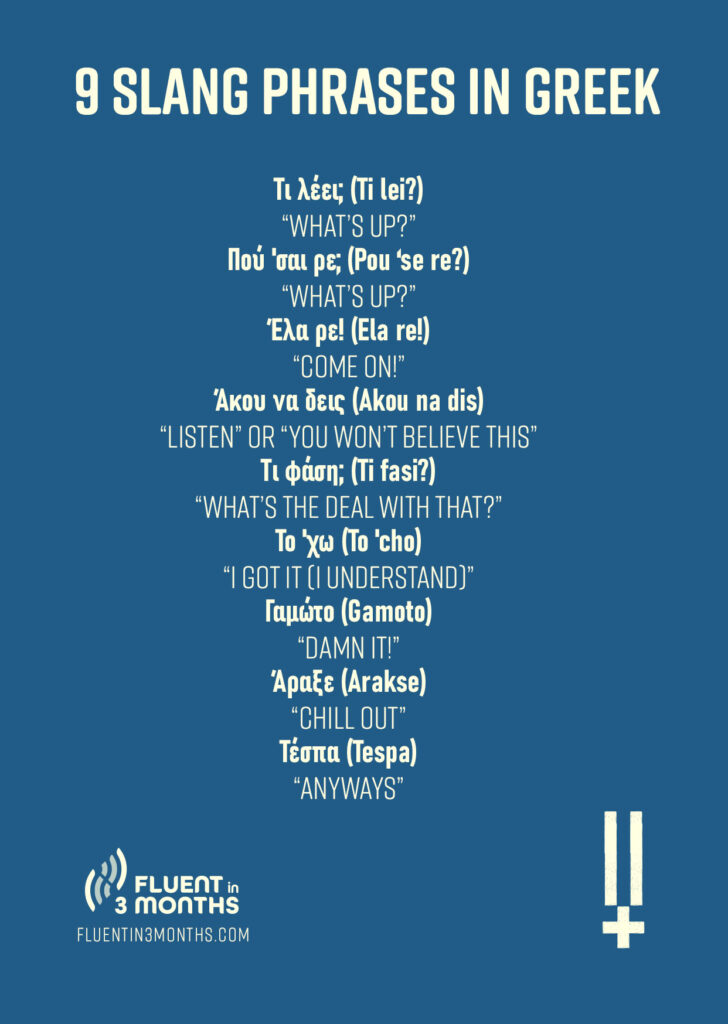
- Ela re!: (Έλα ρε!) – Literally "Come on," but used to express disbelief or excitement.
- Ti fasi?: (Τι φάση;) – "What’s the deal?" or "What’s going on?"
- To ‘cho: (Το ‘χω) – "I’ve got it" or "I understand."
- Arakse: (Άραξε) – "Chill out" or "Relax."
Philosophical Heritage: The Role of Proverbs
To achieve true fluency, one must comprehend the philosophical underpinnings of the language. Greek proverbs, or parimies, often reflect the agrarian history and Stoic traditions of the region.
- "Small in the eye, big in the heart": Suggests that value is not found in physical size but in emotional depth.
- "The good sailor is revealed in the storm": A maritime metaphor for resilience and character.
- "Better to have your eye out than your name out": Emphasizes the importance of reputation over physical well-being.
- "One swallow does not make a spring": A warning against making broad generalizations based on a single event.
- "Hungry bears don’t dance": A pragmatic acknowledgment that basic needs must be met before productivity or art can flourish.
Broader Impact and Global Language Trends
The surge in Greek language interest is reflected in digital metrics. Language learning platforms reported a significant uptick in Greek learners during the 2021-2023 period, coinciding with the post-pandemic travel boom. This trend is supported by the Greek Ministry of Education and Religious Affairs, which has expanded the reach of the "Certificate of Attainment in Greek," a standardized test for non-native speakers seeking residency or employment in the country.
Furthermore, the Greek diaspora—particularly in cities like Melbourne, Australia, and Astoria, New York—continues to act as a vital engine for the language’s survival. The "Greek Diaspora 2030" initiative aims to leverage these communities to promote Greek language education through digital immersion programs and cultural exchange.
In conclusion, the mastery of basic Greek phrases is more than a travel convenience; it is a gateway to understanding a culture that has shaped the foundations of Western thought. As the Hellenic Republic navigates the complexities of the 21st century, the language remains its most enduring and powerful asset. By engaging with these linguistic tools, travelers and students do more than communicate—they participate in a living history that continues to resonate across the globe.