


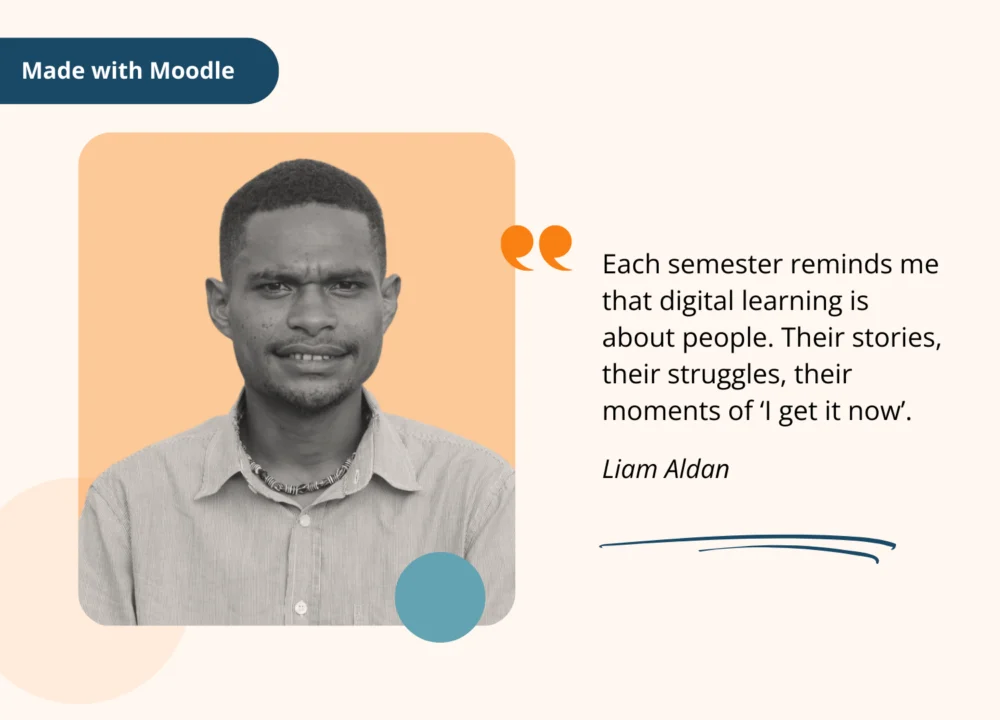
Divine Word University’s commitment to innovative online education is exemplified by the transformative work of Liam Aldan, a Moodle Learning Designer whose dedication to thoughtful course design has reshaped the student and faculty experience. In a series highlighting creative and impactful uses of the Moodle platform, Aldan’s four-year journey at the university in Papua New Guinea stands out, showcasing how meticulous attention to pedagogical principles can unlock the true potential of digital learning environments. This initiative, part of Moodle’s ongoing "Made with Moodle" series, aims to spotlight individuals who are pushing the boundaries of online education, and Aldan’s story provides a compelling case study.
The Genesis of a Learning Experience Designer
Aldan’s path to becoming a Moodle Learning Designer was not a preordained one. Instead, it was a journey fueled by curiosity and a deep-seated desire to support students in their academic pursuits. Initially, his role at Divine Word University (DWU) involved navigating existing digital courses, many of which, he observed, felt like "long corridors with closed doors." This metaphor powerfully captures the experience of students encountering digital learning spaces where information was present but lacked clear pathways for comprehension and application. Lecturers, too, faced significant time constraints, limiting their capacity to develop engaging Moodle courses or to effectively refine those already in use.
This observation led Aldan to a crucial realization: the true impact of digital learning lay not just in the delivery of content, but in the cultivation of meaningful and accessible learning experiences. This shift in perspective marked a pivotal moment, moving him from a course creation mindset to one focused on designing intuitive and supportive online environments.
A Four-Year Evolution: From Navigation Challenges to Engaging Journeys
Aldan’s tenure at Divine Word University, which began four years ago, has been characterized by a systematic and empathetic approach to improving the Moodle Learning Management System (LMS). His initial strategy involved deep engagement with academic staff. By actively listening to their challenges and understanding their unique teaching styles, Aldan gained invaluable insights that informed his design process. This collaborative approach was fundamental to his success.
Early Interventions and the ‘Opening Windows’ Metaphor
In the early stages of his work, Aldan focused on making the Moodle platform more navigable for both students and faculty. He recognized that diverse learners, often with varying levels of digital literacy and access, required an online environment that was not only functional but also welcoming and intuitive. His efforts to restructure courses, imbue them with clearer navigation, and integrate multimedia elements were likened to "opening a window" in each redesigned course. This vivid imagery suggests a transformation from confined, opaque spaces to bright, open environments that fostered greater engagement and understanding.
The impact of these initial changes was palpable. First-year students, who previously might have felt lost or overwhelmed, now had clear starting points and logical progression through their courses. Lecturers, initially intimidated by the technological demands of online course development, found themselves inspired and empowered by Aldan’s support and the enhanced capabilities of the platform.
Timeline of Transformation:
- Year 1-2: Foundation and Navigation Enhancement
- Initial assessment of existing Moodle courses and identification of usability issues.
- Development of consistent course templates to standardize structure and navigation.
- Introduction of basic multimedia elements (videos, images) to enhance content delivery.
- Focused training and support for academic staff on Moodle functionalities.
- Early student feedback highlighting improved course accessibility.
- Year 3: Deepening Engagement and Interactive Elements
- Integration of more sophisticated interactive elements: quizzes, interactive presentations, and discussion forums.
- Expansion of multimedia content, including curated external resources and internally produced videos.
- Refinement of assessment strategies within Moodle to promote deeper learning.
- Emergence of active student participation in course forums, fostering a sense of community.
- Year 4: Strategic Integration and Pedagogical Rethinking
- Development of consistent design principles across the entire Moodle platform.
- Ongoing support for staff in rethinking pedagogical approaches for online delivery.
- Exploration of advanced Moodle features for personalized learning pathways.
- Formal recognition of Aldan’s contributions through initiatives like the "Made with Moodle" series.
The Ripple Effect: Fostering a Vibrant Learning Ecosystem
The changes implemented by Aldan extended beyond mere structural improvements. Course forums, once underutilized, transformed into dynamic spaces for genuine academic discourse and peer-to-peer learning. The integration of interactive elements like videos, quizzes, and presentations injected vibrancy into the courses, actively encouraging student participation and engagement. This shift from passive content consumption to active learning is a cornerstone of effective online pedagogy.
Aldan’s approach also demonstrated a profound respect for the existing institutional knowledge. Rather than advocating for a complete overhaul, he focused on evolving what was already in place. This iterative process of building upon existing courses, while simultaneously introducing best practices in digital design, ensured a smoother transition and greater buy-in from faculty who had established teaching methods.
The Human Element: Stories of ‘I Get It Now’
For Liam Aldan, the most profound indicator of success lies in the human impact of his work. He frequently recalls a moment when a first-year student expressed, "I actually understand where everything is now." This simple yet powerful statement resonated deeply, reinforcing his belief that "thoughtful design really does change the learning experience – in ways people don’t always see." These "aha!" moments, where students grasp complex concepts or navigate a digital environment with confidence, are the ultimate validation of his efforts.
He emphasizes that digital learning, at its core, is about people. It’s about understanding their individual stories, their unique struggles, and ultimately, facilitating those critical moments of understanding and achievement. This human-centric philosophy guides his ongoing work, which now encompasses building consistent templates, integrating multimedia strategically, refining assessment methods, and collaborating with staff to reimagine the possibilities of online education.
Supporting Data and Institutional Impact
While specific quantitative data on DWU’s Moodle usage before and after Aldan’s interventions was not provided in the original content, the qualitative evidence points to significant improvements. Globally, institutions leveraging well-designed LMS platforms often report:
- Increased Student Engagement: Studies by organizations like Educause consistently show a correlation between well-structured online courses and higher levels of student engagement, participation, and retention. A 2023 survey indicated that 78% of students felt more engaged in courses with interactive elements compared to those with primarily text-based content.
- Improved Learning Outcomes: Thoughtful design that promotes active learning and clear progression has been linked to better student performance. Research published in the Journal of Online Learning and Teaching has demonstrated that courses with robust pedagogical design lead to higher completion rates and better grades.
- Enhanced Faculty Efficiency: By providing templates and training, institutions can reduce the time faculty spend on the technical aspects of course creation, allowing them to focus more on pedagogical content and student interaction. A report by the Online Learning Consortium suggested that well-supported faculty can reduce course development time by up to 30%.
- Greater Accessibility and Inclusivity: Intuitive design principles, coupled with multimedia options, cater to a wider range of learning styles and abilities, making digital education more accessible.
Divine Word University’s experience, as described by Aldan, aligns with these broader trends. The transformation from "long corridors with closed doors" to "opening windows" signifies a move towards a more accessible, engaging, and ultimately effective learning environment.
Broader Implications for Digital Education
Liam Aldan’s work at Divine Word University offers valuable insights for educational institutions worldwide grappling with the challenges and opportunities of online learning. His emphasis on a human-centric approach, coupled with a deep understanding of Moodle’s capabilities, underscores several key implications:
- The Critical Role of Learning Designers: The success of Aldan’s initiatives highlights the indispensable role of dedicated learning designers in modern educational settings. These professionals bridge the gap between technology and pedagogy, ensuring that digital platforms serve genuine learning needs.
- Iterative Design and Faculty Collaboration: Aldan’s strategy of honoring existing structures while facilitating evolution is a model for sustainable change. Collaborative partnerships with faculty, rather than top-down mandates, are crucial for fostering adoption and innovation.
- Beyond Content Delivery: The Experience Economy: The shift from "designing courses" to "designing learning experiences" is a paradigm shift. Educational institutions must prioritize the student journey, focusing on engagement, navigation, and the emotional and cognitive aspects of learning.
- Moodle as a Flexible and Powerful Tool: Aldan’s story is a testament to Moodle’s adaptability. When wielded by skilled designers, the platform can be transformed into a dynamic and responsive tool that caters to diverse pedagogical approaches and learner needs.
The "Made with Moodle" series aims to inspire by showcasing such impactful work. Liam Aldan’s dedication at Divine Word University serves as a powerful example of how thoughtful design, driven by a commitment to people, can profoundly transform the landscape of digital education, making learning more accessible, engaging, and ultimately, more effective for all. His journey is a reminder that behind every digital interface are individuals whose learning experiences can be fundamentally shaped by the care and intention invested in their creation.