


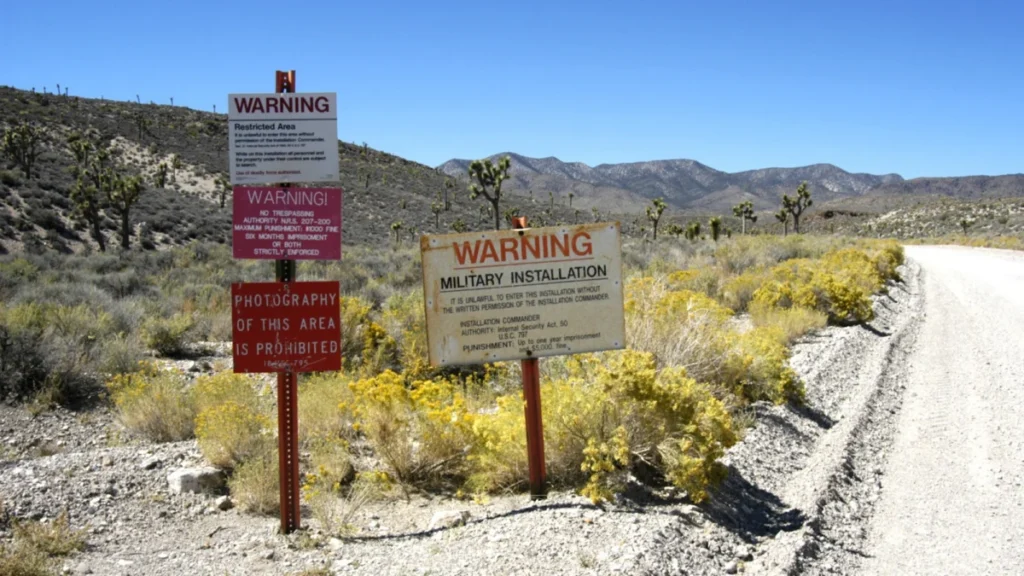
The United States Geological Survey (USGS) has recorded a significant cluster of seismic activity in the immediate vicinity of the Nevada Test and Training Range, a region more commonly known to the public as Area 51. According to official data released earlier this week, a swarm of at least 17 earthquakes occurred within a compressed 24-hour window, centered near the high-security military installation. These events, which ranged in magnitude from 2.5 to a peak of 4.4, have triggered intense scrutiny from both the scientific community and geopolitical analysts. While the remote desert of Nevada is no stranger to tectonic shifts, the specific location and shallow depth of these tremors—approximately 2.5 miles beneath the surface—have led experts to describe the occurrence as "unusual" and "noteworthy."
Geophysicist Stefan Burns, who has been monitoring the regional data, noted that the epicenter of the strongest shocks occurred in a geographic area not typically associated with frequent seismic clusters of this intensity. The event has reignited a complex dialogue involving national security, historical nuclear testing legacies, and the geological mechanics of the American West. As over 100 residents and observers reported feeling the vibrations, the lack of immediate explanation from military authorities has allowed a vacuum of information to be filled by both rigorous scientific hypothesis and speculative theory.
Chronology of the Rachel Swarm
The seismic sequence began in the early hours of the week, with a series of minor tremors that rapidly escalated in frequency. Data from the USGS Earthquake Hazards Program indicates that the first notable shocks occurred in the desert expanse northwest of Las Vegas, specifically near the small town of Rachel, Nevada. Rachel serves as the unofficial gateway for tourists interested in the mysteries of the Nevada National Security Site (NNSS) and the Groom Lake facility.
The timeline of the swarm shows a classic "cluster" pattern. Unlike a traditional earthquake which features a clear mainshock followed by decreasingly powerful aftershocks, this event saw multiple mid-range magnitudes occurring in quick succession. The peak magnitude of 4.4 is significant enough to be felt across several counties and can cause minor structural damage to sensitive equipment, though no such damage has been officially reported by the Department of Defense or local infrastructure managers.
The shallow nature of these events—calculated at roughly 4 kilometers (2.5 miles) deep—is a critical data point. In seismology, shallow quakes are often felt more intensely on the surface than deeper ones of the same magnitude. However, this depth also falls within the range historically used for underground industrial or military activity, which has naturally led to questions regarding the origin of the tremors.
The Legacy of Area 51 and Yucca Flat
To understand the weight of these seismic events, one must look at the historical context of the land on which they occurred. Area 51 was established in 1955 under the direction of the Central Intelligence Agency (CIA) for Project AQUATONE, the development of the Lockheed U-2 reconnaissance plane. For decades, the facility remained one of the most classified locations on Earth, serving as the proving ground for the A-12 spy plane, the F-117 Nighthawk stealth fighter, and various unmanned aerial vehicles.
Beyond its role in aerospace engineering, Area 51 shares borders with the Yucca Flat region of the Nevada Test Site. Between 1951 and 1992, the United States government conducted hundreds of nuclear tests in this vicinity. Initially, these were atmospheric detonations that created the iconic mushroom clouds associated with the early Cold War. However, following the Limited Test Ban Treaty of 1963, the military transitioned to underground testing to mitigate the risks of radioactive fallout.
Underground nuclear testing fundamentally altered the geology of the region. Subterranean detonations, such as the 1951 "Buster-Jangle Uncle" test, proved that the earth could contain the immediate blast effects of a nuclear device, but they also created massive subsidence craters and altered local fault lines. The deepest such test in U.S. history occurred in Alaska in 1971, reaching 6,000 feet, but the Nevada desert remains the most "cratered" landscape in the country due to these decades of high-energy experiments.
Analyzing the Potential for Resumed Nuclear Testing
The timing of the recent seismic swarm has coincided with a shift in American domestic policy and international relations. In February 2026, the final remaining nuclear arms control treaty between the United States and Russia expired, leaving a regulatory void that has not existed for decades. Former President Donald Trump has previously suggested a willingness to restart underground testing as a means of maintaining the technological edge of the U.S. nuclear stockpile.
This geopolitical backdrop has led some observers to speculate that the 17 earthquakes might actually be "seismic signatures" of a secret return to nuclear testing. However, nuclear weapons researchers and semiotic anthropologists, such as Martin Pfeiffer, argue that this hypothesis is highly unlikely. Pfeiffer, an expert in the cultural and technical aspects of nuclear weaponry, stated that nuclear detonations produce a very specific type of seismic wave.
"Nukes have a relatively distinctive seismic signal," Pfeiffer explained. "It is almost certainly not nukes." In a tectonic earthquake, the ground moves in a sliding or shearing motion, producing a mix of primary (P) and secondary (S) waves. In contrast, an explosion is a point-source event that pushes outward in all directions simultaneously, creating a dominant P-wave signature that is easily distinguishable to trained seismologists. Furthermore, the prep time required to resume nuclear testing after a 34-year hiatus is estimated by the Department of Energy to be at least 36 months—a timeline that does not align with the recent policy shifts.
The Role of Global Monitoring Systems
If the United States—or any nation—were to conduct a clandestine underground nuclear test, it would be nearly impossible to hide from the international community. The Comprehensive Nuclear-Test-Ban Treaty Organization (CTBTO) operates the International Monitoring System (IMS), a global network of sensors designed to detect even the smallest nuclear signatures.
Robert Floyd, the Executive Secretary of the CTBTO, recently reaffirmed the sensitivity of this network. The IMS can detect explosions with a yield equivalent to 500 tonnes of TNT anywhere on the planet. For context, this is a mere fraction of the power of the Hiroshima bomb. Beyond seismic sensors, the CTBTO utilizes infrasound detectors to listen for low-frequency sound waves in the atmosphere and radionuclide stations to sniff the air for radioactive isotopes that might leak from an underground cavity.
Modern signal detection technology has reached a level of precision where a 1.7-ton buried explosion can be identified with 97 percent accuracy. Given that the recent Nevada tremors were equivalent to magnitudes that would require massive amounts of explosives, the absence of an international alarm from the CTBTO strongly suggests that the events were of natural, tectonic origin.
Geological Perspectives: The Basin and Range Province
While the proximity to Area 51 invites speculation, geologists point to the "Basin and Range" province as a more logical culprit. Nevada is the third most seismically active state in the U.S., trailing only California and Alaska. The state’s crust is literally being pulled apart by extensional tectonic forces. This "stretching" of the Earth’s crust creates a series of north-south trending mountain ranges and flat valleys, separated by normal faults.
The Walker Lane, a 500-mile-long zone of faults running through western Nevada, is known to produce swarms of earthquakes. These swarms can last for days or weeks as the crust adjusts to internal pressures. While the Rachel swarm occurred east of the primary Walker Lane trend, it is situated within the same broad tectonic environment. Natural swarms are often characterized by a lack of a single massive shock, matching the data recorded by the USGS this week.
Broader Implications and National Security
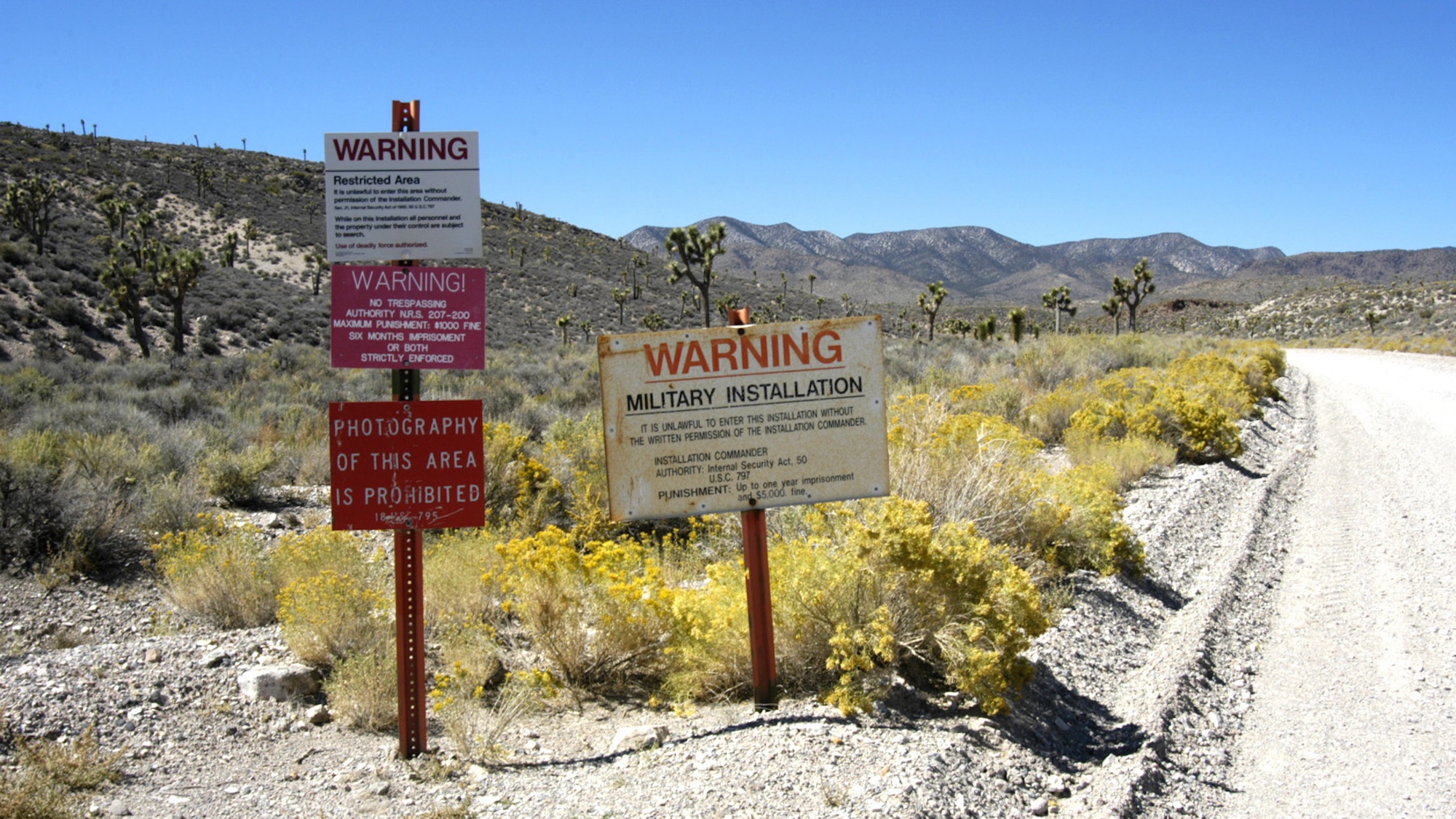
Despite the likelihood of a natural cause, the "Rachel Swarm" highlights the ongoing tension between public transparency and national security. The Nevada Test and Training Range remains a restricted airspace and ground territory where "black budget" projects are developed. Any seismic activity in this area will inevitably be viewed through the lens of suspicion, especially as global tensions rise and arms control treaties fail.
The incident also serves as a reminder of the environmental and geological legacy of the Cold War. The Nevada desert is a scarred landscape, and the interaction between ancient fault lines and man-made subterranean cavities remains a subject of study for environmental scientists. Whether the quakes were caused by the natural "unzipping" of the Nevada crust or were influenced by the weakened geology of former test sites, they underscore the volatility of the region.
As of this writing, the USGS continues to monitor the area for further activity. While the frequency of the shocks has slowed, the data collected from this 24-hour window will provide valuable insights into the subsurface mechanics of one of the world’s most mysterious geographical locations. For now, the "aliens and nukes" theories remain in the realm of folklore, while the reality of a restless Earth continues to provide the most compelling evidence.
The scientific consensus remains firm: the Earth beneath Area 51 is moving, but it is doing so according to the laws of geology, not the dictates of secret warfare. Nevertheless, the event has successfully reminded the world that even in the most desolate corners of the American desert, the ground is rarely truly still.