



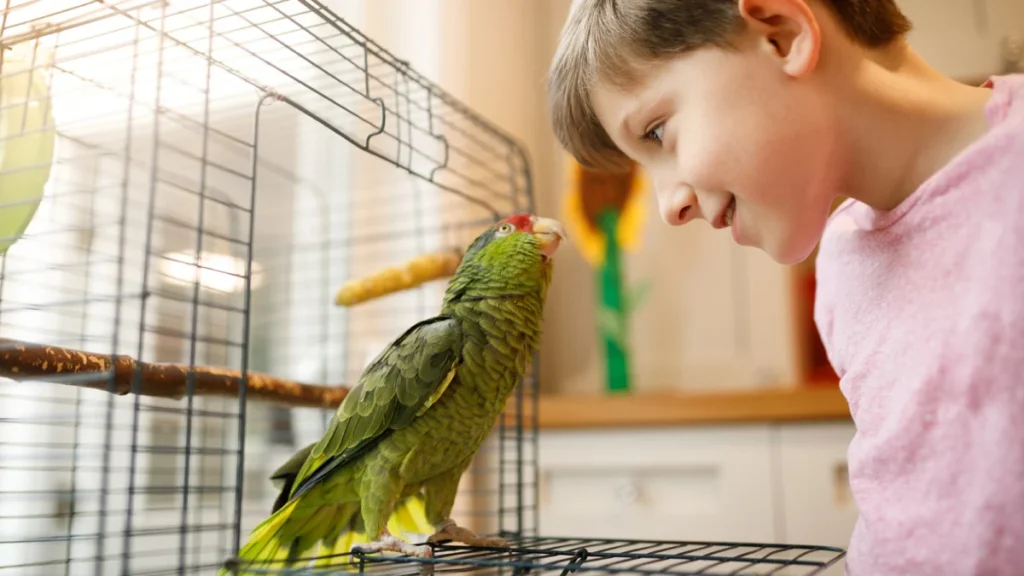
The phenomenon of avian mimicry, long a source of fascination and entertainment, is rooted in complex neurobiology and the fundamental evolutionary need for social cohesion. While the internet is replete with videos of parrots singing popular songs, barking like dogs, or engaging in what appears to be human conversation, researchers at institutions such as the Cornell Lab of Ornithology and various neurobiology departments have identified that these behaviors are far more than mere party tricks. For vocal learners—a select group of birds that includes parrots, songbirds, and hummingbirds—the ability to replicate sounds is a sophisticated tool used to forge bonds, define territories, and navigate the intricate social hierarchies of their environments.
The Biological Hardware: The Syrinx and the Song System
To understand how birds "talk," one must first examine the unique physiological structures that distinguish them from other vocalizing animals. Unlike humans, who produce sound using the larynx located at the top of the trachea, birds possess a specialized organ called the syrinx. Located deep within the chest at the junction where the trachea splits into the lungs, the syrinx is a marvel of evolutionary engineering.
The syrinx allows birds to use nearly 100 percent of the air passing through it to create sound, making it significantly more efficient than the human larynx. Furthermore, because the syrinx is situated at the bifurcation of the bronchial tubes, many bird species can control the two sides of the organ independently. This enables them to produce two different frequencies simultaneously, creating complex harmonies or rapidly alternating sounds that human vocal cords cannot replicate.
Supporting this physical hardware is a specialized neural architecture known as the "song system." In parrots, specifically, this system is uniquely organized. Research led by Mukta Chakraborty at Duke University has highlighted that parrot brains contain a "core" and a "shell" structure within their vocal learning centers. While all vocal-learning birds have the core, parrots possess an outer shell that researchers believe is responsible for their superior ability to mimic human speech and other environmental sounds. This neural plasticity allows them to continue learning new sounds throughout their lives, a trait known as "open-ended learning."
The Evolutionary Motivation: The Search for a Flock
In the wild, vocal mimicry serves a critical social function. Parrots are obligate socialites, living in large, complex flocks where communication is vital for survival. Ornithologists have observed that wild parrots develop "contact calls"—unique vocal signatures that allow individuals to identify one another and maintain group cohesion.
When these birds are brought into captivity, their social instincts remain intact, but their environment changes. In a domestic setting, the human owner and other household pets become the bird’s "flock." Because parrots are evolutionary programmed to mirror the behaviors and sounds of their social group to fit in, they begin to mimic the dominant sounds of the household: human speech.
This behavior is a form of social grooming. By replicating the words and tones of their owners, birds are essentially signaling their membership in the family unit. This explains why a bird might mimic a specific greeting when a person enters the room or bark when the family dog is nearby. They are not merely repeating sounds; they are attempting to engage with the social dynamics of their environment.
A Chronology of Avian Linguistics and Research Milestones
The study of avian intelligence and speech has evolved significantly over the last century, moving from the view of birds as "mindless mimics" to recognizing them as cognitively complex beings.
- 1950s–1970s: Early behavioral studies focused on the mechanics of song learning in passerines (songbirds), establishing the concept of "critical periods" for vocal acquisition.
- 1977: Dr. Irene Pepperberg began her landmark work with Alex, an African Grey parrot. Over 30 years, Alex demonstrated that he could not only mimic words but understand concepts such as color, shape, matter, and zero. This research fundamentally shifted the scientific consensus on bird intelligence.
- 1994: Puck, a budgerigar (budgie), entered the Guinness World Records for the largest human vocabulary of any bird, boasting 1,728 words. Puck’s ability to form original sentences suggested a level of grammatical processing previously thought impossible for birds.
- 2015: Research published in PLOS ONE identified the "shell" structure in parrot brains, providing the first neurobiological explanation for why parrots are better mimics than other vocal learners.
- 2023–2024: Recent studies have focused on "vocal labeling," finding evidence that parrots in the wild use specific sounds to name their offspring, and that captive parrots may use human names to get the attention of specific individuals.
Cognitive Association vs. True Understanding
A persistent debate in the scientific community is whether birds understand the meaning of the words they speak. While most researchers agree that birds lack the deep semantic understanding of human language, they excel at "associative learning."
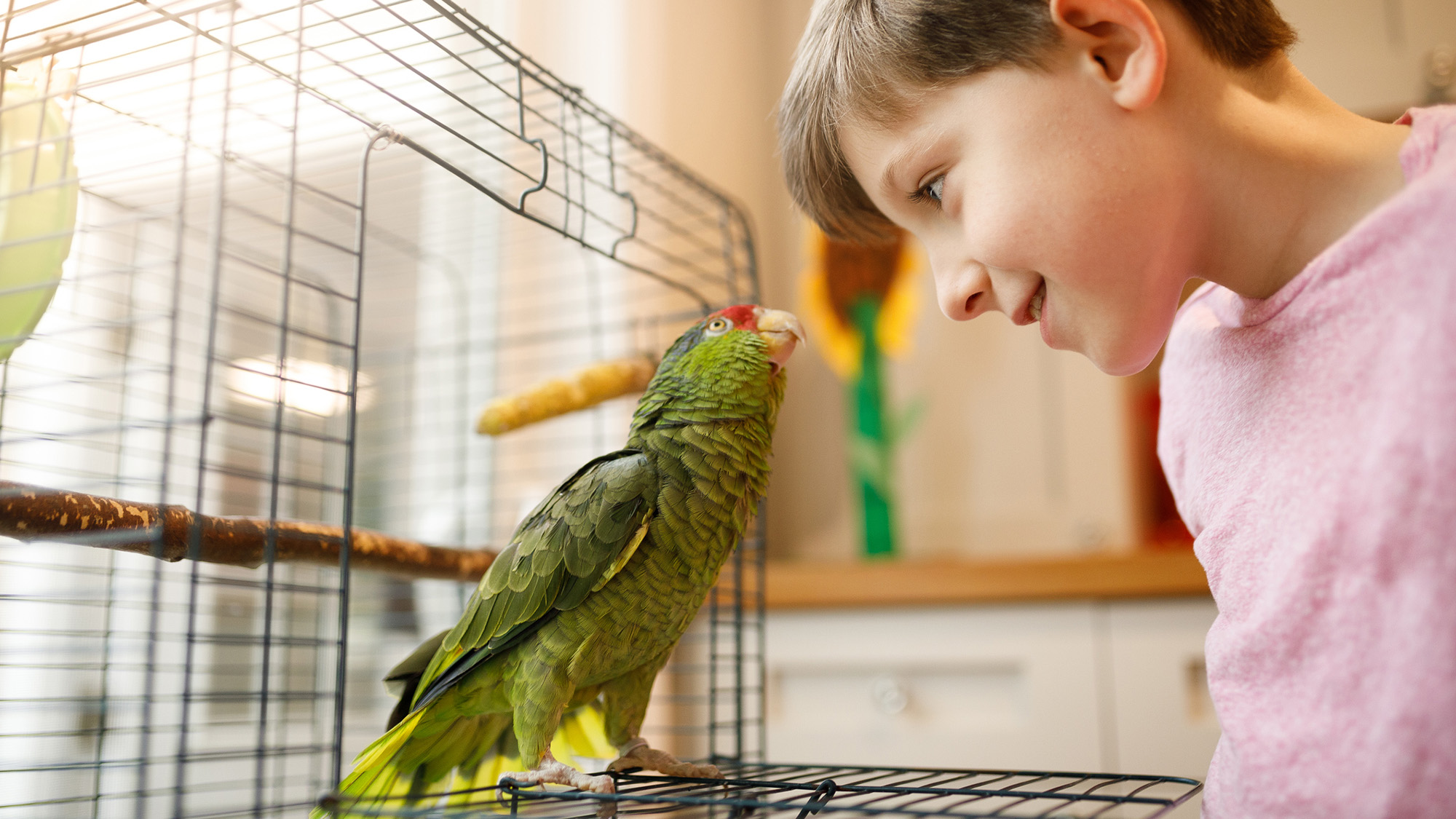
For instance, if a bird says "cracker" and receives a treat, it quickly learns the association between the vocalization and the reward. However, the depth of this association can be surprising. Many parrot owners report that their birds use "contextual speech"—saying "goodnight" only when the lights are dimmed or "hello" only when the telephone rings. This indicates that the birds are processing environmental cues and choosing the appropriate vocal response based on the situation.
Data from studies on Chickadees further illustrates this complexity. While not mimics of human speech, Chickadees use a "D" note in their calls to signal danger. Analysis shows that the number of "D" notes increases based on the size and proximity of a predator. This structured, rule-based communication system suggests that the foundations of syntax and information-sharing are present in the avian brain, even if they manifest differently than human linguistics.
Regional Dialects and Avian Slang
One of the most striking findings in recent ornithological research is the existence of regional dialects among wild bird populations. Much like human accents or regional slang (such as "hoagie" versus "sub"), parrots in different geographical areas develop distinct vocal variations.
In a study of yellow-naped amazons in Costa Rica, researchers found that vocalizations changed across different regions and that these dialects remained stable over decades. However, at the "borders" of these regions, some birds were found to be "bilingual," capable of communicating in both dialects. This suggests that vocal learning is a culturally transmitted trait rather than a purely genetic one. For a social bird, learning the local "slang" is essential for being accepted into a new flock, further reinforcing the theory that mimicry is a tool for social integration.
Broader Implications and Official Perspectives
The scientific community’s growing understanding of avian speech has significant implications for animal welfare and conservation. Dr. Margherita Bassi and other contributors to Popular Science emphasize that because talking is a social behavior, a bird that stops vocalizing or begins to scream may be experiencing social isolation or distress.
"When we look at the neurobiology of these birds, we see a brain that is wired for connection," says the editorial team at Popular Science. "Mimicry is an olive branch. It is an animal’s way of bridging the gap between species."
Furthermore, conservationists are using these insights to improve the success of reintroduction programs. By ensuring that captive-bred birds are exposed to the correct "dialects" of their wild counterparts before release, scientists can increase the likelihood that the birds will be accepted into wild flocks, thereby improving survival rates.
Analysis of the Human-Avian Bond
The ability of birds to mimic human speech creates a unique psychological feedback loop. Humans are naturally inclined to attribute intelligence and emotion to entities that speak their language. This anthropomorphism, while scientifically debated, has led to a deeper societal valuation of avian species.
However, the "brilliance" of the talking bird also serves as a reminder of the responsibilities of ownership. Parrots are long-lived—often reaching 50 to 80 years of age—and their high intelligence means they require constant mental stimulation and social interaction. The same "song system" that allows them to sing Rihanna songs also makes them prone to boredom and psychological issues if they are treated as mere ornaments rather than social partners.
In conclusion, the chatty parrot or the talking raven is not just a mimic; it is a biological marvel equipped with a sophisticated vocal organ and a brain wired for complex sociality. Their ability to learn our names and mimic our voices is a testament to the evolutionary power of the need to belong. As research continues to peel back the layers of the avian "shell" and "core," it is likely that we will find even more evidence that the gap between human language and animal communication is narrower than we once believed.