


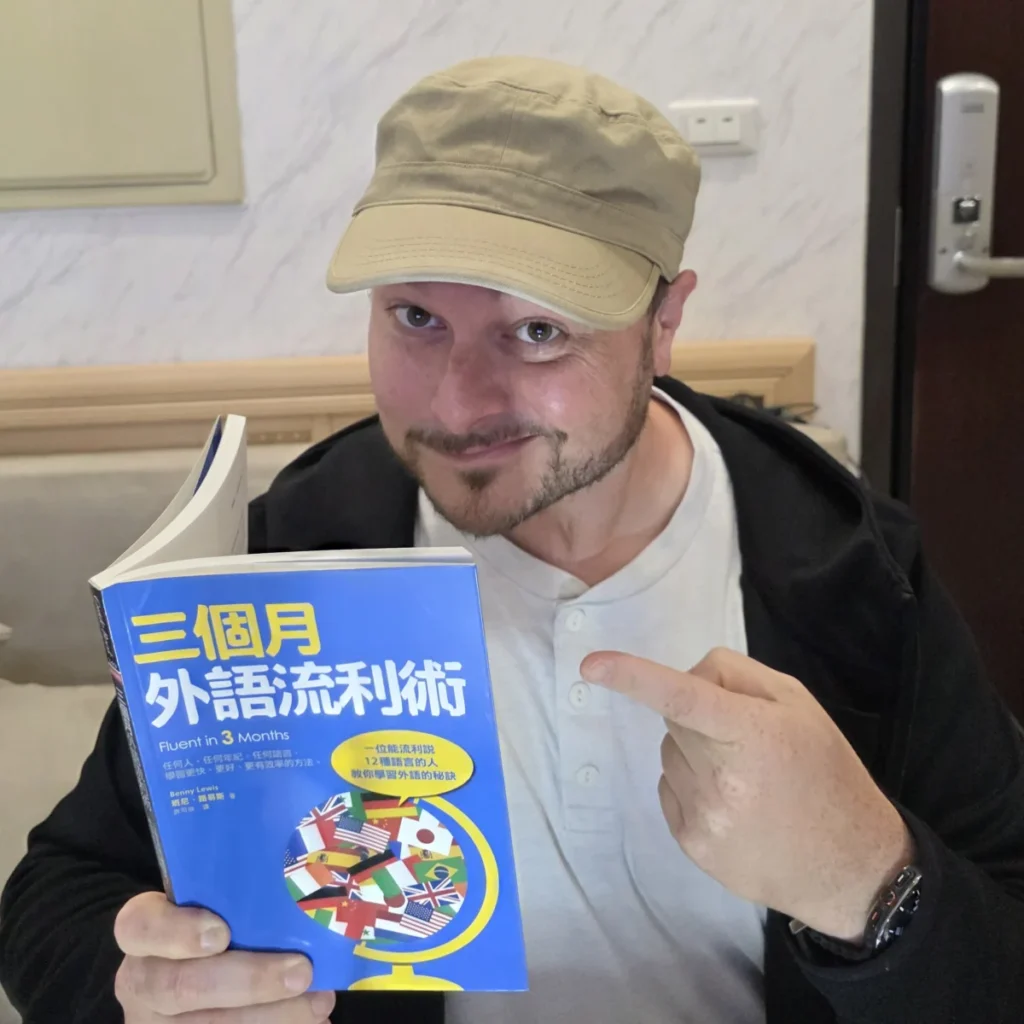
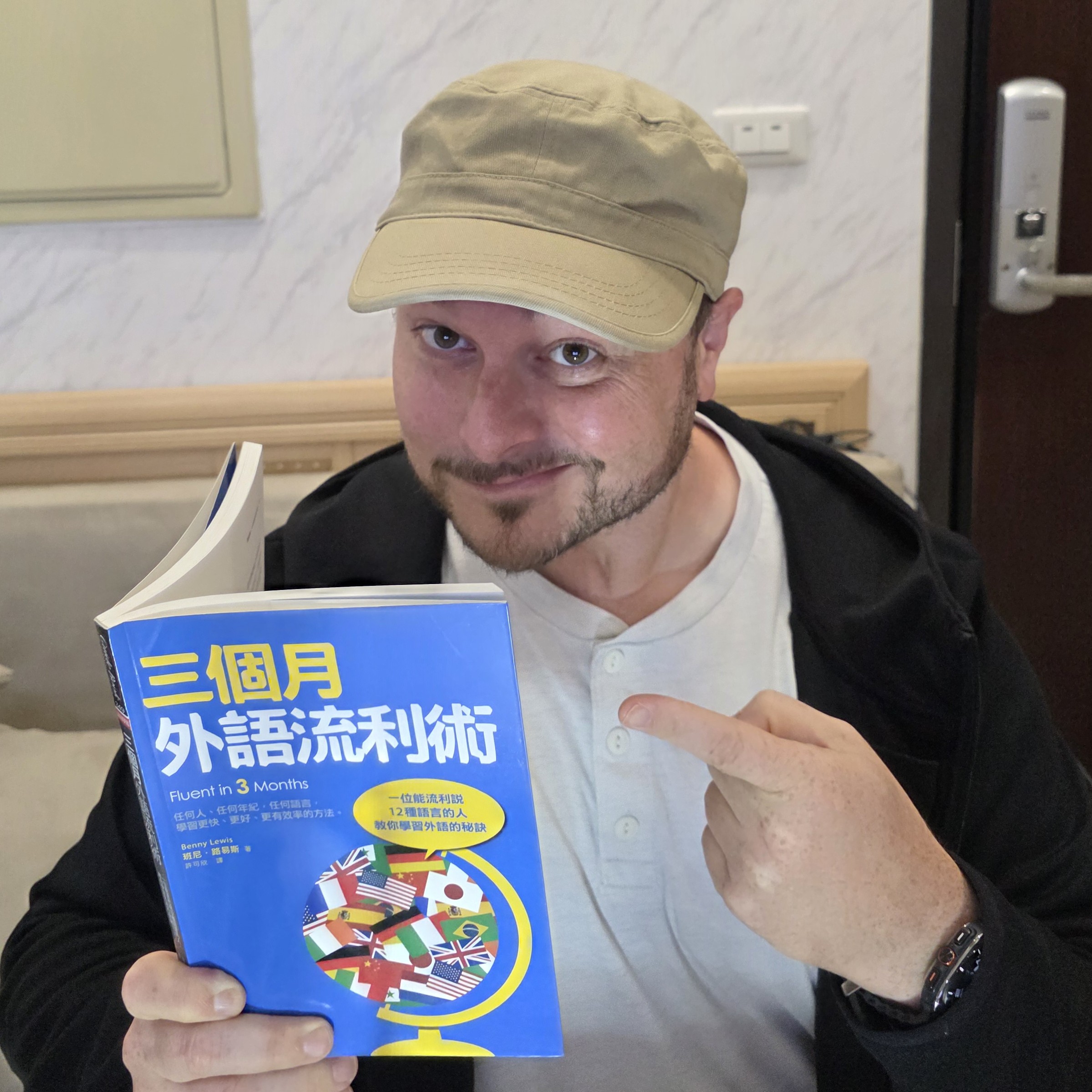
Benny Lewis, the internationally recognized polyglot and founder of the "Fluent in 3 Months" platform, has officially returned to Taipei, Taiwan, to initiate a comprehensive revitalization of his Mandarin Chinese skills. This move marks a significant full-circle moment for the Irish author and language consultant, occurring exactly 14 years after his initial high-profile Mandarin project in the same city. The return to Taipei is not merely a personal refresher course but serves as the launchpad for a broader "Deep Travel" initiative that aims to explore the linguistic and cultural nuances of Taiwan beyond its metropolitan capital.
The current project represents a strategic pivot for Lewis, who has spent the last decade managing a large-scale language learning enterprise. By returning to the field as an active student, Lewis is signaling a shift back to the experiential, boots-on-the-ground blogging style that originally defined his career between 2009 and 2013. This transition comes at a time when the language learning industry is grappling with the rise of generative artificial intelligence and shifting search engine algorithms, which Lewis suggests have prioritized "AI-generated slop" over authentic human experience.
A Historical Retrospective: The 2012 Mandarin Mission
To understand the significance of Lewis’s return to Taiwan, one must look back to his 2012 "Mandarin Mission." At the time, it was one of the most documented and debated projects in the online language-learning community. Lewis spent three months in an intensive immersion environment in Taipei, followed by two months of travel across mainland China. The project concluded with an independent evaluation that placed his spoken proficiency at a B1 level on the Common European Framework of Reference for Languages (CEFR), signifying a lower-intermediate ability.
While the 2012 project was a functional success—allowing Lewis to interview television presenters and study Kung Fu in rural Chinese fishing villages—it was also fraught with stress and controversy. Critics within the linguistics community often debated the efficacy of his "Speak from Day One" methodology when applied to tonal languages like Mandarin. Lewis has since acknowledged that the intensity of the 2012 mission created unnecessary pressure, a factor he intends to mitigate during his 2024 residency by adopting a more balanced, sustainable routine.
In the intervening years, Lewis’s Mandarin proficiency saw a gradual decline, a phenomenon known in linguistics as language attrition. Aside from a brief intensive period during the co-authoring of the "Language Hacking Mandarin" coursebook, his use of the language was relegated to sporadic interactions at international language exchange events. The decision to re-immerse in Taipei was catalyzed by a recent two-month journey through Malaysia, where Lewis encountered the significant Chinese diaspora and realized the enduring utility of the language in a global context.
The 2024 Pedagogical Framework: Modernizing the Routine
The methodology Lewis is employing in 2024 reflects an evolution in language acquisition strategies, blending traditional academic study with modern technological tools. Unlike his 2012 approach, which focused almost exclusively on social immersion and spoken output, the current routine incorporates a structured focus on grammatical accuracy and digital reinforcement.
Systematic Grammar and Character Study
Lewis has integrated a daily regimen of grammar study at local cafes, utilizing textbooks that specifically address the nuances of Taiwanese Mandarin. This is a critical distinction, as Taiwanese Mandarin (Guoyu) differs from the Mainland Standard (Putonghua) in terms of vocabulary, certain pronunciations, and the use of Traditional versus Simplified characters. For an intermediate learner, Lewis argues that grammar becomes a "central focus" necessary for achieving natural-sounding sentence structures, a departure from his advice for absolute beginners, whom he encourages to prioritize basic communication over technical rules.
Digital Reinforcement and Spaced Repetition
A cornerstone of the revitalization project is the recovery of legacy data. Lewis successfully retrieved and updated 14-year-old Anki decks—software based on Spaced Repetition Systems (SRS)—which contained vocabulary specifically tailored to his personal conversational history from 2012. The technical challenge of converting these files to modern formats highlights the longevity of his commitment to the language. By focusing on vocabulary that was once relevant to his daily life, Lewis is leveraging the "self-reference effect," a psychological phenomenon where individuals remember information more effectively when it is related to their own experiences.
Hybrid Tutoring Models
In addition to self-study, Lewis utilizes a hybrid model of human and artificial intelligence. He employs professional tutors via platforms like Preply to provide the "momentum" necessary to overcome the initial "rusty" phase of language retrieval. Concurrently, he has integrated AI-driven conversation tools to supplement his learning, providing a cost-effective way to practice output in a low-stakes environment.
The Taipei Immersion Environment: A Case Study in Linguistic Persistence
Taipei serves as a unique laboratory for language immersion. Despite its status as a global tech hub and a major tourist destination, Lewis notes that English proficiency is not as ubiquitous as many Western travelers might expect. This "linguistic friction" is a vital component of his learning strategy.
Early in his current stay, Lewis reported an incident at a local Starbucks where a barista did not understand a basic request for an espresso in English. This forced an immediate mental retrieval of the Mandarin term "nóngsuō kāfēi." Such encounters, while initially frustrating, serve as "forced immersion" points that prevent the "laziness" often found in expatriate communities where English acts as a crutch.
Furthermore, the social landscape of Taipei presents specific challenges. Lewis observed that many language exchange events in the city are "sit-down" affairs involving large groups, which can be intimidating for learners whose listening comprehension is still adjusting to noisy environments and native-speed speech. His strategy involves a gradual transition: starting with smaller interactions and moving toward large-group fluency as his confidence and auditory processing improve.
Comparative Analysis: The Global Mandarin Learning Market
Lewis’s return to Mandarin study coincides with a complex era for the language. According to data from the Chinese Ministry of Education, as of 2023, over 180 countries have integrated Chinese language teaching into their national education systems, with an estimated 30 million people learning the language outside of China. However, the choice of Taiwan as a study destination has seen a resurgence among Western learners who prefer the island’s democratic environment and the preservation of Traditional Chinese characters.

| Feature | Mainland China (Putonghua) | Taiwan (Guoyu) |
|---|---|---|
| Writing System | Simplified Characters | Traditional Characters |
| Phonetic System | Pinyin | Bopomofo (Zhuyin) / Pinyin |
| Cultural Context | Socialist Modernization | Traditional/Democratic Hybrid |
| Learning Motivation | Global Business/Trade | Cultural Heritage/Academic |
By choosing Taipei, Lewis is aligning himself with a specific subset of the Mandarin-learning community that values the "Traditional" script, which is often cited as being more etymologically rich, albeit more complex to write by hand.
Broader Implications: Blogging and the Age of "AI Slop"
A significant portion of Lewis’s update addresses the changing landscape of digital content creation. He critiques the current state of the internet, where search engine results are increasingly dominated by AI-generated snippets that aggregate advice without lived experience. Lewis reveals that his platform, "Fluent in 3 Months," has intentionally scaled back on "search-optimized" articles in favor of returning to long-form, human-centric narratives.
This "anti-AI" stance is a strategic move to preserve the authenticity of the "Fluent in 3 Months" brand. Lewis asserts that while AI can be a tool for rephrasing or grammar correction, the "soul" of language learning lies in the "personal experiences of actual humans in the world." This sentiment echoes a growing trend among content creators who are seeking to differentiate themselves from automated content by emphasizing "deep travel" and unique, non-replicable human interactions.
Future Outlook: The "Deep Travel" Expansion
The Taipei residency is only the first phase of a broader national project. Lewis intends to spend several weeks traveling through the various provinces of Taiwan, a "Deep Travel" concept he has previously applied to Brazil, the United States, and South Korea. By moving beyond the internationalized environment of Taipei, Lewis aims to test his Mandarin in regions where English speakers are even rarer, thereby solidifying his transition from B1-level "maintenance" to a more robust, permanent fluency.
This upcoming expedition is designed to provide a comprehensive look at the linguistic diversity of the island, including the influence of Taiwanese Hokkien on local Mandarin dialects. For the global audience of "Fluent in 3 Months," Lewis’s journey serves as a real-time case study in adult language re-acquisition, demonstrating that even after a decade of decline, a language can be reclaimed through a combination of geographical immersion, modern technology, and psychological resilience.
As Lewis moves forward with his Taiwan project, he continues to document the process for his followers on social media, emphasizing that the goal is not perfection, but the ability to connect with people and cultures in their own tongue. The project stands as a testament to the idea that language learning is not a one-time achievement but a lifelong cycle of engagement, loss, and rediscovery.