


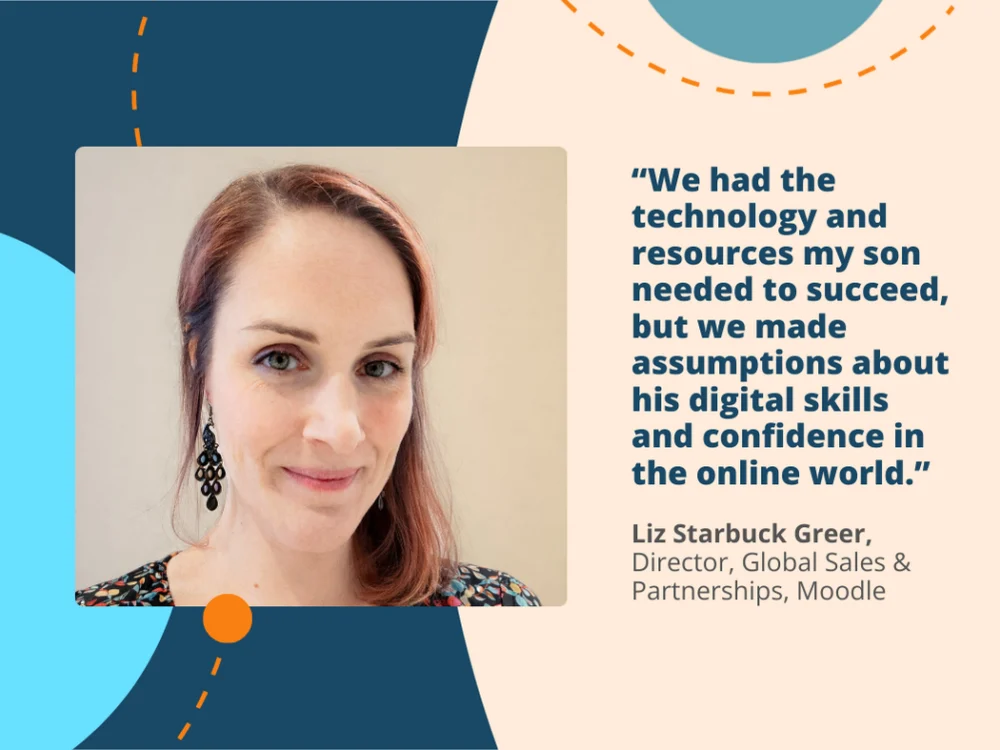
The landscape of education has been irrevocably altered by the rapid integration of digital technologies, a shift that has brought both unprecedented opportunities and complex challenges. Liz Starbuck Greer, an advocate for understanding learner experiences through the lens of "digital capital," recently shared a poignant personal anecdote that underscores a critical distinction often overlooked in educational circles: the difference between digital confidence and digital competence. This distinction, Greer argues, is paramount for educators and institutions seeking to design effective and equitable online learning environments.
Greer’s insights, initially presented at MoodleMoot Global 2025 and further elaborated in a Moodle podcast, revolve around the concept of digital capital. This multifaceted construct encompasses not just access to technology, but also the crucial elements of skills, prior experience, and social support networks that collectively determine an individual’s capacity to navigate and leverage digital tools. The core argument is that simply providing access – bridging the so-called "digital divide" – is insufficient to ensure equal participation or academic success. The how and why of technology use, and the tangible benefits derived from it, form a far more comprehensive picture. By adopting a holistic perspective on the digital advantages or disadvantages learners bring, educational designers can craft experiences that foster better outcomes for all.
The Unforeseen Challenges of Emergency Remote Learning
The genesis of Greer’s realization stemmed from a personal experience during the COVID-19 pandemic. Her son, a newly minted high school student in the United Kingdom, found his transition to secondary education abruptly interrupted by the nationwide lockdown. The sudden pivot to emergency online learning, a scenario that thrust millions of students into uncharted territory, proved to be a surprisingly arduous ordeal for him, despite his family’s seemingly robust digital resources.
While Greer herself was immersed in managing the demands of her professional life – a role that involved assisting hundreds of business school students, supporting anxious faculty, and supervising a younger child – her son began to exhibit signs of disengagement. This quiet disaffection, initially unnoticed amidst the family’s collective strain, would soon reveal a deeper underlying issue.
The Greer household was, by many societal standards, exceptionally well-equipped for the digital transition. They possessed a stable, high-speed internet connection, multiple computing devices, and a household where technological proficiency was a given. Both Greer and her husband were professionals whose daily work relied heavily on digital tools, and they had personal experience with online learning. Greer, in fact, was actively involved in the complex process of transforming an entire MBA program into an online format, demonstrating a deep understanding of digital pedagogy. Furthermore, their children had grown up accustomed to using technology to maintain connections with family and friends across distances. Her son, a proficient and enthusiastic gamer, displayed a high degree of comfort and skill in digital entertainment environments. Collectively, the family ranked high on the "digital capital" scale.
The Stark Revelation: "Untitled Documents" and Uncharted Territory
The alarm was finally sounded when a teacher contacted Greer, expressing concern that her son was falling behind on assignments and had been absent from scheduled online classes. This news was met with disappointment, both in her son’s perceived lack of effort and in their own failure to recognize the developing problem sooner. The realization dawned that her son, at his age, lacked the inherent self-discipline to navigate the unstructured nature of remote learning when the established routines and expectations of in-person schooling were removed.
A subsequent conversation, marked by tears and a shared desire to rectify the situation, led to an attempt to assess his academic standing. When Greer asked her son to retrieve the exercise he was working on, he navigated to his school’s cloud storage and presented a daunting array of "hundreds of versions of ‘Untitled Document’." This chaotic digital landscape was a stark indicator of the profound disconnect between his digital familiarity and his actual academic application of technology.
The ensuing discussion revealed the extent of the misjudgment. Her son did not possess the foundational skills required for organized digital work. He was unfamiliar with the simple act of naming a document or creating a dedicated folder for his assignments. His typing skills were rudimentary, and he struggled to locate the necessary materials. Crucially, he lacked the knowledge of how to formulate and send an email to seek clarification, a critical communication channel in any online learning environment. The inconsistent approaches adopted by different teachers for distributing and collecting work further compounded his confusion, leaving him adrift and unsure of his responsibilities. Greer admitted to assuming that the school’s systems would be inherently more robust, a sentiment she recognized might mirror her own students’ perceptions of her faculty. The consequence was clear: her son had become lost and disengaged, ultimately giving up on the learning process.
Redefining Design: Accounting for Learners’ Digital Realities
Greer’s experience serves as a powerful case study for the broader implications of digital capital in education. She emphasizes that possessing the necessary technology and resources does not automatically equate to success. "Strength in one digital arena doesn’t promise success in another," she states, highlighting the crucial distinction between social digital use and academic digital use.
Even in a post-pandemic era, where online learning has become more normalized, the core issue persists. Educators can easily fall into the trap of assuming that all online learners possess the requisite digital skills. However, not all students opt for online learning by choice, and their proficiency in social digital interactions does not necessarily translate to academic efficacy. Until they are actively engaged in the learning process, learners may be unaware of the specific digital skills they lack.
The choices made by Greer’s son’s teachers, while perhaps well-intentioned and executed under difficult circumstances, led to a cascade of inconsistent expectations and processes. While educators often value the autonomy to design and deliver their courses as they see fit, this freedom can inadvertently create significant obstacles for students.
Strategies for Inclusive Digital Learning Environments
Greer advocates for a more deliberate and thoughtful approach to designing online learning experiences, one that actively accounts for the diverse digital realities of learners. Clarity and consistency in course structure, navigation, and the explicit signposting of tasks and resources are invaluable for all students, but particularly crucial for those with lower levels of digital capital.
Instructors and learning designers can actively cultivate learners’ digital skills and confidence through several key strategies:
- Providing Clear and Explicit Instructions: Detailing precisely what is expected for each task, including file naming conventions, folder structures, and submission methods.
- Modeling Expectations for Learner Interactions: Demonstrating appropriate online communication etiquette, how to ask questions effectively, and how to engage in respectful discourse.
- Proactive Check-ins and Support: Regularly monitoring student progress and intervening when individuals appear to be struggling or disengaging. This could involve targeted outreach, offering additional resources, or providing one-on-one support.
- Standardizing Digital Processes: Where possible, institutions can implement standardized tools and workflows for communication, assignment submission, and resource sharing to reduce cognitive load for students.
- Developing Digital Literacy Resources: Offering optional workshops, tutorials, or readily accessible guides that cover essential digital skills relevant to online learning.
Greer’s son, thankfully, was able to overcome the challenges he faced and move forward. However, his experience serves as a potent reminder for educators designing future online learning environments. The "superpower" of platforms like Moodle, she notes, lies not only in their technological capabilities but also in their vibrant communities of supportive colleagues who are eager to share knowledge and best practices.
The implications of Greer’s observations extend far beyond individual anecdotes. In an era where online and blended learning models are becoming increasingly prevalent, understanding the nuances of digital capital is essential for promoting educational equity. Institutions that invest in developing robust digital literacy support for both students and faculty, and that prioritize clear, consistent, and accessible online learning design, will be better positioned to ensure that all learners have the opportunity to succeed. As the educational landscape continues to evolve, the ability to distinguish between the superficial appearance of digital familiarity and the deeper, functional competence required for academic achievement will be a defining factor in creating truly inclusive and effective learning experiences. The challenge lies in moving beyond assumptions and embracing a design philosophy that actively supports every learner’s journey into the digital realm of education.