


The Biological Context of the Ephemeroptera Order
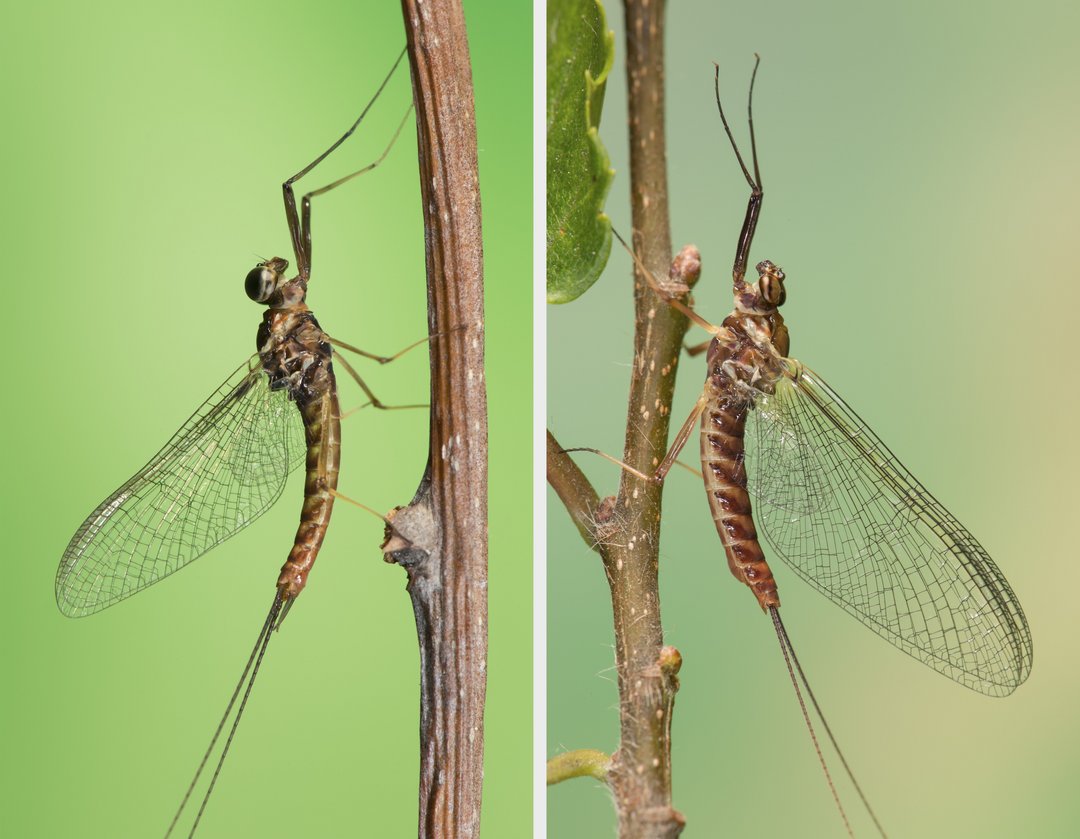
Mayflies, belonging to the order Ephemeroptera, represent some of the oldest winged insects still in existence, with a fossil record dating back over 300 million years to the Carboniferous period. The name Ephemeroptera is derived from the Greek words "ephemeros," meaning "short-lived," and "pteron," meaning "wing." This nomenclature reflects the most striking aspect of their biology: an adult life that often lasts only a few hours or days.
The life cycle of a mayfly is divided into two distinct phases. The majority of their existence—anywhere from several months to several years—is spent underwater as nymphs or larvae. During this stage, they are vital components of freshwater ecosystems, serving as a primary food source for fish and birds and acting as bioindicators of water quality. However, once they undergo their final molts to reach the "imago" or adult stage, their biology undergoes a radical shift. Adult mayflies possess no functional mouthparts or digestive systems; their gut fills with air to aid in buoyancy and flight, and their sole purpose shifts entirely to reproduction.
Methodology: The "Shock-Freeze" Technique in the Black Forest
The research team, based primarily at the State Museum of Natural History Stuttgart and the Karlsruhe Institute of Technology, focused their efforts on the species Ecdyonurus venosus. The fieldwork took place in the Black Forest region of Germany, a location known for its pristine streams and high biodiversity.
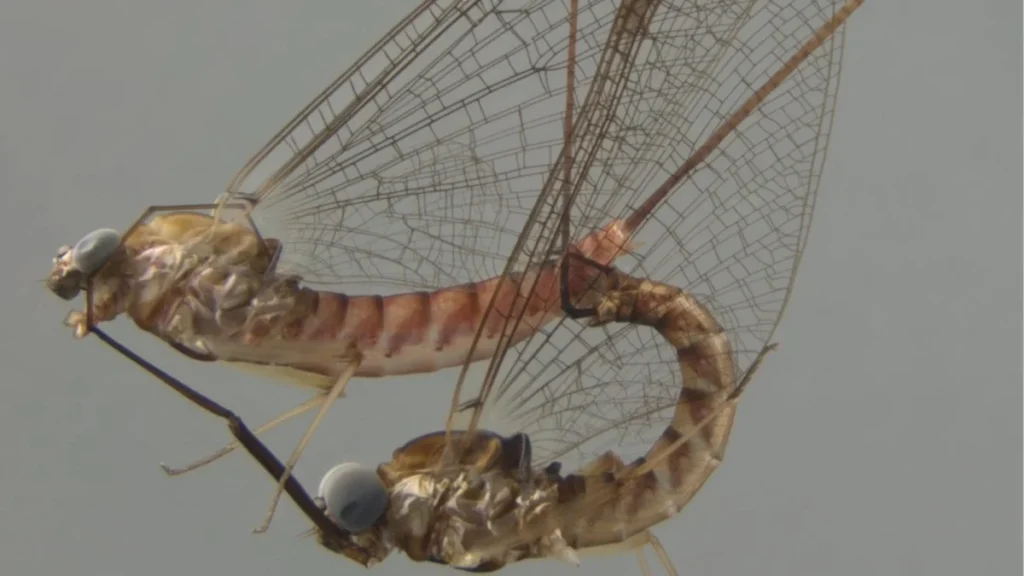
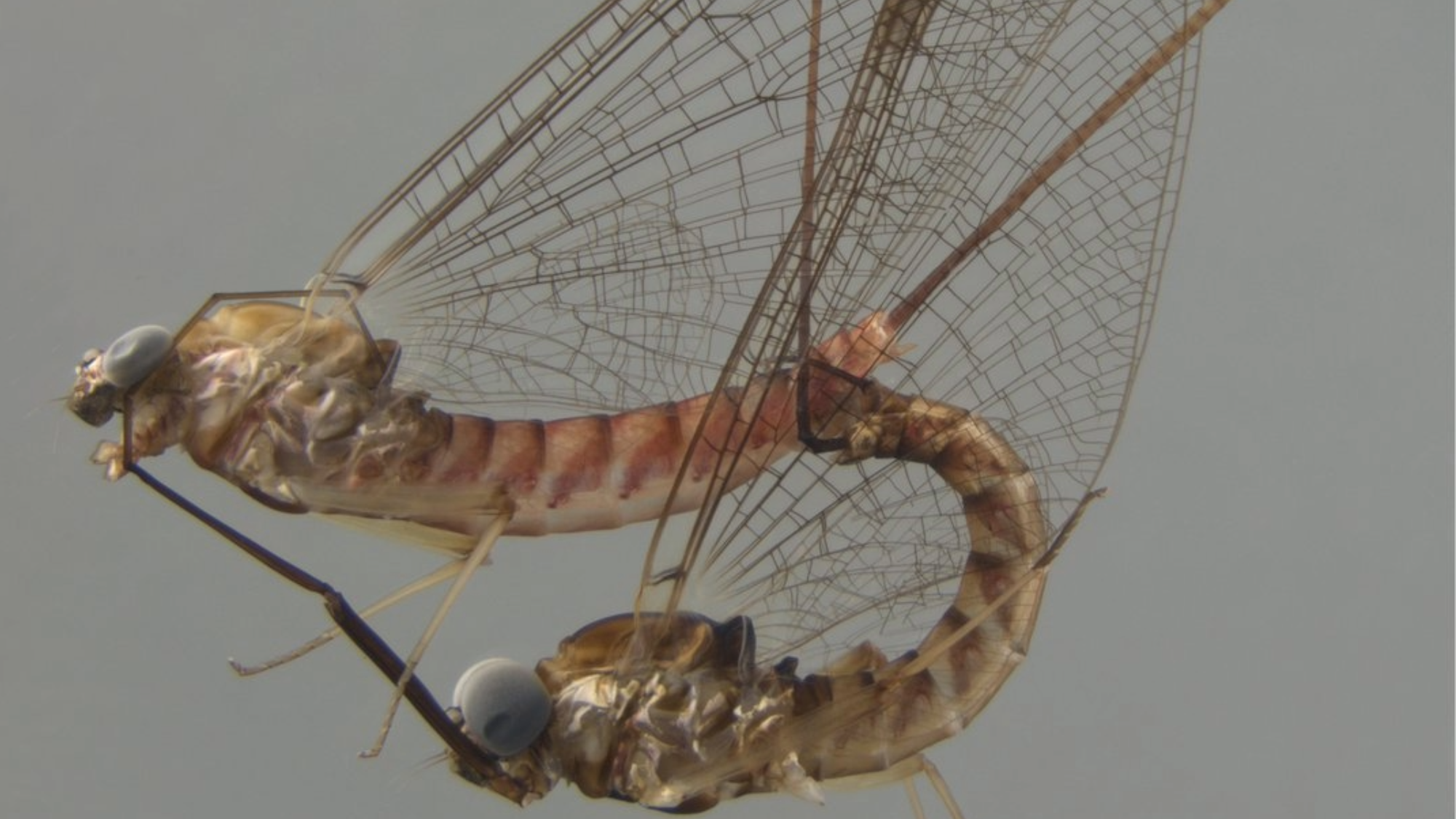
Studying the copulation of mayflies presents a significant logistical challenge. The act occurs in mid-air, often within massive swarms of males, and lasts only seconds. To capture these moments, researchers utilized long-handled nets to intercept mating pairs as they tumbled through the air. However, the physical contact of the net often causes the insects to disengage immediately. To preserve the anatomical positioning of the genitalia during the act, the scientists employed a "shock-freeze" method. Using a specialized freezing spray, they instantly immobilized the mating pairs before they could separate. Once frozen, the specimens were carefully transferred into ethanol for long-term preservation, ensuring that the intricate physical connection between the male and female remained intact for laboratory analysis.
Advanced Imaging via Synchrotron Microtomography
To analyze the internal and external structures without damaging the delicate specimens, the team turned to the Karlsruhe Institute of Technology’s synchrotron particle accelerator. Specifically, they employed synchrotron X-ray microtomography (µCT). This technology allows for the creation of high-resolution, three-dimensional digital models of microscopic objects.
Unlike traditional light microscopy or dissection, µCT scanning can penetrate the chitinous exoskeleton of the insects to reveal the interaction of soft tissues and musculature. This was crucial for understanding the "functional morphology" of the genitalia—how the parts move and change shape under internal pressure. The resulting 3D models allowed the researchers to observe the internal deformation of the male’s penis shaft and the subsequent reaction of the female’s reproductive tract in a way that was previously impossible.
Anatomical Findings: The Mechanism of the Paired Penis
The study revealed that the male Ecdyonurus mayfly possesses a "paired penis," consisting of two distinct lobes. This anatomical arrangement is a hallmark of the order but varies significantly across different genera. In Ecdyonurus, the researchers discovered a highly specialized mechanical process that occurs during the transition from a resting state to an "erect" or active state.
According to the study’s findings, powerful internal muscles within the male’s abdomen cause a significant deformation of the penis shaft. This muscular contraction forces the two penis lobes to fold over and expand. Positioned between and around these lobes are penial spines and specialized genital forceps known as "claspers."
The function of these structures is twofold:

- Attachment and Stability: The claspers allow the male, who approaches the female from below in mid-flight, to secure a firm grip on the female’s abdomen.
- Internal Interaction: The µCT scans showed that the penial spines actively prick the thin membrane of the female’s copulatory pouch. Far from being a purely aggressive act, this pricking serves to stretch the pouch, preparing it to receive and store a large volume of sperm. The sperm is then deposited into a folded membrane at the front of the pouch, where it is held until the female is ready to deposit her eggs.
Evolutionary Pressures and Aerial Competition
The complexity of these reproductive structures is likely an evolutionary response to the high-pressure environment of the mayfly mating swarm. In the Black Forest and similar habitats, male mayflies gather in large numbers over water bodies, performing rhythmic flight patterns to attract females. When a female enters the swarm, she is immediately pursued by multiple males.
Because the mating process occurs in the air, the male must overcome the challenges of wind, gravity, and interference from rival males. The study notes that other males frequently attempt to "dislodge" a mating pair to take the female for themselves. The elaborate system of claspers and spines ensures that once a male has successfully engaged, he can maintain the connection until the transfer of genetic material is complete. This "sturdy attachment" is a critical survival strategy in a species where an individual may only have one opportunity to reproduce in its entire lifetime.
Chronology of the Research and Post-Mating Lifecycle
The timeline of the study spanned several seasons of field collection followed by months of digital reconstruction and analysis. After the successful capture and freezing of the specimens in the Black Forest, the data processing at the Karlsruhe Institute of Technology required intensive computational power to render the microtomography scans into usable 3D models.
The study also highlights the poignant end of the mayfly life cycle. For Ecdyonurus venosus, the completion of the mating act signals the beginning of the end. Once the male has transferred his sperm, he typically dies of exhaustion shortly after, his energy reserves depleted by the demands of swarming flight. The female, now carrying fertilized eggs, flies to the upstream sections of the water body. She deposits her eggs onto the water’s surface or dives beneath the surface to attach them to submerged stones, ensuring the next generation has a stable environment in which to hatch. Following oviposition, the female also dies, completing a life cycle that is as brief as it is biologically complex.
Scientific and Ecological Implications
The findings of this study have broader implications for the field of entomology and evolutionary biology. By unravelling the mechanisms of mayfly genitalia, researchers can better understand the diversity of reproductive strategies across the insect world. The study provides a "functional" map that can be compared with other insect orders to trace the evolutionary history of flight and reproduction.
Furthermore, the research underscores the importance of advanced imaging technology in modern biology. The use of a synchrotron particle accelerator to study insect sex might seem extreme, but it represents the only way to visualize the high-speed, microscopic interactions that define the survival of a species.
From an ecological perspective, understanding the reproductive success of mayflies is vital for monitoring the health of freshwater ecosystems. As mayflies are sensitive to pollution and climate change, any disruption to their complex mating rituals could lead to population collapses, which would have cascading effects on the fish and birds that rely on them for food.
Reactions and Analysis
While the study is primarily a work of functional morphology, it has been received by the scientific community as a masterclass in creative methodology. Peers have noted that the combination of "low-tech" field techniques (the long-handled net and freezing spray) with "high-tech" lab analysis (the synchrotron) is a model for future entomological research.
The researchers themselves emphasized that while the "bizarre" nature of mayfly sex often draws public curiosity, the underlying goal is to document the sheer variety of life’s solutions to the problem of reproduction. The study of Ecdyonurus confirms that even in the most fleeting of lives, nature has engineered a level of mechanical precision that rivals the most complex human machinery.
As the study concludes, the "functional morphology" of these insects is not just a matter of anatomy, but a testament to 300 million years of evolutionary refinement. The work remains a definitive resource for understanding how the smallest inhabitants of our planet ensure their continuity against the backdrop of an ever-changing environment.