


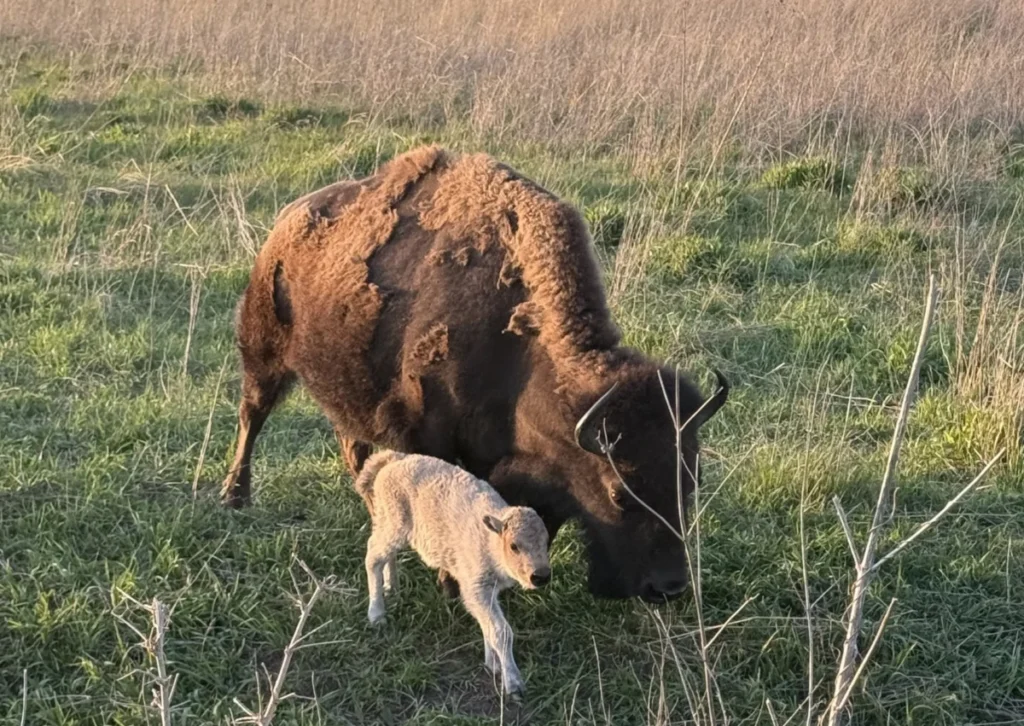
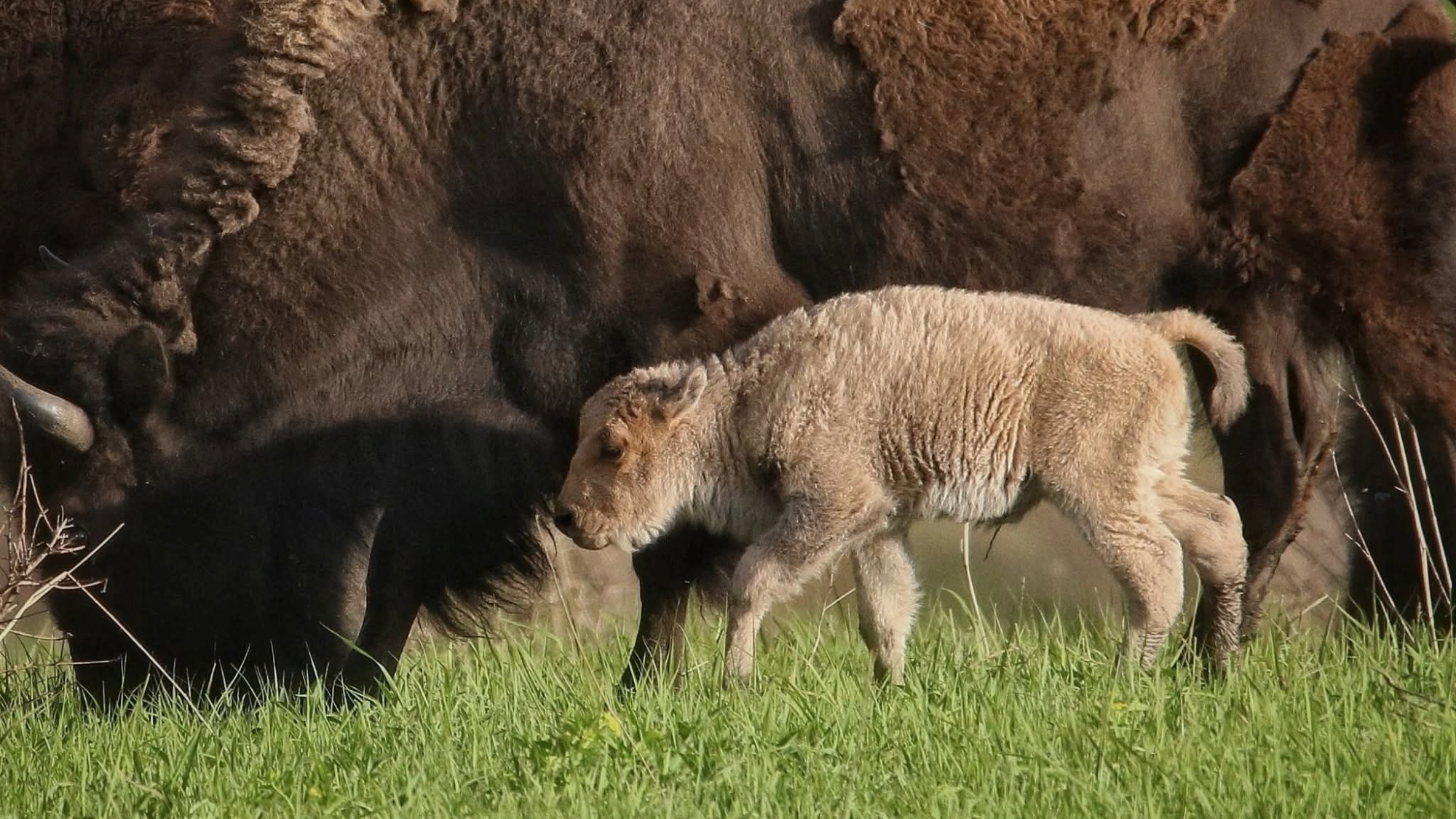
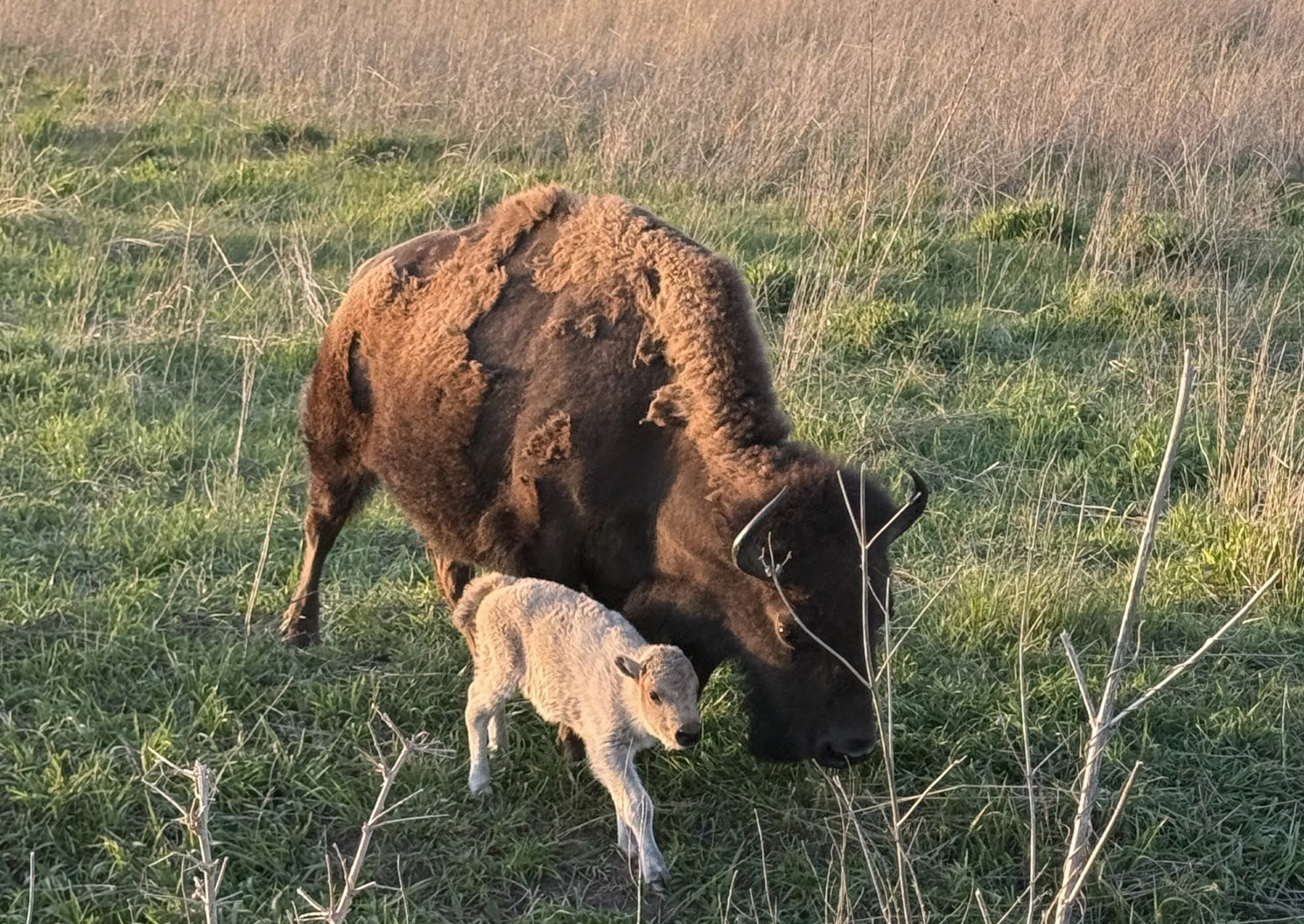
In an event described by wildlife experts as a "one-in-a-million" biological occurrence, a rare white bison calf has been born at the Neal Smith National Wildlife Refuge in Prairie City, Iowa. This birth represents a historic first for the refuge since its inception and has sparked significant interest from conservationists, biologists, and Indigenous communities across North America. While most bison (Bison bison) are born with a distinct reddish-orange coat that eventually darkens to a deep chocolate brown, the arrival of this white calf stands as a rare anomaly in the natural world, occurring roughly once in every one million births, according to data provided by the National Park Service and the National Bison Association.
The calf was first spotted by staff at the 6,000-acre refuge, which is managed by the U.S. Fish and Wildlife Service (USFWS). Its arrival comes during the peak of the spring calving season, a period of renewal for the refuge’s resident herd. Refuge Manager Scott Gilje confirmed the birth, stating that the event is "something very special" for the local ecosystem and the staff who have dedicated decades to the restoration of the tallgrass prairie. As of early May, the white calf is one of nine newcomers to the herd this season, with officials expecting the total number of new births to reach between nine and fifteen by the end of the spring.
The Biological Phenomenon of White Bison
The birth of a white bison is a complex genetic event that can be attributed to several different factors. In the wild, such a coat color usually stems from one of three conditions: albinism, leucism, or a rare genetic recombination. Albinism is characterized by a complete lack of melanin, resulting in white fur and pink or red eyes. Leucism, on the other hand, involves a partial loss of pigmentation, which often leaves the animal with blue or dark eyes despite its white coat. A third possibility involves a rare recessive gene that has persisted within the bison genome for centuries.
In some historical cases, white bison have been the result of crossbreeding with white-coated cattle, such as the Charolais breed, during the late 19th century when bison populations were on the brink of extinction and some ranchers attempted to hybridize the species. However, conservation herds managed by the USFWS, such as the one at Neal Smith, are carefully monitored for genetic purity. Preliminary observations of the Iowa calf suggest it may possess the rare recessive trait or leucism, though genetic testing would be required to confirm the exact cause.
Historically, many white bison calves do not retain their snowy complexion throughout their lives. It is common for these rare individuals to transition into a more traditional brown or tan coat as they mature into adulthood. Regardless of its future coloration, the calf’s current state has already solidified its place in the annals of the refuge’s history.
Contextualizing the Birth within Regional Conservation Efforts
The Neal Smith National Wildlife Refuge was established in 1990 with the primary mission of restoring the tallgrass prairie, an ecosystem that once covered over 85 percent of Iowa but has since been reduced to less than 0.1 percent of its original range. The reintroduction of bison is a cornerstone of this restoration effort. Bison are known as "ecosystem engineers"; their grazing patterns, wallowing behavior, and nutrient distribution through waste are essential for maintaining the health and diversity of prairie flora and fauna.
The current herd at Neal Smith consists of 81 individuals who roam across a vast expanse of reconstructed prairie. These animals are descendants of lineages carefully selected to represent the genetics of the great herds that once roamed the Great Plains. The birth of any calf is a sign of a healthy, self-sustaining population, but the arrival of a white calf provides an unexpected boost to public engagement and awareness of the refuge’s mission.
This Iowa birth follows another high-profile arrival in 2024, when a white bison calf was born in Yellowstone National Park—the first ever recorded in the park’s history. The proximity of these two events has led some observers to speculate on the health and genetic diversity of modern conservation herds, which have grown significantly from a low of just a few hundred animals in the late 1800s to approximately 30,000 managed for conservation today.
Cultural and Spiritual Significance to Indigenous Nations
Beyond its biological rarity, the white bison calf holds deep spiritual and cultural meaning for many Native American nations, including the Lakota, Sioux, Cherokee, Navajo, and Dakota. In many of these cultures, the birth of a white buffalo is considered the most significant prophetic sign in the natural world, symbolizing a time of rebirth, hope, and the restoration of harmony between humanity and the Earth.
The most prominent tradition associated with the animal is the legend of the White Buffalo Calf Woman, or Ptesan Wi. According to Lakota oral tradition, Ptesan Wi appeared to the people during a time of great famine and hardship. She brought with her the Seven Sacred Rites and the Chanunpa (the sacred pipe), teaching the people how to pray and how to live in balance with all living things. Upon leaving, she transformed into a white buffalo calf, promising to return one day to restore peace and spirituality to a troubled world.
For many Indigenous leaders, the birth of a white calf at a place like Neal Smith—a site dedicated to healing the land—is seen as a powerful omen. It serves as a reminder of the resilience of the bison and the enduring strength of the cultures that have lived alongside them for millennia. Indigenous groups often travel great distances to offer prayers and tobacco at the site of such births, treating the animal with a level of reverence reserved for the most sacred of entities.
The History of Bison Recovery in North America
To understand the weight of this event, one must consider the near-total loss of the species in the 19th century. At the start of the 1800s, an estimated 30 to 60 million bison roamed North America. They were the lifeblood of the plains, providing food, clothing, and shelter for dozens of Indigenous tribes. However, westward expansion, commercial hunting for hides, and a deliberate government-sanctioned effort to undermine Indigenous food sources led to a catastrophic slaughter.
By the late 1880s, fewer than 1,000 bison remained in the entire world. The species was saved from extinction by a handful of private ranchers and early conservationists, such as William Temple Hornaday and Theodore Roosevelt, who formed the American Bison Society in 1905. Over the last century, the recovery of the American bison has become one of the most successful conservation stories in history.
In 2016, the bison was officially named the National Mammal of the United States, a designation that recognizes its historical, cultural, and ecological importance. Today, while the species is no longer considered endangered, conservationists focus on "ecological recovery." This involves moving beyond simply increasing numbers to ensuring that bison can once again perform their natural roles within large-scale landscapes. The Neal Smith National Wildlife Refuge is a vital link in this national network of protected lands.
Ecological Impact and Future Monitoring
The white calf will be closely monitored by refuge biologists as it integrates into the herd. For the first few months of its life, it will remain close to its mother, nursing and learning to navigate the tallgrass environment. Visitors to the refuge are encouraged to view the bison from the safety of their vehicles along the refuge’s auto tour route, as bison are notoriously protective of their young and can be dangerous if approached.
The presence of the white calf is expected to draw record numbers of visitors to Prairie City, providing an opportunity for the USFWS to educate the public on the importance of biodiversity. Biologists will also be observing how the rest of the herd interacts with the white calf. In some species, leucistic or albino individuals can be ostracized or targeted by predators due to their lack of camouflage; however, in a protected environment like Neal Smith, the calf’s primary challenge will be the Iowa elements rather than predation.
The birth also highlights the ongoing need for prairie conservation. While the bison are the most visible residents, the refuge also provides critical habitat for elk and various declining grassland bird species, such as the Henslow’s sparrow and the bobolink. The "halo effect" of the white bison birth may lead to increased funding and volunteer support for these less charismatic but equally vital species.
Conclusion and Broader Implications
The arrival of the white bison calf at Neal Smith National Wildlife Refuge is more than a local curiosity; it is a confluence of science, history, and spirituality. In a world where news of environmental decline is common, the birth of a "one-in-a-million" animal serves as a poignant symbol of nature’s ability to surprise and inspire.
As the calf grows and eventually takes its place among the 81 bison of the Iowa prairie, it will stand as a living testament to the success of the Neal Smith restoration project. It serves as a bridge between the tragic history of the 19th-century "Great Slaughter" and a future where the American bison—and the prairies they inhabit—can once again thrive. Whether the calf remains white or eventually turns brown, its birth has already succeeded in bringing a moment of wonder and a message of hope to a global audience. For the staff at Neal Smith and the many Indigenous people who hold the animal sacred, the message is clear: the prairie is alive, and the spirit of the bison remains as strong as ever.