



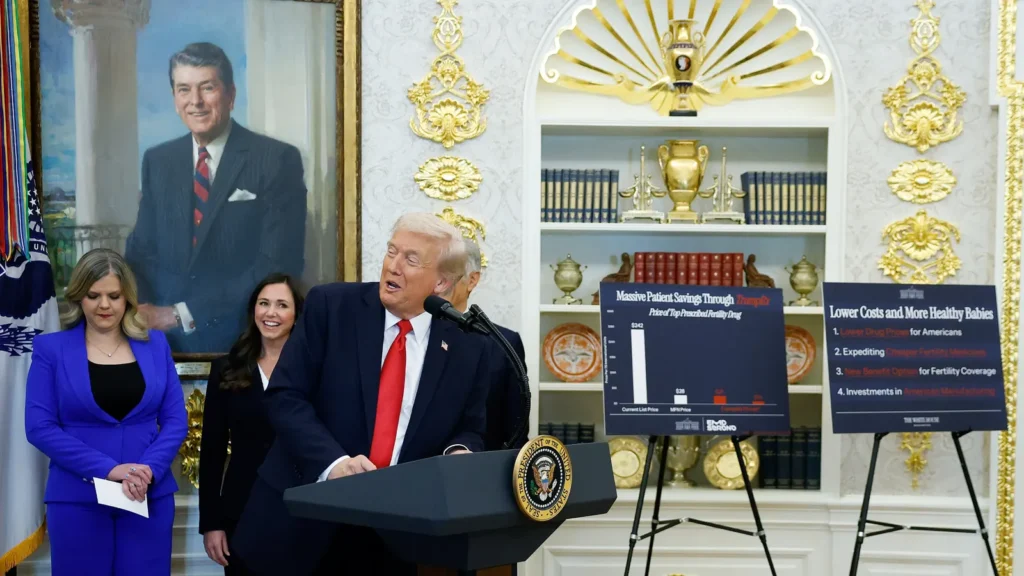
In a significant move that aligns with President Donald Trump’s stated labor agenda, the administration has unveiled a proposed rule designed to exempt fertility benefits, including in vitro fertilization (IVF), from the stringent requirements of several federal health coverage laws. This initiative, announced on May 10, 2026, by the Department of Labor (DOL) and two other federal agencies, aims to bolster access to fertility treatments for American families and address declining birth rates. The proposal builds upon an executive order issued by President Trump in February 2025, which underscored the financial and emotional burden of infertility on individuals and couples.
Expanding Access to Fertility Treatments: A Core Tenet of the Trump Administration’s Labor Agenda
The proposed rule represents a direct effort to fulfill a key promise within President Trump’s broader labor policy objectives. The administration’s focus on fertility benefits stems from a recognition of the growing financial strain associated with treatments like in vitro fertilization (IVF), which can cost between $12,000 and $25,000 per cycle, according to the February 2025 executive order. This substantial expense has, as the order noted, transformed infertility into "an emotional and financial struggle" for many Americans.

Acting Labor Secretary Keith Sonderling articulated the administration’s motivation behind the joint proposed rule, stating in a press release that it is intended to "build upon President Trump’s order and address declining birth rates." The supporting documentation for the rule cited concerning demographic trends, including data from the Centers for Disease Control and Prevention (CDC) indicating a 9% decrease in U.S. births between 2014 and 2024. Concurrently, the data revealed that approximately one in five Americans experienced infertility during that period.
"President Trump is committed to expanding access to fertility benefits so that more American families can have children, building on his longstanding efforts to support family formation and stability," Sonderling remarked, emphasizing the administration’s dedication to this issue.
The Evolving Landscape of Employer-Sponsored Fertility Benefits
While fertility benefits have gained increasing traction in the employee benefits sector in recent years, their widespread adoption by employers remains a work in progress. A comprehensive survey conducted by the International Foundation of Employee Benefits Plans in 2024 found that 42% of employers offered some form of fertility benefits. However, the study also highlighted that a smaller proportion of these employers provided specific, comprehensive offerings such as coverage for IVF procedures, fertility medications, and genetic testing. This indicates a significant gap between employers offering general fertility support and those providing robust, specialized coverage.

The administration’s 2025 guidance had previously clarified that employers could offer fertility benefits as a distinct category of "excepted benefits." These are known as "independent, noncoordinated excepted benefits" and must adhere to specific regulatory conditions. The same guidance also suggested that fertility benefits could be incorporated as "limited excepted benefits" through Health Reimbursement Arrangements (HRAs).
Analysis of Previous Guidance and Expert Reactions
In an analysis conducted in 2025, the American Society for Reproductive Medicine (ASRM) acknowledged that the administration’s prior guidance offered employers a "manageable way to support fertility care." However, the ASRM’s assessment also pointed out the financial limitations inherent in the specified benefit types. The organization concluded that these benefits, as previously defined, did not constitute comprehensive fertility coverage nor did they serve as a replacement for it. Furthermore, the ASRM noted that the pathways for offering such coverage were entirely voluntary for employers, raising concerns about equitable access.
The ASRM’s analysis expressed a critical perspective: "This leaves open questions about whether lower-income workers, those with self-insured plans, or historically underserved populations will actually gain meaningful access to fertility care." This highlights a potential disparity where employees in less comprehensive plans or those from marginalized communities might not benefit from these new provisions.

The Regulatory Process and Public Comment
As of the publication of the original article on May 13, 2026, the proposed rule had not yet been officially published in the Federal Register. Following its official publication, a 60-day public comment period will commence, allowing stakeholders, including employers, healthcare providers, patient advocacy groups, and the general public, to submit their feedback and concerns. This period is crucial for refining the proposed rule and ensuring it adequately addresses the multifaceted aspects of fertility benefit coverage.
The regulatory process leading to this proposed rule can be traced back to earlier administrative actions. The February 2025 executive order served as a foundational document, signaling the administration’s intent to address the challenges of infertility. Subsequent guidance in 2025 provided employers with initial frameworks for offering fertility benefits as excepted benefits. The current proposed rule represents a more formal regulatory step, aiming to codify and potentially expand these provisions, while also clarifying their exemption from certain federal health coverage mandates.
Broader Initiatives and Future Implications
In conjunction with the announcement of the fertility benefits proposal, the U.S. Department of Health and Human Services (HHS) also unveiled the launch of Moms.gov. This new federal website is designed to serve as a centralized hub for resources and information tailored to the needs of new and expectant mothers. The initiative reflects a broader commitment by the administration to support families throughout the childbearing process, from conception through early parenthood.
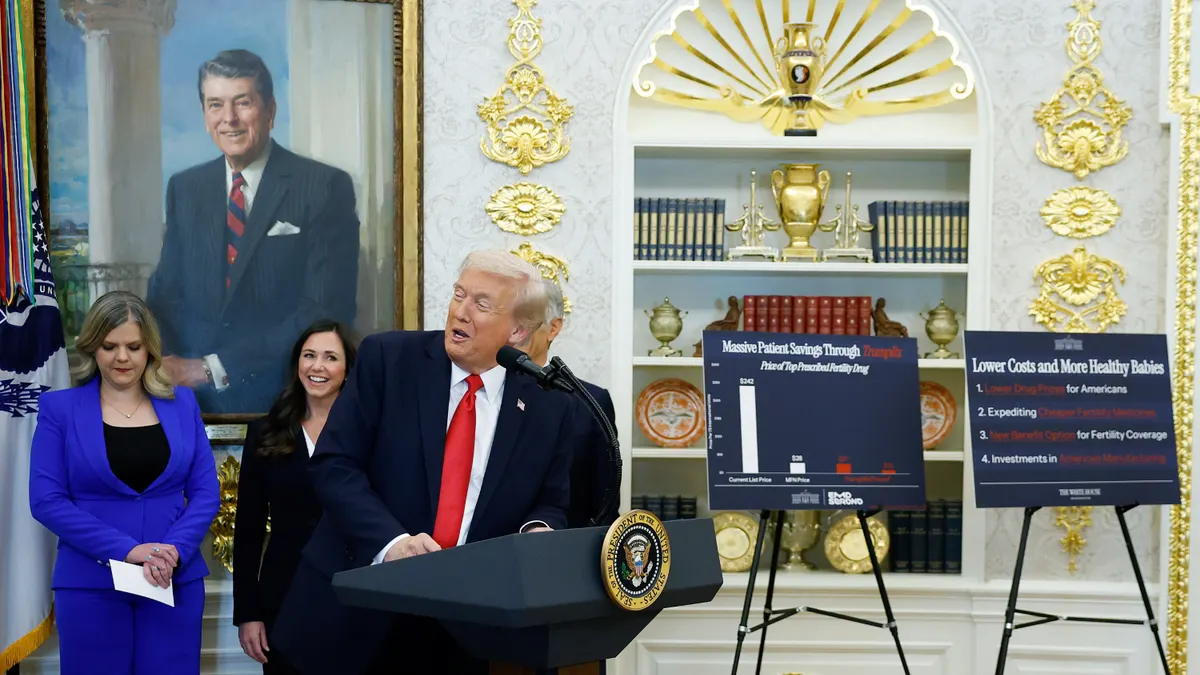
The implications of this proposed rule are far-reaching. By exempting fertility benefits from certain federal requirements, employers may find it more feasible and less burdensome to offer these services. This could lead to a significant increase in the number of employers providing comprehensive fertility coverage, thereby expanding access for a larger segment of the workforce. The administration’s stated goal of addressing declining birth rates could also see a positive impact if more individuals and couples feel empowered to pursue family-building options.
However, the success of this initiative will ultimately depend on the details of the final rule and the willingness of employers to adopt these benefits. The concerns raised by organizations like the ASRM regarding equitable access for all income levels and plan types will need to be carefully considered during the public comment period and in the subsequent finalization of the rule. The voluntary nature of employer participation also remains a key factor, suggesting that while the regulatory landscape may become more accommodating, widespread adoption will still rely on employer initiative.
The inclusion of fertility benefits within the broader scope of employee health coverage is a developing trend, and this proposed rule by the Trump administration marks a significant milestone in that evolution. It underscores the growing recognition of reproductive health as a critical component of overall well-being and a vital consideration for employers seeking to support their workforce. The coming months, including the public comment period, will be critical in shaping the final form of this policy and its ultimate impact on American families.