



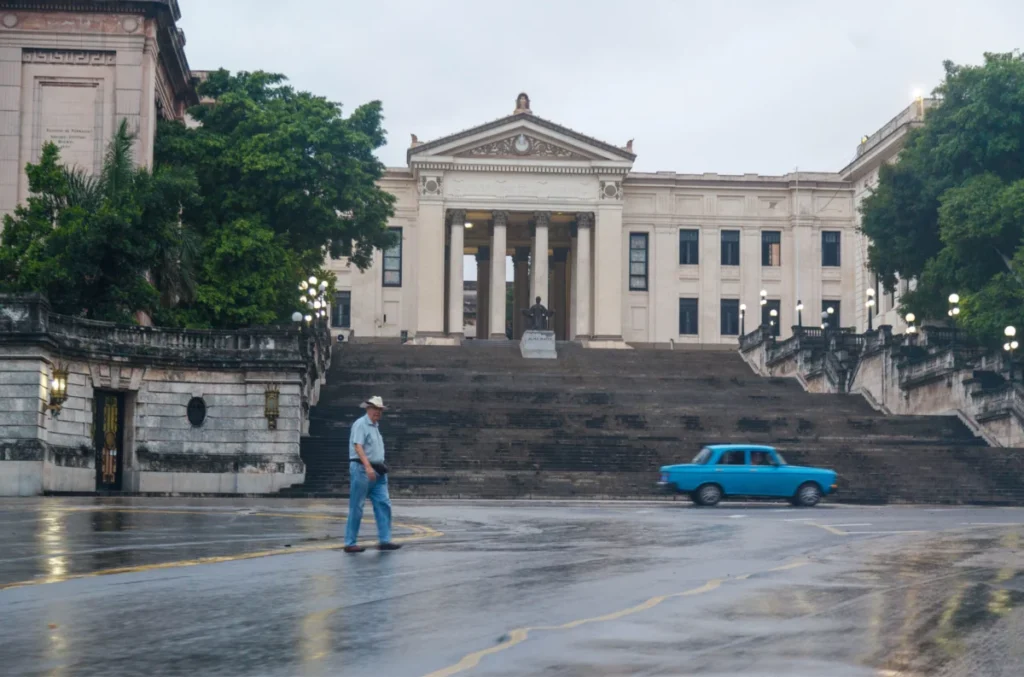
Four months after the United States implemented a sweeping oil embargo against Cuba, the Caribbean nation finds itself grappling with escalating hardship that increasingly struggles to capture sustained international attention. While official pronouncements from Washington highlight the executive order’s intent to pressure the Cuban government, on the ground, the consequences are starkly felt by ordinary citizens, leading to a pervasive sense of frustration and a growing humanitarian concern that is largely relegated to the periphery of global news cycles. The embargo, signed by U.S. President Donald Trump, has compounded existing economic vulnerabilities, creating a ripple effect that has profoundly impacted daily life and the nation’s ability to sustain essential services.
The Human Cost of a Tightening Grip
The severity of the situation was underscored in February when Canadian airlines undertook the repatriation of nearly 28,000 of their citizens from Cuba. This mass exodus, driven by deteriorating conditions and growing uncertainties, served as a poignant indicator of the challenges facing the island. For many, academic and cultural exchanges represent one of the few remaining conduits for sustained engagement with Cuba. Among those maintaining these vital links is Professor Emerita Karen Dubinsky, a distinguished scholar in Global Development Studies and History at Queen’s University. Her recent book, "Strangely, Friends: A History of Cuban Canadian Encounters" (2025), delves into the complex and enduring relationship between the two nations.
From 2008 to 2023, Dr. Dubinsky helmed Queen’s University’s "Cuban Culture and Society" course, a program that included immersive two-week stays for students at the University of Havana. This academic bridge was reciprocal, with Cuban scholars and musicians frequently visiting Queen’s University, fostering a vibrant intellectual and cultural exchange. Dr. Dubinsky herself maintained a personal connection to Cuba, attending the Havana Jazz Festival annually in January. Her planned extended stay this past February, intended to celebrate the wedding of one of her four Cuban graduate students, was dramatically interrupted by the unfolding crisis and the subsequent evacuations.
"He wanted his family to be part of it, and they’re all still in Havana," Dr. Dubinsky recounted, her voice tinged with the memory of that disrupted moment. "That came to a screeching halt with the airplanes. I was there and the groom was there, but that was it. No bride, nobody else. I was there for the first two or three weeks of the oil blockade. It was already a mess." Her firsthand account paints a vivid picture of the immediate impact of the embargo, illustrating how even deeply personal and celebratory events were abruptly overshadowed by the economic realities imposed by the U.S. sanctions.
A Crisis Brewing Long Before the Embargo
However, Dr. Dubinsky is quick to emphasize that the current dire circumstances are not solely a consequence of the recent oil embargo. "I’ve never seen it as bad as I’ve seen it in the past few years," she stated, highlighting a pre-existing and deteriorating situation. "Now there’s a lot of images of garbage not being collected and literally burned in the streets. That started to happen two or three years ago." This visual evidence of urban decay and a breakdown in basic services predates the intensified U.S. pressure, suggesting a deeper malaise within the Cuban economy and governance.
Her ongoing communication with friends and colleagues on the island provides a constant stream of information regarding the daily struggle to cope with pervasive blackouts. These power outages, a direct consequence of fuel shortages exacerbated by the embargo, disrupt every facet of life, from essential services like healthcare and water supply to the basic rhythms of domestic life and economic activity. The inability to consistently power homes and businesses not only leads to immediate discomfort and hardship but also hinders productivity and further isolates the nation.
Decades of Strain and Emerging Dissent
The long-standing frustrations over perceived government incompetence and the lingering effects of the COVID-19 pandemic have significantly contributed to the nation’s decline. Dr. Dubinsky observed a pervasive sentiment among Cubans: "People feel either active opposition, or at best, a kind of abandonment. That was the word that I kept hearing before this super dramatic moment, from people who still had some sense that they were looking to their own government for help when inflation ran wild, with the economy in shambles." This sense of abandonment has been amplified by the added pressure of the U.S. embargo, pushing the mood from discontent to despair.
"They’re super frustrated. I think many are despairing," Dr. Dubinsky elaborated. "If you have the misfortune of getting sick or having an accident, you’re really in trouble." The strain on the healthcare system, already fragile, is immense. Fuel shortages directly impact the transportation of medical supplies, the operation of ambulances, and the functioning of medical equipment. Access to basic necessities, including food and medicine, becomes increasingly precarious, particularly for vulnerable populations.
The growing despair has manifested in visible forms of protest. Nightly demonstrations, characterized by citizens banging pots and pans after dark, have become a common occurrence, a symbolic expression of collective frustration and a demand for change. More organized forms of dissent have also emerged. International media reported on a rare sit-in held by students at the University of Havana on March 9, protesting disruptions to their academic programs. Such actions, though often met with swift responses from authorities, signal a growing willingness among Cubans to voice their grievances publicly.
Historical Context and Shifting Dynamics
Discussions of Cuba’s current decline often draw parallels to the "Special Period" of the 1990s, a time of severe economic hardship following the collapse of the Soviet Union, Cuba’s primary economic benefactor. The subsequent decades saw the island navigate a complex geopolitical landscape under the leadership of Fidel Castro, and later, his brother Raúl Castro, with Miguel Díaz-Canel currently serving as president. Amidst these transitions, persistent allegations of corruption and noticeable media repression have continued to fuel internal discontent. While President Trump’s intensified sanctions have undoubtedly exacerbated an existing crisis, many Cubans have been vocal in their calls for fundamental change for years, a sentiment that predates the latest U.S. policy shift.
Navigating a Complex Path Forward
Dr. Dubinsky has engaged with a spectrum of views on the way forward for Cuba, from calls for outright regime change to advocating for self-reliance and internal reform. Like many observers deeply invested in Cuba’s future, she acknowledges the profound complexity of finding viable solutions. "I believe in the rule of law. I believe in national sovereignty. I think people have a right to make their own nations, their own decisions," she stated, reflecting a principled stance on self-determination. "Just in this case, it’s harder to imagine what that looks like." The challenges are multifaceted, involving not only economic recovery but also political reform and the rebuilding of trust between the government and its citizens.
The sheer scale of the effort required to address even fundamental infrastructure issues, such as repairing the nation’s electrical grid, highlights the long road ahead. The ongoing struggle further complicates any return to normalcy, underscoring the deep-seated nature of the challenges Cuba faces.
Resilience and Enduring Cultural Contributions
Despite the grim realities, Dr. Dubinsky remains a staunch supporter of Cuba’s resilience and its capacity for cultural innovation. The island’s rich history continues to inspire scholarly inquiry into social change and culture, particularly its internationally acclaimed music and film industries. These vibrant cultural expressions serve as a testament to the enduring spirit of the Cuban people, even in the face of immense adversity.
The academic study of Cuba, while robust globally, features a relatively small cohort of Canadian scholars. Dr. Dubinsky, herself a Canadianist whose research evolved to encompass Canada-Cuba relations through an interest in Cuban music and culture, has significantly contributed to this field. Her extensive body of work on Cuban culture, particularly its intersections with Canada, and her co-produced podcast series on the history of Cuban musicians in Canada, underscore the unique value of such cross-cultural academic endeavors.
Encouragingly, a new generation of scholars is emerging, taking up novel research areas. Dr. Dubinsky recently supervised a master’s student whose thesis focused on Canada-Cuba economic ties. The promising news is that this student intends to pursue a PhD, signaling a continued commitment to deepening the understanding of this vital relationship and contributing to the ongoing dialogue surrounding Cuba’s future. This next wave of research is crucial for providing nuanced perspectives and potential pathways forward in a complex geopolitical and humanitarian landscape.