


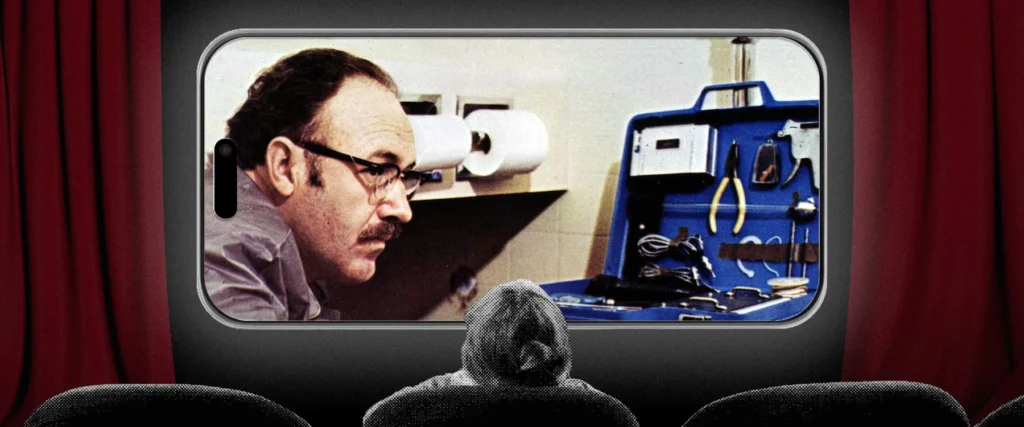
Last month, The Atlantic ignited a crucial discussion with an article bearing the stark headline, "The Film Students Who Can No Longer Sit Through Films." This piece, penned by Rose Horowitch, brought to light a disquieting trend observed by film professors nationwide: a significant erosion of students’ ability to maintain sustained attention on feature-length cinematic works. The implications extend far beyond the classroom, touching upon a broader societal challenge exacerbated by pervasive digital technologies.
The core of Horowitch’s report stemmed from conversations with over 20 film-studies professors across the United States. Their collective experience painted a sobering picture. Craig Erpelding, a film professor at the University of Wisconsin at Madison, articulated a sentiment echoed by many: "I used to think, if homework is watching a movie, that is the best homework ever. But students will not do it." This observation, a far cry from the enthusiastic engagement once expected from aspiring filmmakers, highlights a profound shift in cognitive patterns that has become particularly pronounced over the last decade, with a sharp acceleration since the onset of the global pandemic.
The Smartphone’s Shadow: A Culprit in Cognitive Decline
The consensus among the interviewed educators points overwhelmingly to one primary antagonist: the smartphone. These ubiquitous devices, designed to deliver instant gratification and constant stimulation, are fundamentally reshaping how individuals process information and sustain focus. The struggle to enforce bans on electronics during screenings, as experienced by the founding director of Tufts University’s Film and Media Studies, underscores the depth of this dependency. "About half the class ends up looking furtively at their phones," she noted, indicating a compulsive need that overrides academic expectations. A Cinema and Media Studies professor at USC vividly described his students’ behavior as akin to "nicotine addicts going through withdrawal…the longer they go without checking their phone, the more they fidget."
This phenomenon is not merely a matter of poor discipline but a reflection of a deeper neurological recalibration. Reading scholar Maryanne Wolf defines the critical ability at play as cognitive patience—the capacity to maintain "focused and sustained attention and delay gratification, while refraining from multitasking." Smartphones, with their constant stream of notifications and endless content feeds, actively degrade this cognitive patience. When a device is present, it activates neuronal bundles within the brain’s short-term reward system. These bundles anticipate a high expected value from engaging with the phone, effectively "voting" for the distracting behavior. This internal "vote" triggers a cascade of neurochemicals, primarily dopamine, which is experienced as a powerful motivation to check the device. Over time, and through a lack of practice in sustained attention, individuals lose their comfort and capacity for deep, uninterrupted focus.
Historical Context and Supporting Data on Attention Spans
Concerns about attention spans are not entirely new; they have evolved alongside technological advancements throughout history, from the advent of the printing press to television. However, the current digital era, particularly with the proliferation of smartphones and social media platforms, presents a unique challenge. The average daily screen time for young adults and students has surged dramatically. Data from various research firms consistently show that individuals aged 18-24 spend upwards of 7-9 hours per day on digital media, with a significant portion dedicated to social media and short-form video content. Platforms like TikTok, designed with algorithms that optimize for rapid content consumption and immediate reward, have further conditioned users for fleeting engagement rather than sustained immersion.
A 2021 study by Statista revealed that smartphone users check their devices, on average, 58 times a day, with half of those checks occurring within three minutes of the previous one. This constant micro-interruption fragments attention, making it increasingly difficult to engage with tasks requiring prolonged focus. Research from Microsoft Canada in 2015, although debated, suggested a dramatic drop in the average human attention span from 12 seconds in 2000 to 8 seconds, purportedly less than that of a goldfish. While the precise figures may be contested, the qualitative observations from educators and psychologists broadly support the notion of a decreasing tolerance for boredom and a heightened need for immediate stimulation. The pandemic, forcing a dramatic increase in screen-based learning and social interaction, only accelerated these trends, further entrenching digital habits.
Broader Implications for Education and Society
The ramifications of this attention crisis extend far beyond film studies. In a broader educational context, it impacts reading comprehension, the ability to engage with complex academic texts, and critical thinking skills that demand sustained analytical effort. Professors across various disciplines report students struggling with lengthy lectures, comprehensive readings, and assignments requiring deep research. For creative industries, particularly filmmaking and literature, this trend could signify a future where long-form narratives struggle to capture audiences accustomed to bite-sized content.
On a societal level, a collective decline in cognitive patience could hinder the ability to engage with nuanced political discourse, understand complex scientific issues, or participate in sustained problem-solving. It fosters an environment ripe for superficial engagement and susceptibility to misinformation, as individuals may lack the patience to delve into the depth required for critical evaluation.
Reclaiming Attention: A Path to Cognitive Resilience
Amidst this growing concern, there are proactive strategies to counteract the erosion of cognitive patience. As proposed by Cal Newport, the author of the original piece critiquing "AI vibe reporting" and host of a podcast discussing these issues, the ability to watch an entire feature-length film can serve as an accessible and powerful "training goal" for reclaiming our brains. Much like a new runner gradually working up to completing a 5k race, this is a challenging yet achievable milestone that can initiate an effort toward "attention autonomy."
The journey to improved cinematic cognitive patience, and by extension, broader cognitive resilience, involves deliberate practice. Strategies include:
- Dedicated Viewing Environments: Creating a distraction-free space is paramount. This means dimming lights, silencing notifications, and placing smartphones out of reach or in a different room. The physical removal of the device helps break the neurological "vote" for distraction.
- Mindful Engagement: Approach film watching as an active exercise in focus. Instead of passively consuming, try to engage with the narrative, cinematography, sound design, and thematic elements. This transforms passive viewing into an active mental workout.
- Gradual Progression: For those struggling with a two-hour film, start smaller. Begin with shorter films, documentaries, or even television episodes that demand a certain level of sustained attention. Gradually increase the duration as comfort and focus improve.
- Scheduled "Attention Blocks": Extend this principle beyond films. Designate specific periods each day for single-tasking—whether it’s reading a book, working on a complex project, or engaging in a hobby—without any digital interruptions. This helps retrain the brain for sustained focus.
- Digital Detox Periods: Regularly schedule time away from all screens. Even short periods of disengagement can help reset the brain’s reward system and reduce the compulsive need for digital stimulation.
The irony of suggesting one screen (a television or computer for film viewing) to mitigate the distracting impact of another (a smartphone) is acknowledged. However, the distinction lies in intentionality and control. Watching a film, when approached mindfully, can be a focused, enriching activity that trains the brain for depth, whereas impulsive smartphone use often leads to fragmented attention and superficial engagement. Rediscovering the patient joys of cinematic storytelling can indeed be a powerful component of a broader effort to push back against the pervasive pull of digital devices.
Navigating the AI Narrative: Disentangling Hype from Reality
In parallel to the attention crisis, the modern media landscape presents another significant challenge: distinguishing rigorous analysis from "vibe reporting," particularly concerning emerging technologies like Artificial Intelligence. The volume of distressed messages and speculative articles surrounding AI’s impact on the workforce has notably increased. The Atlantic, a publication that also highlighted the attention crisis, recently published a vibe-filled article titled "The Worst-Case Future for White-Collar Workers," which exemplifies this trend.
"AI vibe reporting," as critiqued by Cal Newport, refers to a style of journalism that prioritizes a narrative or emotional impact over verifiable data and factual analysis. It often operates by projecting a pre-conceived "feeling" about a trend, then working backward to find anecdotal evidence or hypothetical scenarios to support that feeling, rather than meticulously examining the evidence to form a conclusion. This approach, while potentially engaging, can lead to unnecessary public anxiety and misinformed perceptions.
A critical look at the "Worst-Case Future" article reveals several hallmarks of this approach:
- Focus on Hypotheticals as Imminent: The article often presents potential future scenarios as if they are already unfolding or are on the immediate horizon, without sufficient grounding in current data.
- Emphasis on Anecdotal Evidence: While anecdotes can illustrate a point, an over-reliance on them without broader statistical support can create a skewed picture of reality.
- Lack of Nuance on AI’s Current Capabilities: The piece may overstate the current autonomous capabilities of generative AI, blurring the lines between what AI can do now and what it might do in a hypothetical future.
- Emotional Language: The use of evocative or alarmist language can heighten the "vibe" and emotional impact, sometimes at the expense of objective reporting.
The Reality of AI’s Impact on Jobs
The rapid advancements in generative AI, exemplified by tools like ChatGPT, have undoubtedly brought AI into mainstream consciousness. This has naturally sparked discussions about its potential to disrupt various industries and job markets. Historically, every major technological revolution, from the Industrial Revolution to the rise of the internet, has generated similar fears of widespread job displacement, often alongside promises of new opportunities.
Currently, the actual impact of AI on the job market is complex and multifaceted, far from the apocalyptic "worst-case future" often portrayed in vibe reporting. While generative AI is indeed creating broad disruptions, the magnitude and nature of these shifts are still being understood.
- Augmentation, Not Pure Replacement (Currently): Many early observations suggest that AI is more often acting as an augmentation tool, enhancing human productivity and automating repetitive tasks, rather than completely replacing entire job roles. For instance, in software development, AI tools assist programmers in writing code, debugging, and generating test cases, but the human element of design, problem-solving, and complex architectural decisions remains crucial. Cal Newport’s ongoing reporting project, involving over 300 computer programmers, indicates this nuanced reality: "it’s complicated!"
- Sector-Specific Impact: The first major shifts are indeed likely to occur in knowledge-based sectors, particularly those involving data analysis, content generation, and software development. However, even within these sectors, the outcomes vary widely. Some roles may be significantly redefined, requiring new skills and adaptation, while others might see increased demand for human oversight and creativity.
- Job Creation: History also suggests that new technologies often create entirely new job categories and industries. While the specific jobs AI will create are still emerging, roles related to AI development, ethical AI oversight, AI integration specialists, and prompt engineering are already gaining traction.
- Economic Cycles and Other Factors: It’s crucial to disentangle the impact of AI from broader economic cycles, geopolitical events, and other technological advancements. Attributing all job market changes solely to AI oversimplifies a complex interplay of factors.
Towards a Balanced Perspective on Technology
The implications of "AI vibe reporting" are significant. It can fuel unnecessary public anxiety, misinform career choices, and divert attention from the actual, nuanced challenges and immense opportunities presented by AI. It can also lead to reactive, poorly conceived policy decisions if public discourse is dominated by sensationalism rather than evidence.
To be clear, the potential societal and economic disruptions of AI are important topics that warrant serious discussion and rigorous journalistic investigation. The Atlantic‘s article, beyond its initial "vibe reporting" sections, delves into hypothetical government responses to massive economic disruptions, a crucial area of inquiry. The concern is not with exploring future possibilities, but with the manner in which these possibilities are presented—as imminent certainties rather than carefully analyzed contingencies.
Both the attention crisis and the discourse around AI highlight a fundamental need for greater media literacy and a more critical engagement with technology. As individuals, cultivating cognitive patience and discerning reliable information from sensationalism are paramount. As a society, fostering environments that encourage deep focus and promote fact-based dialogue will be essential for navigating the complexities of the digital age and shaping a future where technology serves humanity, rather than dictating its cognitive and economic fate.