
The outbreak of the Second World War in September 1939 ignited a spectrum of reactions across Quebec’s university campuses, revealing deep divisions shaped by linguistic, cultural, and political allegiances. While students at McGill and Bishop’s Universities, deeply connected to the British Empire, largely embraced the call to arms, their counterparts at Université de Montréal (UdeM) and Université Laval demonstrated a pronounced anti-war sentiment, fueled by a burgeoning Quebec nationalism. This divergence in student attitudes and participation was meticulously documented in a PhD dissertation by Jeremy John Walling, who undertook an exhaustive review of student newspapers from the era’s four chartered Quebec universities, working under the supervision of UdeM history Professor Carl Bouchard.
Walling’s research highlights a stark contrast in motivations. At McGill and Bishop’s, the prevailing atmosphere among young men of military age was one of social pressure and a fear of being perceived as cowardly should they not enlist. "Their friends were being sent to the front, and they feared that society would see them as cowards if they didn’t rally too," explains Dr. Walling. Simultaneously, the Canadian government, keen to avoid a significant disruption to academic institutions, encouraged students to remain in their studies by offering exemptions from conscription. This policy, while intended to preserve educational capacity, inadvertently contributed to the differing enlistment rates.
On-Campus Military Training: A Tale of Two Solitudes
Despite not being mandated to serve, students at many Canadian universities had the opportunity to volunteer for officer training programs directly on campus. These programs, often organized under the Canadian Officers’ Training Corps (COTC), were viewed as a pathway to leadership. "The attitude at the time was that universities were training the leaders of tomorrow," notes Professor Bouchard. "Students also saw themselves that way. They trained to command troops, not to become cannon fodder."
This perception was vividly reflected in enrollment figures. At McGill University, the COTC saw an astonishing surge in recruits, escalating from a mere 125 cadets to an impressive 1,323 by the close of October 1939. This represented approximately 60 percent of the male student body, underscoring a widespread enthusiasm for military preparedness. Bishop’s University mirrored this immediate and fervent response. In stark contrast, Walling’s research indicates that COTC membership at UdeM and Laval grew minimally, highlighting a significantly lower level of institutional engagement with the war effort on these francophone campuses.
The Collapse of the Pan-Canadian Student Movement
The early years of the war also witnessed the unraveling of nascent attempts at pan-Canadian student solidarity. Since the 1920s, student organizations had been working to establish a coordinated voice across Canada’s vast geographical expanse. The Canadian Student Assembly (CSA) and the National Federation of Canadian University Students (NFCUS), once rival entities, had agreed to unite in December 1939, hoping to present a unified front.
However, underlying ideological differences proved insurmountable. In 1938, both groups had voiced opposition to the impending war. Post-declaration, the more conservative NFCUS pledged its support to the war effort, while the liberal CSA maintained its anti-war stance. This divergence quickly escalated into acrimony. "Once NFCUS realized the CSA hadn’t budged, it accused the CSA of cowardice and claimed it was a disgrace to the Empire," Dr. Walling recounts. The situation rapidly deteriorated, with internal dissension plaguing both organizations. By 1940, the strain proved too great, leading to the ultimate collapse of both the CSA and the NFCUS. This fragmentation mirrored the broader societal divisions that the war exposed.
The Fall of France and a Shift in Francophone Sentiment
A pivotal moment that significantly altered the trajectory of attitudes, particularly among francophone students, was the fall of France to Nazi Germany in June 1940. This event sent profound shockwaves through francophone universities. "France’s defeat sent a shockwave through francophone universities," explains Professor Bouchard. "France was a beacon of civilization for francophones, who felt little attachment to the British Empire."
The subsequent establishment of Marshal Philippe Pétain’s collaborationist Vichy regime further complicated the narrative. Pétain, a revered figure from the First World War, espoused a rhetoric of national renewal based on traditional values, a message that resonated deeply within Quebec’s conservative Catholic society. "He parroted the Catholic Church, claiming France had been defeated because it had lost its traditional values, and calling for a national cultural revolution," Professor Bouchard elaborates. "This rhetoric resonated deeply with French Canadians." Both UdeM and Laval, at the time, were deeply intertwined with the Catholic Church, led by clergy who advocated for a highly conservative societal vision, making Pétain’s message particularly influential.
Mandatory Military Training and Shifting Expectations
Following France’s defeat, the Canadian government made military training mandatory in universities. The rationale was straightforward: Canada required a substantial army, and consequently, a large officer corps. "Canada needed a big army, and thus a large contingent of officers," states Dr. Walling. "University students were considered intelligent young people from good families. Training them into officers seemed like a quick and efficient solution."
However, the anticipated outcome did not fully materialize. While many anglophone students readily joined the army upon graduation, francophone graduates exhibited a far greater reluctance to enlist. "A lot of them were waiting to see if the government was going to conscript them," notes Professor Bouchard, suggesting a degree of passive resistance or a desire for a clear mandate rather than voluntary enlistment.
The Purge of Humanities and Social Sciences
As the war progressed, accusations of students evading military service intensified, prompting the government to scrutinize academic programs for their perceived essentiality to the war effort. "They decided that doctors and engineers were necessary for the war," observes Dr. Walling, "but philosophers and historians were not." This led to a significant push to de-emphasize or even eliminate certain humanities and social science programs.
The threat to these disciplines was palpable. "It was even rumoured that the government might start closing humanities departments," explains Professor Bouchard, "but universities opposed the measure. In the end, the decision was made to remove underperforming humanities students from their programs." The implementation of this policy varied significantly across institutions. Francophone universities, by and large, did not embrace the government’s directive with enthusiasm. "Francophones didn’t generally support the government’s decision and therefore didn’t follow the letter of the law," says Dr. Walling. The Rector of UdeM publicly denounced the policy, sparking considerable controversy. In contrast, McGill University adhered strictly to the government’s instructions. The cumulative effect was that anglophone universities experienced a greater loss of students to the war effort, while francophone universities saw their student populations continue to grow.
A Late Francophone Rally and Shifting War Narratives
The tide of public opinion and student engagement among francophones began to shift significantly only in the later stages of the war. "It was easier to be critical of the war in 1939 when there were no French Canadians on the front than it was in 1944, when there were tens of thousands," Dr. Walling points out, emphasizing the growing presence of francophone soldiers in the conflict.
The discourse surrounding the war also evolved. The initial focus on imperial duty or distant conflicts began to be replaced by narratives of liberation and the defense of democratic values. "People started saying we were going to liberate France and the entire European continent, and destroy the Nazi regime," says Dr. Walling. Crucially, by 1944, the outcome of the war appeared increasingly certain, with an Allied victory on the horizon. "We also knew by then that we were going to win the war, which made it easier to support," he adds. This sense of impending victory, coupled with a more tangible Canadian involvement, fostered a greater sense of national purpose and justification for participation.
Commemorative Legacies: A Tale of Two Remembrance Days
The disparate experiences of students during the Second World War left a lasting imprint on how these institutions chose to commemorate the conflict. Dr. Walling’s research revealed that McGill University promptly initiated the collection of photographs and information pertaining to students who served, meticulously building its archival records. Furthermore, McGill actively raised funds for war memorials and engaged in other commemorative initiatives.
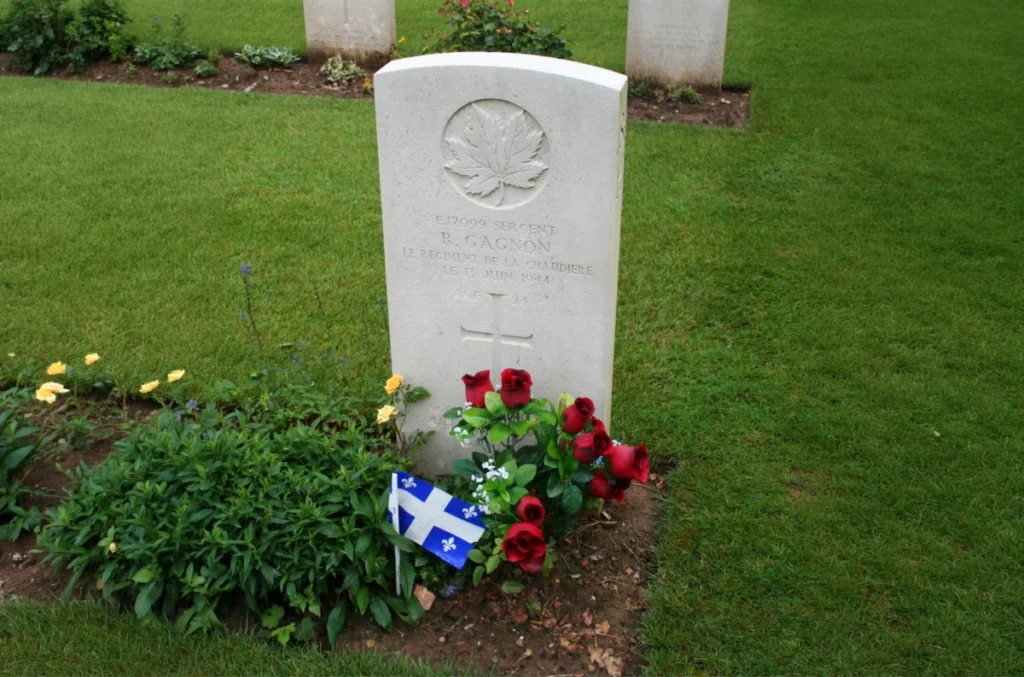
In contrast, francophone institutions demonstrated a considerably more subdued approach to war commemoration in the immediate post-war period. These differing attitudes persist even today. "Remembrance Day was observed in francophone universities for a few years after the war ended, but then it was abandoned," states Dr. Walling. "At McGill, it’s still an important day to celebrate. At Bishop’s, too, where every year they read out the names of every student killed in war." This enduring divergence in commemorative practices serves as a tangible reminder of the distinct wartime experiences and national identities that shaped Quebec’s academic landscape.
Reflections on a Modern Context: Would History Repeat Itself?
The cultural and political landscapes of Quebec’s anglophone and francophone universities remain distinct. The question arises: if Canada were to enter an armed conflict today, would a similar schism in student responses emerge? Professor Bouchard expresses skepticism. "Canada is a sovereign nation and no longer has the imperial tie that existed during the Second World War, so I’m not sure you’d see the same division," he posits. He also notes the increased professionalization and unionization of university faculty, granting them a more unified and vocal platform than they possessed during the 1940s. "In addition, university professors are now mostly unionized, so they have an official voice in a way they didn’t then. I think there would be a strong critical response."
The nature of modern warfare also plays a significant role. Professor Bouchard points out that contemporary military conflicts are far more technologically driven and can be executed with significantly smaller personnel numbers. Dr. Walling concurs, adding that universities are unlikely to resume their roles as officer training grounds. "The Canadian Army now has a more stringent framework for officer training, because the formula of training part-time while taking university courses didn’t work," he explains. "Officer training is intensive and long-term."
However, the Second World War undeniably ushered in a more utilitarian perspective on the role of universities. Professor Bouchard observes, "Back then, the impetus was to cut humanities departments. Today, governments are pressuring universities to develop closer ties to industry. In wartime, the question arises of dual-use research: civilian and military. Does university research have potential applications in military defense? What about offense?" This evolving relationship between academia, industry, and the state suggests that in any future conflict, universities might be scrutinized for their potential contributions to national defense, albeit through different mechanisms than those employed during the Second World War.
Crucially, Quebec universities operate as public institutions. "As beneficiaries of public funds, universities serve society and the state," Professor Bouchard asserts. "If the state needs something from universities, universities have the obligation to provide it. And that’s also true when it comes to contributing to the war effort." This fundamental principle underscores the enduring, albeit evolving, nexus between academic institutions and the demands of the state, particularly in times of national crisis. The legacy of the Second World War continues to inform the complex relationship between universities, national identity, and the responsibilities of citizenship in a sovereign nation.