



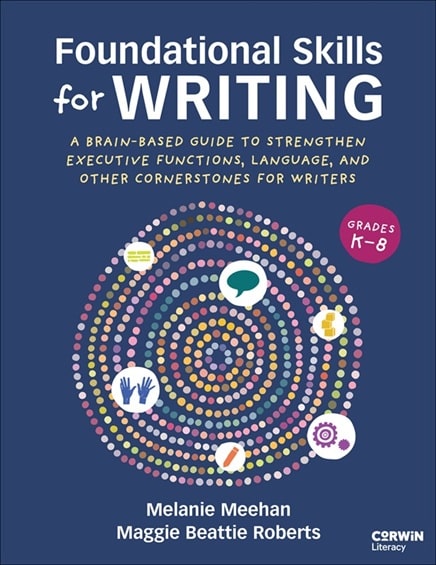
For years, the discourse surrounding literacy education has been dominated by fervent debates over reading instruction, particularly the efficacy of phonics and comprehension strategies. Yet, a critical component of literacy — writing — has largely remained in the shadows, an often-overlooked sibling in the educational spotlight. This significant omission is now being robustly addressed by two prominent educators, Melanie Meehan and Maggie Roberts, who have co-authored a groundbreaking new book, Foundational Skills for Writing: A Brain-Based Guide to Strengthen Executive Functions, Language, and Other Cornerstones for Writers. Published earlier this month, their work aims to fundamentally shift how educators approach writing instruction by delving into the intricate cognitive processes involved and offering practical, brain-informed strategies.

The publication of Meehan and Roberts’ book arrives at a pivotal moment in education, as policymakers and practitioners grapple with persistent challenges in student literacy outcomes. While national assessments frequently highlight struggles in reading, data on writing proficiency paints an equally concerning picture. For instance, the National Assessment of Educational Progress (NAEP) consistently shows that a significant percentage of students, particularly at the middle and high school levels, do not achieve proficiency in writing. In the most recent NAEP writing assessment (though not as frequently administered as reading), scores have indicated stagnation or even decline across various grade levels, underscoring a systemic issue that has received comparatively less attention than the "reading wars."
Melanie Meehan, a former curriculum coordinator who recently established her own in-person writing center, and Maggie Roberts, a seasoned literacy consultant and former middle school teacher with nearly two decades of classroom support experience, recognized this glaring gap. Their collaboration stems from a shared understanding that reading and writing are not discrete skills but deeply interconnected processes, each reinforcing the other. Research consistently demonstrates this reciprocal relationship: strong writers tend to be stronger readers, and vice versa. Writing helps solidify phonological awareness, develop vocabulary, improve comprehension of text structure, and deepen critical thinking skills. Conversely, extensive reading exposes students to diverse writing styles, vocabulary, and organizational patterns, enriching their own writing abilities.
The core premise of Foundational Skills for Writing is to demystify the complex cognitive demands of writing. The authors meticulously break down the multifaceted act of writing into manageable, brain-based skill categories, offering educators a clearer roadmap for instruction. These categories include transcription skills, oral language development, and executive functions – areas often underdeveloped in students, leading to significant hurdles in expressing ideas effectively on paper.
Understanding the Cognitive Blueprint of Writing
At its heart, writing is a profoundly demanding cognitive task. It requires the simultaneous orchestration of numerous mental processes, from the basic mechanics of forming letters to the higher-order thinking involved in structuring an argument or crafting a narrative. Meehan and Roberts emphasize that for many students, the sheer cognitive load of writing can be overwhelming. If foundational skills are not automatized, they consume precious working memory, leaving little capacity for creativity, organization, and critical thought.

The book categorizes these foundational skills into three primary domains:
- Transcription Skills: This category encompasses the physical and linguistic mechanics of putting words on paper. It includes handwriting, keyboarding proficiency, spelling accuracy, and the underlying large and small motor development necessary for these tasks. When a student struggles with forming letters or recalling spellings, their cognitive resources are diverted from generating ideas and constructing meaning, effectively slowing down or halting the writing process.
- Oral Language: Crucially, writing is built upon a strong foundation of spoken language. This category addresses the speaking and listening skills that serve as precursors to written expression, including vocabulary acquisition, grammatical awareness, and the ability to construct coherent sentences orally. A child who struggles to articulate complex ideas verbally will invariably face challenges in committing those ideas to writing.
- Executive Functioning: Perhaps the most sophisticated and often least understood aspect, executive functions are the brain’s control center, managing complex cognitive activities. For writing, this includes working memory (holding information in mind while manipulating it), cognitive flexibility (shifting perspectives, adapting strategies, and revising ideas), and inhibitory control (filtering out distractions and resisting impulsive responses). These functions are vital for planning, organizing, revising, and self-monitoring during the writing process.
By delineating these skill sets, Meehan and Roberts provide educators with a diagnostic framework and targeted interventions. Their approach advocates for explicit, systematic instruction in these foundational areas, rather than assuming students will acquire them implicitly or through osmosis.

The "Minute Moves": Practical Strategies for Busy Classrooms
A hallmark of Meehan and Roberts’ pedagogical philosophy is the concept of "Minute Moves." These are short, flexible activities designed to be easily integrated into daily classroom routines, requiring only a couple of minutes each. They can serve as warm-ups, transition activities, or quick insertions during lessons, aiming to automatize foundational skills and thereby reduce the cognitive load on students during more complex writing tasks. The authors shared eight such strategies, categorized by the skill they target:
Spelling Minute Moves: Building Orthographic Maps
Spelling is far more than rote memorization; it involves understanding the intricate patterns and structures of the English language. The "Minute Moves" for spelling aim to foster curiosity and build neurological pathways for efficient word retrieval and recognition.
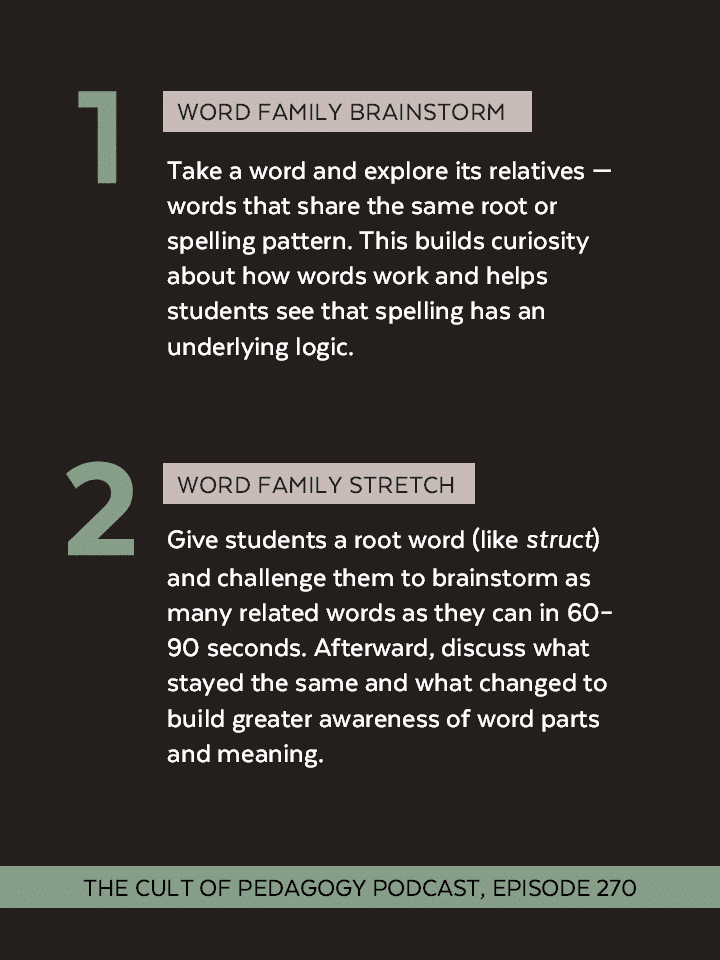
- Word Family Brainstorm: Inspired by spelling researcher Rebecca Treiman, this activity encourages students to explore the etymological and morphological connections between words. Instead of teaching homophones like two, to, too in isolation, educators guide students to see how two relates to twin, twine, twenty, revealing a pattern where the "TW" combination often signifies "twoness." Meehan recounts a tutoring experience where a student struggling with "decision" grasped its spelling by connecting it to "decide," which then branched to "incision," "concise," and even "scissors" – all tracing back to a Latin root meaning "to cut." This approach makes spelling logical and engaging, cultivating a sense of wonder about words.
- Word Family Stretch: This is a timed activity where students brainstorm as many words as possible related to a given root, such as "struct" (meaning "to build"). Within 60-90 seconds, students might generate "structure," "destruction," "construct," "structural," "instruct," and "instruction." The critical follow-up is a debriefing session: "What stayed the same? What changed? How did prefixes or suffixes alter the meaning?" This fosters an understanding that word parts carry consistent meaning, a cornerstone of academic vocabulary development. Roberts highlights the distinction between "bound roots" (like "struct," which cannot stand alone) and "free roots" (like "form," which can be a word on its own but also part of "reform," "transform," etc.), deepening students’ morphological awareness.
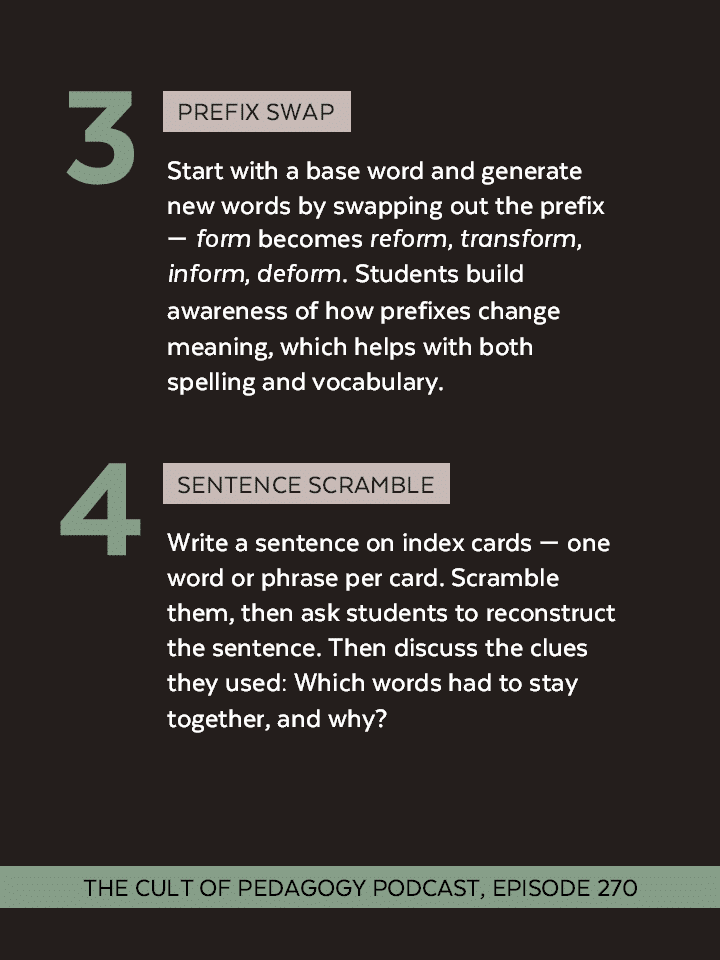
- Prefix Swap: Directly building on the previous activities, this move focuses specifically on the impact of prefixes. Students are given a base word, such as "form," and challenged to generate variations by swapping prefixes: "reform," "transform," "inform," "deform." The discussion then centers on how each prefix shifts the word’s meaning. This strategy is particularly powerful for multilingual learners who often recognize Latin or Greek roots and prefixes from their native languages, as Meehan observed with students understanding "benevolent" and "malevolent" through their existing knowledge of "bene" and "mal." Collectively, these activities strengthen orthographic mapping, the process by which the brain stores written words for instant retrieval, thus freeing up cognitive energy during writing.
Sentence Construction Minute Moves: Mastering Syntax and Fluency
Effective writing relies on the ability to construct varied, coherent, and grammatically sound sentences. These "Minute Moves" help students internalize sentence patterns and develop syntactic fluency.
- Sentence Scramble: A hands-on activity where a sentence is broken into words or phrases, written on index cards, and then scrambled for students to reassemble. The tactile nature allows for experimentation. After reconstruction, students reflect on their process: "How did you determine the order? What clues did you use? Which words had to stay together?" The activity can be scaffolded by removing punctuation, adding a distractor word, or challenging students to extend the sentence. Roberts underscores that the goal is to build an "internalized understanding of sentence patterns and sentence construction," which students can then apply to their own compositions.
- Sentence Expander: Starting with a simple "kernel" sentence, like "The cat purrs," students collectively expand it by answering a series of questions: "Which cat? What color? Where? When? Why?" Meehan prefers "doer" and "doing" over the more abstract "subject" and "predicate" to make grammar accessible. Once expanded (e.g., "The orange cat is sleeping on the couch in the afternoon because he is tired"), students experiment with rearranging phrases to create new variations. This playfulness helps them develop richer, more complex sentences and understand how details can be woven in without disrupting the core meaning.
- Sentence Combining: Roberts identifies sentence combining as a "high-impact, quick way" for students to transition from simple, choppy sentences to more syntactically complex and precise expressions. Students are given two basic sentences (e.g., "My cat is orange. My cat is big.") and asked to combine them into one (e.g., "My big orange cat…"). For beginners, specific words can be underlined for "harvesting." As proficiency grows, students combine three or more sentences and experiment with conjunctions (because, and, but) to alter meaning and create nuanced connections. This practice directly translates into students’ ability to produce more sophisticated prose in their independent writing.
Executive Functioning Minute Moves: Cultivating Cognitive Agility
Executive functions are crucial for navigating the iterative and complex nature of writing. These "Minute Moves" explicitly target cognitive flexibility, a key executive function.
- What’s Another Way?: This activity directly practices cognitive flexibility by challenging students to rewrite a given sentence in multiple ways. "What if you started with the dependent clause? What if you replaced the noun with a pronoun? What if you made it shorter?" Meehan highlights that powerful writing isn’t just about complexity; it’s about intentional variation. The ability to shift between long, intricate sentences and concise, impactful ones is a mark of a skilled writer. Critically, Meehan notes the empowering effect of explicitly naming "cognitive flexibility" for students, helping them recognize that they are developing a sophisticated mental skill, especially for those who have historically struggled with writing.
- New Angle: This strategy zooms out from the sentence level to the narrative, targeting cognitive flexibility through perspective-taking. Students retell a familiar scene from a book, class text, or short film through the eyes of a different character. Roberts recalls a vivid memory of a ninth-grade cafeteria food fight, illustrating how retelling it from the perspective of the teacher with applesauce in her hair completely transforms the narrative. This exercise demands holding multiple viewpoints simultaneously, making deliberate choices about voice, detail, and interpretation. Meehan uses short Pixar films like "Snack Attack" for this, where the same event is shown from two contrasting perspectives. She describes an instance where she and a student collaboratively wrote from different characters’ viewpoints, fostering not only writing skill but also empathy and the ability to understand diverse perspectives – a skill paramount for civic engagement and a functioning democracy.
Broader Implications and a Call to Action
The framework presented by Meehan and Roberts represents more than just a collection of strategies; it signifies a potential paradigm shift in writing pedagogy. By explicitly integrating cognitive science and executive function development into writing instruction, the book advocates for a more holistic, equitable, and effective approach.
This shift has several profound implications:
- For Teachers: The book offers practical, research-informed tools that can be immediately implemented, providing a sense of agency and clarity for educators often overwhelmed by the complexities of teaching writing. It also serves as a valuable resource for professional development, encouraging teachers to understand the "why" behind their instructional choices.
- For Students: By breaking down writing into its foundational components and providing low-stakes, frequent practice, students can build confidence and competence. The emphasis on automatizing basic skills frees them to engage in higher-level thinking, fostering creativity and critical analysis. This approach is particularly beneficial for students with learning differences, English language learners, and those from disadvantaged backgrounds, who often struggle most with the implicit demands of traditional writing instruction.
- For Curriculum Development: The book challenges curriculum designers to ensure that writing instruction is not an afterthought but is systematically integrated across all grade levels and subject areas, with clear progression in foundational skills. It promotes a more balanced literacy framework that gives writing its rightful place alongside reading.
- For the Literacy Debate: Foundational Skills for Writing serves as a powerful argument for broadening the current "literacy wars" to include a serious, research-backed examination of writing instruction. It underscores that true literacy encompasses both the ability to decode and comprehend text, and the capacity to encode and produce meaningful text.
In an educational landscape often characterized by fragmented approaches and fleeting trends, Meehan and Roberts offer a cohesive, evidence-based vision for empowering the next generation of writers. Their work is a timely and vital contribution, reminding educators that by understanding the brain’s role in writing, they can unlock students’ full potential not just as communicators, but as thinkers, problem-solvers, and engaged citizens. The call to re-center writing in the literacy conversation is not merely academic; it is a call to strengthen the very foundations of learning and expression.