



A recent observation in a bustling classroom underscored a persistent challenge facing educators: how to foster genuine student ownership of learning. During instructional rounds, a team of teachers quietly exited a classroom where students were diligently engaged in group work. The teacher, however, followed them out, expressing a familiar frustration. "I am trying to get them to own their learning," she stated with an exasperated tone. "They are sweet. They do what I ask, but they just won’t own it." This sentiment echoes across educational institutions, highlighting a critical gap between compliant task completion and deep, self-directed engagement. The answer, increasingly supported by cognitive science and pedagogical research, lies in explicitly coaching students in "learn-to-learn" skills. While popular pedagogical approaches such as project-based learning (PBL), Universal Design for Learning (UDL), or makerspace learning are powerful and evidence-backed, they often fall short if students lack the explicit tools, techniques, and metacognitive "moves" to fully leverage them.
The Foundational Challenge: Learning as an Internal Process
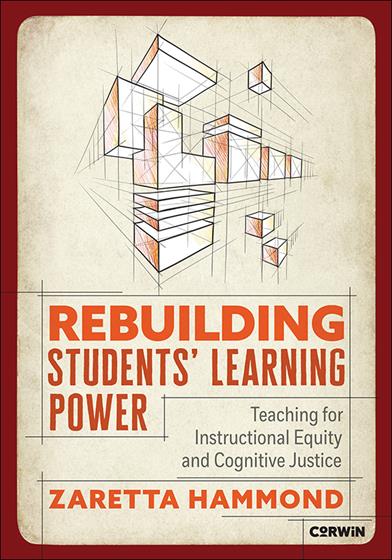
Despite meticulous lesson planning, engaging activities, and comprehensive scaffolded support, educators cannot compel a student’s brain to initiate the intricate information processing cycle. This fundamental truth dictates that learning is ultimately an autonomous act, residing solely with the learner. If teaching fails to ignite intellectual curiosity, if the learning environment does not feel intellectually safe, or if students lack the inherent skills to navigate new content through the attention, elaboration, and consolidation phases of information processing, then meaningful learning will remain elusive. As Zaretta Hammond, author of Rebuilding Students’ Learning Power (Corwin, 2025), posits, "We can teach our hearts out, but in the end, only the learner learns." The central question, therefore, shifts from "How do we teach?" to "How do we empower students to learn effectively?" This necessitates a proactive approach that couples motivation and neuroscientific understanding with specific, actionable tools and strategies, collectively known as learn-to-learn skills, designed to make learning "sticky" and deeply ingrained.
Defining "Learn-to-Learn" Skills: Beyond Executive Function
"Learn-to-learn" skills are not merely a pedagogical buzzword; they represent a recognized and crucial dimension of cognitive development. David Perkins of Harvard’s Project Zero refers to this as the "game of learning," while Ron Berger, founder of EL Education, champions it as the "craftsmanship of learning." Hammond aptly describes them as the "trade secrets" of learning, often hidden in plain sight. From an equity perspective, these skills constitute a vital hidden curriculum, capable of closing opportunity gaps and fostering more equitable academic outcomes by demystifying the learning process for all students.
It is crucial to distinguish learn-to-learn skills, which are deeply rooted in information processing, from executive function skills. While executive function skills, such as planning, organization, and time management (often addressed through binders and study techniques), are undeniably important for academic success, they do not directly enhance a student’s capacity to carry a greater cognitive load during the actual processing of new information. Learn-to-learn skills, conversely, directly address the mental processes involved in understanding, integrating, and retaining new knowledge.
Hammond introduces these as a set of five individual "moves" that, when practiced and internalized, form a robust skill set. A "move" is a specific, discrete action or technique executed in a particular moment – concrete and with a clear beginning and end, akin to a chess move or a dance step. A "skill," in contrast, is a broader, developed ability or competency that encompasses understanding, judgment, and the capacity to effectively execute various moves. Skills involve the knowledge of when, how, and why to deploy different moves adaptively. For instance, in basketball, a crossover dribble is a move, but ball-handling is a skill that integrates many such moves. Skills enable learners to choose the right moves at the right time and execute them proficiently. These five learn-to-learn moves, therefore, collectively constitute a skill set for processing new content meaningfully and deeply.
The Five Learn-to-Learn Moves: A Neurocognitive Framework
The efficacy of these moves is grounded in the brain’s natural information processing cycle, which involves attention, elaboration, and consolidation. By explicitly teaching these strategies, educators can help students optimize their cognitive processes.
Move 1: Size It Up and Break It Down
This foundational move begins with task analysis. Students are prompted to engage in a structured cognitive routine to discern the precise demands of a task. The "Break It Down" component then focuses on formulating a strategic plan of attack, disaggregating the task into its constituent cognitive activities and identifying the necessary tools and strategies. This move activates the brain’s decision-making centers, helping learners adopt an appropriate emotional stance and develop a systematic approach. Questions posed during this phase include:
- What is this task asking me to do?
- What does "good work" look like for this task?
- What are the key steps or components?
- What resources or prior knowledge might I need?
- How much time and effort will this require?
By engaging in "Size It Up and Break It Down," students proactively manage cognitive load, reducing anxiety and increasing self-efficacy. Research on metacognition consistently shows that students who plan their learning effectively demonstrate superior academic performance and problem-solving abilities.
Move 2: Scan the Hard Drive
This move is crucial for activating existing neural pathways that hold a student’s background knowledge, or "funds of knowledge." The brain’s fundamental rule for new learning is that it must connect with existing learning. During the attention phase of information processing, when new information is encountered, the brain instinctively scans its schema for related experiences, definitions, or concepts, no matter how seemingly tangential. This move can be deployed after task analysis or whenever a learner grapples with new or confusing information. It prompts the brain to embark on a "scavenger hunt" through its existing knowledge base. Key questions include:
- What do I already know about this topic?
- What experiences or examples come to mind?
- How does this connect to something I’ve learned before?
- Are there any similar concepts I’m familiar with?
Activating prior knowledge (schema activation) is a well-documented strategy to enhance comprehension and retention, as new information is more easily integrated into an existing cognitive framework, aligning with theories like Ausubel’s assimilation theory.
Move 3: Chew and Remix
Central to the elaboration phase of information processing, "Chew and Remix" involves actively integrating new content with the activated schema. Students are essentially "mixing the new with the known," weaving freshly presented information into their existing background knowledge. This active "chewing" leads to meaning-making and the subsequent "remix." It demands productive struggle within the learner’s zone of proximal development (ZPD) to make sense of complex, conflicting, or competing information. This process is vital for moving beyond surface-level learning to deeper understanding, correlating with higher levels on Bloom’s Taxonomy (e.g., analysis, synthesis, evaluation) or Webb’s Depth of Knowledge wheel. The "Chew and Remix" move signals the brain to engage in:
- Explaining the new content in their own words.
- Making analogies or metaphors to connect new and old information.
- Asking "why" and "how" questions about the material.
- Discussing the content with peers or an adult.
- Creating visual representations (diagrams, mind maps) of the information.
This active processing strengthens synaptic connections and facilitates the transfer of information from working memory to long-term memory.

Move 4: Engage in Skillful Practice
While "Chew and Remix" focuses on general meaning-making, "Skillful Practice" targets the deepening of understanding with core concepts and the development of automaticity for skills and procedures, particularly in areas like math and reading. This move emphasizes deliberate practice, which is critical for myelination – the process of forming a myelin sheath around nerve fibers, increasing the speed and efficiency of neural transmission. Students employ this move when they need to refine how they apply a strategy or execute a skill, such as deepening their understanding of a historical event or mastering a mathematical formula. "Skillful Practice" cues the brain to use its meta-strategic awareness to pinpoint weak areas in skill execution and focus on small, specific improvements. This involves:
- Targeted repetition with continuous refinement.
- Seeking specific feedback on execution.
- Identifying and isolating areas for improvement.
- Varying practice conditions (interleaving).
- Utilizing spaced repetition to reinforce learning over time.
Research on deliberate practice by K. Anders Ericsson highlights its necessity for achieving expertise, emphasizing focused attention and continuous feedback loops.
Move 5: Make it Sticky
The "Make It Sticky" move is designed to strengthen the consolidation phase of information processing and counteract the brain’s natural "pruning" mechanism, which eliminates fragile dendrites if new learning isn’t reinforced within 24 to 48 hours. The objective is to transform fragile dendrites into robust neural pathways through applying newly learned content in diverse contexts. This move is most effective when used at the end of a learning episode and within a short timeframe (e.g., within 12 hours), often during out-of-school hours. Learners must actively apply the skill or reflect on the information to solidify it. Ways to "Make It Sticky" include:
- Teaching the concept to someone else.
- Applying the new knowledge in a different real-world scenario.
- Creating self-quizzes or flashcards for retrieval practice.
- Reflecting on how the new learning connects to personal goals or interests.
- Journaling about the learning experience.
The principle of retrieval practice, championed by cognitive scientists like Roediger and Karpicke, demonstrates that actively recalling information significantly enhances long-term retention compared to passive re-reading.
Cultivating Cognitive Independence: Implementing Learn-to-Learn Skills
The true challenge lies in encouraging students to consistently adopt and utilize these moves without constant teacher prompting – the hallmark of a cognitively independent learner. Simply explaining these moves or using them as whole-class engagement strategies is often insufficient, as students may merely follow directions without internalizing the "ownership." For students to genuinely own their learning, they must grasp the profound idea that they are the active agents in working these moves, much like an athlete must pay attention to their own execution and self-correct.
Hammond proposes three key strategies to facilitate this transition:
1. Initiate Students into a Cognitive Apprenticeship
Modeling the journey of skilled tradespeople, educators can establish the classroom as a cognitive apprenticeship. This involves an explicit onboarding process, followed by phases of skill-building and habit formation, leading ultimately to mastery of learning how to learn. The goal is to help students develop the capacities of a proficient information processor. During an initial 4-6 week initiation period, the teacher explicitly outlines the path to learner mastery, fostering:
- Explicit Modeling: Demonstrating the moves and thinking aloud about their application.
- Guided Practice: Providing structured opportunities for students to practice with support.
- Scaffolding: Gradually reducing support as students become more proficient.
- Coaching: Offering individualized feedback and strategies.
- Peer Collaboration: Encouraging students to learn from and teach each other.
- Self-Correction: Empowering students to identify and address their own learning gaps.
This structured apprenticeship demystifies the learning process, making implicit expert strategies explicit for all learners.
2. Invite Students to Revise Their Learner Identity
Integral to the cognitive apprenticeship is inviting students to critically examine and potentially revise their self-perception as learners. Learner identity encompasses an individual’s beliefs about their abilities, motivations, and their place within the academic world, profoundly impacting their sense of belonging and persistence. Many underperforming students struggle not only with content mastery but also with a fundamental belief in their capabilities, often expressed through phrases like, "I’m not a math person." Addressing this involves:
- Promoting a Growth Mindset: Emphasizing that intelligence and abilities can be developed through effort and strategy (Carol Dweck’s work).
- Building Self-Efficacy: Providing opportunities for successful application of skills to foster belief in one’s capacity to succeed (Albert Bandura’s social cognitive theory).
- Affirming Cultural Capital: Recognizing and valuing students’ diverse backgrounds and experiences as assets to their learning.
- Connecting Learning to Identity: Helping students see how mastering learning skills contributes to their desired future selves.
Shifting learner identity from fixed to growth-oriented is a powerful catalyst for engagement and resilience.
3. Integrate Regular Opportunities for Reflection
Developing learning power, much like any other skill set, demands consistent reflection and constructive feedback. Students need frequent, structured instructional conversations to reflect on their learning journey, including their mistakes, moments of confusion, and the specific moves they employed to overcome challenges. This metacognitive practice helps students to become aware of their own thought processes. Key aspects include:
- Structured Self-Assessment: Using rubrics or checklists to evaluate their application of learn-to-learn moves.
- Metacognitive Journaling: Documenting strategies used, successes, and areas for improvement.
- Peer Feedback: Engaging in reciprocal feedback on learning strategies.
- Teacher-Led Conferencing: Individualized discussions about learning processes.
- Identifying Choke Points and Pitfalls: Explicitly discussing common obstacles.
A choke point is a natural constraint within the information processing cycle, such as the limited capacity of working memory (typically 3-5 "chunks" of information) or the short duration for which these chunks can be held without active rehearsal. Every learner must learn to manage these inherent cognitive limitations. A pitfall, conversely, represents a form of self-sabotage, such as believing that cramming by re-reading notes the night before a test is effective, rather than employing spaced self-quizzing. Another common pitfall is multitasking during new content acquisition. Helping students identify and strategize around both choke points and pitfalls empowers them to navigate their learning more effectively.
The Imperative of Instructional Equity
Creating these conditions and explicitly inviting students to adopt learn-to-learn skills is a profound act of instructional equity. These are not merely supplementary strategies for more engaging lessons; they are the "hidden equity curriculum" that every student requires to become a truly independent and empowered learner. In educational systems where such skills are often implicitly absorbed by some students through their home environments or prior schooling, explicitly teaching them levels the playing field. This approach acknowledges that not all students arrive with the same metacognitive toolkit and deliberately provides it to those who might otherwise be left behind. Every student deserves the opportunity to learn and master the craftsmanship of learning, equipping them not just for academic success, but for lifelong adaptability and flourishing in an ever-evolving world. By investing in these foundational skills, educators move beyond mere content delivery to cultivate a generation of learners who are not just knowledgeable, but also self-aware, strategic, and capable of directing their own intellectual growth.