


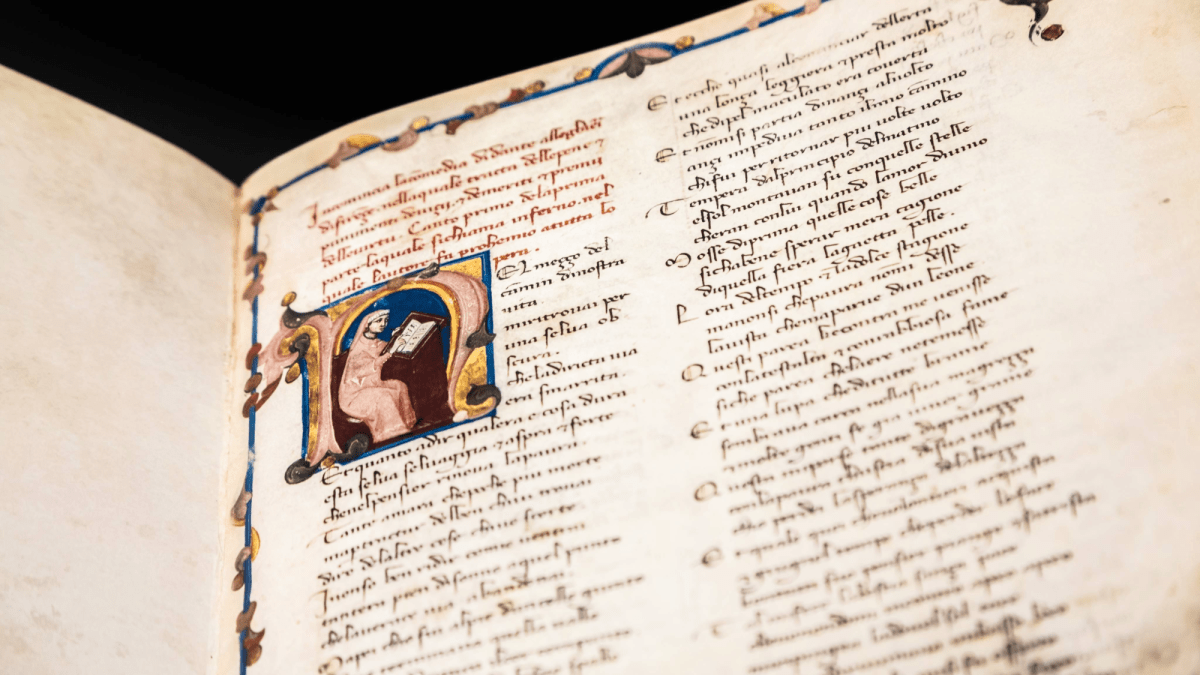
The intersection of medieval literature and modern earth science has revealed an unexpected protagonist in the field of geophysics: Dante Alighieri. While the 14th-century Italian poet is immortalized for his epic narrative "The Divine Comedy," recent scholarship suggests his work transcends mere allegory and theological exploration. Dr. Timothy Burbery, a professor of English at Marshall University, has presented a compelling case that Dante’s descriptions of the cosmos and the physical world demonstrate an intuitive grasp of geophysical principles—such as the inertial frame of reference and meteorite impact mechanics—centuries before these concepts were formally codified by the scientific community.
The core of this research, which Burbery recently presented at the European Geosciences Union (EGU) General Assembly in Vienna, posits that Dante functioned as an "accidental geophysicist." By attempting to provide a physical framework for the spiritual realms of "Inferno," "Purgatorio," and "Paradiso," Dante integrated observations of the natural world that align with modern geological and physical theories. This interdisciplinary analysis offers a new lens through which to view the intellectual history of the Middle Ages, suggesting that poetic intuition may have anticipated the empirical discoveries of the Scientific Revolution.
The Physics of the Geryon Flight and Inertial Frames
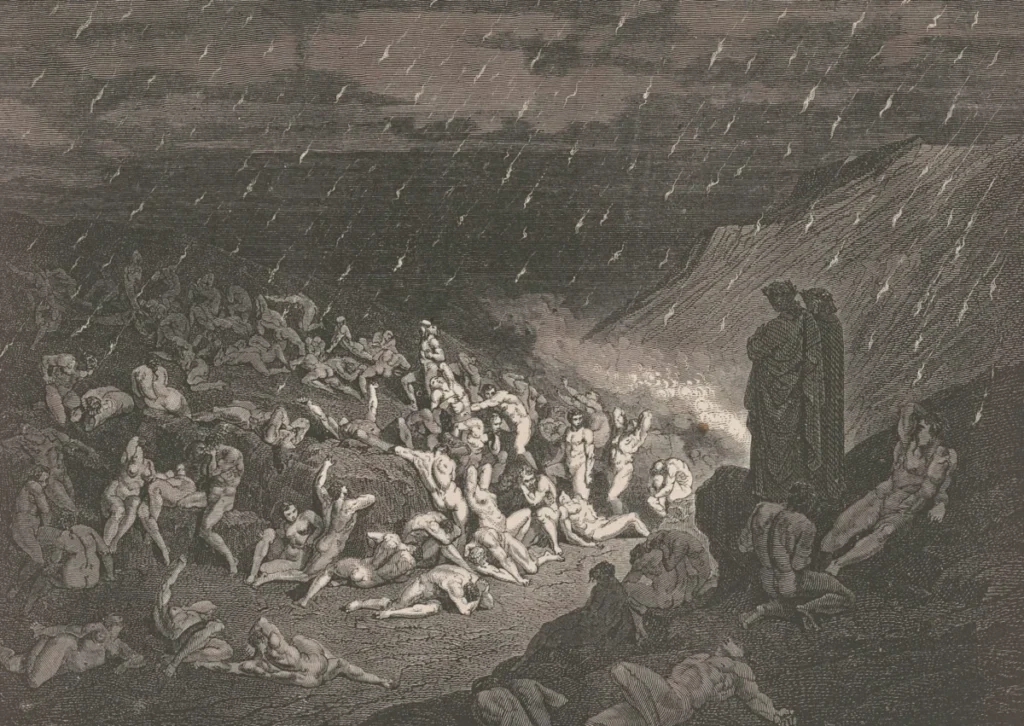
One of the primary examples cited by Burbery involves the transition between the seventh and eighth circles of Hell. In "Inferno," Dante and his guide, the Roman poet Virgil, must descend a massive precipice. They achieve this by mounting the back of Geryon, a mythical hybrid creature described as having the face of a just man, the body of a serpent, and the paws of a lion.
As they descend through the dark void, Dante the character observes a peculiar physical sensation: he is unable to perceive the motion of the flight itself, noting only the wind against his face. Burbery argues that this description is a precocious illustration of what modern physics terms the "inertial frame of reference." This principle, later refined by Galileo Galilei and eventually Albert Einstein, dictates that an observer within a steadily moving system cannot detect motion without an external point of reference.
In the 14th century, the concept of relative motion was not part of the standard intellectual curriculum. Most thinkers adhered to the idea that motion was an absolute quality that could always be felt. By accurately describing the sensory experience of a steady descent in a void—where the lack of visual cues prevents the perception of velocity—Dante displayed an observational rigor that prefigured classical mechanics.
Satan as an Extraterrestrial Impact Event
Perhaps the most striking aspect of Burbery’s research is the reinterpretation of Satan’s fall from Heaven. In "The Divine Comedy," the fall of the Morning Star is not merely a spiritual casting out but a catastrophic physical event that reshapes the planet’s geography. Dante describes Satan plummeting from the celestial heights, passing beyond the orbit of Saturn, and striking the Earth with immense velocity.
From a geophysical perspective, Burbery likens this narrative to a massive meteorite or asteroid impact. According to the poem, the force of Satan’s impact was so great that he tunneled through the Earth’s crust, coming to rest at the very center of the planetary core. This "impact" resulted in several massive geological shifts:
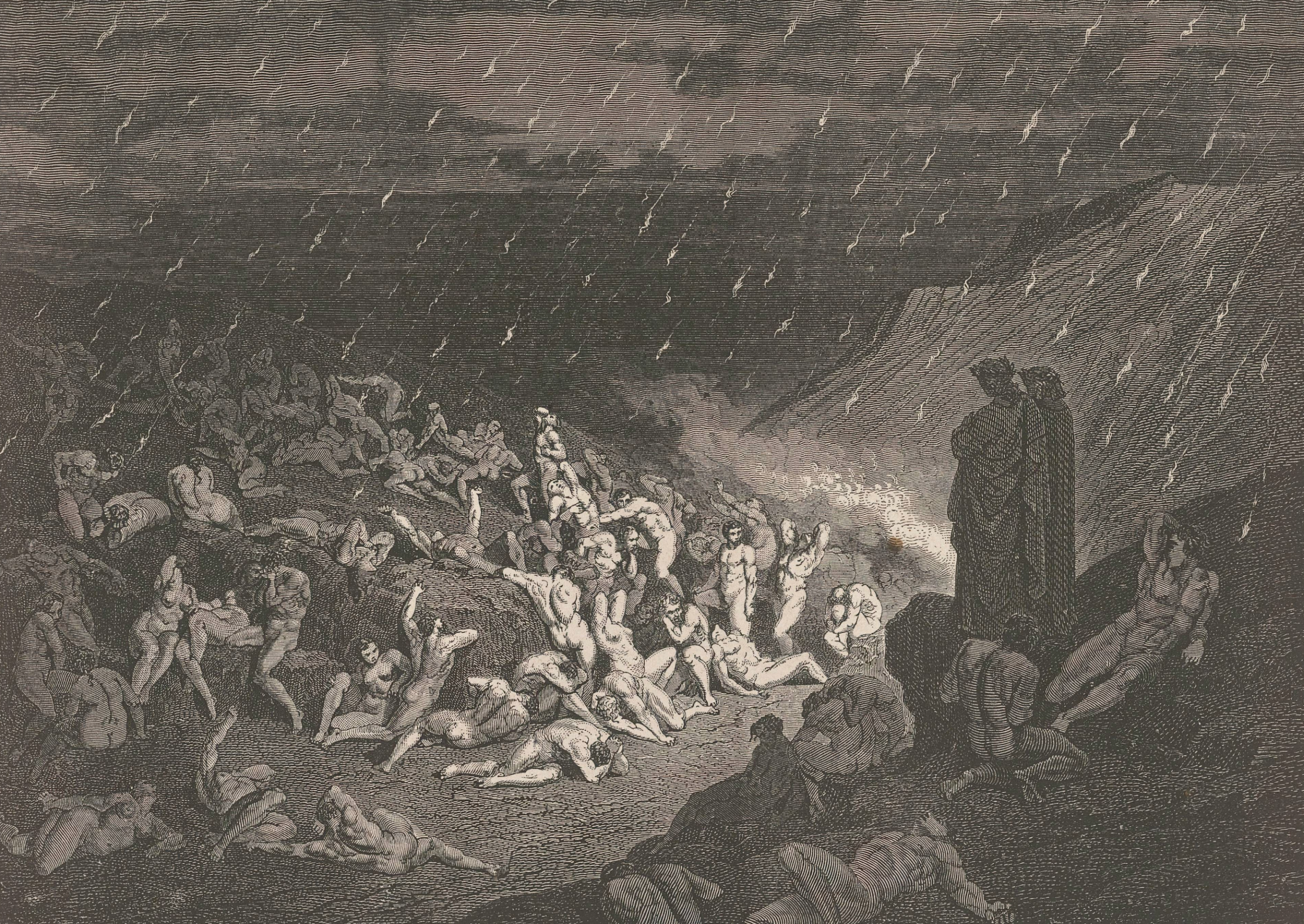
- Crater Formation: The "Inferno" itself is depicted as a vast, funnel-shaped crater or cone in the Northern Hemisphere, created by the displacement of earth during the fall.
- Tectonic Displacement: Dante writes that the impact caused the landmasses in the Southern Hemisphere to "flee" to the Northern Hemisphere, providing a poetic precursor to the concept of continental movement.
- Mountain Building: The earth displaced by Satan’s passage through the globe was forced out the other side, forming Mount Purgatory in the Southern Hemisphere.
While the "bottom-up" formation of a mountain via an internal transit is physically impossible by modern standards, the underlying logic—that a high-velocity extraterrestrial object possesses enough kinetic energy to restructure the Earth’s surface—is remarkably consistent with modern impact cratering physics. Burbery notes that Dante is unique among medieval and classical authors for attempting to calculate the physical consequences of such a fall. While myths like that of Icarus or the fall of the Titans describe descents, they lack the "proto-geological" detail regarding the resulting environmental transformation.
Historical Context and the Aristotelian Conflict
To understand the magnitude of Dante’s "accidental" discoveries, it is necessary to examine the scientific landscape of the 1300s. During this era, European intellectual life was dominated by Aristotelian physics and Ptolemaic astronomy. Under the Aristotelian model, the universe was divided into the "sublunary" sphere (Earth and its atmosphere) and the "celestial" spheres (the moon, planets, and stars). The celestial realms were believed to be composed of "ether," a perfect and unchanging substance, while the sublunary realm was subject to change and decay.
Aristotle posited that meteors and "shooting stars" were atmospheric phenomena—vapors ignited in the upper air—rather than solid bodies arriving from space. This view persisted for nearly five centuries after Dante’s death. It was not until 1803, following the investigation of a meteorite fall in L’Aigle, France, by physicist Jean-Baptiste Biot, that the extraterrestrial origin of meteors was scientifically accepted.
Burbery points out a fascinating tension in Dante’s work: the poet officially endorsed the Aristotelian view in "Paradiso," yet his description of Satan in "Inferno" treats the fallen angel as a physical body with mass and momentum arriving from the deep cosmos. This suggests that Dante’s poetic imagination and his observations of the physical world (such as the impact of falling rocks or the sight of volcanic craters) allowed him to intuitively bypass the flawed scientific dogmas of his time.
Geological Observations and Local Influences
Dante’s interest in geology was likely fueled by his firsthand observations of the Italian landscape. "The Divine Comedy" contains numerous references to geological events, including earthquakes and the "ruina"—massive landslides. In Canto XII of "Inferno," Dante describes a landslide on the Adige River near Trento, comparing the treacherous terrain of Hell to real-world geological failures.
Furthermore, scholars suggest that Dante may have been influenced by the volcanic activity of Mount Etna and Mount Vesuvius. Although he may not have seen an actual meteorite crater—as few were recognized as such at the time—the sight of a volcanic caldera would have provided a visual template for the "cone of Hell." By synthesizing these earthly observations with his narrative of a celestial fall, Dante created a "thought experiment" that anticipated the mechanics of impact geology.
Chronology of Scientific Discovery vs. Dante’s Narrative
The timeline of geophysics highlights how far Dante’s descriptions were ahead of formal scientific validation:
- 1308–1320: Dante composes "The Divine Comedy," describing an inertial frame of reference and a planetary-scale impact event.
- 1632: Galileo Galilei publishes "Dialogue Concerning the Two Chief World Systems," formalizing the principle of relativity and inertial frames.
- 1803: The scientific community finally confirms that meteorites are extraterrestrial rocks striking the Earth.
- 1912: Alfred Wegener proposes the theory of continental drift, echoing Dante’s idea of shifting landmasses (though via different mechanisms).
- 1960s: Eugene Shoemaker pioneers the study of impact craters as a major force in planetary evolution.
Broader Implications and Official Responses
Dr. Burbery’s research belongs to the growing field of "geomythology," which examines how ancient stories and literature might encode observations of actual geological events or intuitive understandings of natural processes. While some literary scholars remain cautious about projecting modern science onto medieval texts, the reception at the European Geosciences Union suggests a burgeoning interest among scientists in the historical roots of their discipline.
"While these effects are clearly fantastic and literary, they presage scientific thinking on how asteroids and meteorites restructure the earth," Burbery explained during his presentation. He acknowledges that while Dante’s Satan reaches the Earth’s core—a physical impossibility for any known meteorite—the poet’s attempt to grapple with the "splat" or the physical impact of a falling body represents a significant shift from purely mystical storytelling to proto-scientific inquiry.
The implications of this study are twofold. First, it challenges the "Dark Ages" narrative by demonstrating the sophisticated observational capabilities of medieval thinkers. Second, it suggests that literature can serve as a repository for early scientific intuition, providing a "pre-history" of geophysics that predates the invention of the telescope or the seismograph.
Conclusion: The Legacy of a Poetic Scientist
Timothy Burbery intends to expand his findings into a full research paper, further exploring the specific passages where Dante’s "proto-geology" manifests. The study serves as a reminder that the boundaries between the arts and sciences were once much more fluid. Dante Alighieri, in his quest to map the depths of the human soul and the heights of the divine, inadvertently mapped some of the fundamental laws of the physical universe.
By treating the fall of a spiritual being as a problem of mass, velocity, and displacement, Dante provided a blueprint for understanding the Earth as a dynamic, changeable body subject to cosmic forces. His "accidental geophysics" remains a testament to the power of human observation and the enduring relevance of "The Divine Comedy" as not just a masterpiece of literature, but a milestone in the history of human thought.