



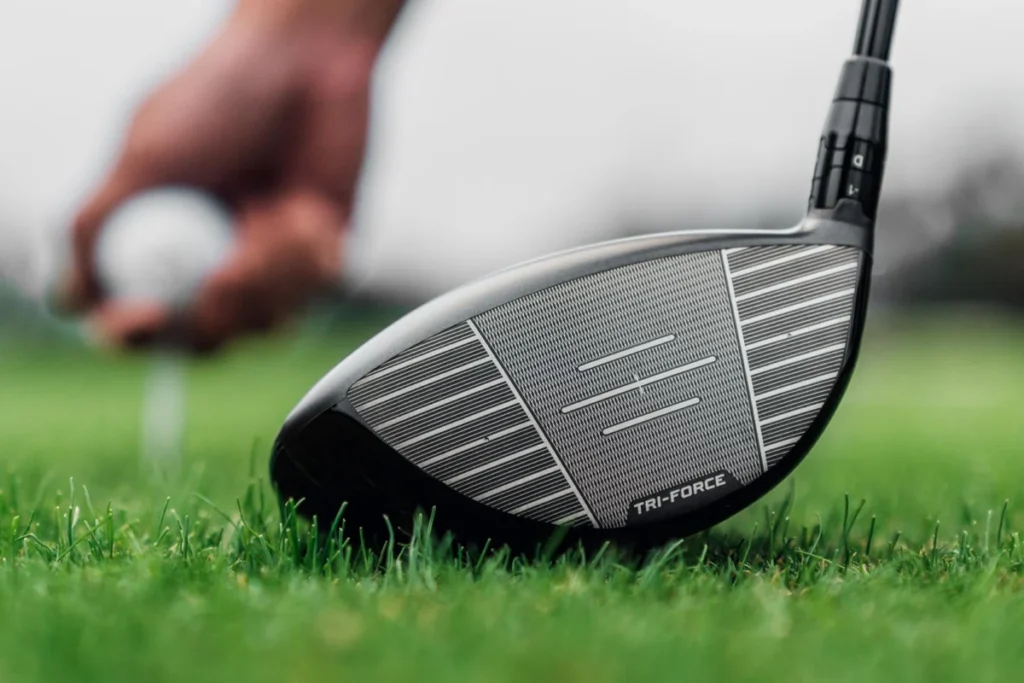
The global golf equipment market has entered a new era of material science with the official release of the Callaway Quantum driver series. Representing a significant departure from the industry’s long-standing reliance on monolithic titanium face structures, the Quantum lineup introduces the Tri-Force Face—a sophisticated three-layered composite construction. This new architecture utilizes a combination of titanium, carbon fiber, and a specialized military-grade polymer to push the boundaries of ball speed and structural durability. By integrating these disparate materials into a single, cohesive hitting surface, Callaway aims to address the inherent trade-offs between weight, strength, and elastic recovery that have challenged club designers for over three decades.
The Quantum series, which arrived at U.S. retail outlets on February 13, 2026, comprises five distinct models tailored to various player profiles: the Max, Max Fast, Max D, Triple Diamond, and Triple Diamond Max. With prices starting at $649.99, the lineup targets the premium segment of the market, positioning itself as a high-technology solution for golfers seeking to maximize performance under the strict regulatory constraints of the United States Golf Association (USGA) and the R&A.
The Evolution of Driver Face Materiality
To understand the significance of the Quantum launch, one must look at the chronology of driver development. For much of the 20th century, golf club heads were crafted from persimmon wood, followed by a transition to stainless steel in the 1980s. The true revolution occurred in the early 1990s with the introduction of titanium. Callaway’s own Great Big Bertha, released in 1995, helped cement titanium as the gold standard due to its high strength-to-weight ratio and its ability to provide a "spring-like effect" at impact.
However, the industry has spent the last 20 years searching for the next leap forward. In the early 2000s, Callaway experimented with the C4 driver, which featured an all-composite head and face. While innovative, the C4 struggled with sound, feel, and durability, leading the company back to titanium. More recently, competitors like TaylorMade have introduced carbon-fiber faces, arguing that the weight savings allow for better center-of-gravity (CG) placement.
The Quantum series represents a "third way" in this material evolution. Rather than choosing between titanium and carbon fiber, Callaway engineers, led by Brian Williams, Vice President of Research and Development, sought to leverage the strengths of both. Williams, a 23-year veteran of the company who took the helm of R&D in late 2022, noted that the project began by reframing the physics of a golf ball strike.
The Tri-Force Face: Engineering the Material Sandwich
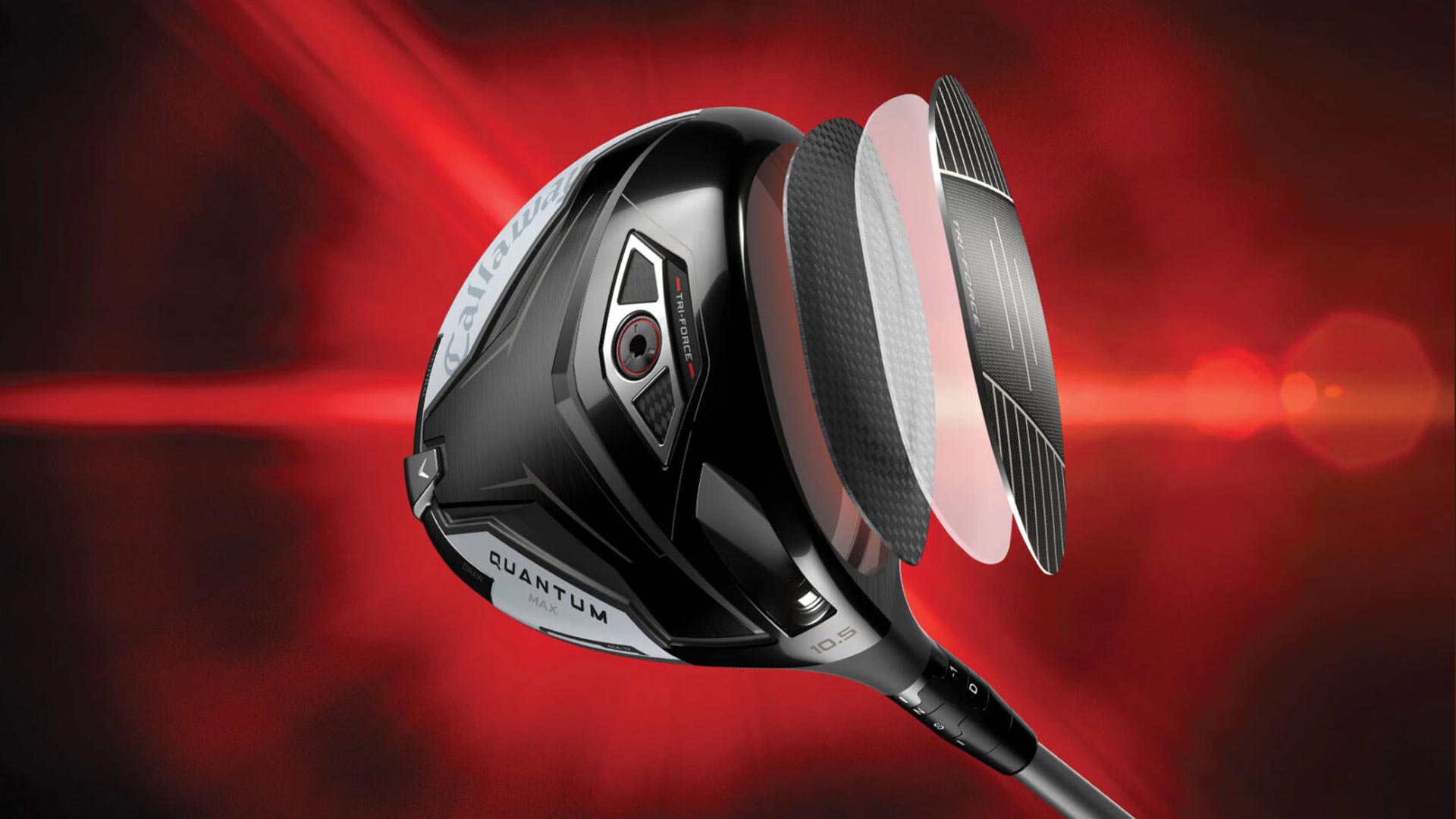
The core innovation of the Quantum driver is the Tri-Force Face. This design is predicated on the fact that during a high-velocity impact, the driver face undergoes two different types of stress simultaneously: the exterior surface (the hitting side) experiences intense compression, while the interior surface (the back side) is subjected to extreme tension.
- The Titanium Hitting Layer: The outermost layer is a titanium alloy. Because it is supported by a secondary structure, engineers were able to reduce its thickness significantly. The face is 14 percent thinner than previous Callaway models, and up to 25 percent thinner in the Max D variant. This reduction in mass allows for a more efficient transfer of energy to the ball, effectively increasing the "trampoline effect" while remaining within the legal limits of Characteristic Time (CT).
- The Carbon Fiber Chassis: Behind the titanium sits a carbon fiber layer. Carbon fiber is exceptionally strong in tension, making it the ideal material to reinforce the back of the face as it stretches during impact. This layer provides the necessary structural integrity without the heavy weight penalty of a full titanium face.
- The Military-Grade Polymer Bond: The most critical component is the bonding agent. Callaway’s R&D team discovered a specialized polymer originally described in military white papers for use in makeshift bunkers. In combat applications, this polymer is applied to the interior of structures to prevent shrapnel from flying inward during an explosion—essentially holding the material together under extreme stress.
In the Quantum driver, this polymer acts as a "viscous adhesive" with a consistency similar to honey. Unlike rigid glues, which can dampen the face and reduce ball speed, this polymer allows the titanium and carbon layers to flex independently while maintaining a permanent bond. This prevents the delamination and cracking that often plague carbon-fiber-based faces, particularly for high-swing-speed players.
AI-Driven Topography and Localized Tuning
The structural sandwich of the Tri-Force Face is managed by Callaway’s proprietary Artificial Intelligence (AI) design suite. Since the introduction of the Flash Face in 2019, Callaway has used supercomputers to run thousands of simulations to determine the optimal face shape. For the Quantum series, the AI was tasked with a more complex problem: managing three materials with different elastic properties.
The result is a face with non-intuitive topography. Unlike traditional faces that have a uniform thickness or a simple "variable face thickness" (VFT) pattern, the Quantum face features localized "thick and thin" zones. These zones are designed to normalize ball speed across the entire hitting surface.
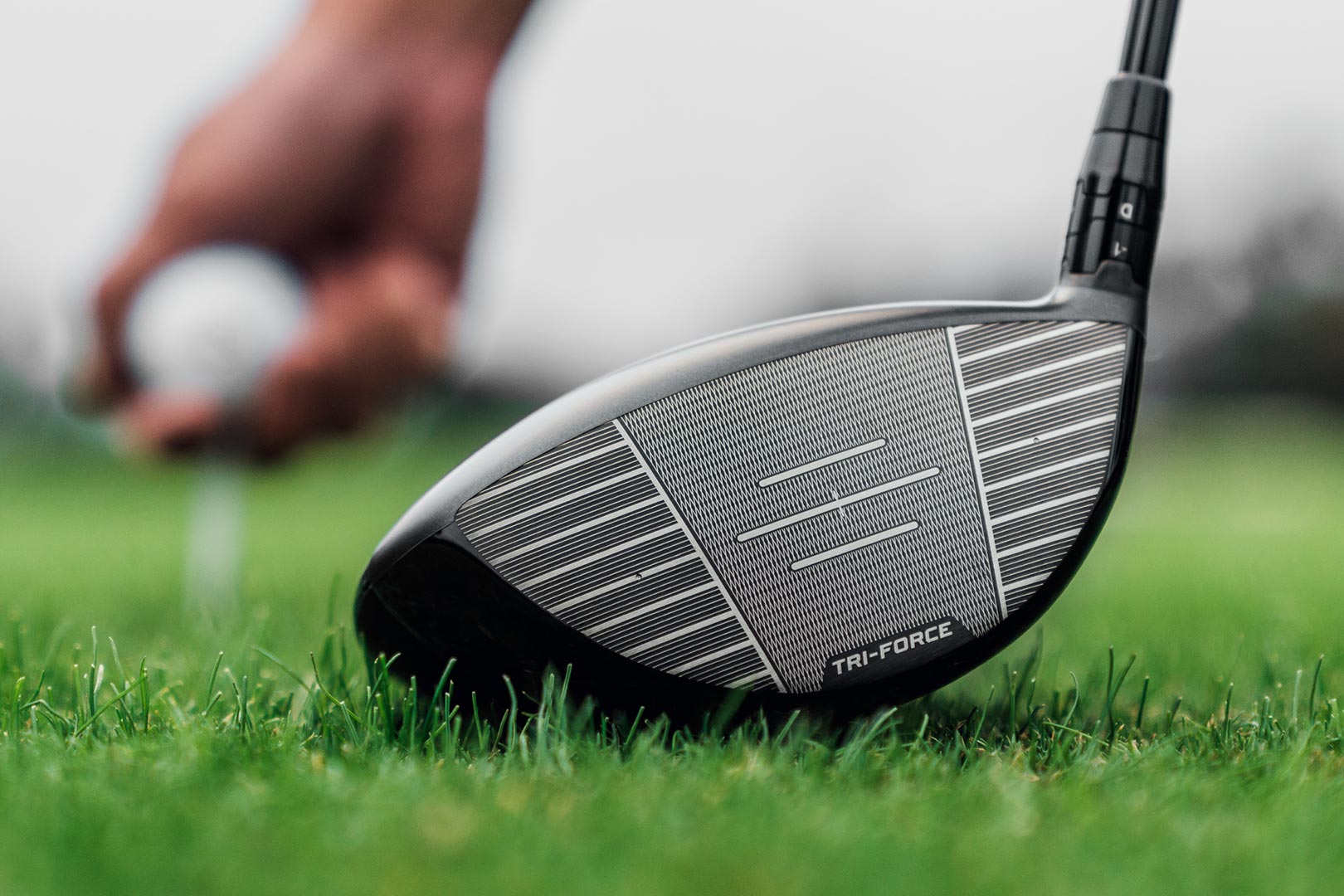
Data from robot testing indicates that this AI-driven approach significantly improves "off-center hit" performance. For example, strikes high on the face—which typically lose spin and "nose-dive"—are engineered to maintain enough spin to stay airborne. Conversely, heel strikes, which often result in a heavy "slice" or side-spin, are corrected by the face geometry to produce a straighter flight path.
A Targeted Five-Model Lineup
Callaway has structured the Quantum lineup to cover every segment of the golfing population, from professional tour players to high-handicap amateurs.
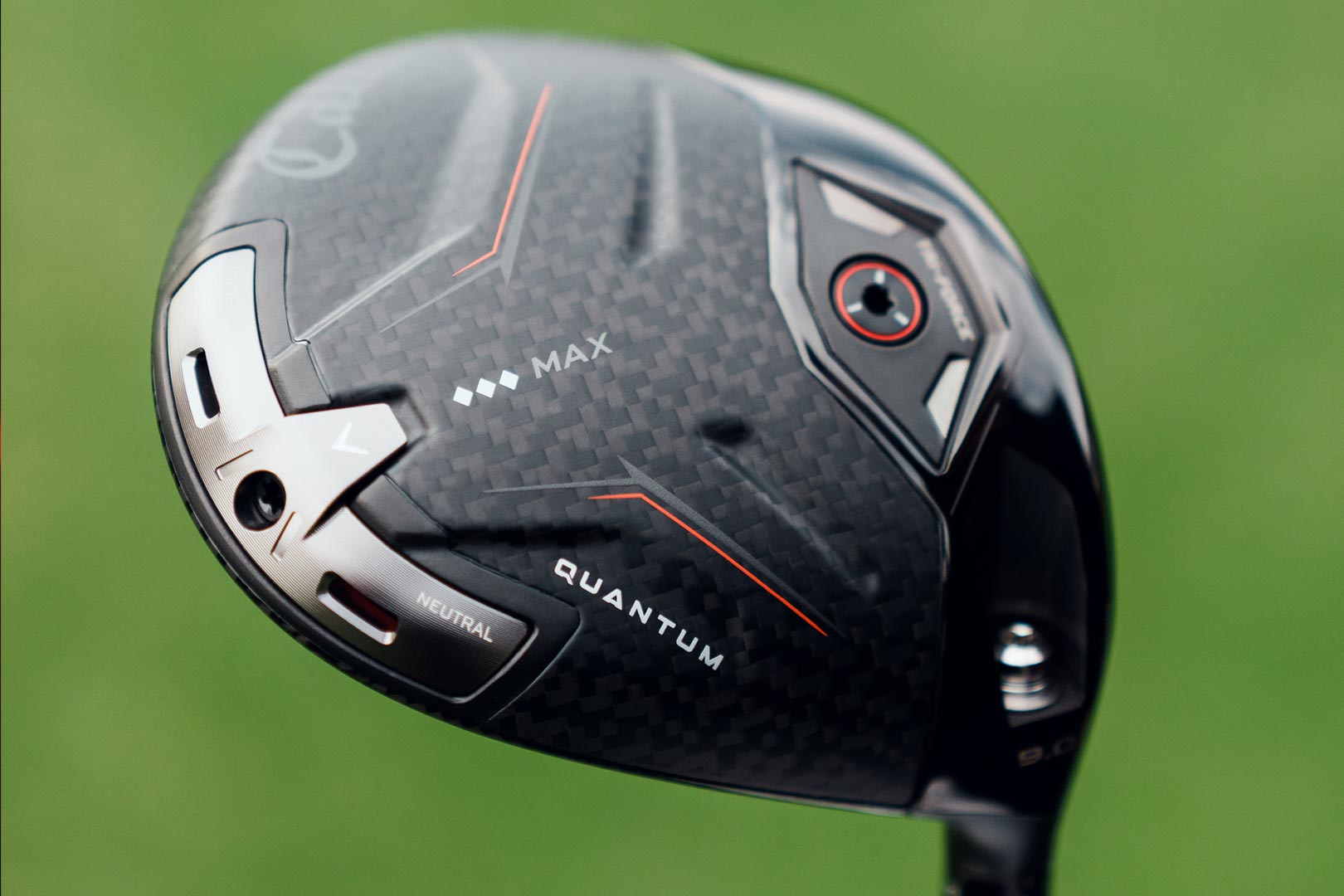
- Quantum Max: This is the flagship 460cc model designed for the broadest range of players. It features a neutral center of gravity and high Moment of Inertia (MOI) for maximum forgiveness.
- Quantum Max Fast: Specifically engineered for golfers with moderate swing speeds (seniors and some lady golfers), this model utilizes lighter components and a 360° Carbon Chassis to help increase clubhead speed.
- Quantum Max D: The "D" stands for Draw. This model incorporates internal heel weighting and a specifically tuned Tri-Force Face to help golfers who struggle with a chronic slice.
- Quantum Triple Diamond: A 450cc, tour-inspired head designed for better players. It offers lower spin, a more compact look at address, and greater workability. It features a carbon-fiber sole and adjustable weighting to fine-tune shot shape.
- Quantum Triple Diamond Max: This model blends the low-spin characteristics of the Triple Diamond with the stability of a 460cc head. Early retail reports suggest this has been the most sought-after model for high-speed amateurs who want both distance and control.
Regulatory Context and Performance Metrics
The development of the Quantum series occurs within a highly regulated environment. The USGA’s "Characteristic Time" (CT) test measures the elasticity of the clubface by dropping a steel pendulum against it. The limit is currently set at 239 microseconds (with a 18-microsecond tolerance).
By using the Tri-Force construction, Callaway is attempting to maximize the "area under the curve." While all legal drivers hit the same peak CT limit, the Quantum aims to stay closer to that limit across a larger percentage of the face. This "sweet spot expansion" is the primary metric by which modern drivers are judged. Internal data suggests that the Quantum provides a 2-3 mph ball speed advantage on mishits compared to the previous Paradym Ai Smoke generation.
Market Implications and Industry Reaction
The launch of the Quantum series at a $649.99 price point reflects a broader trend of rising costs in the golf equipment industry, driven by R&D investments and advanced materials. Callaway’s move to incorporate military-grade polymers and hybrid-material faces is likely to spark a new "arms race" among major manufacturers like Titleist, PING, and TaylorMade.
Industry analysts suggest that Callaway’s success with the Quantum will depend on whether the "military-grade" marketing resonates with consumers and if the durability of the multi-material face holds up over thousands of strikes. Early feedback from the professional tours has been positive, with several high-profile staffers putting the Triple Diamond models into play immediately upon their release.
The long-term impact of the Quantum series may be the end of the "Titanium Age" and the beginning of the "Composite-Hybrid Age." As engineers reach the physical limits of what a single metal can do, the future of golf club design clearly lies in the intelligent layering of materials to manipulate physics at the micro-second of impact. For now, Callaway has positioned itself at the forefront of this shift, betting that a military-inspired polymer and a carbon-titanium sandwich are the keys to unlocking the next level of performance on the golf course.