


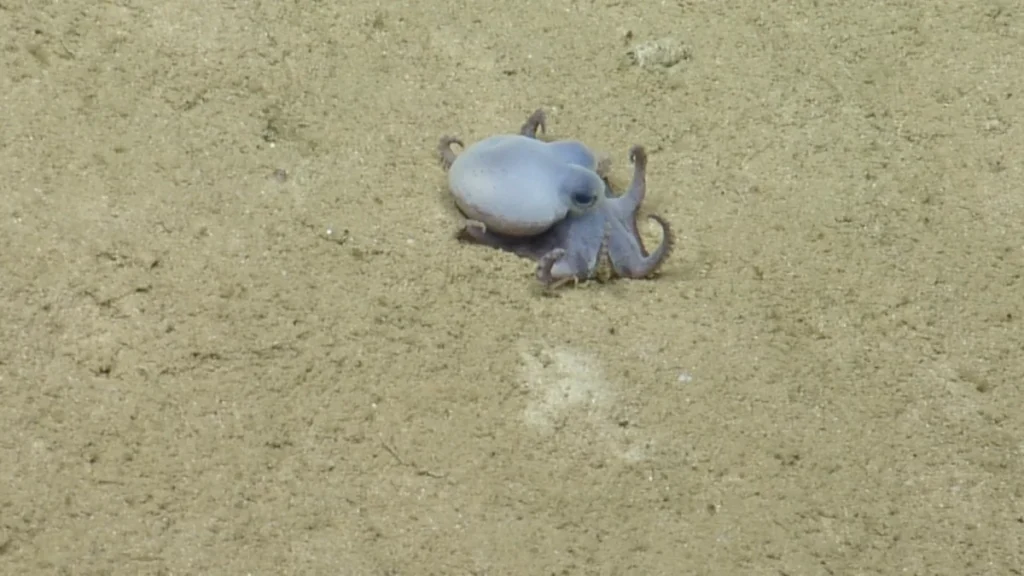
Marine biologists and taxonomists have officially announced the discovery of a new species of deep-sea cephalopod, Microeledone galapagensis, a diminutive and vibrantly blue octopus found nearly 6,000 feet below the ocean surface. First sighted nearly a decade ago, the formal description of this species, published in the peer-reviewed journal Zootaxa, represents a significant milestone in deep-sea biology and underscores the vast, unexplored biodiversity within the Galápagos Marine Reserve. The octopus, which is small enough to be cradled in a human palm, was identified through a combination of remote deep-sea exploration and non-destructive high-resolution imaging technology, marking a shift in how rare marine specimens are studied and preserved for future generations.
The 2015 Expedition and Initial Sighting
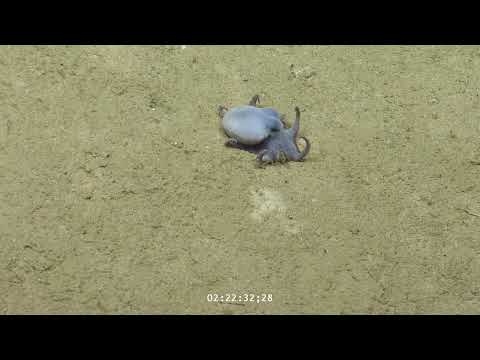
The journey toward the formal identification of M. galapagensis began in 2015 during a deep-sea research expedition conducted by the Ocean Exploration Trust. Operating the research vessel E/V Nautilus, a team of international scientists was exploring the volcanic slopes and seafloor surrounding Darwin Island, the northernmost island in the Galápagos archipelago. While piloting a remotely operated vehicle (ROV) at a depth of approximately 5,800 feet (1,768 meters), the crew spotted a tiny, strikingly blue organism resting against the dark, basaltic rock of the underwater mountain slope.
The visual impact of the specimen was immediate. In the dark, high-pressure environment of the deep sea, most organisms utilize red, black, or transparent coloration to remain invisible to predators, as red light does not penetrate to such depths. The vibrant blue hue of the M. galapagensis was an anomaly that immediately caught the attention of the ROV pilots and the scientists observing the live feed. The recorded audio from the mission captured the excitement of the researchers, who noted the specimen’s unique appearance and diminutive size.
During the mission, the ROV’s suction sampler was used to carefully collect a single specimen. Over the course of the expedition, the team observed two additional individuals of the same type, confirming that the initial find was not an isolated mutation but likely a member of a distinct population inhabiting the deep-sea slopes of the Galápagos.
Morphological Characteristics and Taxonomic Classification
Upon its arrival at the surface, the specimen presented a challenge to the onboard biologists. While it was clearly a member of the Octopodidae family, its specific features did not align with any known species. The specimen was subsequently sent to the Field Museum of Natural History in Chicago, where it came under the scrutiny of Janet Voight, a renowned curator of invertebrate zoology and a leading expert on cephalopods.
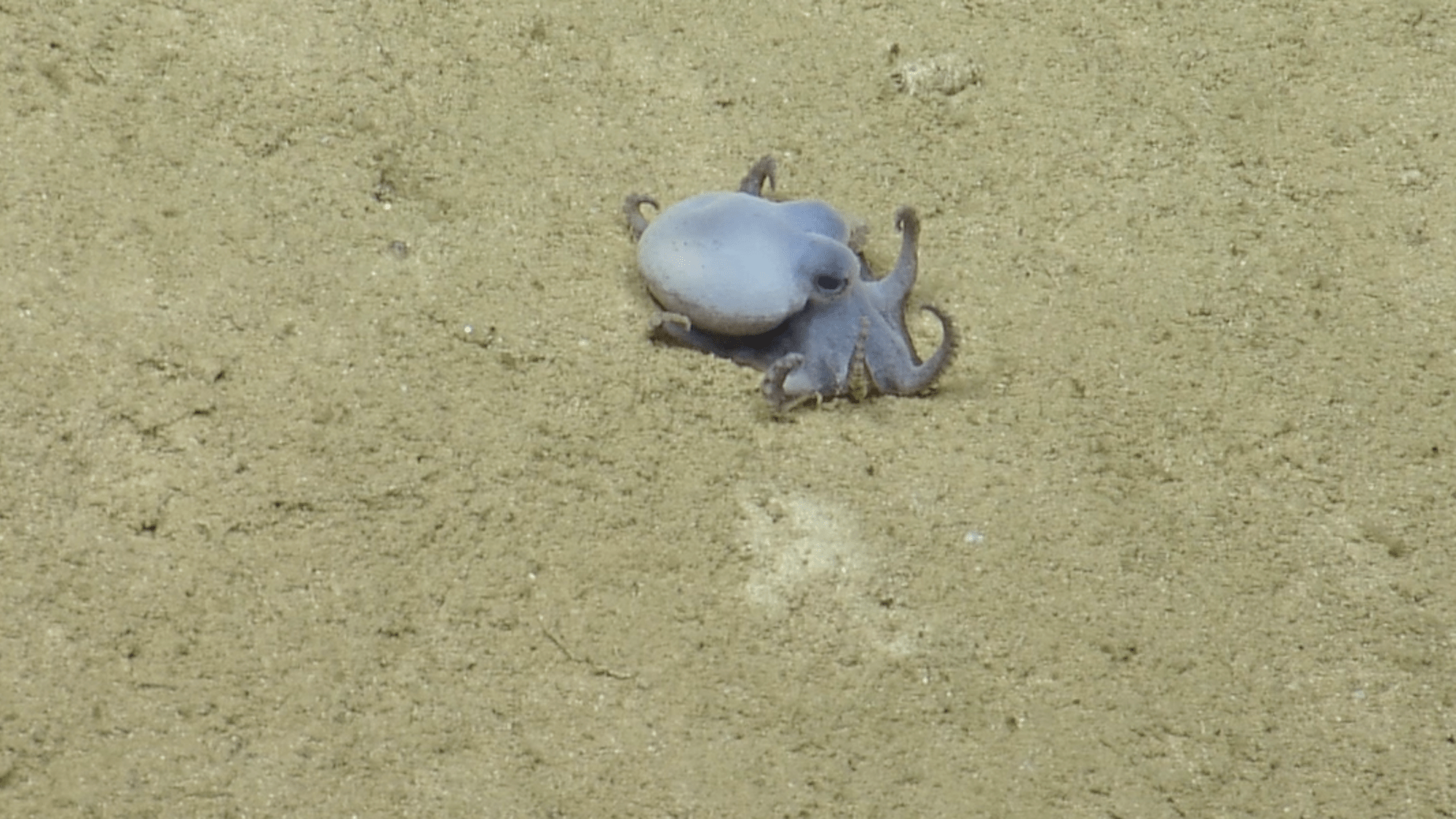
Voight, a co-author of the study published in Zootaxa, recognized the specimen as a member of the genus Microeledone. This genus is characterized by its small size and specific anatomical arrangements of the suckers and reproductive organs. However, the Galápagos specimen possessed distinct traits that separated it from its relatives. M. galapagensis is notably small, with a mantle length and arm span that allow it to fit comfortably within the palm of a hand. Its most defining characteristic remains its coloration, which is described as a "vibrant blue," a rarity for the genus.
The formal naming of Microeledone galapagensis serves as a tribute to its place of discovery. Despite her 40-year career in malacology (the study of mollusks), this marks the first time Voight has officially described a new species of octopus, highlighting the rarity and scientific importance of the find.
Innovation in Methodology: The Use of Micro-CT Scanning
One of the primary hurdles in deep-sea taxonomy is the "type specimen" problem. Traditionally, to confirm a new species, scientists must perform an invasive autopsy to examine internal organs, such as the radula (the tooth-lined tongue) and reproductive structures. Because the 2015 expedition yielded only one physical specimen of the blue octopus, a traditional dissection would have resulted in the permanent destruction of the very organism intended to serve as the global reference for the species.
To circumvent this, the research team turned to Stephanie Smith, the manager of the Field Museum’s X-ray CT laboratory. Utilizing micro-computer tomography (CT) scanning, the team was able to create a high-resolution, three-dimensional digital reconstruction of the octopus’s internal and external anatomy. This process involved taking thousands of individual X-ray images from various angles and compiling them into a comprehensive 3D model.
"Because CT imaging is non-destructive, it’s especially important for type specimens like this one," Smith noted in a statement. This technology allowed the researchers to "virtually open" the octopus, examining its internal structure with a level of detail that would be difficult to achieve with a scalpel, all while keeping the physical specimen intact for future study. This approach is increasingly becoming the gold standard for the description of rare and fragile deep-sea organisms.
Chronology of Discovery and Research
The timeline from initial discovery to formal publication spans nearly ten years, reflecting the meticulous nature of deep-sea taxonomic work:
- 2015: The E/V Nautilus expedition discovers and collects the first specimen near Darwin Island at a depth of 5,800 feet.
- 2016-2018: Preliminary analysis is conducted; the specimen is transferred to the Field Museum for expert evaluation by Janet Voight.
- 2019-2021: Advanced imaging techniques, including micro-CT scanning, are employed to map the internal anatomy without damaging the holotype.
- 2022-2023: Comparative studies are performed against other members of the Microeledone genus to ensure the Galápagos specimen is truly unique.
- 2024: The formal study is finalized and submitted to Zootaxa.
- Present: The official description of Microeledone galapagensis is published, introducing the species to the global scientific community.
Collaborative Efforts and Institutional Support
The discovery was the result of a multi-institutional collaboration. Salome Buglass, a marine scientist at the University of California Los Angeles (UCLA) and a researcher with the Charles Darwin Foundation, played a pivotal role in the expedition and the subsequent years of analysis. Buglass emphasized the logistical difficulty of deep-sea research, noting that the process of getting the specimen from the ocean floor to a laboratory in Chicago was a multi-year endeavor.
The Charles Darwin Foundation and the Galápagos National Park Directorate have both expressed support for the discovery, viewing it as further evidence of the ecological importance of the Galápagos Marine Reserve. The reserve is one of the largest and most biologically diverse protected marine areas in the world, yet much of its deep-water territory remains unmapped and unobserved.
Broader Implications for Marine Science and Conservation
The discovery of Microeledone galapagensis carries significant implications for our understanding of deep-sea ecosystems. First, it highlights the "taxonomic gap" in the deep ocean; while thousands of species are known to science, it is estimated that millions more remain undiscovered in the bathyal and abyssal zones.
Furthermore, the presence of such a unique species in the Galápagos waters reinforces the need for continued protection of the region. The Galápagos Islands are a UNESCO World Heritage site, famous for the terrestrial species that inspired Charles Darwin’s theory of evolution. However, discoveries like this blue octopus suggest that the underwater "evolutionary laboratory" is just as complex and vital as the one on land.
The use of non-destructive CT scanning also sets a precedent for future deep-sea missions. As ROV technology becomes more accessible, the number of rare specimens collected is likely to increase. By utilizing digital imaging, museums and research institutions can share "digital holotypes" with scientists worldwide, facilitating global collaboration without the risk of losing or damaging rare biological samples.
In her concluding remarks regarding the study, Janet Voight reflected on the privilege of being the first to describe the species. "These are little octopuses that live in the deep sea, and hardly anybody on Earth has ever gotten to see them," she said. The formalization of M. galapagensis ensures that while the octopus remains hidden in the depths, its existence and unique biology are now firmly established in the records of natural history. As exploration continues, scientists expect the Galápagos to yield even more secrets, provided that the international community remains committed to the preservation and study of these remote oceanic frontiers.