


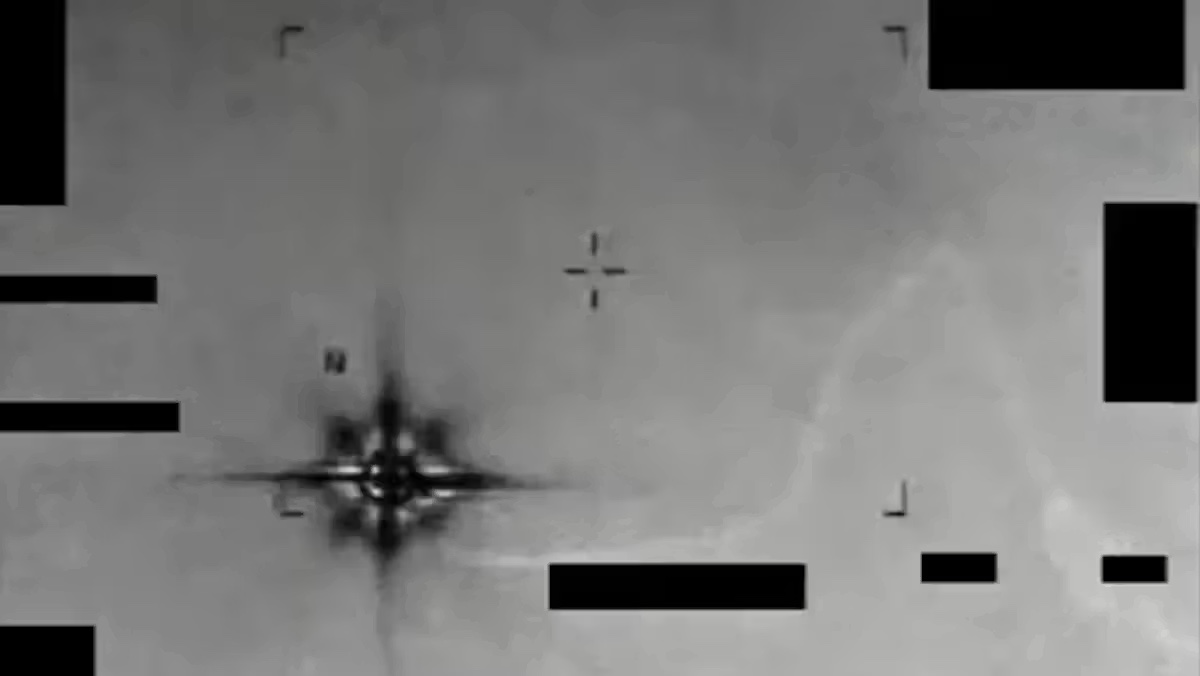
On May 22, 2026, the United States Department of Defense released a second significant installment of previously classified materials concerning Unidentified Anomalous Phenomena (UAP). This release, comprising over 200 high-resolution videos and sensor data logs, represents a milestone in a multi-year transparency initiative that has fundamentally altered the public and scientific discourse regarding potential extraterrestrial visitation. The documents follow a trajectory of government openness that began in earnest during the summer of 2023, moving the conversation from the fringes of speculative fiction into the realm of rigorous aerospace analysis.
While the visual data provided by the Pentagon continues to be scrutinized by intelligence officials and independent researchers, the core question remains one of physical feasibility: Could an extraterrestrial civilization realistically bridge the vast gulfs of interstellar space to reach Earth? To answer this, aerospace scientists and engineers apply the known laws of physics and the constraints of materials science to evaluate the staggering hurdles any interstellar traveler must overcome.
A Chronology of Disclosure and Investigation
The current era of UAP transparency is rooted in a series of legislative and whistleblowing events that began in July 2023. During a landmark session of the House Oversight Committee’s subcommittee on National Security, the Border, and Foreign Affairs, former intelligence official David Grusch and two former Navy pilots testified under oath regarding their encounters and knowledge of "non-human" technologies. Grusch’s testimony specifically alleged that the U.S. government had engaged in a multi-decade "crash retrieval and reverse-engineering" program.
Following these allegations, the U.S. Congress integrated the UAP Disclosure Act into the National Defense Authorization Act (NDAA). This mandated the creation of the All-domain Anomaly Resolution Office (AARO), tasked with centralizing the investigation of sightings across the Army, Navy, and Air Force. By 2025, the scientific community began to mirror this institutional interest. Projects such as the Galileo Project at Harvard University sought to establish a network of high-resolution telescopes and sensors to provide peer-reviewed data on UAPs, independent of government classification. The May 2026 file dump serves as the most comprehensive data set provided to the public to date, prompting a renewed focus on the engineering required for such craft to exist.
The Tyranny of Interstellar Distance
To evaluate the likelihood of alien visitors, one must first quantify the "tyranny of distance" that defines our galaxy. Modern astronomical surveys have confirmed that there is no evidence of intelligent life within our own solar system. Therefore, any visiting craft must originate from another star system.
The nearest neighbor to our Sun is Proxima Centauri, located 4.25 light-years away. In terrestrial terms, this is approximately 25 trillion miles (40 trillion kilometers). To visualize the scale, if the Earth were reduced to the size of a pea, the distance to Proxima Centauri would be roughly equivalent to the distance between New York City and Sydney, Australia. However, the probability that our nearest neighbor also hosts a spacefaring civilization is statistically low. Most estimates from the Drake Equation—a probabilistic argument used to estimate the number of active, communicative extraterrestrial civilizations in the Milky Way—suggest that the nearest intelligent neighbors could be hundreds or even thousands of light-years away.
The Velocity Constraint and Relativistic Engineering
Given these distances, a journey at conventional speeds is impossible. Voyager 1, the farthest man-made object, is currently traveling at approximately 38,000 miles per hour (17 kilometers per second). At this rate, it would take Voyager 1 over 75,000 years to reach Proxima Centauri. For a mission to be viable for biological entities or even advanced autonomous systems, the craft must travel at a significant fraction of the speed of light.
Aerospace researchers generally identify 10% of the speed of light (approximately 18,600 miles per second or 30,000 kilometers per second) as a "realistic" cruise velocity for theoretical interstellar designs. Even at this staggering speed—which is over 1,700 times faster than the fastest crewed spacecraft—a trip from a star system 10 light-years away would still require a century of travel.
As a craft approaches these velocities, it encounters the limits of Special Relativity. While time dilation would theoretically benefit the travelers by slowing their aging relative to Earth, the energy required to accelerate mass to these speeds is astronomical. Furthermore, at 10% of the speed of light, the kinetic energy of the vessel becomes so high that any collision with a microscopic grain of cosmic dust would be equivalent to a high-yield explosive detonation.
The Propulsion Dilemma: Chemical vs. Nuclear vs. Antimatter
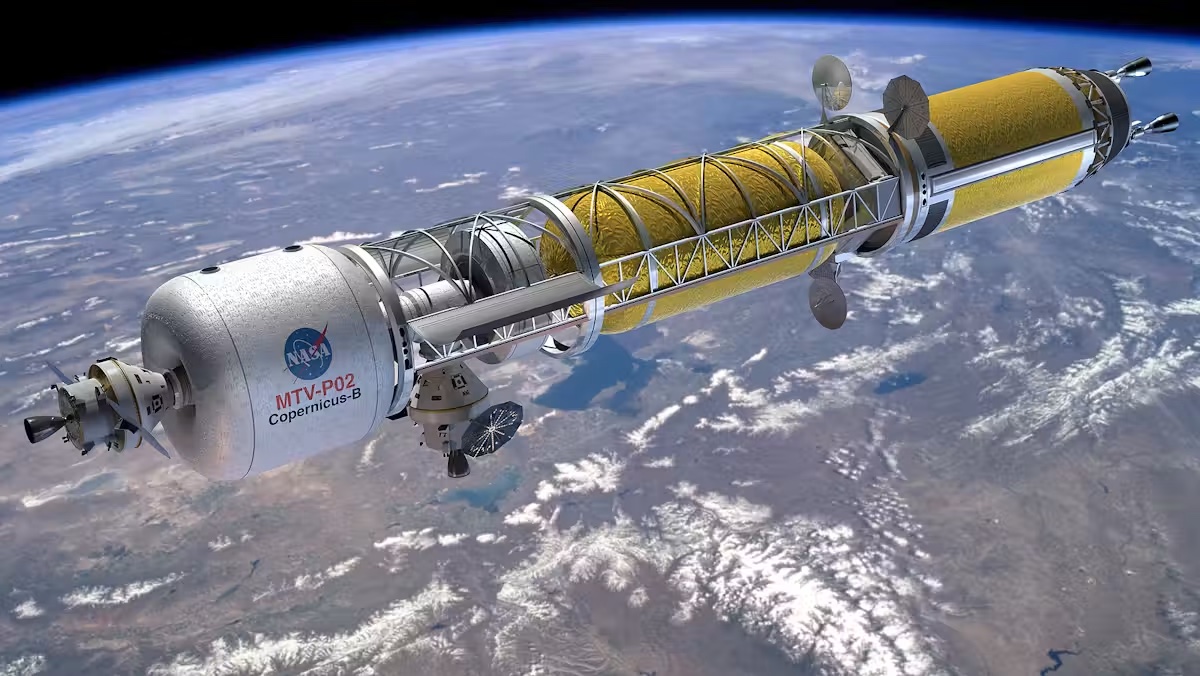
The central engineering challenge of interstellar flight is the propulsion system. Traditional chemical rockets, which power all current human spaceflight, are fundamentally incapable of interstellar travel. The Tsiolkovsky rocket equation dictates that to reach 10% of the speed of light using chemical fuel, a ship would require more propellant than the total mass of the observable universe. This necessitates "high-energy-density" propulsion.
-
Nuclear Fusion: This remains the most scientifically plausible "near-future" technology. By fusing hydrogen isotopes, a ship could theoretically harvest 10 million times more energy per kilogram than chemical combustion. However, the mass ratio remains a hurdle. Calculations indicate that a fusion-powered vessel intending to reach 10% of the speed of light would need a fuel tank 150 times the mass of the ship itself.
-
Antimatter Propulsion: This represents the pinnacle of efficiency, as the total annihilation of matter and antimatter converts 100% of mass into energy. An antimatter ship could achieve the target velocity with a fuel mass of less than 25% of the ship’s total weight. The challenge lies in production and containment. Humans have only produced nanograms of antimatter at a cost of hundreds of millions of dollars per billionth of a gram. An interstellar mission would require tons of it, maintained in perfectly stable magnetic traps.
-
Beamed Propulsion (Laser Sails): Proposed by initiatives like Breakthrough Starshot, this method involves leaving the "fuel" behind. A massive ground-based or orbit-based laser array would fire a high-powered beam at a reflective sail attached to the craft. While this removes the weight of the fuel from the ship, it provides no way for the craft to slow down upon reaching its destination. A visiting alien craft would likely need a hybrid system: beamed propulsion to accelerate and a different on-board system to decelerate.
Structural Integrity and the Interstellar Medium
Interstellar space is not a true vacuum; it is filled with the Interstellar Medium (ISM), consisting of gas atoms and microscopic dust. For a craft traveling at 30,000 km/s, the ISM becomes a lethal environment.

Hydrogen atoms in space would strike the hull with such frequency and energy that they would create a constant stream of ionizing radiation, necessitating heavy shielding that further increases the ship’s mass. Cosmic dust, though sparse, poses a catastrophic threat. A grain of dust just 0.1 millimeters in diameter striking a hull at relativistic speeds would carry the impact energy of a large-caliber bullet. Any alien vessel would require advanced magnetic deflector shields or "sacrificial" bumpers (Whipple shields) several meters thick to survive a multi-decade transit.
Implications and Scientific Analysis
The persistence of UAP reports, coupled with the Pentagon’s data releases, suggests one of two primary conclusions. Either these objects represent highly advanced, terrestrial "black budget" technology that has made a quantum leap in propulsion, or they represent extraterrestrial craft that have solved engineering problems currently deemed "physically infeasible" by human standards.
If these craft are indeed extraterrestrial, their presence implies a mastery of physics that bypasses the "brute force" methods of the rocket equation. Theoretical concepts such as Alcubierre "warp" drives—which involve the contraction and expansion of space-time—exist in the realm of mathematical possibility but require "exotic matter" with negative energy density, something yet to be observed in nature.
The official response from the scientific community remains one of cautious skepticism tempered by a demand for better data. NASA’s independent UAP study team, established in late 2022, has emphasized that while many sightings can be attributed to weather balloons, sensor glitches, or atmospheric phenomena, a small percentage remains truly anomalous. The 2026 data dump is currently being processed by automated AI systems designed to look for flight patterns that defy inertia, such as instantaneous acceleration or hypersonic speeds without a sonic boom.
Conclusion
The question of whether "aliens could ever visit Earth" is no longer confined to the realm of imagination. It is an engineering problem of the highest order. The distance between stars acts as a natural "filter," ensuring that only civilizations with extreme technological maturity and vast resources could ever hope to cross the void.
If the objects documented in the Pentagon’s latest release are truly of extraterrestrial origin, they do more than prove we are not alone. They serve as a proof-of-concept for a level of engineering that has overcome the most fundamental barriers of the physical universe. For now, humanity remains in the observational stage, looking at the data not just for what it shows, but for the "how" behind the "what." Understanding the propulsion and materials science of these phenomena remains the "trillion-dollar question" that could eventually redefine our place in the cosmos.