
A groundbreaking study by researchers at the University of Bonn has unveiled a sophisticated mechanism by which the human brain constructs useful memories, challenging long-held assumptions about how information is stored. The findings, published in the prestigious journal Nature, demonstrate that the brain employs two distinct groups of neurons to store the "what" (content) and the "where/when" (context) of an event separately, coordinating their activity only when a complete memory needs to be formed. This innovative approach, unlike the blended information storage observed in some animal models, appears to be key to the remarkable flexibility and adaptability of human memory.
Understanding the Architecture of Human Memory
For memories to serve their purpose effectively, the brain must seamlessly integrate the specific details of an event with the surrounding circumstances in which it occurred. Humans possess an extraordinary capacity to recognize familiar individuals or objects across a myriad of different situations. For instance, encountering a friend at a casual dinner versus seeing the same person in a formal business meeting elicits distinct contextual associations while the recognition of the individual remains constant. Prof. Florian Mormann from the Clinic for Epileptology at the University Hospital Bonn (UKB) and a member of the Transdisciplinary Research Area (TRA) "Life & Health" at the University of Bonn, explains that deep within the brain’s memory centers, specific "concept neurons" are known to respond to a particular person or object, irrespective of the environment.
However, the precise mechanism by which the brain then binds this stored content to its surrounding context to forge a coherent and meaningful memory has remained a subject of intense scientific inquiry. Previous research, particularly in rodents, has often suggested that individual neurons might combine both types of information directly. This led the Bonn team to pose a fundamental question: "Does the human brain function fundamentally differently here? Does it map content and context separately to enable a more flexible memory? And how do these separate pieces of information connect when we need to remember specific content according to context?" elaborated Dr. Marcel Bausch, working group leader at the Department of Epileptology and also a member of TRA "Life & Health" at the University of Bonn. Their investigation sought to determine if the human brain adopted a more specialized, distributed strategy.
Methodology: Glimpsing Brain Activity in Real Time
To address these intricate questions, the research team employed a unique and ethically rigorous methodology, recording electrical signals directly from individual neurons in a cohort of patients suffering from drug-resistant epilepsy. These patients, as part of their critical clinical evaluation for potential surgical treatment, had electrodes surgically implanted in memory-critical brain regions, specifically the hippocampus and adjacent areas. This rare opportunity allowed researchers an unparalleled, real-time window into the neural dynamics of human memory formation at the cellular level.
While doctors meticulously monitored their seizure activity to assess treatment options, the patients voluntarily participated in computer-based tasks. During these experiments, participants were presented with pairs of images and subsequently asked to answer different types of questions about them. For example, they might view an image of a biscuit and then be prompted with the question "Bigger?" This experimental design was crucial because it allowed the researchers to observe how the brain processed identical visual content under varying task contexts. As Mormann noted, "This allowed us to observe how the brain processes exactly the same image in different task contexts," providing a direct insight into content-context interaction. The ability to monitor neural activity with such precision in conscious human subjects performing cognitive tasks is an exceptionally powerful tool in cognitive neuroscience, offering insights that animal models cannot fully replicate.
The Revelation: Two Distinct Neural Libraries
The meticulous analysis of the electrical activity of more than 3,000 individual neurons yielded a pivotal discovery: the identification of two largely separate and specialized groups of neurons. One group, aptly named "content neurons," consistently responded to specific images, such as a biscuit, regardless of the particular task or question being posed. These neurons acted as dedicated identifiers for the visual information. The other group, termed "context neurons," exhibited activity patterns that correlated specifically with the type of question being asked, for instance, responding robustly to the prompt "Bigger?" irrespective of the image currently displayed.
Crucially, and in stark contrast to findings predominantly observed in rodent studies where individual neurons often combine both content and context information, the Bonn study found that only a very small minority of human neurons performed both roles simultaneously. This suggests a fundamental divergence in memory encoding strategies between humans and some other species, emphasizing a more specialized division of labor in the human brain. Dr. Bausch underscored a key aspect of these findings: "A key finding was that these two independent groups of neurons encoded content and context together and most reliably when the patients solved the task correctly." This correlation with successful task performance highlights the functional significance of this neural separation and subsequent coordination.
Chronology of Interaction: How Memories are Reconstructed from Clues
The study further elucidated the dynamic interplay between these two specialized neural populations. As the experiment progressed and patients continued to perform the tasks, the interaction between content and context neuron groups demonstrably strengthened. This progressive coupling was evidenced by the observation that activity in a content neuron began to predict the response of a context neuron just a few tens of milliseconds later. This suggested a rapid and learned association forming within the neural circuitry. Mormann described this phenomenon vividly, stating, "It seemed as if the ‘biscuit’ neuron was learning to stimulate the ‘Bigger?’ neuron."
This evolving interaction is not merely a passive co-activation but acts as an intricate control system. It ensures that during memory recall, only the relevant context is retrieved and linked with the specific content. This process, known as pattern completion, is fundamental to how the brain reconstructs a full memory, even when only partial information or a specific cue is available. For instance, seeing a biscuit might trigger the memory of having been asked if it was "bigger" in a particular experimental setting. This elegant separation and subsequent linking mechanism, according to the researchers, provides a compelling explanation for the unparalleled adaptability and flexibility of human memory. By storing content and context in what they metaphorically describe as separate "neural libraries," the brain can efficiently apply the same core knowledge or concept across an almost infinite array of novel situations without requiring a unique, dedicated neuron for every conceivable combination.
Implications for Memory Flexibility and Generalization
The findings from the University of Bonn represent a significant leap in understanding the foundational architecture of human memory. This "division of labor" among neurons likely underpins the remarkable flexibility that characterizes human cognitive function. As Dr. Bausch summarized, "This division of labor probably explains the flexibility of human memory: the brain can reuse the same concept in countless new situations without needing a specialized neuron for each individual combination, by storing content and context in separate ‘neural libraries’." This neural economy is profoundly efficient; instead of an exponential increase in specialized neurons for every potential content-context pairing, the brain maintains modularity, allowing for combinatorial complexity.
Prof. Mormann further elaborated on this adaptive advantage: "The ability of these neuronal groups to link spontaneously allows us to generalize information while preserving the specific details of individual events." This dual capacity – to generalize across contexts and yet retrieve specific contextual details when required – is a hallmark of human intelligence and learning. It allows us to apply learned principles to new scenarios while still remembering the unique circumstances of original learning. This mechanism is crucial for everything from recognizing a friend in different outfits and locations to applying mathematical principles to varied problems.
Broader Context: The Enduring Quest to Understand Memory
The quest to understand memory has been a central pillar of neuroscience for centuries. Early theories ranged from philosophical musings on the "tabula rasa" to more empirical attempts to locate memory "engrams" in the brain. Landmark cases, such as that of patient H.M., who suffered severe anterograde amnesia after bilateral hippocampal removal, definitively established the hippocampus’s critical role in forming new declarative memories (memories of facts and events). This Bonn study builds directly on this legacy, delving into the micro-circuitry within and around the hippocampus to reveal how this crucial structure organizes information.
Memory itself is not a monolithic entity but a complex tapestry of systems, including episodic memory (for specific events), semantic memory (for facts and concepts), and procedural memory (for skills). This study sheds light primarily on episodic memory, where the binding of content and context is paramount. The challenges in studying the human brain, particularly at the single-neuron level, are immense, constrained by ethical considerations and the brain’s inherent complexity. The unique opportunity provided by epilepsy patients with implanted electrodes has been instrumental in advancing our understanding of human cognition in ways previously unimaginable. This research complements other cutting-edge techniques like fMRI and EEG, offering unparalleled spatial and temporal resolution at the neuronal level.
Supporting Data and Related Research
The human brain’s memory capacity is often cited as virtually limitless, capable of storing petabytes of information. However, the efficiency of retrieval and the robustness of memory formation are what truly define its utility. The importance of understanding these mechanisms is underscored by the global prevalence of memory disorders. For instance, neurodegenerative diseases like Alzheimer’s disease, affecting millions worldwide, are characterized by progressive memory loss, often starting with difficulties in recalling episodic memories and contextual details. Post-traumatic Stress Disorder (PTSD), another condition impacting a significant portion of the population, involves the maladaptive recall of traumatic content tightly bound to specific, often inappropriate, contexts. This research provides a novel framework for potentially understanding the neural underpinnings of such conditions.
The concept of "sparse coding" – where only a small fraction of neurons are active at any given time to represent a particular stimulus – is a widely recognized principle in neuroscience that aligns with the specialized content and context neurons identified here. This efficient coding strategy maximizes the brain’s capacity and reduces energy expenditure. The Bonn findings contribute to a growing body of research emphasizing the dynamic and distributed nature of memory, moving beyond simplistic localization models to a more nuanced understanding of neural networks.
Expert Reactions and Future Avenues
The scientific community is likely to welcome these findings as a substantial advancement in cognitive neuroscience. Leading neurologists and cognitive scientists not involved in the study might characterize the research as a critical step forward in elucidating the neural basis of human memory’s unique flexibility. Patient advocacy groups for neurological conditions could highlight the long-term potential for these discoveries to inform future diagnostic tools and therapeutic interventions, particularly for disorders marked by memory impairment.
The University of Bonn researchers themselves have outlined several crucial next steps. One immediate priority is to investigate how the brain processes "passive" contexts – such as the physical environment one is in – compared to the "active" contexts defined by specific questions in this study. It remains to be seen if the same dual-neuron system is engaged for these more naturalistic contextual cues. Scientists also plan to test these memory mechanisms outside of clinical settings, perhaps using advanced non-invasive neuroimaging techniques in healthy volunteers, although with less cellular resolution.
Another critically important future direction involves intentionally disrupting the interaction between these content and context neuron groups. Such experiments, potentially using targeted neuromodulation techniques, could reveal whether interference with this linking process directly impairs a person’s ability to recall the correct memory in the right context or to make accurate, context-dependent decisions. This line of research could pave the way for understanding the causal role of this dual-neuron system in memory function and dysfunction.
Potential Societal and Clinical Impact
The implications of this research extend far beyond the laboratory, touching upon various aspects of society and clinical practice.
-
Clinical Applications:
- Memory Disorders: By providing a detailed neural model of how content and context are bound, this study offers new avenues for understanding and potentially treating memory disorders. In conditions like Alzheimer’s disease, where patients struggle to recall recent events and their associated contexts, the disruption of this content-context linking mechanism could be a key pathology. Future therapies might aim to restore or bolster the coordination between these neural groups.
- PTSD and Trauma: For individuals suffering from PTSD, traumatic memories often become excessively generalized, with benign contexts triggering intense fear responses. Understanding how the brain binds content (the traumatic event) to context could lead to targeted interventions that help "uncouple" maladaptive associations, allowing individuals to recall the event without the overwhelming emotional context.
- Memory Enhancement: Conversely, insights into optimal content-context binding could inform strategies for memory enhancement, both for healthy individuals and those with mild cognitive impairment.
-
Educational Implications:
- Understanding how context aids memory formation can revolutionize educational methodologies. Designing learning environments and curricula that strategically embed content within rich, relevant contexts could significantly improve retention and retrieval of information, promoting deeper learning rather than rote memorization.
-
Technological Implications:
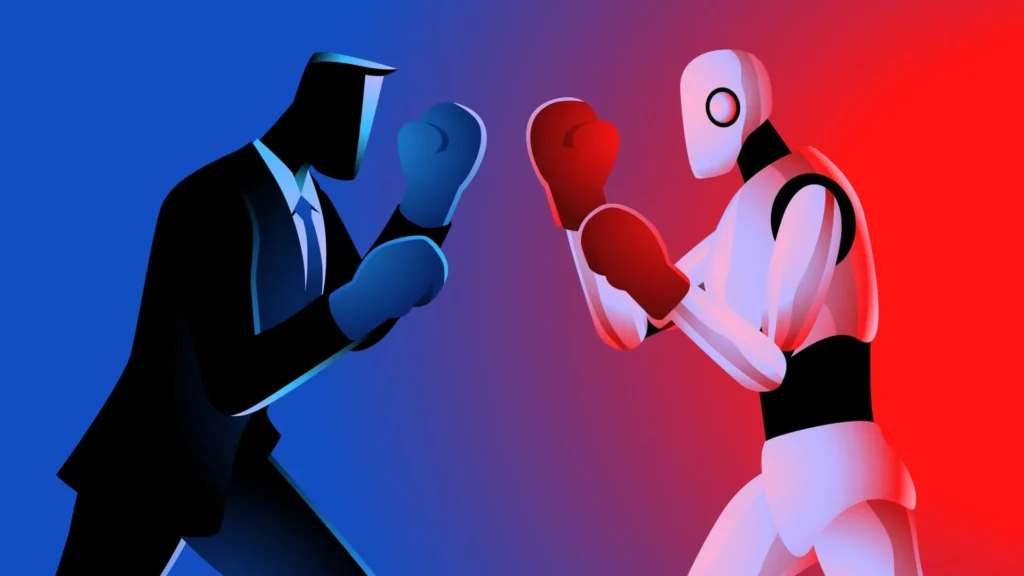
- The findings could inspire the development of more sophisticated artificial intelligence and machine learning algorithms. Current AI models often struggle with context-awareness and flexible generalization. A neural architecture inspired by the brain’s dual-neuron system could lead to AI systems with more robust, adaptable memory capabilities, capable of understanding and responding to nuanced contextual cues.
The study was supported by significant funding from the DFG (German Research Foundation), the Volkswagen Foundation, and the NRW joint project "iBehave," underscoring the collaborative and interdisciplinary nature of this groundbreaking research. The work from the University of Bonn team represents a crucial step forward in deciphering the intricate neural code of human memory, promising a future where our understanding of this fundamental cognitive process can be translated into tangible benefits for health, education, and technology.