

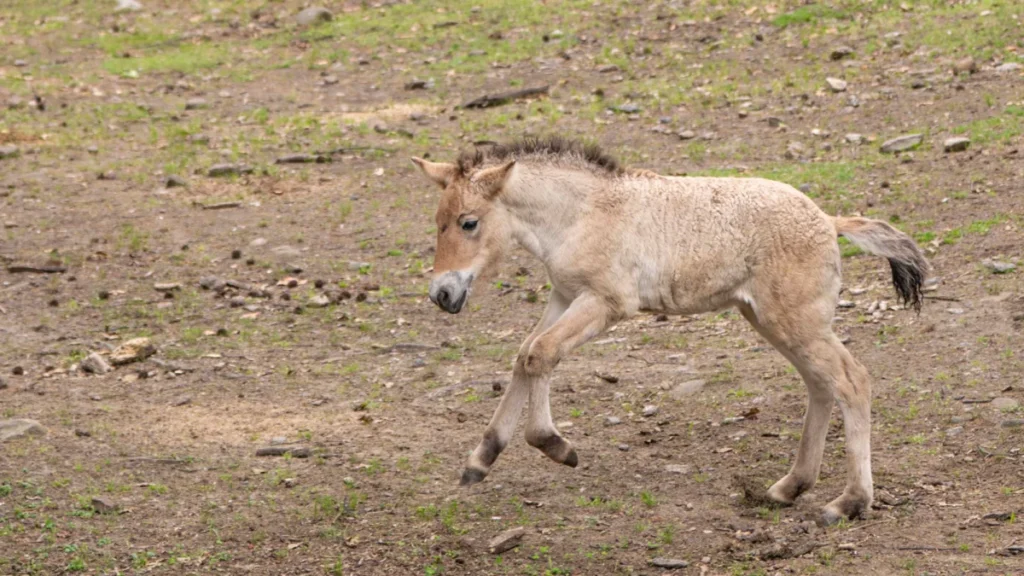
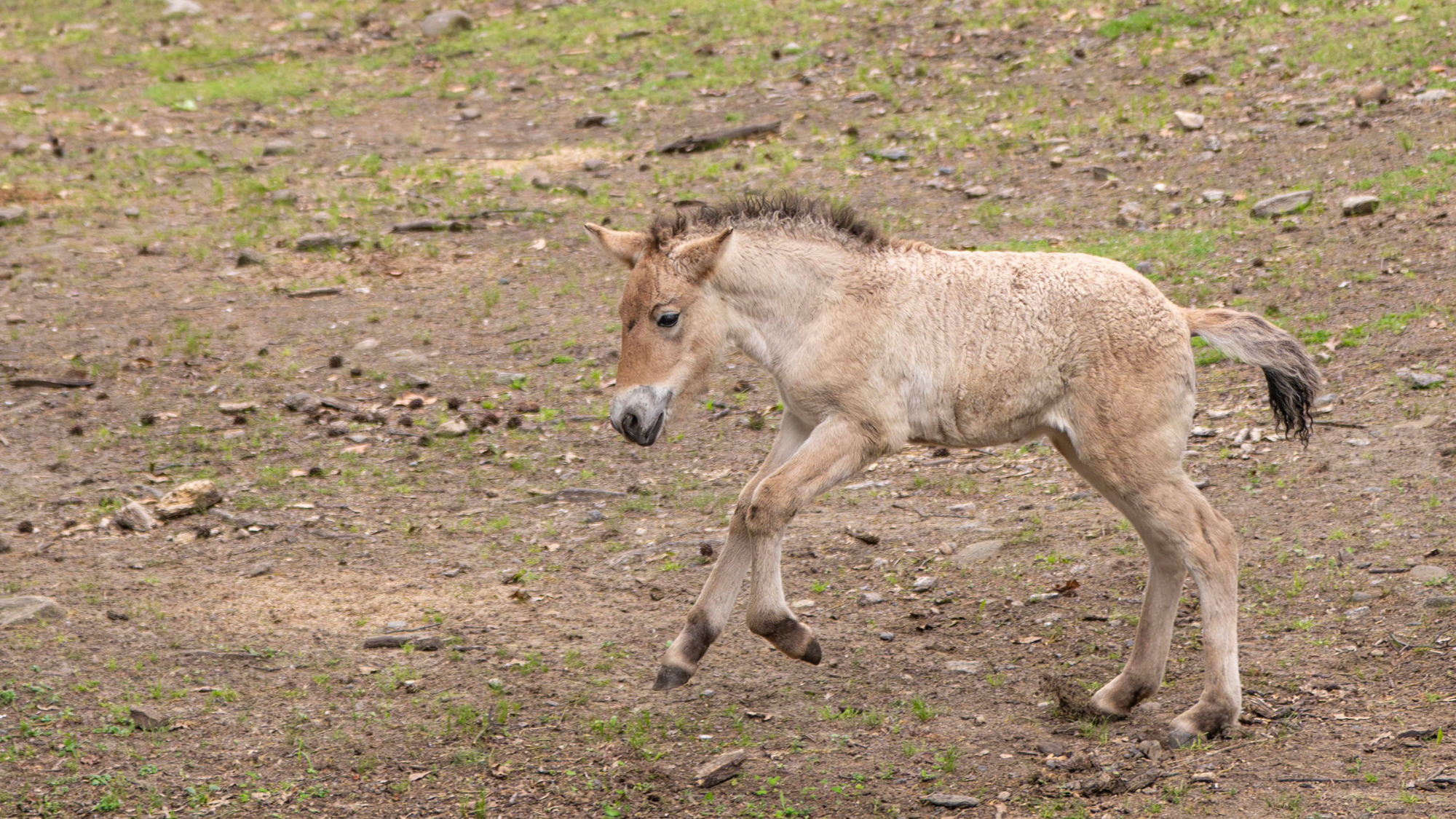
The Wildlife Conservation Society’s Bronx Zoo has officially announced the birth of a Przewalski’s horse foal, a significant addition to a species that once faced total extinction in the wild. Born on April 21, the young horse represents the latest success in a decades-long international effort to preserve the only remaining truly wild horse species on the planet. The foal, whose birth was recently publicized by zoo officials, is currently residing with its mother and the rest of the herd in the zoo’s Wild Asia exhibit, where it serves as a living testament to the efficacy of captive breeding programs in modern conservation science.
Przewalski’s horses (Equus ferus przewalskii), also known as Mongolian wild horses or "takhi" in their native Mongolia, are distinct from the feral horses found in the American West or the Australian Outback. While Mustangs and Brumbies are descendants of domesticated horses that escaped into the wild, Przewalski’s horses have never been domesticated. Their genetic lineage remains separate from that of the domestic horse (Equus ferus caballus), a fact underscored by their chromosomal makeup; Przewalski’s horses possess 66 chromosomes, while domestic horses have only 64. This biological distinction highlights the evolutionary importance of the species and the necessity of the Bronx Zoo’s ongoing preservation efforts.
Physical Characteristics and Evolutionary Traits
The new foal at the Bronx Zoo exhibits the classic physical traits that define this ancient species. Unlike the sleek, varied appearances of domestic breeds, Przewalski’s horses have a uniform, rugged aesthetic suited for the harsh environments of the Central Asian steppes. They are characterized by a stocky build, a short and thick neck, and a dun-colored coat that ranges from sandy brown to reddish-fawn. One of their most striking features is their mane, which stands stiff and upright without a forelock—the "bangs" commonly seen on domestic horses.
Adults typically stand between 12 and 14 hands high at the shoulder and weigh between 550 and 800 pounds. Their legs are often faintly striped, a primitive marking shared with other ancient equines like the zebra. These traits are not merely aesthetic; they are adaptations for survival in extreme climates where temperatures can fluctuate violently between blistering summer heat and frigid winter blizzards. The birth of a healthy foal in the controlled environment of the Bronx Zoo allows researchers to monitor these developmental traits from day one, providing data that can be used to support wild populations in Mongolia and China.
A History of Survival: From the Brink of Extinction
The survival of the Przewalski’s horse is one of the most dramatic stories in the history of conservation. Named after the Russian explorer Nikolai Przewalski, who first described the species for Western science in the late 19th century, the horses were once found across vast swathes of Europe and Asia. However, a combination of habitat loss, competition with livestock, and hunting led to a catastrophic decline in their numbers throughout the 20th century.
By the mid-1960s, the species had all but vanished from its native range. The last confirmed sighting of a wild Przewalski’s horse occurred in 1969 in the Gobi Desert of Mongolia. At that point, the species was declared Extinct in the Wild by the International Union for Conservation of Nature (IUCN). The only survivors were a small number of individuals kept in European and American zoos.
The global population today, which is estimated to be approximately 2,000 individuals, is remarkably descended from just 12 founding horses. This extreme genetic bottleneck has presented significant challenges for conservationists, as low genetic diversity can lead to health issues and reduced fertility. The Bronx Zoo’s breeding program is part of a coordinated Species Survival Plan (SSP) designed to manage the genetics of the captive population carefully, ensuring that every birth, like the one on April 21, contributes to the long-term viability of the species.
The Role of the Bronx Zoo and WCS in Reintroduction
The Bronx Zoo and the Wildlife Conservation Society (WCS) have been at the forefront of the movement to return these horses to their ancestral lands. The zoo’s involvement dates back to the early 20th century, but the most pivotal moments occurred in the late 1980s and early 1990s. Through meticulous breeding programs, the zoo helped produce individuals capable of being reintroduced into the wild.
In 1989, zoo-bred Przewalski’s horses were successfully returned to protected areas in China. This was followed by a landmark reintroduction effort in Mongolia starting in 1992. These programs involved transporting horses from various international zoos to acclimatization pens in Mongolia, where they were monitored before being released into the wild. Today, self-sustaining populations exist in several locations, including Hustai National Park, the Great Gobi B Strictly Protected Area, and the Khomiin Tal Reserve.
The WCS continues to support these efforts on the ground. In Mongolia, the organization works with local authorities to manage protected areas and mitigate threats such as illegal mining and habitat degradation. The birth of the new foal in New York is intrinsically linked to these international efforts, as captive populations serve as a vital "insurance policy" against catastrophic events that could wipe out the wild herds.
Scientific Advancements and Modern Management
The management of Przewalski’s horses has increasingly relied on cutting-edge science. Beyond traditional breeding, conservationists have explored advanced reproductive technologies to combat the limitations of the 12-founder genetic bottleneck. In recent years, scientists at other institutions have successfully produced Przewalski’s horse clones using preserved genetic material from decades ago, a technique that could eventually be used to reintroduce lost genetic diversity into the current population.
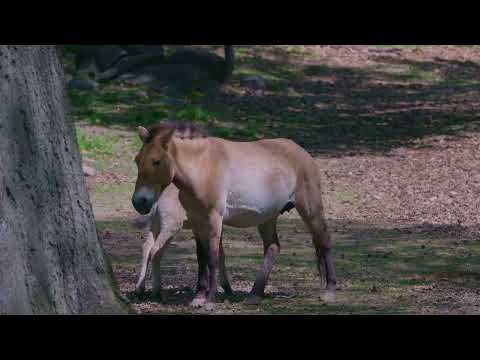
While the Bronx Zoo foal was conceived through natural means, its presence allows the zoo to participate in the broader scientific community’s study of the species. The zoo’s Wild Asia Monorail provides a unique vantage point for visitors to observe the foal’s integration into the herd, offering a rare glimpse into the social dynamics of a species that nearly disappeared from the Earth. The foal’s development—from its first steps to its eventual maturity—provides valuable behavioral data that assists in the management of wild herds, where direct observation can be difficult.
Implications for Global Biodiversity
The birth of this foal is more than just a local success story; it is a symbol of hope for global biodiversity. The recovery of the Przewalski’s horse from "Extinct in the Wild" to its current "Endangered" status is frequently cited by the IUCN as a model for other species recovery programs. It demonstrates that with international cooperation, rigorous scientific management, and dedicated funding, it is possible to reverse the trend of extinction.
Furthermore, the Przewalski’s horse is considered an "umbrella species" for the Central Asian Steppe. By protecting the habitat necessary for these horses to thrive, conservationists are simultaneously protecting a wide range of other flora and fauna that share the ecosystem. The health of the steppe is vital for regional carbon sequestration and the livelihoods of nomadic herding communities, making the horse’s survival a matter of ecological and cultural importance.
Future Outlook and Conservation Challenges
Despite the success of the Bronx Zoo foal and the growth of wild populations, the Przewalski’s horse still faces significant hurdles. One of the primary concerns is the risk of hybridization with domestic horses. As human settlements and livestock grazing areas expand, the likelihood of wild horses encountering and breeding with domestic ones increases, which could dilute the unique genetic heritage of the species.
Climate change also poses a threat. The Central Asian Steppe is experiencing more frequent and severe "dzuds"—harsh winter conditions that follow summer droughts. These events can cause mass die-offs of both livestock and wild animals. Maintaining a robust, genetically diverse captive population in zoos like the Bronx Zoo is essential to ensure that the species can withstand such environmental shocks.
The Bronx Zoo’s latest resident will remain with its mother for several months before gradually becoming more independent. As it grows, it may eventually be transferred to another accredited institution to participate in further breeding efforts, or it could potentially become a candidate for future reintroduction programs in Asia.
The Wildlife Conservation Society remains committed to the long-term survival of the species. Through a combination of captive breeding, field research, and community engagement, the WCS aims to ensure that the Przewalski’s horse remains a permanent fixture of the Mongolian landscape. The April 21 birth is a reminder that while the road to recovery is long, every new arrival is a step toward a more secure future for the world’s last truly wild horse. Visitors to the Bronx Zoo are encouraged to view the foal from the Wild Asia Monorail, where they can witness firsthand the results of a century of conservation dedication.