



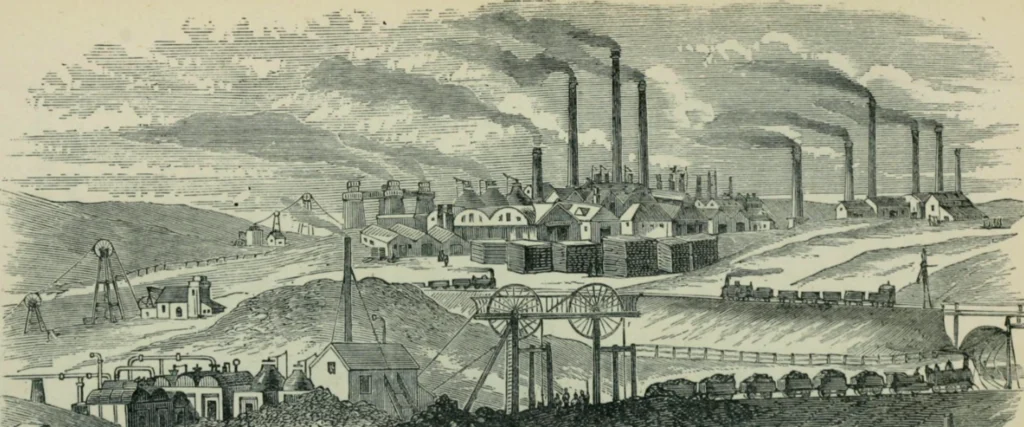
The economic theory known as the Jevons Paradox, a concept first articulated in the 19th century, has seen a remarkable resurgence in contemporary discourse, particularly as discussions around artificial intelligence (AI) intensify. This paradox posits that increasing the efficiency with which a resource is used often leads not to a reduction in its consumption, but rather to an overall increase. While often framed in optimistic terms regarding economic growth and job creation, a deeper examination reveals a "dark side" to this phenomenon: the unexpected and often detrimental side effects that can accompany a sudden surge in demand for an "efficient" resource.
The Historical Roots: William Stanley Jevons and the Coal Question
The Jevons Paradox owes its name to William Stanley Jevons (1835-1882), a prominent English neoclassical economist and logician. Jevons lived during a transformative period in British history, the height of the Industrial Revolution, characterized by rapid technological advancement and an insatiable demand for energy. His seminal work, "The Coal Question: An Inquiry Concerning the Progress of the Nation, and the Probable Exhaustion of Our Coal-Mines," published in 1865, laid the groundwork for this counterintuitive observation.
In his book, Jevons meticulously analyzed the trajectory of Britain’s industrial power, which was overwhelmingly fueled by coal. He observed that technological innovations, particularly the development of more efficient steam engines by engineers like James Watt, were not leading to a conservation of coal. On the contrary, these more efficient engines, which required less fuel to generate the same amount of power, made steam power cheaper and more accessible. This reduction in the effective cost of power spurred its adoption across a wider range of industries—from manufacturing and transportation to mining itself. The net result was a dramatic increase in overall coal consumption, defying the intuitive expectation that greater efficiency would lead to less.
Historical data largely validated Jevons’s prediction regarding consumption. Between 1830 and 1863, for example, British coal output surged from approximately 25 million tons to nearly 84 million tons, a period marked by significant improvements in steam engine efficiency. While Jevons’s dire prediction of an imminent coal shortage for Britain was ultimately averted through advancements in mining techniques, the discovery of new coalfields, and later, the transition to other energy sources, the core observation about increased consumption due to efficiency held true. The paradox demonstrated that while local efficiency gains are undeniable, their macro-economic impact can be quite different.
AI and the Modern Interpretation: The Labor Market Debate
Today, the Jevons Paradox finds new relevance in the ongoing debate surrounding artificial intelligence and its potential impact on the global labor market. Many fear that AI, by making workers extraordinarily efficient, will lead to widespread job displacement. The common narrative suggests that if AI tools enable one programmer to accomplish the work of five, then companies will logically reduce their workforce by 80%. This perspective anticipates a contraction of the labor market as automation replaces human effort.
However, proponents of the Jevons Paradox offer a contrasting, more optimistic, outlook. They argue that if AI significantly boosts worker efficiency, the effective cost of the services these workers provide will decrease. This reduction in cost could, in turn, stimulate a substantial increase in demand for those services, potentially leading to job growth rather than contraction. Applying the programming example, if AI makes software development significantly cheaper and faster, a vast new market could emerge. More individuals, small businesses, and organizations might find it economically viable to develop custom applications, specialized tools, or entirely new digital products, thereby creating more demand for programmers, albeit ones augmented by AI.
This perspective aligns with historical precedents where technological advancements, while disrupting existing roles, also created entirely new industries and job categories. The advent of personal computers, for instance, automated many clerical tasks but simultaneously created millions of jobs in software development, IT support, digital content creation, and more. Economists like Erik Brynjolfsson and Andrew McAfee, authors of "The Second Machine Age," have extensively explored how technological progress can lead to both disruption and new opportunities, urging societies to adapt proactively. Research from organizations like the World Economic Forum consistently highlights that while AI will automate some tasks, it is also expected to create millions of new jobs, particularly in areas requiring human-AI collaboration, creativity, and critical thinking. The crucial question remains whether the pace of new job creation will offset the pace of displacement, and how effectively the workforce can be reskilled.
The Dark Side Unveiled: Unintended Negative Externalities
While the potential for AI to expand markets and create new opportunities is a compelling argument against mass unemployment, the Jevons Paradox carries a less discussed, darker implication: the generation of unforeseen negative side effects stemming from increased consumption or utilization. This aspect of the paradox shifts focus from resource depletion to the broader environmental, social, and psychological consequences of runaway efficiency.
One of the earliest manifestations of this "dark side" can be traced back to Jevons’s original "Coal Question." While efficient steam engines averted an immediate coal shortage, the vastly increased burning of coal led to pervasive air pollution. Victorian industrial cities became synonymous with smog, soot-stained buildings, and respiratory illnesses. More profoundly, this era marked the smoky genesis of human-driven climate change, a consequence far beyond Jevons’s immediate concerns but directly linked to the burgeoning scale of industrial activity fueled by efficiency gains. The environmental cost of cheap, abundant energy, made possible by more efficient conversion, proved to be astronomical over the long term.
A more recent and relatable example of the Jevons Paradox’s darker implications can be observed in the evolution of digital communication. The advent of tools like email, instant messaging platforms (e.g., Slack, Microsoft Teams), and video conferencing revolutionized communication efficiency. They made it incredibly easy, fast, and cheap to transmit information across distances, facilitating collaboration and accelerating decision-making. The intuitive expectation might have been that such efficiency would streamline work, reduce communication overhead, and free up time.
However, the reality has been quite different for many knowledge workers. The vastly increased efficiency of communication tools led to an explosion in the volume of communication. Instead of fewer, more focused interactions, workers found themselves inundated with a constant stream of emails, chat messages, and notifications. Studies, including those by Microsoft’s Work Trend Index, have indicated that the average knowledge worker is interrupted, or switches contexts, every few minutes, often by digital communication. This incessant stream of interaction fragments attention, hinders deep work, and contributes significantly to cognitive overload, stress, and burnout. The "always-on" culture fostered by these tools blurs the lines between work and personal life, leading to extended working hours and diminished well-being. What was designed to make communication more efficient paradoxically made work itself less efficient by eroding focus and demanding constant reactivity. The unintended consequence of seamless digital communication has been a pervasive state of "communication madness" and an "attention economy" where the most valuable resource is an individual’s unbroken focus.
Anticipating AI’s New Dark Sides
If the Jevons Paradox holds true for AI, and efficiency gains lead to a dramatic expansion in the application and consumption of AI-powered services, we must remain vigilant about the potential for new, unforeseen negative externalities. The history of technology repeatedly shows that innovations, while solving existing problems, often create new ones.
-
Environmental Footprint of AI: Increased AI efficiency could lead to a surge in demand for computational power, data storage, and network infrastructure. Training large language models and running complex AI algorithms are incredibly energy-intensive processes. A future where AI is deeply embedded in every aspect of industry and daily life could translate into a massive increase in global energy consumption, potentially exacerbating climate change concerns if not powered by renewable sources. The mining of rare earth minerals essential for advanced computing hardware also carries significant environmental and social costs.
-
Cognitive Overload and Decision Fatigue (AI-Assisted): Just as efficient digital communication led to information overload, hyper-efficient AI could lead to "AI-output overload." If AI can generate vast amounts of analysis, content, or recommendations almost instantaneously, humans might struggle to process, vet, and act upon this deluge. This could lead to new forms of cognitive strain, decision fatigue, and a diminished capacity for critical evaluation if individuals become overly reliant on AI-generated insights without fully understanding their nuances or limitations.
-
Ethical Dilemmas at Scale: The efficiency of AI systems also means they can operate and propagate at an unprecedented scale. If AI models contain biases, generate misinformation, or are used for intrusive surveillance, their efficiency could amplify these negative impacts exponentially. An efficient system for content generation, for example, could flood the information ecosystem with deepfakes or propaganda, making it incredibly difficult for individuals to discern truth from falsehood. The ethical implications of AI, from algorithmic fairness to data privacy, become far more complex and urgent when the Jevons Paradox drives widespread, high-volume deployment.
-
Resource Depletion (New Forms): While AI might make traditional resource use more efficient, it could create new demands for other resources. Beyond energy and minerals, this could extend to data itself (e.g., demand for ever-larger, more diverse, and ethically sourced datasets for training), or even human attention, as AI systems compete for engagement.
-
Erosion of Human Agency and Skills: If AI makes certain tasks too efficient, individuals might lose opportunities to develop or maintain critical skills. For example, highly efficient AI diagnostic tools in medicine, while beneficial, could potentially lead to a decline in the diagnostic intuition of human practitioners if over-relied upon. This deskilling effect, if widespread, could diminish human resilience and adaptability in scenarios where AI fails or is unavailable.
Navigating the Paradox: Vigilance and Proactive Governance
The Jevons Paradox serves as a crucial reminder that technological progress, particularly in efficiency, is a double-edged sword. It underscores the temptation to assume that increasing efficiency can only lead to improvements, when economic and social history often tells a more intricate and sometimes sobering tale.
To mitigate the "dark side" of AI-driven efficiency, a multi-faceted approach involving policymakers, industry leaders, researchers, and the public is essential:
- Sustainable AI Design: Prioritizing energy-efficient AI architectures, algorithms, and hardware, and investing in renewable energy sources for data centers.
- Ethical AI Frameworks: Developing robust regulatory frameworks and industry standards that address algorithmic bias, transparency, data privacy, and accountability, ensuring AI’s expansion is guided by human values.
- Human-Centric AI Integration: Designing AI tools not merely for automation but for augmentation, focusing on how AI can enhance human capabilities and creativity, rather than diminish them. This includes fostering new skills in human-AI collaboration.
- Digital Literacy and Critical Thinking: Educating individuals to critically evaluate AI-generated content and insights, understand AI’s limitations, and manage information overload effectively.
- Proactive Policy Development: Governments and international bodies must anticipate the broader societal and environmental impacts of AI’s pervasive adoption, moving beyond reactive measures to establish forward-looking policies that promote beneficial outcomes while curbing negative externalities.
- Research into Unintended Consequences: Investing in interdisciplinary research to systematically identify and understand the second- and third-order effects of widespread AI deployment across various sectors.
In conclusion, while the Jevons Paradox offers a hopeful counter-narrative to fears of mass job displacement by AI, suggesting that efficiency could spur new demand and economic growth, it simultaneously casts a long shadow. The history of coal consumption and digital communication overload demonstrates that the benefits of efficiency can come with significant, often unanticipated, costs. As AI continues its rapid advancement, it is imperative that societies remain vigilant, embracing the potential for efficiency while proactively designing safeguards and ethical guardrails to navigate its inherent "dark side" and ensure a future where technological progress serves humanity’s broader well-being, not just its productive capacity.