

The modern workplace is in a constant state of flux, driven by an unprecedented acceleration in technological advancements and evolving business needs. This rapid evolution is creating a significant chasm between the skills employees possess and those required to perform effectively, a phenomenon the employee training platform TalentLMS has termed the "speed-to-skill" gap. Their recent "Speed-to-Skill" report, based on a survey of 1,500 U.S. respondents—comprising 964 managers and 536 employees—underscores a growing concern across industries: learning is failing to keep pace with the swift transformation of work itself.
This finding aligns with a broader consensus emerging from multiple industry analyses. LinkedIn’s annual survey, for instance, revealed that nearly half of its respondents view the ongoing skills gap as a crisis. Further reinforcing this urgency, the Josh Bersin Company’s 2025 report, "Dynamic Skilling: Anticipating and Mitigating Current and Future Skills Gaps," advocates for a strategic shift towards "dynamic skilling." This approach emphasizes the continuous realignment of workforce skills development to proactively evolve with and anticipate business requirements, rather than reacting to emergent deficits.
The TalentLMS report paints a stark picture of the challenges faced by both individuals and organizations. Seven in ten employees surveyed indicated a need for more efficient methods to acquire and practice new skills to remain competent in their roles. This desire for faster skill acquisition is compounded by the reality that, for 44 percent of respondents, work commitments actively impede their ability to dedicate time to learning and development. This creates a paradox where the very demands of the job are hindering employees’ capacity to equip themselves for those demands.
Employees Taking the Reins: A Self-Driven Learning Landscape
In response to this widening disparity, a significant portion of the workforce is taking a proactive, self-directed approach to their professional development. The report reveals that over half of respondents—53 percent—are independently pursuing skills development. This trend is a direct consequence of both managers and employees acknowledging that a substantial number of their current job-related skills have become obsolete within the past five years. This rapid obsolescence necessitates a constant re-evaluation and acquisition of new competencies, a process that traditional, often slower-paced, organizational training programs are struggling to facilitate.
Managerial Uncertainty and the AI Catalyst
The pressures are not confined to employees. Managers are also grappling with a considerable degree of uncertainty regarding the future skill requirements of their teams. A striking three out of four managers expressed a desire for their employees to be able to practice skills at a faster rate, highlighting a critical need for agility in talent development. A primary driver of this seismic shift in the employment landscape is undeniably the meteoric rise of artificial intelligence (AI). AI is fundamentally reshaping job functions, creating new roles, and rendering others obsolete at an unprecedented speed. This technological revolution demands a workforce that can adapt and learn at a similar pace, a capability that current organizational structures are often ill-equipped to provide.
The implications of AI are far-reaching, impacting everything from routine administrative tasks to complex analytical processes. Industries that were once considered stable are now facing disruption, requiring professionals to understand and work alongside AI tools, develop AI-specific skills, and adapt to new workflows. For example, in marketing, AI-powered analytics and content generation tools are changing the nature of campaign management. In healthcare, AI is assisting in diagnostics and personalized treatment plans, necessitating new skills for medical professionals to interpret and utilize these advancements. The legal sector is exploring AI for document review and legal research, pushing lawyers to develop proficiency in managing and validating AI-generated insights.
The Primacy of Experiential Learning
The data indicates a clear shift away from a sole reliance on formal, structured learning programs. While traditional learning still holds some sway—with 33 percent of respondents utilizing their company’s learning platform—the most prevalent and effective method for skill acquisition is increasingly "learning by doing." Employees are finding that practical application and hands-on experience are the most effective ways to internalize new skills and adapt to changing job requirements. This preference for experiential learning suggests a need for organizations to integrate more project-based learning, simulations, and on-the-job training opportunities into their development strategies.
This move towards experiential learning is supported by research in cognitive psychology, which suggests that active engagement and immediate feedback inherent in practical application lead to deeper understanding and better retention of skills. Furthermore, when employees learn skills in the context of their actual work, the relevance and applicability of those skills are immediately apparent, fostering greater motivation and engagement.
Bridging the Gap: A Call to Action for Leadership
The "speed-to-skill" gap is not a transient issue; it is an ongoing challenge that requires strategic and sustained attention from organizational leadership. As managers and employees navigate this demanding landscape, senior leaders and learning and development (L&D) departments have a crucial role to play in alleviating the pressure and fostering a more adaptable workforce.
Key Strategies for Leaders
To address the speed-to-skill gap effectively, organizations must consider a multi-pronged approach:
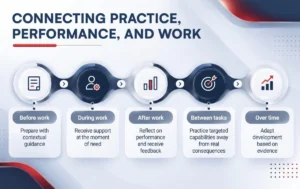
- Embrace Dynamic Skilling Frameworks: Moving beyond static training catalogs, organizations need to adopt dynamic skilling strategies that continuously assess emerging skill needs and adapt learning pathways accordingly. This involves close collaboration between L&D teams, HR, and business units to forecast future talent requirements.
- Foster a Culture of Continuous Learning: Leadership must champion a workplace culture where learning is not an afterthought but an integral part of daily operations. This includes allocating dedicated time for learning, recognizing and rewarding skill development, and encouraging knowledge sharing across teams.
- Invest in Agile Learning Technologies: Leveraging modern learning technologies that support microlearning, personalized learning paths, just-in-time learning resources, and immersive simulations can significantly accelerate the speed-to-skill acquisition process. These platforms can provide employees with the resources they need, precisely when they need them.
- Prioritize Experiential Learning Opportunities: Design and implement more on-the-job training, apprenticeships, job rotations, project-based learning, and stretch assignments. These opportunities allow employees to acquire and practice skills in real-world contexts, enhancing both learning effectiveness and practical application.
- Promote Cross-Functional Collaboration: Encourage collaboration and knowledge exchange between departments. This can break down silos, expose employees to diverse perspectives, and facilitate the transfer of skills across the organization.
- Empower Managers as Learning Facilitators: Equip managers with the skills and resources to identify skill gaps within their teams, guide employees towards relevant learning opportunities, and provide constructive feedback on skill development. Managers should be seen as coaches and mentors in the learning process.
- Develop Robust Skills Taxonomy and Gap Analysis Tools: Implement systems that allow for the detailed mapping of existing skills within the organization and the identification of critical skill gaps relative to current and future business objectives. This data-driven approach will inform targeted learning interventions.
Supporting Data and Broader Context
The urgency highlighted by the TalentLMS report is not an isolated incident. The World Economic Forum’s "Future of Jobs Report 2023" projected that by 2027, 44 percent of workers’ core skills will be disrupted. This indicates a systemic shift across the global economy, where the half-life of skills is rapidly diminishing. The report also identified analytical thinking and creative thinking as the top skills for the coming years, alongside technological literacy and curiosity and lifelong learning. These are skills that are often developed through experience and continuous engagement, rather than solely through formal instruction.
The increasing prevalence of remote and hybrid work models also presents unique challenges and opportunities for skill development. While these models can offer greater flexibility, they also require employees to be more self-disciplined and proactive in their learning. Organizations need to ensure that their learning and development strategies are inclusive and effective across all work arrangements, providing equitable access to resources and support.
Implications for the Future of Work
The "speed-to-skill" gap has profound implications for the future of work. Organizations that fail to adapt risk facing critical talent shortages, reduced productivity, and a diminished ability to innovate. This could lead to increased recruitment costs as companies struggle to find candidates with the requisite skills, and higher attrition rates as employees seek environments that offer better opportunities for growth and development.
Conversely, organizations that proactively address this challenge will be better positioned to thrive. They will cultivate a more agile, resilient, and future-ready workforce capable of navigating the complexities of a rapidly changing business landscape. This proactive approach will not only drive competitive advantage but also foster a more engaged and satisfied employee base, as individuals feel supported in their professional growth and equipped to meet the demands of their roles.
In conclusion, the "speed-to-skill" gap is a critical imperative for businesses today. It demands a fundamental rethinking of how organizations approach learning and development, moving towards more dynamic, agile, and employee-centric models. By embracing continuous learning, prioritizing experiential development, and leveraging technology effectively, organizations can bridge this gap and ensure their workforce remains relevant and competitive in the face of relentless technological advancement and evolving industry demands. The future of organizational success hinges on the ability to learn, adapt, and evolve at the same pace as the world of work itself.