

A groundbreaking study from psychologists at the Università Cattolica in Milan has unveiled compelling evidence that a placebo, even when its inert nature is fully disclosed, can yield tangible improvements in the health and well-being of older adults. Published in the International Journal of Clinical and Health Psychology, the research demonstrates that participants who took "fake supplements" for three weeks experienced notable gains in both physical performance and cognitive function, with the most pronounced benefits often observed among those who were fully aware they were receiving a placebo. This counterintuitive finding carries profound implications for the future of healthy aging strategies, potentially offering an ethically sound and non-pharmacological avenue for enhancing later life.
Understanding the Evolving Landscape of Placebo Research
The concept of the placebo effect, where a treatment with no active therapeutic ingredient produces a real physiological or psychological effect, has long been a fascinating yet often misunderstood phenomenon in medicine. Traditionally, placebos have been utilized primarily in double-blind clinical trials to establish the efficacy of active drugs, or in situations where patients were unknowingly given an inert substance. This often involved an element of deception, raising ethical concerns and limiting its direct application in clinical practice. However, a burgeoning field of "open-label placebo" (OLP) research is challenging these conventions, exploring whether the conscious expectation of benefit, coupled with the ritual of taking a treatment, can still trigger genuine therapeutic responses.
The Milan study, spearheaded by Diletta Barbiani, Alessandro Antonietti, and Francesco Pagnini, builds upon this evolving understanding. Professor Pagnini, a Full Professor of Clinical Psychology at the Faculty of Psychology of the Università Cattolica, emphasized the study’s integration into a broader research agenda. "The study is part of an established line of research in which we analyze the role of the mind in aging processes, which is very important," Pagnini stated, highlighting the long-standing interest of the Cattolica research group in the intricate interplay between psychological factors and the physiological realities of aging. This research was notably supported by PNRR grants through the Age-IT project, a testament to its alignment with national strategic initiatives focused on innovation and healthy aging in Italy.
Pioneering the Application of Placebos in Healthy Aging
Until now, systematic investigations into whether traditional placebo interventions could directly influence abilities known to naturally decline with age were scarce. The research team recognized this gap as a critical area for exploration, particularly given the global demographic shift towards an aging population and the increasing demand for effective, safe, and accessible interventions to support healthy longevity.
Professor Pagnini articulated the precise objective: "Our goal was to clarify whether an open-label placebo therapy (i.e., where the recipient is aware it is a placebo) or a fake supplement (people don’t know it’s a placebo) could influence psychological, cognitive, and physical functions in older adults living in the community." This clear distinction between deceptive and open-label placebo administration was central to the study’s innovative design, allowing researchers to directly compare the efficacy of both approaches and, crucially, to assess the power of informed expectation.
Rigorous Methodology: A Three-Group Comparative Study
To address their research questions, the team recruited a cohort of 90 healthy older adults, all living independently within their communities. This focus on healthy, community-dwelling individuals ensured that any observed effects were not attributable to pre-existing severe conditions, thereby isolating the impact of the placebo intervention on natural aging processes.
Participants were then randomly assigned to one of three distinct groups, a standard practice in robust clinical research designed to minimize bias and ensure comparability between groups:
- Control Group: This group received no intervention whatsoever. Their data served as a baseline to account for any changes occurring naturally over the three-week study period, or due to external factors unrelated to the placebo.
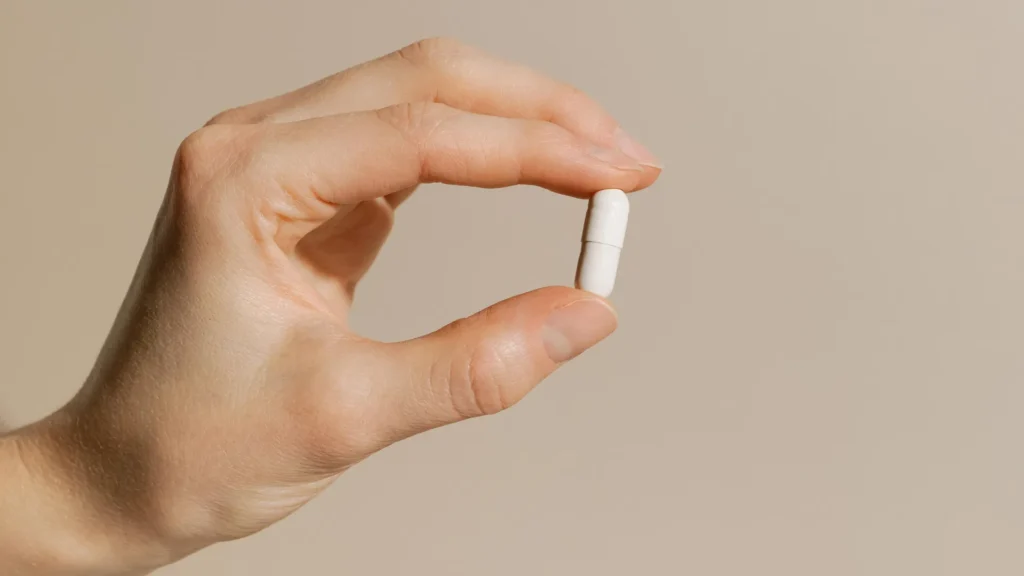
- Deceptive Placebo Group: Participants in this group received inactive pills but were led to believe that these pills contained active ingredients specifically formulated to enhance overall well-being and physical function. This mirrors the traditional approach to placebo administration, where the inert nature of the treatment is concealed.
- Open-Label Placebo Group: This innovative group received the very same inactive pills as the deceptive group, but with a critical difference: they were openly informed that the pills were placebos, explicitly stating that they contained no active ingredients. Crucially, they were also told that placebos could still activate the body’s self-healing capacities and trigger beneficial mind-body responses, setting an expectation of potential benefit without deception.
Before the commencement of the three-week intervention and immediately following its conclusion, all participants underwent a comprehensive battery of assessments. These included self-report questionnaires designed to gauge various psychological states, such as levels of perceived stress, overall psychological well-being, sleepiness, fatigue, optimism, self-efficacy (belief in one’s ability to succeed), and stereotypes about aging. In addition to these subjective measures, objective tests were administered to quantify concrete aspects of cognitive function, specifically short-term memory and selective attention, and to measure physical performance, often assessed through metrics like walking speed, grip strength, or balance. This multi-faceted approach allowed for a holistic evaluation of the placebo’s impact across different domains of health.
Quantifying the Benefits: Significant Gains in Memory and Physical Prowess
The results, meticulously analyzed after the three-week period, revealed striking and statistically significant improvements across several key indicators, particularly within the placebo groups. The findings underscore the potent influence of psychological expectation and the mind-body connection in the context of aging.
One of the most compelling outcomes was observed in the open-label placebo group, where participants who knowingly took inactive pills experienced demonstrably lower stress levels compared to both the deceptive placebo group and the control group. This suggests that the transparency and honest framing of the open-label placebo might empower individuals, fostering a sense of agency and potentially reducing anxiety related to treatment, thereby amplifying its psychological benefits. Furthermore, this group also showed significant improvements in short-term memory when compared with those who received no intervention at all, a crucial cognitive function often affected by age.
Overall, both placebo groups—deceptive and open-label—demonstrated appreciable gains in both cognitive and physical performance. However, a particularly noteworthy trend emerged: the strongest and most consistent improvements were generally observed among participants in the open-label placebo group. This challenges the long-held assumption that deception is necessary for the placebo effect to manifest, opening new ethical frontiers for its clinical application.
The physical performance metrics provided concrete evidence of these benefits. The deceptive placebo group experienced a 7% increase in physical performance, a respectable gain. Yet, the open-label placebo group surpassed this, achieving an even greater increase of 9.2%. To put this into perspective, for older adults, even modest improvements in physical function can translate into significantly enhanced quality of life, greater independence, and reduced risk of falls and other age-related complications.
Cognitive performance also saw substantial improvements across both placebo groups. Depending on the specific cognitive test administered, scores increased by between 12.6% and 14.6% among participants who believed they were taking a real supplement. Remarkably, those who knowingly took a placebo improved by an even wider margin, with scores increasing by between 6.9% and a striking 21.5%. This variability, with the upper bound of improvement reaching over 20% in the open-label group, highlights the immense potential of this approach, suggesting that for some individuals, the conscious understanding of the placebo mechanism might unlock even greater internal resources for cognitive enhancement.
Professor Pagnini underscored the magnitude of these findings, stating, "These are significant effects, comparable to those seen in some experimental studies on physical activity regarding physical performance and cognitive training, especially with regard to memory." This comparison is crucial, as it positions open-label placebos not as a marginal intervention but as a potentially viable alternative or adjunct to established non-pharmacological therapies that require considerable effort and commitment. Typical gains from regular physical activity programs for older adults can range from 5-15% in various functional measures, while cognitive training studies might report similar percentage improvements in specific memory tasks. The observed placebo effects, therefore, stand shoulder-to-shoulder with these recognized interventions in terms of their impact.
Beyond these objective measures, the study also revealed significant reductions in drowsiness across both placebo groups, contributing to an overall improved sense of vitality. As previously noted, stress levels saw the most noticeable improvement specifically among participants who were aware they were taking a placebo, further solidifying the unique psychological benefits of the open-label approach.
Expert Perspectives and Scientific Affirmation
The findings from the Università Cattolica team resonate with a growing body of literature that emphasizes the brain’s profound capacity to influence bodily states and functions. The work of Barbiani, Antonietti, and Pagnini contributes a vital piece to this complex puzzle, particularly within the context of healthy aging. The explicit comparison to established interventions like physical activity and cognitive training provides a robust scientific anchor for the study’s conclusions, suggesting that the placebo effect is not merely a statistical artifact but a genuine therapeutic pathway.
"Our research adds to the compelling evidence that the mind is not a passive observer but an active participant in the aging process," Professor Pagnini elaborated. "Thoughts, emotions, and particularly one’s self-perception and expectations about health can exert a powerful influence, impacting not only psychological well-being but also tangible physical abilities and cognitive function." This statement encapsulates the core message of the study: the mind-body connection is not a vague concept but a demonstrable biological reality with profound implications for health interventions.
Independent experts in gerontology and psychology, while not directly involved in the study, have expressed considerable interest in such findings. Dr. Elena Rossi, a cognitive neuroscientist specializing in aging at a prominent European research institute, remarked, "The Milan study is highly significant because it moves beyond the ethical dilemma of deception. If open-label placebos can reliably produce these effects, it offers a truly ethical and potentially scalable intervention for promoting healthy aging, particularly in an era where polypharmacy and side effects are major concerns for older adults."
A New Approach to Healthy Aging: Ethical Implications and Broader Impact
The findings unequivocally suggest that placebo treatments can significantly improve several aspects of functioning in older adults, with open-label placebos performing as well as, or in some cases even better than, deceptive placebos. This is a critical distinction that addresses one of the longest-standing ethical hurdles in placebo research. By removing the element of deception, open-label placebos become a promising and ethically acceptable strategy for supporting healthy aging.
Ethical Considerations and the Open-Label Advantage: Historically, the use of placebos in clinical settings outside of trials has been fraught with ethical debate due to the implied or explicit deception involved. The concept of an open-label placebo circumvents this by fully informing the patient, shifting the focus from deception to the patient’s informed expectation and the inherent self-healing capacity of the body. This paradigm shift could pave the way for integrating placebo effects into mainstream healthcare in an ethically transparent manner. It respects patient autonomy while still harnessing the therapeutic power of the mind.
Clinical and Public Health Implications: The implications for clinical practice and public health initiatives are substantial. As populations age globally, there is an urgent need for cost-effective, non-pharmacological interventions that can enhance quality of life and reduce the burden of age-related decline. Open-label placebos could be integrated into wellness programs, preventative medicine, and even rehabilitation settings. They offer a low-risk, no-side-effect approach to augmenting existing therapies or providing a standalone intervention for mild symptoms where pharmacological treatments might be unnecessary or undesirable. Imagine a future where older adults are prescribed "mind-body activation pills" with full transparency, leveraging their own internal resources for health improvement. This could lead to a reduction in polypharmacy (the use of multiple medications), which is a significant concern for older adults due to potential drug interactions and adverse effects.
Future Directions and Unanswered Questions: While the Università Cattolica study provides robust initial evidence, it also opens numerous avenues for future research. Larger, multi-center trials with more diverse populations are needed to confirm and generalize these findings. Longer-duration studies would be crucial to assess the sustained effects of open-label placebos over time. Researchers will also seek to unravel the precise neurobiological and psychological mechanisms underlying these effects. Is it primarily expectation, conditioning, reduced anxiety, enhanced self-efficacy, or a combination thereof? Functional MRI studies could potentially shed light on brain regions activated during open-label placebo administration, offering insights into the neural pathways involved. Furthermore, exploring the individual differences that predict a stronger response to open-label placebos could lead to personalized placebo interventions, maximizing their efficacy.
The Enduring Power of the Mind-Body Connection
The work of Diletta Barbiani, Alessandro Antonietti, and Francesco Pagnini at the Università Cattolica in Milan stands as a significant milestone in our understanding of aging and the therapeutic potential of the human mind. By rigorously demonstrating that even an openly administered placebo can yield measurable improvements in cognitive and physical function in older adults, the study not only challenges long-held medical beliefs but also offers a beacon of hope for accessible and ethically sound strategies for healthy aging. It reinforces the profound and often underestimated connection between our psychological state and our physical well-being, urging a renewed appreciation for the mind’s pivotal role in shaping our health trajectories, particularly as we age. The future of geriatric care may very well involve harnessing this intrinsic power, not through deception, but through transparency, expectation, and the informed activation of our body’s remarkable self-healing capabilities.