



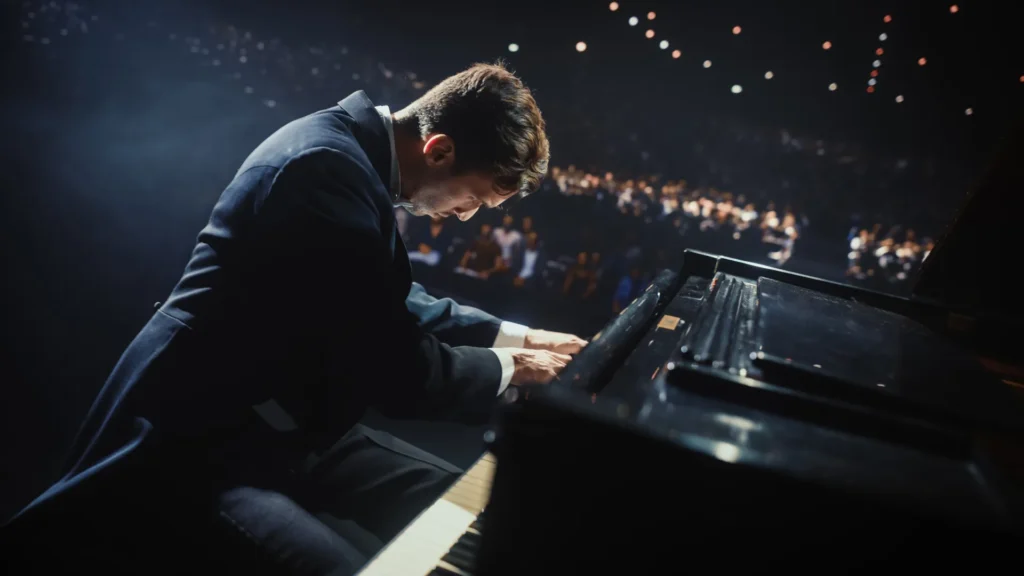
For generations, the nuanced artistry of pianists has been steeped in the belief that a performer’s touch can fundamentally alter the character of a piano’s sound. This deeply held conviction, a cornerstone of music pedagogy and performance practice, has long faced skepticism from the scientific community, which largely argued that once a piano hammer strikes a string, the resulting tone is almost entirely dictated by the instrument’s physical properties. Now, a groundbreaking scientific study has delivered some of the most compelling evidence to date, unequivocally demonstrating that pianists possess the remarkable ability to shape a piano’s timbre through touch alone, validating a century of artistic intuition.
The Genesis of a Breakthrough Study
The pivotal research, spearheaded by Dr. Shinichi Furuya of the NeuroPiano Institute and Sony Computer Science Laboratories, Inc., harnessed cutting-edge ultra-high-speed sensing technology to meticulously decode the subtle, often imperceptible movements underpinning expressive piano playing. Their findings, meticulously peer-reviewed and published in the prestigious Proceedings of the National Academy of Sciences (PNAS), illuminate how minute adjustments in a pianist’s finger and hand motions exert a measurable influence on how listeners perceive critical sonic qualities such as brightness, heaviness, and clarity within individual musical notes. This study not only resolves a long-standing debate but also opens new avenues for understanding the intricate interplay between human motor control, auditory perception, and artistic expression.
A Century of Contention: The Timbre Debate
The question of whether a pianist’s touch could truly modulate timbre, beyond merely affecting loudness or timing, has been a contentious subject since the early 20th century. Musicians, steeped in a language rich with descriptors like "warm," "dark," "bright," or "heavy" tones, intuitively understood these distinctions as direct outcomes of their physical interaction with the keyboard. However, many early scientists, focusing on the physics of sound production, posited that such perceived differences were primarily psychological phenomena, or simply byproducts of variations in dynamics (volume) and articulation (timing), rather than a direct alteration of the sound’s spectral content – its timbre – through touch itself.
Prominent figures in acoustics, such as Hermann von Helmholtz in the 19th century, laid much of the groundwork for understanding sound, often emphasizing the physical properties of instruments. While his work was foundational, the limitations of early measurement technologies meant that the incredibly subtle, rapid movements involved in piano playing remained largely unquantifiable. The prevailing scientific view held that the moment a hammer struck a string, the initial velocity and point of impact largely determined the harmonic series produced, thus defining the timbre. Any further influence by the player was deemed negligible. This created a persistent chasm between the empirical experience of musicians and the analytical framework of scientists, a divide that persisted for over a hundred years.
Unlocking the Secrets of Touch: The Methodology
The new research directly challenges this long-held scientific assumption by employing a sophisticated, custom-built noncontact sensing system dubbed "HackKey." This innovative technology allowed the research team to capture the movements of all 88 piano keys with unprecedented precision, recording data at an astonishing rate of 1,000 frames per second and with microscopic spatial resolution. This level of detail was crucial, as it enabled the researchers to observe minute variations in key descent, hammer acceleration, and the precise timing of various finger and hand components – elements previously unobservable with sufficient accuracy.
To test their hypothesis, twenty internationally acclaimed pianists were recruited for the study. These virtuosos were tasked with playing single notes while intentionally striving to produce contrasting tonal qualities. For instance, they were asked to play the same note multiple times, aiming for "bright" versus "dark" sounds, or "light" versus "heavy" sounds. This experimental design ensured that any observed differences in timbre could be directly attributed to the pianists’ intentional efforts to alter their touch, rather than variations in the musical context.
The subsequent listening tests were equally rigorous. Audiences, comprising both individuals with extensive musical training (professional pianists) and those with no formal musical background, were asked to identify the intended timbres. The results were remarkably consistent: listeners, regardless of their musical expertise, reliably recognized the contrasting tonal qualities the pianists aimed to produce. Notably, professional pianists demonstrated an even greater sensitivity to these subtle differences, underscoring the nuanced perception honed through years of dedicated practice and performance. This robust perceptual validation, coupled with the objective movement data, provided a powerful dual-pronged confirmation of the pianists’ influence.
The Hidden Choreography: Mechanics of Expressive Movement
The core of the study’s revelation lies in its ability to pinpoint the specific physical actions that translate into perceived timbral changes. The researchers discovered that only a select number of exceedingly precise movement features were strongly correlated with alterations in perceived timbre. These included tiny, almost imperceptible variations in key acceleration leading up to hammer strike, the precise timing of the finger’s release, and the intricate synchronization between different parts of the hand and arm.
One particularly significant finding was that manipulating even a single one of these identified movement features could reliably elicit a change in how listeners described the sound. For example, a slightly different acceleration profile of the key prior to the hammer striking the string could consistently be perceived as a "brighter" or "darker" tone. This provided direct, causal evidence that touch itself, through these micro-movements, plays an active and measurable role in shaping timbre, rather than merely being an accompanying factor to other musical elements like loudness or tempo. It underscored that the spectral characteristics of the sound, its inherent color, could be modulated by the performer’s precise kinetic input.
The study conceptualized these subtle gestures not as random occurrences but as integral components of a highly refined motor skill, painstakingly developed and perfected through years of advanced piano training. This implies that the profound artistry behind a pianist’s tone is not merely a metaphorical or subjective interpretation; it is firmly grounded in quantifiable, physical actions. As Dr. Furuya articulated, this work represents a crucial step in translating a long-standing artistic intuition into the verifiable domain of science. The findings not only validate what countless pianists have inherently understood for decades but also furnish a clearer, empirical framework for comprehending how skilled human movement generates the rich tapestry of emotional and aesthetic experiences in music.
Broader Horizons: Implications Beyond the Concert Hall
The reverberations of this research extend far beyond the confines of concert halls and music conservatories, promising transformative impacts across a diverse array of scientific and technological disciplines.
Transforming Music Education: The research team posits that these discoveries hold the potential to revolutionize music education. Current pedagogical methods often rely on abstract or metaphorical instructions – "play warmer," "use a lighter touch," "project more." While effective for experienced students, these phrases can be frustratingly vague for beginners. Future training systems, informed by this research, could move beyond such qualitative guidance. Imagine a student learning to play a passage, and a digital interface, powered by high-speed sensors, visually demonstrating the exact finger acceleration profile associated with a "warm" tone, or highlighting the minute timing discrepancies that produce a "brighter" sound. This data-driven, visual feedback could make expressive techniques more accessible, easier to teach, and accelerate skill acquisition, potentially democratizing advanced musical expression.
Rehabilitation Science: The study’s insights into fine motor control and its impact on perception could be invaluable in rehabilitation science. Patients recovering from neurological injuries, strokes, or those with conditions affecting motor coordination often struggle with dexterity. Therapeutic interventions that integrate musical movement, informed by the precise actions identified in this study, could offer novel approaches to improving fine motor skills. By focusing on specific movement parameters that yield tangible sonic results, rehabilitation programs could become more engaging and effective, leveraging the brain’s capacity for motor learning in a musically enriched context.
Neuroscience and Human-Computer Interaction (HCI): The findings offer profound clues about the intricate relationship between the brain, body, and sensory experience. They illuminate how advanced motor control can actively shape perception itself, providing a clearer understanding of how the brain integrates efferent (motor) commands with afferent (sensory) feedback to create a unified experience. In the realm of HCI, this could lead to the development of more intuitive and expressive interfaces. Imagine a surgeon using a robotic arm whose movements are so finely tuned that the "touch" transmitted back to the human operator carries timbral information, enhancing their tactile perception during delicate procedures.
Robotics and Artificial Intelligence: The study’s detailed mapping of expressive human movements provides critical data for advancing robotics and artificial intelligence. Researchers in these fields are already exploring technologies inspired by expressive musical performance. This includes developing AI models capable of generating highly realistic piano motion, synthesizing music with nuanced timbral variations, and building robotic systems that can reproduce subtle expressive nuances in performance. The ultimate goal could be more human-like robotic performers, more expressive digital musical instruments, or AI composers that understand and manipulate timbre with the sophistication of a human artist.
The Science of Creativity: Unlocking Artistic Expression
Beyond its practical applications, this research makes a significant contribution to the burgeoning scientific effort to understand the very essence of creativity. For decades, much of the scientific inquiry into music perception concentrated on readily quantifiable elements such as pitch, loudness, and rhythm. Timbre, however, has proven far more elusive to study. Its subjective nature, deeply entwined with higher-level sensory interpretation, emotional response, and individual aesthetic preferences, presented formidable methodological challenges.
By meticulously identifying the specific physical actions that are causally linked to timbre perception, Dr. Furuya’s team has effectively opened a new frontier for studying how artistic expression emerges from the dynamic interaction between the performer’s body, the brain’s motor and perceptual systems, and the resulting sound. This represents a crucial step in demystifying the creative process, moving it from the realm of pure intuition to one amenable to scientific investigation.
This work is a cornerstone of a broader, emerging scientific discipline sometimes referred to as "dynaformics" – the science of music performance. Proponents of dynaformics believe that a deeper, scientifically informed understanding of the physical and cognitive processes underlying musical performance can yield profound benefits. It could empower musicians to train more efficiently, reducing the risk of injuries that often plague performers after years of intense practice, and helping them overcome physical limitations. By providing objective data on optimal movement strategies, dynaformics aims to enhance both the longevity and the artistic output of musicians.
The excitement surrounding these findings transcends the mere resolution of an old musical enigma. It profoundly reveals that a significant portion of music’s emotional power and aesthetic impact originates from movements so minuscule they are practically invisible to the naked eye. Yet, these gestures are executed with such exacting precision that human listeners, regardless of their musical background, are acutely sensitive to their resulting sonic differences. This study underscores the extraordinary capacity of the human body to act as a conduit for complex artistic expression, transforming subtle physical inputs into profound emotional and sensory experiences. It is a testament to the intricate dance between physics, physiology, and artistry that defines the magic of music.