


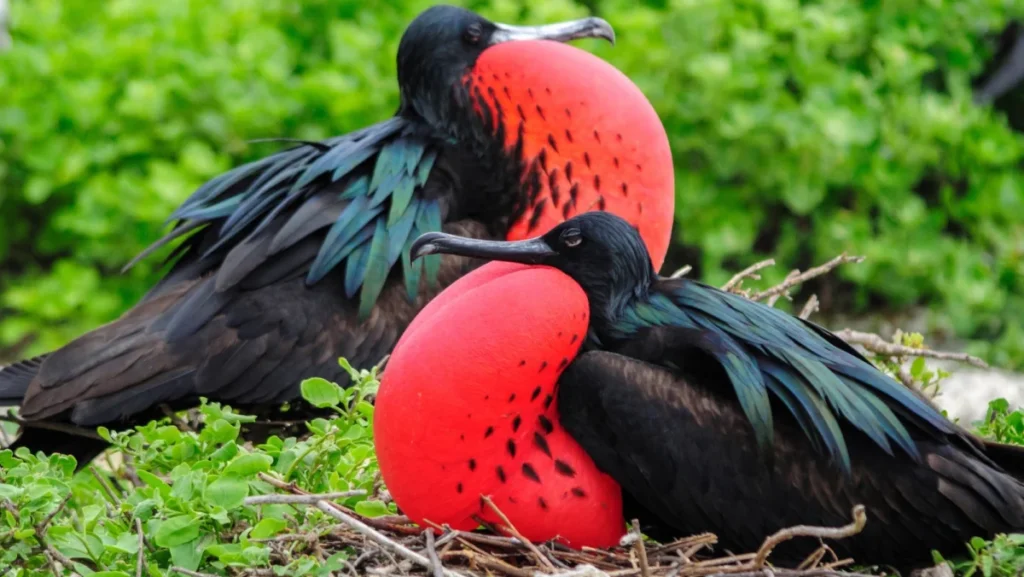
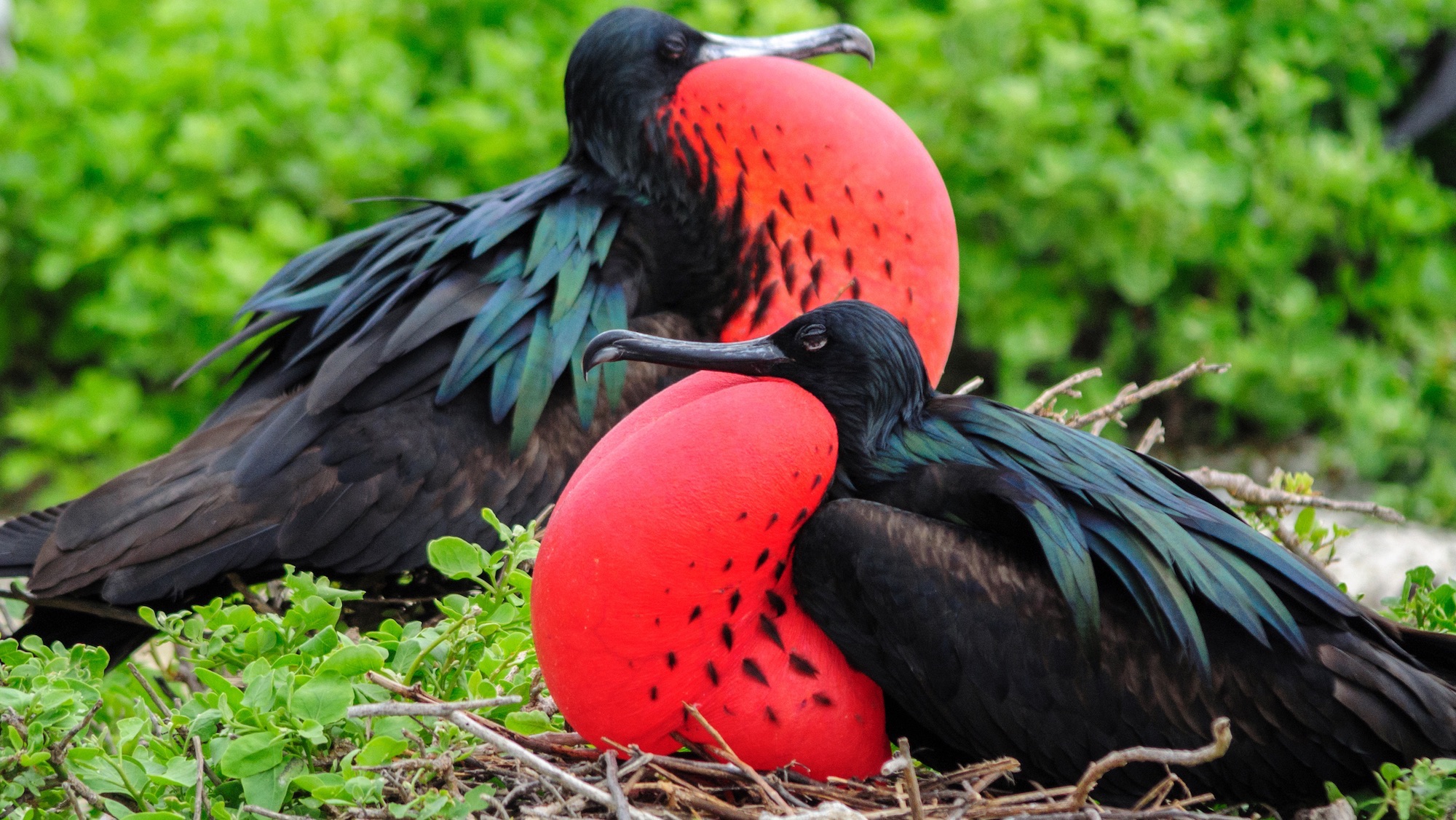
The United States Fish and Wildlife Service (USFWS) has recently released high-definition footage documenting the intricate and visually striking mating displays of male frigatebirds within the Midway Atoll National Wildlife Refuge. This annual biological phenomenon, characterized by the dramatic inflation of vibrant red throat pouches and rhythmic wing-shaking, represents one of the most complex reproductive rituals in the avian world. Captured by USFWS volunteer Dan Rapp, the observations provide a rare glimpse into the competitive social structures and physiological adaptations of these pelagic seabirds during their breeding season.
The frigatebird, often referred to as the "Man-o’-War bird" due to its habit of harassing other seabirds to steal their catch, exhibits a reproductive strategy that is as demanding as it is flamboyant. At the heart of this display is the gular sac—a featherless patch of skin on the throat that males can inflate into a balloon-like structure. When fully distended, this sac acts as a visual beacon to females soaring overhead, signaling the health, vigor, and genetic fitness of the suitor.
The Physiological Mechanics of the Gular Sac
The inflation of the gular sac is not merely a passive act but a significant physiological undertaking. The sac is composed of highly elastic skin that, when not in use, sits inconspicuously against the neck. During the mating season, hormonal changes trigger the engorgement of this tissue. The brilliant crimson hue is derived from carotenoid pigments obtained through the bird’s diet, primarily consisting of flying fish and squid. Research suggests that the intensity of the red color serves as an honest signal of the male’s nutritional status and immune system strength, allowing females to make informed choices regarding their reproductive partners.
Beyond the visual spectacle, the gular sac serves an acoustic purpose. As the male vibrates his wings and tilts his head back, the inflated sac acts as a resonance chamber. The resulting sounds—a mixture of drumming, clicking, and high-pitched shrieking—can be heard from significant distances across the atoll. This multi-sensory approach ensures that even in dense colonies, a male’s presence is noted by potential mates.
Behavioral Chronology of the Breeding Season
The breeding cycle of the frigatebird is notably protracted compared to other seabird species. The process begins with the arrival of males at established nesting sites, often in the branches of beach naupaka (Scaevola taccada) or other hardy coastal vegetation. Unlike many birds that defend a large foraging territory, male frigatebirds defend a small "display site" within a larger colony.
Once a group of up to 30 males has gathered—a formation often referred to as a "lek"—the display begins in earnest. When a female is spotted overhead, the colony erupts into a coordinated performance of wing-waving and vocalizations. This display can last for several days or even weeks until a female descends to investigate a specific male.
Upon selection, the pair engages in a period of mutual head-snaking and bill-clattering to solidify the bond. Unlike some avian species that mate for life, frigatebirds are seasonally monogamous. They form a dedicated pair bond for a single breeding cycle, working together to construct a rudimentary nest of sticks and twigs. However, the investment required for chick-rearing is so immense that females typically only breed every other year, whereas males may attempt to breed annually if environmental conditions permit.
The Long Road to Fledging: Parental Investment and Challenges
The reproductive stakes for frigatebirds are exceptionally high due to the duration of parental care. Following an incubation period of approximately 40 to 55 days, a single chick is hatched. The offspring is born altricial—naked and entirely dependent on its parents for warmth and sustenance.
For the first three months, the parents take turns guarding the nest and foraging. However, the post-fledging care period is what sets the frigatebird apart from nearly all other birds. Even after the young bird learns to fly, it remains dependent on its parents for food for an additional six to 14 months. This extended "adolescence" is necessary because the frigatebird’s specialized hunting technique—catching prey in mid-air or skimming the ocean surface—takes a long time to master. Because frigatebirds lack the waterproof plumage common to other seabirds, they cannot land on the water; doing so would lead to waterlogging and eventual drowning. Consequently, the young must become experts at aerial maneuvers before they can survive independently.
Ecological Context of the Midway Atoll National Wildlife Refuge
The Midway Atoll, located approximately 1,300 miles northwest of Honolulu, serves as a critical sanctuary for these displays. As part of the Papahānaumokuākea Marine National Monument, the atoll provides a predator-free environment essential for colonial nesting birds. The USFWS manages the refuge with a focus on habitat restoration, including the removal of invasive species and the protection of native flora that frigatebirds rely on for nesting.
The presence of the Great Frigatebird (Fregata minor) and the Lesser Frigatebird (Fregata ariel) at Midway highlights the atoll’s importance as a biodiversity hotspot. While the two species share similar mating rituals, their niche partitioning and slight variations in display timing allow them to coexist within the same ecosystem.
Supporting Data and Population Dynamics
Ornithological data indicates that frigatebirds possess the largest wing-area-to-body-weight ratio of any bird in the world. This anatomical advantage allows them to stay aloft for weeks at a time, often hitching rides on thermal updrafts to reach altitudes of over 10,000 feet. Such mastery of the air is vital for their survival but makes the energy-intensive mating displays on land all the more remarkable.
In terms of population health, the colonies at Midway are considered stable, though they face ongoing threats from global environmental shifts. Recent census data from the USFWS suggests that while nesting pairs remain consistent, the success rate of fledglings is highly sensitive to the availability of prey, which is in turn dictated by ocean temperatures and the health of the surrounding coral reef systems.
Official Responses and Conservation Implications
Wildlife biologists at the USFWS emphasize that the documentation of these rituals is more than a matter of aesthetic interest. "Observing the frequency and intensity of these mating displays allows us to gauge the overall health of the population," noted a representative from the Pacific Islands region of the USFWS. "A vigorous display season often correlates with a healthy marine environment and sufficient food resources."
However, experts also warn of the long-term implications of climate change. Midway Atoll is low-lying, and sea-level rise poses a direct threat to the nesting habitats of frigatebirds. Furthermore, the increase in plastic pollution in the Pacific Ocean is a growing concern. Frigatebirds, which scavenge items from the surface of the water, frequently mistake plastic debris for food, leading to ingestion and, in many cases, the death of both adults and chicks.
Broader Impact and Scientific Significance
The study of frigatebird mating behavior offers broader insights into the evolution of sexual selection. The "handicap principle"—an evolutionary theory suggesting that elaborate traits evolve because they are costly to maintain, thus proving the individual’s superior quality—is vividly illustrated by the frigatebird’s gular sac. The energy required to grow, maintain, and inflate the sac, coupled with the increased visibility to predators it might cause, ensures that only the most fit males can successfully compete for mates.
As the USFWS continues to monitor the colonies at Midway Atoll, the footage captured by volunteers like Dan Rapp serves as a vital tool for both public education and scientific research. By fostering a deeper understanding of these "pirates of the sky," conservationists hope to build stronger support for the protection of the remote island ecosystems that serve as the stage for nature’s most elaborate performances.
The frigatebird remains a symbol of the raw beauty and extreme adaptations required for life in the open ocean. From their 7-to-8-foot wingspans to their iconic red pouches, these birds continue to captivate the scientific community and the public alike, reminding observers of the intricate connections between animal behavior, physiological evolution, and environmental health.