


The persistent challenge of fostering genuine student ownership in learning continues to vex educators, despite widespread adoption of innovative pedagogical approaches. A recent observation during instructional rounds highlighted this very predicament, as a dedicated teacher expressed frustration over her students’ compliance without true engagement. "I am trying to get them to own their learning," she articulated with an exasperated tone, "They are sweet. They do what I ask, but they just won’t own it." This sentiment echoes across classrooms globally, underscoring a critical gap in educational practice: the explicit teaching of "learn-to-learn skills."
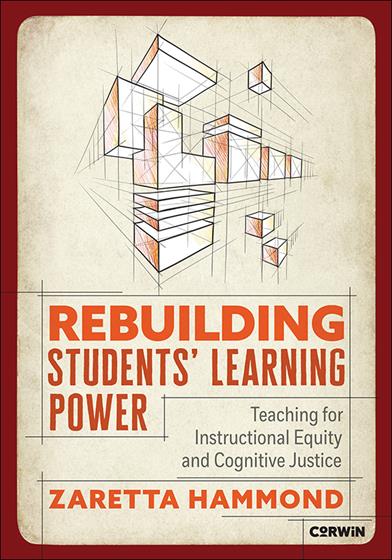
While modern pedagogical frameworks such as project-based learning (PBL), Universal Design for Learning (UDL), and makerspace learning are lauded for their student-centered nature and evidence-backed efficacy, they often fall short of equipping students with the intrinsic tools necessary to leverage these environments fully. The core principle remains that learning is an inherently individual act; teachers can facilitate and guide, but ultimately, the cognitive processing cycle—attention, elaboration, and consolidation—rests with the learner. If a student’s intellectual curiosity isn’t ignited, if the learning environment lacks intellectual safety, or if they simply lack the metacognitive skills to integrate new information, deep learning is unlikely to occur. Zaretta Hammond, author of Rebuilding Students’ Learning Power (Corwin, 2025), argues that the solution lies not merely in motivational strategies or explaining brain function, but in coupling these with concrete "learn-to-learn skills" — specific tools and "moves" that transform students into proficient information processors.
Defining the Craftsmanship of Learning: Learn-to-Learn Skills
The concept of "learn-to-learn skills" might appear novel, but it represents a fundamental aspect of cognitive development that educational thought leaders have long recognized. David Perkins of Harvard’s Project Zero refers to this as the "game of learning," while Ron Berger, founder of EL Education (formerly Expeditionary Learning), champions it as the "craftsmanship of learning." Hammond aptly describes these as the "trade secrets" of learning, often hidden in plain sight. From an equity perspective, these skills form a vital "hidden curriculum" capable of bridging the opportunity gap and advancing more equitable academic outcomes by demystifying the learning process for all students, particularly those who have historically been marginalized or underserved.
It is crucial to differentiate these "learn-to-learn" skills, which are deeply rooted in information processing, from executive function skills. While executive functions — such as planning, organization, time management, and task initiation — are undeniably important for academic success, they primarily focus on the management of learning. Binder organization or traditional study skills, for instance, are executive function supports. Learn-to-learn skills, conversely, directly enhance a student’s capacity to handle greater cognitive load by actively engaging with and transforming new content. They are about how information is processed and integrated, not just how tasks are managed.

Hammond introduces "learn-to-learn skills" as a comprehensive set of abilities, composed of five individual "moves." A "move" is a specific, discrete action or technique executed in a particular moment — think of a precise step in a dance or a tactical maneuver in chess. A "skill," in contrast, is a broader, developed competency encompassing understanding, judgment, and the adaptive capacity to deploy various moves effectively. Skills involve the metacognitive awareness of when, how, and why to use different moves. For example, in basketball, a crossover dribble is a move, but the skill of ball-handling involves knowing when to use that crossover, how to adapt it to different defenders, and integrating it into a broader offensive strategy. This interplay highlights that skills are built through practicing moves, but also through cultivating the judgment and adaptability that transcend any single technique. These five "learn-to-learn moves" collectively form a powerful skillset for students to meaningfully and deeply process new content.
The Five Pillars of Cognitive Independence: Learn-to-Learn Moves
The framework proposed by Hammond delineates five interconnected moves that guide students through the complex process of information acquisition, elaboration, and retention. These moves are designed to be used flexibly, rather than in a rigid, linear sequence, empowering students to adapt their learning strategies to diverse cognitive tasks.
1. Move 1: Size It Up and Break It Down
This foundational move initiates the learning process by engaging students in rigorous task analysis. "Size It Up" prompts the learner to undertake a structured cognitive routine to fully comprehend the demands of a given task. This involves asking critical questions: What is the task asking me to do? What does success look like? What are the key concepts or processes involved? The second half, "Break It Down," focuses on crafting a strategic plan of attack. Here, the student dissects the task into its constituent cognitive activities, assessing the specific tools, strategies, and prior knowledge that will be necessary for completion. This prompts the brain to ask a series of decision-making questions, establishing an appropriate emotional stance and charting a course of action. This early metacognitive engagement is crucial, as research indicates that effective task analysis significantly reduces cognitive load later in the learning process and improves problem-solving efficacy.
2. Move 2: Scan the Hard Drive
Central to effective learning is the activation of prior knowledge, a principle encapsulated in the "Scan the Hard Drive" move. Neuroscience confirms that all new learning must connect with existing neural pathways; the brain naturally seeks to integrate new information into established schema. During the attention phase of information processing, the brain instinctively scans a student’s "funds of knowledge" — their existing experiences, definitions, and concepts — for any connection, however tangential, to the new content. This move can be deployed immediately after task analysis or whenever new information is encountered or causes confusion. By consciously prompting the brain to "scan the hard drive," students actively engage in a "scavenger hunt" for relevant background knowledge, fostering deeper connections and aiding comprehension. Studies on schema theory consistently demonstrate that activating relevant prior knowledge is one of the most powerful predictors of new learning success.
3. Move 3: Chew and Remix
The "Chew and Remix" move is the engine of the elaboration phase of information processing. Once students have activated their existing schema, they must actively blend the new content with this identified knowledge. This is the intellectual "chewing" — the active process of integrating "new with the known." The very act of this cognitive mastication leads to meaning-making, culminating in the "remix." This phase demands productive struggle within the learner’s zone of proximal development (ZPD), as students grapple with complex, sometimes conflicting, information to construct coherent understanding. This process is vital for moving beyond surface-level recall to deeper learning, aligning with higher levels of Bloom’s Taxonomy (e.g., analysis, evaluation, creation) and Webb’s Depth of Knowledge (levels 3 and 4). This move signals the brain to actively manipulate and transform information, rather than passively absorb it.

4. Move 4: Engage in Skillful Practice
While "Chew and Remix" focuses on general meaning-making, "Engage in Skillful Practice" targets the deepening of understanding for core concepts and the development of automaticity in skills and procedures, particularly critical in subjects like mathematics and reading. This move emphasizes deliberate practice—a focused, iterative process designed to myelinate new neural pathways, thereby building proficiency and automaticity. Students execute this move when they need to refine their application of a concept or skill. It involves meta-strategic awareness, prompting the learner to identify specific weaknesses in their execution and concentrate on improving small, targeted aspects. This is not rote repetition but "repetition with continuous refinement," where students actively monitor their progress and adjust their approach. Research on deliberate practice, popularized by Anders Ericsson, highlights its crucial role in expert performance, emphasizing focused effort, immediate feedback, and iterative improvement.
5. Move 5: Make it Sticky
The final move, "Make It Sticky," addresses the consolidation phase of information processing, counteracting the brain’s natural "pruning" mechanism. Without active reinforcement, fragile dendrites — the nascent connections formed during new learning — can be deleted within 24 to 48 hours. The goal of this move is to transform these fragile connections into robust neural pathways through varied application of newly learned content. Students are encouraged to use this move at the conclusion of a learning episode and, crucially, within 12 hours outside of formal class time. This involves applying the skill or thinking about the information in different contexts, reinforcing the learning and deactivating the brain’s pruning feature. Strategies for "making it sticky" include explaining the concept to someone else, connecting it to real-world applications, identifying unanswered questions, or sketching out the core ideas. This move directly addresses the Ebbinghaus forgetting curve, emphasizing spaced retrieval and application to ensure long-term retention.
Cultivating Cognitive Independence: Strategies for Implementation
Merely presenting these moves to students is insufficient; the true challenge lies in fostering their consistent, independent application. This requires a paradigm shift in how teachers approach instruction, moving beyond engagement strategies to intentional cultivation of cognitive independence.
1. Initiate a Cognitive Apprenticeship:
Drawing parallels to traditional apprenticeships in crafts like carpentry or culinary arts, educators must establish classrooms as cognitive apprenticeships. This involves an explicit onboarding process, followed by phases of skill-building and habit formation, leading to mastery of learning how to learn. This initiation, ideally spanning 4-6 weeks, clearly outlines the pathway to becoming a skilled learner. During this period, the teacher acts as a master artisan, modeling, coaching, and providing scaffolds, gradually transferring responsibility to the student. The goal is to develop six key capacities of a proficient information processor: self-monitoring, self-correction, strategic thinking, metacognitive awareness, intellectual courage, and reflective practice.
2. Invite Revision of Learner Identity:
Integral to the cognitive apprenticeship is inviting students to re-evaluate their self-perception as learners. Learner identity encompasses an individual’s beliefs about their abilities, motivations, and sense of belonging within the academic sphere. Many students, particularly those who underperform, often struggle with a diminished sense of their own capability, exemplified by common refrains like "I’m not a math person." By explicitly teaching "learn-to-learn" skills, educators provide tangible evidence of student agency and growth, empowering them to revise limiting self-narratives. This process cultivates a growth mindset, where challenges are seen as opportunities for skill development rather than indicators of inherent inability, directly impacting academic perseverance and success.
3. Integrate Regular Opportunities for Reflection:
Developing "learning power" is an iterative process requiring consistent reflection and feedback. Teachers must create structured, regular opportunities for students to discuss their learning journey, including their successes, struggles, and the specific "moves" they employed. These instructional conversations, conducted several times a week, prompt students to articulate how they managed their learning process, navigated confusions, addressed mistakes, and consciously applied the learn-to-learn moves. This metacognitive dialogue helps students internalize strategies, recognize their own learning patterns, and develop a deeper understanding of their cognitive processes. This reflective practice transforms learning from a passive reception of information into an active, self-directed endeavor.
Understanding Choke Points and Pitfalls
To truly support students, it’s essential to distinguish between "choke points" and "pitfalls." A choke point represents a natural, inherent constraint within the brain’s information processing cycle. A prime example is the limited capacity of working memory, which can typically hold only 3-5 "chunks" of new content and background knowledge at any given time, and for a short duration before forgetting sets in. Every learner must learn to manage these universal constraints.
A pitfall, in contrast, is a form of self-sabotage, often stemming from misconceptions about effective learning. For instance, the common student belief that "cramming" by re-reading notes the night before a test is effective, rather than engaging in spaced, self-quizzing practices, is a significant pitfall. Another prevalent pitfall is multitasking during the learning of new content, which demonstrably fragments attention and hinders deep processing. By understanding these distinctions, educators can guide students in developing strategies to navigate choke points and avoid counterproductive pitfalls, thereby optimizing their learning efforts.
A Path Towards Instructional Equity
The explicit teaching and fostering of "learn-to-learn skills" represent more than just individual pedagogical strategies; they constitute a vital "hidden equity curriculum." By creating conditions that invite students to take up these critical metacognitive moves, educators are actively teaching for instructional equity. This approach ensures that every student, regardless of their background or prior academic experience, has the opportunity to master the "craftsmanship of learning" and become a truly independent, self-directed learner. In an increasingly complex and rapidly changing world, equipping students with the ability to effectively learn how to learn is not merely beneficial; it is a fundamental imperative for personal success and societal progress.