

Chinese clothing, historically categorized under the broad term Zhongguo fushi, represents one of the world’s most enduring and complex systems of cultural expression, evolving over five millennia to reflect shifting social hierarchies, philosophical tenets, and geopolitical changes. Far more than a mere medium for protection or modesty, traditional Chinese attire has functioned as a visual language, where every stitch, color, and fabric choice communicated the wearer’s rank, profession, and adherence to moral codes. In the 21st century, this heritage is experiencing a profound renaissance, driven by a combination of nationalistic pride, the "Guochao" (national trend) consumer movement, and the global integration of Chinese aesthetics into high-fashion haute couture.
The Dynastic Foundation: A Chronology of Textile Evolution
The history of Chinese apparel is inextricably linked to the rise and fall of imperial dynasties, each of which introduced specific regulations and aesthetic preferences that defined the era’s visual identity.
The Han Dynasty (206 BCE – 220 CE) and the Genesis of Hanfu
The Han Dynasty established the foundational aesthetic known as Hanfu. This period prioritized the Confucian ideals of harmony and ritual (Li). The standard attire consisted of the yi, a narrow-sleeved, knee-length tunic, and the chang, a narrow, ankle-length skirt. The most distinctive feature was the cross-collar design, where the left lapel was wrapped over the right—a practice known as youren. This was not merely a stylistic choice but a cultural marker; wrapping the right over the left was traditionally associated with non-Han ethnic groups or funeral rites. During this era, clothing was used to distinguish between the scholarly elite and the laboring classes, with silk reserved strictly for the nobility.
The Tang Dynasty (618–907 CE): The Golden Age of Cosmopolitanism
As the Silk Road flourished, the Tang Dynasty emerged as an era of unprecedented cultural exchange and economic prosperity. This openness was reflected in fashion, which became more diverse, colorful, and experimental. Women’s fashion, in particular, saw the rise of the high-waisted ruqun, often paired with sheer silk shawls. Influences from Central and Western Asia led to the adoption of "Hufu" (foreign dress), characterized by tighter sleeves and more practical silhouettes. The Tang era also saw the formalization of color-coded rankings for officials, where purple was reserved for the highest-ranking ministers, followed by red and green.
The Ming Dynasty (1368–1644 CE): Restoration of Han Tradition
Following the collapse of the Mongol-led Yuan Dynasty, the Ming Dynasty sought to restore traditional Han Chinese values. Clothing became more structured and conservative. This period saw the introduction of "rank patches" (buzi)—elaborate embroidered squares on the front and back of official robes depicting birds for civil officials and animals for military officers. The Ming period also refined the "Mandarin collar," a high, standing collar that would later become a staple of 20th-century Chinese fashion.
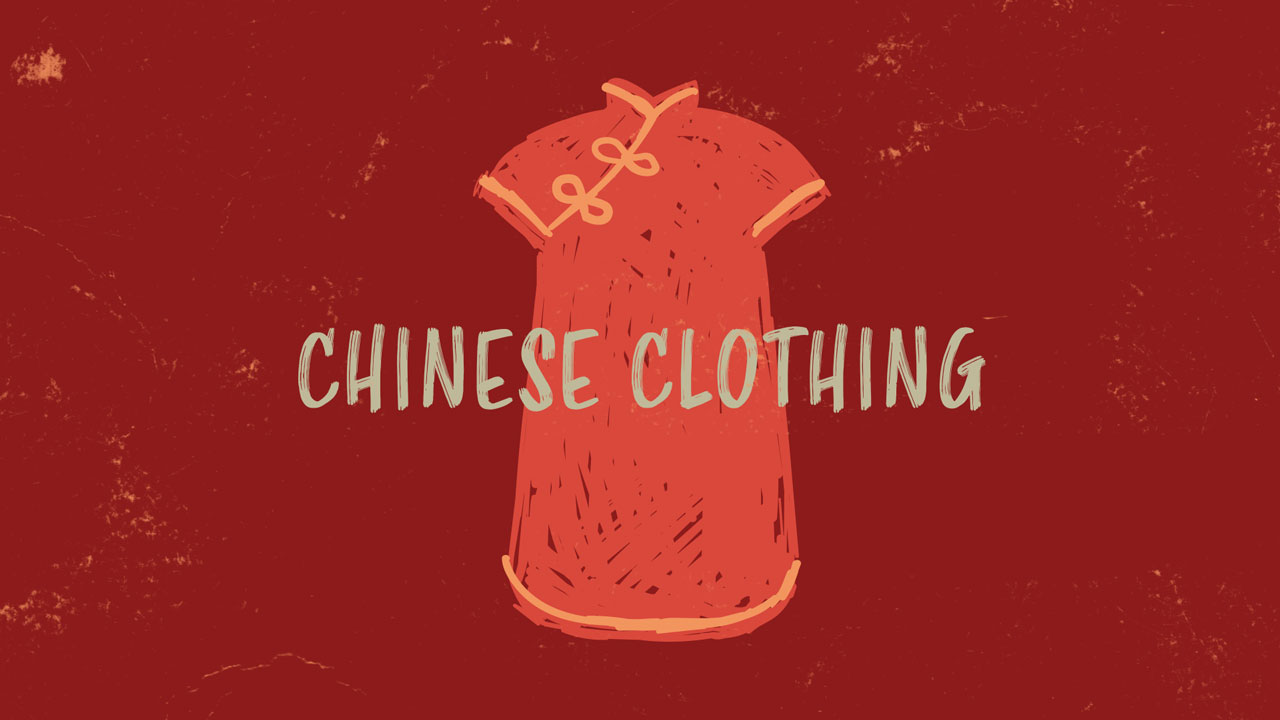
The Qing Dynasty (1644–1912 CE): Manchu Integration and the Qipao
The Manchu-led Qing Dynasty introduced the most radical shifts in Chinese dress. The ruling class mandated the adoption of Manchu-style clothing, such as the changpao (long robe). Over time, the Manchu qipao (for women) and changshan (for men) evolved. Originally loose-fitting and designed to conceal the body’s silhouette, these garments were adapted through the centuries. By the 1920s and 30s in Shanghai, the qipao was modified into the form-fitting, high-slit dress that remains an international symbol of Chinese elegance today.
Ethnic Diversity and Regional Variations
While Han Chinese styles dominate the historical narrative, China’s 55 officially recognized ethnic minorities contribute a vast array of textile traditions that reflect unique geographical and spiritual landscapes.
- The Dai People: Located primarily in the tropical Yunnan Province, Dai clothing utilizes lightweight fabrics suited for high humidity. Women typically wear tight-fitting, short-waisted shirts with long, wrap-around skirts (sarongs), often featuring vibrant floral patterns that mirror the local flora.
- Tibetan Minority: On the high-altitude Tibetan Plateau, clothing is a matter of survival. The chupa, a long, wide-sleeved robe made of wool or sheepskin, is the central garment. It is worn with one sleeve off during the heat of the day and wrapped tightly at night, demonstrating a practical adaptation to extreme diurnal temperature swings.
- Uyghur Culture: Reflecting Central Asian and Islamic influences, Uyghur attire is noted for its intricate embroidery and the use of "atlas silk," a traditional tie-dyed fabric. The doppa (skullcap) is a mandatory accessory, featuring geometric patterns that signify the wearer’s hometown and social status.
- The Zhuang Group: As the largest minority group, the Zhuang are renowned for their "Zhuang brocade." Their clothing often features dark blue or black cotton bases embellished with brightly colored hand-woven patterns depicting phoenixes, butterflies, and ginger flowers.
Materials, Symbolism, and the Semiotics of Color
The technical mastery of Chinese textiles is centered on silk (sichou), a material China monopolized for centuries. The production of silk—sericulture—was considered a state secret, and the fabric was often used as a form of currency and a diplomatic gift.
Beyond material, the semiotics of color played a vital role in social governance:
- Yellow (Huángsè): Historically reserved for the Emperor. It symbolized the earth and the center of the universe. Unauthorized use of imperial yellow was once a capital offense.
- Red (Hóngsè): Representing fire, luck, and joy. It remains the standard color for weddings and the Lunar New Year, believed to ward off evil spirits.
- White (Báisè): Associated with metal and traditionally worn during mourning, representing the departure of life.
- Black (Hēisè): Symbolizing water and the heavens in ancient times, it was often used for formal court robes before being supplanted by other colors in later dynasties.
Embroidery patterns further enriched the narrative of the garment. The dragon (long) symbolized imperial power and strength, while the phoenix (fenghuang) represented the Empress and grace. Plant motifs like the lotus signified purity, and the "Three Friends of Winter" (pine, bamboo, and plum blossom) represented resilience.
The Modern Renaissance: The Hanfu Movement and Guochao
In the last decade, a significant socio-cultural phenomenon known as the Hanfu Movement (Hanfu yundong) has taken hold among China’s Gen Z and Millennial populations. Data from market research firms such as iMedia Research indicates that the Hanfu market in China surpassed 10 billion yuan (approximately $1.4 billion USD) in 2021, with over 10 million active enthusiasts.
This movement is not merely about costume or nostalgia; it is an assertion of cultural identity in a globalized world. Young consumers are increasingly wearing modernized Hanfu to work, universities, and social gatherings. This domestic demand has fueled the "Guochao" trend, where brands incorporate traditional motifs into modern streetwear, sneakers, and cosmetics. Analysts suggest this trend reflects a shift in consumer psychology from "Made in China" to "Designed in China."
Global Impact and Haute Couture
The influence of Chinese aesthetics has transcended national borders, impacting the highest levels of global fashion. Chinese designers like Guo Pei have gained international acclaim for bringing traditional craftsmanship to the world stage. Guo Pei’s "Yellow Queen" gown, which took 50,000 hours to create, became a viral sensation at the 2015 Met Gala, highlighting the intricate embroidery and structural complexity of Chinese couture.
International luxury houses, including Dior, Armani, and Valentino, frequently draw inspiration from Chinese silhouettes and fabrics. However, this has also sparked global conversations regarding cultural appropriation versus appreciation. Fashion historians argue that for Chinese aesthetics to be respected, the industry must acknowledge the deep historical and philosophical contexts behind the designs, rather than treating them as mere exotic motifs.
Economic and Cultural Implications
The resurgence of traditional clothing has revitalized rural economies through the preservation of "Intangible Cultural Heritage." Techniques such as Suzhou embroidery, Yunbrocade, and traditional indigo dyeing are being protected through government subsidies and the creation of specialized "craft villages."
Furthermore, clothing serves as a tool of "soft power." By promoting traditional dress through international cultural festivals and digital media, China projects an image of a nation that is both technologically advanced and deeply rooted in its heritage. As the proverb rén kào yī zhuāng, fó kào jīn zhuāng suggests, appearances are fundamental to identity. In the modern era, the evolution of Chinese clothing continues to be a primary vehicle for the nation to narrate its past while tailoring its future on the global stage.