



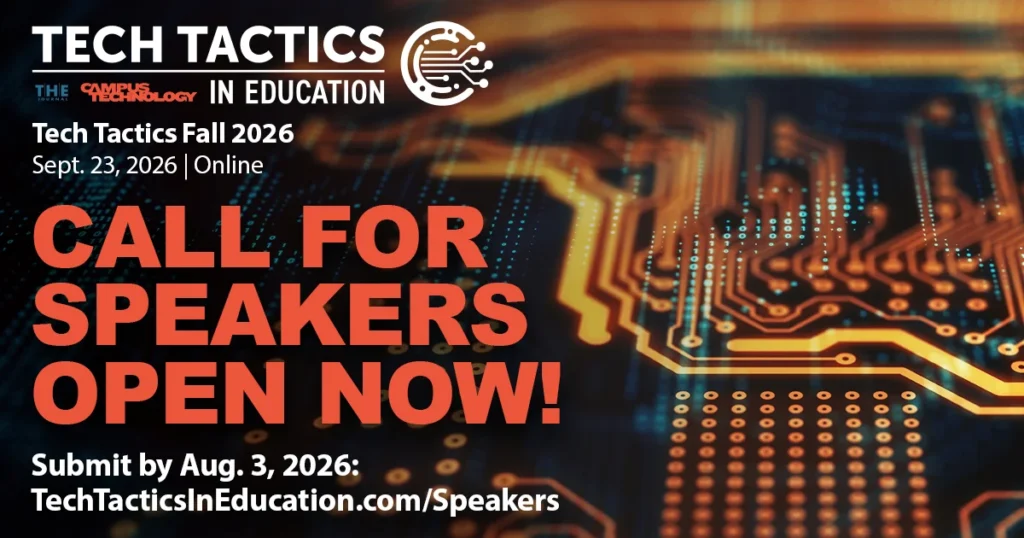
The Tech Tactics in Education Fall 2026 conference, a premier virtual event designed to equip educators and IT professionals with cutting-edge insights, has officially opened its call for speakers. Scheduled for September 23, 2026, this highly anticipated online gathering, spearheaded by the respected producers of Campus Technology and THE Journal, aims to deliver practical strategies and foster strategic discussions around the most pressing technological trends shaping K-12 and higher education institutions. With a profound emphasis on artificial intelligence (AI), cybersecurity, data management, and broader educational technology innovations, the conference seeks to provide actionable knowledge that attendees can immediately apply within their respective environments.
A Deep Dive into Educational Technology’s Future
Tech Tactics in Education has established itself as a pivotal forum for exploring the evolving landscape of technology in learning. Organized by Campus Technology and THE Journal, two publications with a rich history of serving the educational IT sector, the conference series consistently brings together thought leaders, practitioners, and solution providers. Campus Technology, founded decades ago, has long been recognized as a leading resource for higher education IT professionals, offering comprehensive coverage of enterprise systems, infrastructure, teaching and learning technologies, and IT leadership. Similarly, THE Journal (Technological Horizons in Education) has served the K-12 community for over 50 years, providing insights into technology integration, administrative tools, and digital learning strategies. The synergy between these two esteemed publications ensures a holistic perspective, addressing the unique challenges and opportunities across the entire educational spectrum.
The Fall 2026 iteration is particularly timely, given the accelerating pace of technological change and its profound impact on educational delivery, institutional operations, and student outcomes. The fully virtual format ensures accessibility for a global audience, allowing participants to engage with expert content and network with peers without geographical constraints. This accessibility is crucial in an era where professional development and continuous learning are paramount for staying ahead in a rapidly evolving tech landscape.
Navigating the Call for Speakers: Key Dates and Submission Guidelines
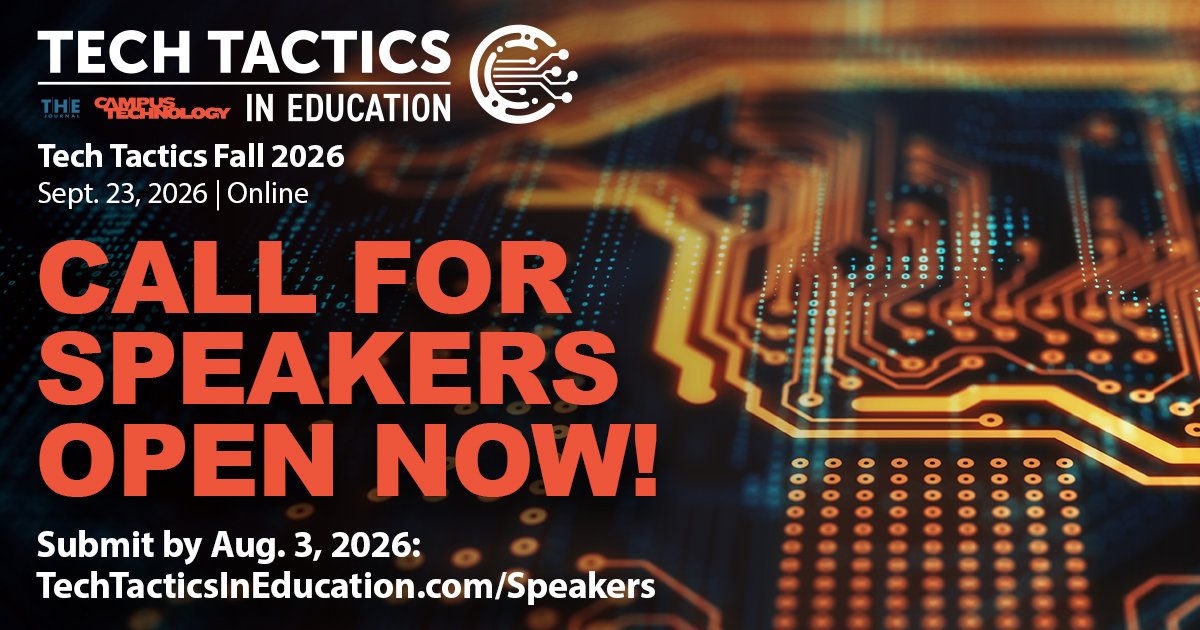
Prospective speakers are encouraged to submit proposals that promise in-depth, interactive, and highly relevant content. The organizers are specifically seeking presentations that offer practical applications, illuminate best practices, and provide concrete takeaways that attendees can implement to refine their IT strategies and educational technology practices. The deadline for all speaker proposals is August 3, 2026. This timeline allows for a thorough review process, ensuring a high-quality program reflective of the most current and critical topics in education technology.
The conference is structured around three distinct yet interconnected tracks, each designed to address specific facets of AI’s transformative influence on education and institutional security:

Track 1: AI’s Intersection with Students
Artificial intelligence has permeated nearly every aspect of educational institutions, from the classroom to administrative functions. This track is designed to explore how schools can harness AI’s potential across teaching and learning, student support services, and other crucial operational areas. The call for proposals emphasizes practical applications that advance institutional missions, expert advice on mitigating AI-related risks, insights into emerging trends, and guidelines for responsible implementation. The goal is to move beyond theoretical discussions to provide tangible strategies for integrating AI effectively and ethically.
- Potential topics within this track are diverse and critical: AI in educational technology, the profound impact of generative AI on learning methodologies, the emergence of agentic AI, robust frameworks for evaluating AI tools, essential AI skills and training programs for both educators and students, the development of comprehensive AI policies, the role of predictive analytics in student success, the utility of AI chatbots for student engagement and support, and the application of AI in various student services, including counseling and academic advising.
- Analysis: The rapid evolution of AI, particularly generative AI, has necessitated a paradigm shift in educational practices. Institutions are grappling with how to leverage tools like ChatGPT for personalized learning while simultaneously upholding academic integrity and ensuring equitable access. Data from recent surveys, such as a hypothetical "2025 EdTech Adoption Report," might indicate that over 60% of higher education institutions and 40% of K-12 districts are actively experimenting with or implementing AI-powered learning tools. This track aims to guide institutions through this complex terrain, focusing on both innovation and responsible stewardship.
Track 2: AI’s Impact on Cybersecurity and Privacy
Educational institutions, irrespective of their size or level, remain prime targets for a broad spectrum of cyber threats, including ransomware, malware, phishing attacks, and data breaches. The advent of AI introduces new dimensions to both offensive and defensive cybersecurity strategies. This track is dedicated to equipping IT leaders with the knowledge and tools necessary to fortify their institutions’ defenses or facilitate recovery in the aftermath of a security incident, with a particular focus on the role of AI in shaping modern cybersecurity approaches.
- Key areas for discussion include: The application of AI in cybersecurity tools for enhanced threat detection and response, the imperative for responsible AI development and deployment in security contexts, comprehensive incident response planning, advanced threat detection methodologies, strategies for combating ransomware, robust network and data security protocols, safeguarding student and staff privacy (adhering to regulations like FERPA and GDPR), optimizing security operations centers (SOCs), strategic cybersecurity planning, securing adequate IT security funding and budgeting, identity management solutions, the adoption of zero-trust architectures, cloud security best practices, combating phishing campaigns, fostering pervasive cybersecurity awareness, navigating cyber liability insurance, securing remote work and learning environments, proactive AI risk management, and developing effective disaster recovery plans and staff training programs.
- Analysis: The educational sector consistently faces a disproportionate number of cyberattacks. Reports from organizations like the K-12 Security Information Exchange (K12 SIX) or similar higher education cybersecurity groups often highlight thousands of reported incidents annually, ranging from data breaches to costly ransomware demands. The integration of AI into both offensive and defensive cyber tactics means that IT leaders must understand how AI can both exacerbate vulnerabilities and provide powerful new tools for protection. This track underscores the critical need for proactive, AI-informed cybersecurity strategies to protect sensitive data and maintain operational continuity.
Track 3: AI Leadership: From Strategy to Action
This track shifts focus to the leadership imperative, guiding educational leaders from initial AI exploration to the development and implementation of intentional, institution-wide AI strategies. Presentations will emphasize practical methodologies for aligning policy, pedagogical practices, and operational frameworks. The track will also address the crucial task of supporting diverse stakeholders, who may possess varying levels of AI readiness, and establishing robust governance structures. Attendees will gain invaluable guidance on constructing sustainable AI strategies that skillfully balance innovation with academic integrity, ethical considerations, and long-term institutional objectives.
- Relevant topics encompass: Overarching AI strategy development, establishing comprehensive AI governance frameworks, robust data governance policies, effective AI integration strategies, the formulation of institutional AI policies, assessing and enhancing AI readiness across the institution, change management strategies for AI adoption, targeted AI professional development programs for faculty and staff, and leadership strategies for fostering an AI-savvy organizational culture.
- Analysis: Effective AI integration requires more than just deploying new tools; it demands a strategic vision and strong leadership. Educational institutions face challenges in developing policies that keep pace with technological advancements, ensuring ethical AI use, and providing adequate training for their workforce. A hypothetical "EDUCAUSE Horizon Report" might indicate that strategic AI planning is a top priority for CIOs, yet many struggle with resource allocation and institutional buy-in. This track will provide a roadmap for leaders to transition from reactive responses to proactive, well-governed AI adoption, fostering a culture of innovation while mitigating risks.
Presentation Formats and Target Audience

The conference offers three distinct presentation formats, each designed to maximize engagement and knowledge transfer:
- Panel Discussion: These sessions feature a moderator guiding a conversational exchange among at least two panelists on a significant topic within the education community. Prospective panel organizers must secure all panelists before submitting their proposal, ensuring a cohesive and well-rounded discussion. This format encourages diverse perspectives and lively debate.
- Hands-on Tutorial: Geared towards practical application, these workshops are led by education practitioners. Attendees participate in interactive activities such as brainstorming, problem-solving exercises, and small group discussions, directly addressing their institution’s specific technology needs. This format is ideal for delivering concrete skills and actionable strategies.
- Campus/Expert Perspective: These sessions allow an individual or a team to share first-hand experiences with a technology project or to provide expert insights on a particular subject. These presentations often take the form of case studies, showcasing real-world implementations, lessons learned, and successful strategies.
The call for speakers is primarily directed at higher education and K-12 IT leaders and practitioners, independent consultants specializing in educational technology, and leaders from association or nonprofit organizations engaged in technology in education. While industry experts are welcome to submit, their presentations must be non-promotional and focus on educational value rather than product endorsement. Submissions will undergo a rigorous evaluation process based on their relevance to the education field, clarity of title and abstract, potential usefulness to attendees, and comprehensive coverage of current issues and emerging trends. Speakers whose proposals are selected will be granted complimentary registration to the Tech Tactics in Education Fall 2026 conference, acknowledging their valuable contribution to the event’s success.
Broader Implications and the Future of Education
The focus of Tech Tactics in Education Fall 2026 on AI, cybersecurity, and strategic leadership underscores the critical juncture at which educational institutions currently stand. The integration of AI promises unprecedented opportunities for personalized learning, administrative efficiency, and enhanced research capabilities. However, these advancements are inextricably linked to the escalating challenges of cybersecurity, data privacy, and the ethical governance of powerful technologies.

The insights shared at this conference will be vital for institutions aiming to navigate this complex landscape successfully. For instance, the discussion around AI policy is not merely academic; it has direct implications for student data rights, academic integrity policies in an age of generative AI, and the responsible deployment of AI tools that impact admissions, student support, and faculty workloads. Similarly, advancements in cybersecurity, particularly those leveraging AI, are no longer just an IT department’s concern but a fundamental aspect of institutional resilience and reputation management. A significant data breach can have devastating financial, legal, and reputational consequences, impacting student enrollment, donor confidence, and faculty morale.
The conference, therefore, serves as a crucial platform for collective learning and strategic planning. It provides a space for leaders to share innovative solutions, discuss common pitfalls, and collaborate on best practices that can shape the future of learning environments. As Rhea Kelly, Editor-in-Chief for Campus Technology, THE Journal, and Spaces4Learning, and a key figure behind the event, might articulate, "The discussions sparked at Tech Tactics in Education are more vital than ever. We aim to empower educational leaders to harness the transformative power of AI responsibly, ensuring robust security postures, and ultimately enriching the learning experience for all students."
In conclusion, the Tech Tactics in Education Fall 2026 conference represents a timely and essential convergence of thought and practice in educational technology. By fostering a dialogue around AI, cybersecurity, and strategic leadership, it promises to equip educators and IT professionals with the foresight and tools necessary to build resilient, innovative, and secure learning environments for the future. Prospective speakers are encouraged to seize this opportunity to contribute to a critical discourse that will shape the next generation of education.
For detailed information on the call for speakers and to submit proposals, interested parties should visit https://sessionize.com/tech-tactics-fall-2026/. Further general information about the conference can be found at https://techtacticsineducation.com/Home.aspx.