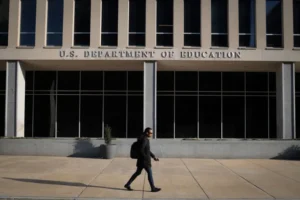



The U.S. Department of Education has finalized a series of 14 interagency agreements with six other federal agencies, a move that continues the Trump administration’s broader strategy to decentralize federal oversight in education and empower states. These agreements, with the latest four announced on June 16, 2026, represent a significant shift in how federal responsibilities for key educational programs, particularly those concerning special education and civil rights, will be managed. While the Department of Education asserts these partnerships will streamline operations and enhance coordination, critics express concern that the dispersal of authority could lead to confusion and dilute federal accountability.
Shifting Responsibilities: A Closer Look at the Agreements
The core of these new agreements involves the transfer of specific program functions from the Department of Education to other federal bodies. Notably, certain special education programming responsibilities are now being transitioned to the U.S. Department of Health and Human Services (HHS). Concurrently, aspects of civil rights enforcement, student privacy matters, and desegregation activities are being moved to the U.S. Department of Justice (DOJ). This strategic realignment is a direct manifestation of the Trump administration’s "Returning Education to the States" campaign, a policy initiative explicitly designed to reduce the perceived "education bureaucracy" in Washington, D.C. The overarching goal, as articulated by administration officials, is to shift greater authority and decision-making power to parents and local school districts, thereby increasing their role in K-12 education policy and implementation.
Despite these transfers, the Department of Education is slated to retain its statutory responsibility for the programs being decentralized. This dual responsibility structure is intended to ensure continuity and oversight, but it also raises questions about the practical implications of shared authority. Stakeholders within the education sector have voiced a range of opinions on these changes. Advocates for increased state and local control see this as a positive step toward reducing federal overreach. However, a significant segment of critics argues that fragmenting core K-12 programming and civil rights enforcement across multiple federal agencies will inevitably lead to a more convoluted and less effective federal role. The consolidation of special education, elementary and secondary education, and civil rights enforcement under the purview of three distinct federal departments, they contend, could create significant administrative hurdles and weaken the federal government’s ability to ensure equitable access and outcomes for all students.
The "Returning Education to the States" Campaign: A Policy Timeline
The "Returning Education to the States" initiative has been a gradual but persistent effort throughout the Trump administration’s tenure. The genesis of this policy can be traced back to early statements from the administration emphasizing a desire to empower local communities and reduce the federal footprint in education.
- Early 2025: Initial discussions and policy papers begin to outline the administration’s vision for educational decentralization. The concept of interagency collaboration is proposed as a mechanism to achieve this.
- Mid-2025: The first wave of interagency agreements are explored and negotiated. The Department of Education begins identifying specific program functions that could be managed by other federal agencies.
- Late 2025: A series of pilot interagency agreements are implemented, allowing the Department of Education to assess the feasibility and effectiveness of this approach. Feedback from participating agencies and early stakeholder consultations inform subsequent policy adjustments.
- Early 2026: The administration signals an acceleration of the "Returning Education to the States" campaign, with a stated goal of finalizing a comprehensive set of interagency partnerships.
- May 2026: The Department of Education announces the majority of its interagency agreements, bringing the total to 14. These agreements span partnerships with six distinct federal agencies.
- June 16, 2026: The final four interagency agreements are officially announced, formalizing the transfer of special education, civil rights, student privacy, and desegregation-related functions to HHS and the DOJ.
This timeline highlights a strategic, phased approach to implementing significant structural changes within the federal education landscape. The administration’s commitment to this initiative is underscored by the sustained effort and the growing number of formalized partnerships.
Data and Demographics: Understanding the Scope of Federal Education Programs
To fully appreciate the implications of these interagency agreements, it is crucial to consider the scale and scope of federal involvement in K-12 education. The Individuals with Disabilities Education Act (IDEA), for instance, is a cornerstone of federal special education policy, guaranteeing free appropriate public education to eligible children with disabilities. In the 2023-2024 school year, federal data indicated that approximately 7.5 million students, or about 15% of all public school students, received special education services. The funding and oversight of these services, a significant portion of which originates from federal sources, are complex operations.
Civil rights enforcement in education, often guided by statutes such as Title IX of the Education Amendments of 1972 and Title VI of the Civil Rights Act of 1964, aims to prevent discrimination based on sex, race, color, national origin, and disability. These protections are vital for ensuring equitable access to educational opportunities for all students. Student privacy, governed by the Family Educational Rights and Privacy Act (FERPA), establishes guidelines for how student records can be accessed and shared, a critical component of trust between families and educational institutions. Desegregation activities, while a legacy of the Civil Rights Movement, continue to be relevant in addressing historical and ongoing inequities in school systems.

The sheer volume of students impacted by these programs and the legal frameworks underpinning them suggest that any shift in federal management carries substantial weight. The transfer of administrative functions, even if statutory responsibility remains, could affect the consistency and efficacy of the enforcement and support mechanisms that have been established over decades.
Official Responses: Department of Education’s Perspective
The U.S. Department of Education has consistently framed these interagency agreements as a positive evolution in federal governance. A spokesperson for the Department stated, "These partnerships are designed to leverage the unique expertise of each federal agency, fostering enhanced collaboration and ultimately leading to improved academic and career outcomes for our nation’s students. By reducing duplicative federal efforts and empowering agencies with specialized knowledge, we are creating a more agile and responsive system that better serves the needs of states, local districts, and families."
The administration’s rationale centers on the belief that specialized agencies are better equipped to handle certain aspects of education policy. For example, the Department of Health and Human Services possesses extensive experience in child welfare, developmental services, and public health, which can be directly relevant to supporting students with disabilities. Similarly, the Department of Justice has a deep understanding of legal frameworks, civil rights litigation, and enforcement mechanisms, making it a logical partner for civil rights and student privacy matters.
The "Returning Education to the States" campaign, as promoted by the Department, is not about abdicating federal responsibility but about re-imagining the federal role. The emphasis is on partnership and shared stewardship rather than direct federal management of every programmatic detail. This approach, the Department argues, will allow federal agencies to focus on strategic guidance and support, while states and local entities can tailor educational approaches to their specific contexts and populations.

Broader Implications and Analysis: Navigating the New Landscape
The realignment of federal responsibilities in education presents a complex set of potential implications. On one hand, proponents argue that the move could lead to greater efficiency and more targeted expertise. For instance, integrating special education support within HHS might streamline services for students who also have health or social service needs, creating a more holistic approach to child development. Similarly, placing civil rights enforcement within the DOJ could potentially lend greater legal weight and investigative capacity to these crucial protections.
However, critics raise valid concerns about the potential for fragmentation and confusion. A key challenge will be ensuring seamless coordination between the Department of Education and its partner agencies. If a parent or school district has a question regarding a special education service, for example, it may not always be immediately clear whether to contact HHS or the Department of Education, especially if the statutory responsibility for the overarching program remains with the latter. This ambiguity could create delays in addressing critical issues and may disproportionately affect vulnerable populations who rely on consistent support.
Furthermore, the historical role of the Department of Education has been to act as a central hub for federal education policy and advocacy. Splintering key functions could weaken this central role, potentially diminishing the unified voice of federal support for education. The long-term impact on federal data collection, research initiatives, and the development of national education standards will also be a critical area to monitor.
The success of these interagency agreements will largely depend on the robustness of the communication channels, the clarity of each agency’s defined role, and the commitment of all parties to a shared vision of student success. The transition period will be crucial, and ongoing evaluation will be necessary to assess whether these partnerships indeed reduce bureaucracy and enhance outcomes, or inadvertently create new layers of complexity and dilute essential federal protections. The coming years will reveal whether this ambitious restructuring truly empowers states and improves education for all American students.