



Across countless university campuses, a familiar scene unfolds daily: a seasoned faculty member, minutes before a critical hybrid lecture, grapples with malfunctioning classroom technology. The camera is askew, the projector stubbornly refuses to drop, or the display defaults to the wrong input – again. This isn’t an isolated incident; it’s a systemic issue, and it’s not a symptom of faulty equipment, but rather a profound failure in foundational infrastructure planning. While institutions pour significant resources into cutting-edge audiovisual (AV) hardware, they often overlook the critical, hidden layer that dictates its reliable operation: the underlying infrastructure. The consequence is a perpetual cycle of troubleshooting, operational inefficiency, and pedagogical disruption that has become an unsustainable cost of modern higher education.
The Invisible Crisis: A Deeper Look at Campus AV Failures
The scenario of a faculty member battling technology before class is more than an inconvenience; it represents a significant drain on institutional resources and academic effectiveness. Studies, often compiled from internal IT help desk data, suggest that AV-related issues can account for as much as 30-40% of all classroom technology support tickets. Each ticket represents not just a faculty member’s lost preparation time and increased stress, but also the deployment of an IT technician, diverting their expertise from strategic projects to reactive problem-solving. This hidden operational cost, accumulated across hundreds or thousands of classrooms over an academic year, quickly escalates into millions of dollars in wasted time and effort. Beyond the financial burden, the educational impact is profound. When technology fails, it disrupts the flow of instruction, diminishes student engagement, and can undermine the perceived quality of the learning experience. For institutions striving to offer a cutting-edge education, unreliable AV systems project an image of technological incompetence, directly impacting student satisfaction and faculty morale.
A Legacy of Reactive Procurement: How Campuses Got Here
The current state of campus AV infrastructure is not accidental; it is the culmination of decades of procurement practices that prioritized visible hardware over unseen foundational elements. Historically, AV equipment was often treated as a peripheral add-on, secondary to the core architectural design of a learning space.
Pre-Pandemic Practices: Before the global pivot to remote and hybrid learning, AV procurement often followed a disjointed path. Architects would frequently finalize room designs and budgets without extensive input from the AV or IT departments. Brand and platform choices might pass through committees, but the fundamental design of how technology would be integrated—how it would be mounted, cabled, powered, and networked—was often an afterthought. This led to situations where sophisticated equipment was retrofitted into spaces ill-equipped to support it, resulting in ad-hoc cabling, suboptimal mounting solutions, and inadequate power management. This piecemeal approach created a heterogeneous technological landscape across campuses, where each room presented a unique set of challenges for maintenance and support teams.
The Pandemic’s Catalytic Role: The COVID-19 pandemic served as a dramatic accelerant, laying bare the vulnerabilities of these existing practices. Universities were forced to rapidly deploy hybrid learning solutions, often in a matter of weeks, transforming traditional classrooms into synchronous remote learning hubs. This urgent demand led to quick purchases of cameras, microphones, and displays, frequently without the necessary foundational upgrades. Existing network infrastructure buckled under the increased demand, power outlets proved insufficient, and cable management became a chaotic tangle. While these rapid deployments were a testament to the agility of IT departments, they often exacerbated existing infrastructure deficiencies, turning what was once an intermittent problem into a daily crisis. The rush to equip classrooms highlighted a critical truth: even the most advanced AV gear is only as good as the infrastructure supporting it.
The True Cost of Neglect: The initial purchase price of AV equipment is only a fraction of its total cost of ownership (TCO). When infrastructure is neglected, the TCO skyrockets due to increased maintenance, frequent repairs, higher energy consumption from inefficient power management, and the constant need for IT intervention. Institutions inadvertently commit to a cycle of recurring operational expenses that far outweigh the upfront savings of cutting corners on infrastructure.
Beyond the Gadget: Understanding the AV Ecosystem
The necessary shift in thinking moves beyond viewing AV as a collection of devices and instead embraces it as an integrated ecosystem. This perspective demands a fundamental reordering of priorities, where infrastructure is considered a primary architectural decision, not an afterthought.
Defining Infrastructure in the AV Context: In this context, "infrastructure" encompasses a broad range of elements that are crucial for reliable AV performance:
- Display and Projector Mounting Systems: Secure, flexible, and aesthetically integrated solutions that allow for optimal viewing angles and ease of maintenance.
- Structured Cabling and Cable Management: A meticulously planned network of pathways, conduits, and high-quality cables (HDMI, USB, Ethernet, fiber optics) that are properly terminated, labeled, and managed to prevent tangles, interference, and premature wear.
- Rack Enclosures and Power Distribution: Dedicated, cooled, and secure racks to house control processors, amplifiers, and network switches, coupled with robust power management systems that include surge protection, uninterruptible power supplies (UPS), and remote power cycling capabilities.
- AV Signal Distribution: Reliable matrix switchers, extenders, and processors that ensure high-quality audio and video signals are seamlessly routed to their intended destinations without latency or degradation.
- Wireless Network Infrastructure: Strategically placed and powerful wireless access points (WAPs) capable of handling high device density and bandwidth demands for streaming, collaborative tools, and BYOD (Bring Your Own Device) scenarios.
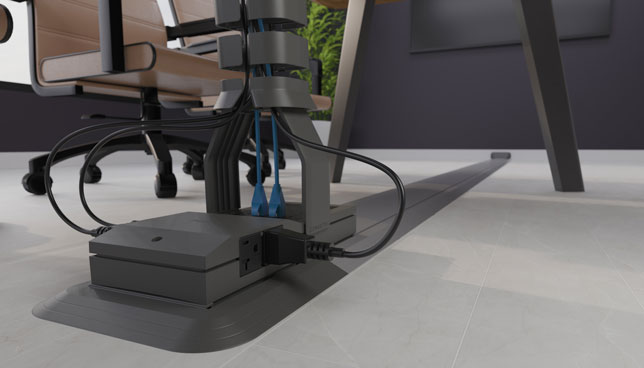
- Floor Connectivity Systems: Integrated floor boxes and conduits for power and data in flexible learning spaces, ensuring connectivity without creating trip hazards or visual clutter.
The Paradigm Shift: The core of the "ecosystem first" approach lies in asking foundational questions before any specific technology is chosen: What teaching formats must this room support? How will faculty and students interact with the technology? How will the space be serviced and maintained? How will it scale to accommodate future technological advancements and pedagogical shifts? When these questions drive the planning process, every layer of the infrastructure becomes a deliberate, strategic decision. It’s the difference between buying a high-performance sports car and then discovering the road it has to drive on is full of potholes, versus building a smooth, purpose-built track for the car. The car isn’t the problem; the road is.
The Data Speaks: Quantifying the Impact
The benefits of prioritizing infrastructure are not merely theoretical; they translate into tangible improvements in operational efficiency, educational outcomes, and financial prudence.
Operational Strain: According to reports from organizations like EDUCAUSE and AVIXA, institutions with poorly integrated AV systems report significantly higher operational costs due to increased help desk tickets and technician deployment. Anecdotal evidence suggests that in some universities, IT staff can spend upwards of 25-30% of their time on reactive AV support, directly impacting their capacity for proactive maintenance, system upgrades, and innovation. A well-designed infrastructure, by contrast, reduces the frequency of failures, streamlines troubleshooting processes, and often enables remote diagnostics and management, freeing up valuable IT resources.

Educational Disruption: The impact on teaching and learning is equally stark. A survey conducted by a major university found that 60% of faculty reported experiencing AV issues in the classroom at least once a month, with 20% reporting weekly issues. These disruptions lead to an average loss of 5-10 minutes per class session, accumulating to hours of lost instruction time over a semester. More critically, these interruptions can diminish student engagement, break concentration, and erode confidence in the institution’s technological capabilities, directly affecting the quality of education delivered.
Financial Drain: While upfront infrastructure investment might seem higher, a TCO analysis over a typical 5-7 year lifecycle of AV equipment consistently demonstrates significant savings. Properly designed infrastructure extends the lifespan of AV components, reduces the need for costly emergency repairs, lowers energy consumption, and decreases labor costs associated with frequent troubleshooting. Industry estimates suggest that a strategic infrastructure investment can reduce TCO by 15-25% over five years, largely through reduced operational expenses and increased equipment longevity.
Industry Insights: Organizations like AVIXA consistently advocate for a holistic approach to AV design, emphasizing the crucial role of infrastructure. Their research indicates that the most successful technology deployments in higher education are those where AV planning is integrated from the earliest stages of architectural design, ensuring that the physical environment supports the technological goals.
Voices from the Campus: Perspectives on the Infrastructure Challenge
The call for foundational change resonates deeply with various stakeholders across university campuses.
IT Directors and AV Managers: "It’s a constant battle," states Sarah Chen, Director of Classroom Technology at a large state university. "We’re expected to deliver seamless hybrid learning experiences with equipment that’s constantly fighting against its own environment. We spend more time patching up problems caused by inadequate cabling or power than we do implementing exciting new pedagogies. Our budgets are often allocated to flashy new devices, not the critical backbone that makes them work." These leaders are often the first responders to classroom emergencies and bear the brunt of faculty frustration, making them staunch advocates for a more strategic, infrastructure-first approach.
Faculty Members: Dr. Alistair Finch, a professor of media studies, laments, "I’ve started arriving 20 minutes early for every class, just to troubleshoot the projector or connect the mic. It detracts from my preparation time and frankly, it makes me look unprofessional when technology fails. It’s incredibly frustrating when you have innovative teaching ideas, but the basic tools constantly let you down." The psychological toll on faculty, who are increasingly expected to be tech-savvy educators, is often underestimated.
Campus Leadership: University administrators, increasingly focused on efficiency and student satisfaction, are beginning to recognize the strategic imperative. Dr. Evelyn Reed, Vice Provost for Academic Affairs, notes, "We initially reacted to the pandemic by rapidly deploying hardware. Now, we understand that sustainable, high-quality hybrid learning requires a deeper investment in the foundational elements. It’s about long-term vision and ensuring our facilities truly empower our educators and learners, rather than hindering them."

Building for Resilience: The "Ecosystem First" Approach in Practice
Adopting an "ecosystem first" approach doesn’t necessitate a complete, immediate overhaul of every campus space. Instead, it involves a strategic reorientation of decision-making and an expansion of what constitutes an "AV decision."
Early Involvement of AV Teams: The most critical change is to integrate AV and IT teams into the architectural and planning process from the very outset of any new build or renovation project. This ensures that considerations like power requirements, network drops, cable pathways, and equipment mounting points are designed into the building’s blueprint, rather than being retrofitted later.
Key Infrastructure Components as Architectural Decisions:
- Structured Cabling: Implementing a robust, labeled, and future-proof structured cabling system that can accommodate current and future bandwidth demands, including fiber optics where appropriate.
- Power Management: Designing intelligent power distribution units (PDUs) with remote monitoring and control capabilities, ensuring stable power delivery and enabling remote troubleshooting.
- Ergonomic Mounting and Racks: Utilizing professional-grade display mounts that allow for easy access and maintenance, and specifying well-ventilated, secure equipment racks that simplify cable management and reduce heat-related failures.
- Integrated Network Backbone: Ensuring that the campus network backbone and classroom-level wireless infrastructure are robust enough to support high-density usage and demanding applications like simultaneous video conferencing, media streaming, and cloud-based collaboration.
The Benefits of Standardization: When infrastructure decisions are made intentionally and consistently across campus, the practical payoff is immediate and profound: standardization. A technician who understands the rack layout, cable management, and power distribution in Building A can apply that knowledge directly to Building F. This consistency dramatically reduces troubleshooting time, simplifies training for support staff, and allows for more efficient inventory management and proactive maintenance. Standardization is not just about efficiency; it’s about creating a manageable, coherent system out of what was once a chaotic collection of disparate setups. It empowers IT teams to shift from reactive firefighting to strategic system management, fostering a more stable and reliable learning environment for everyone.
The Strategic Imperative: Implications for Higher Education’s Future
The shift towards an infrastructure-first mindset is not merely a technical upgrade; it’s a strategic imperative with far-reaching implications for the future of higher education.
Future-Proofing Learning Spaces: By investing in flexible and robust infrastructure, universities can future-proof their learning environments against rapidly evolving technologies and pedagogies. Whether it’s the integration of virtual reality (VR) for immersive learning, artificial intelligence (AI)-enhanced analytics, or new collaborative tools, a strong foundation ensures that classrooms can adapt without requiring costly and disruptive overhauls every few years.

Competitive Advantage: In an increasingly competitive landscape, prospective students and faculty evaluate institutions not just on academic programs, but also on the quality of their learning environments. Universities with consistently reliable, cutting-edge technology infrastructure gain a significant competitive edge, attracting top talent and demonstrating a commitment to innovative education.
Sustainability and Longevity: A well-designed infrastructure contributes to environmental sustainability. By extending the lifespan of AV equipment through optimal operating conditions and easier maintenance, institutions can reduce e-waste and the frequency of equipment replacement.
Financial Prudence: Ultimately, strategic investment in infrastructure is a financially prudent decision. It transforms unpredictable operational expenses into planned capital expenditures with a clear return on investment through reduced support costs, increased equipment longevity, and enhanced educational value.
Conclusion: A Call for Foundational Change
The recurring struggles with classroom technology on university campuses are not an unavoidable cost of modernity but a direct consequence of a fundamental misprioritization. The true "technology" in a modern learning space isn’t just the visible screens and cameras, but the intricate, often hidden, network of infrastructure that underpins their functionality. By embracing an "ecosystem first" approach, integrating AV planning into the earliest stages of facility design, and prioritizing robust foundational elements, institutions can move beyond the cycle of reactive troubleshooting. This strategic shift will not only create more reliable, efficient, and adaptable learning environments but will also empower faculty, engage students, and secure a technologically resilient future for higher education. The hidden layer of infrastructure is, unequivocally, the most important technology investment a campus can make.