


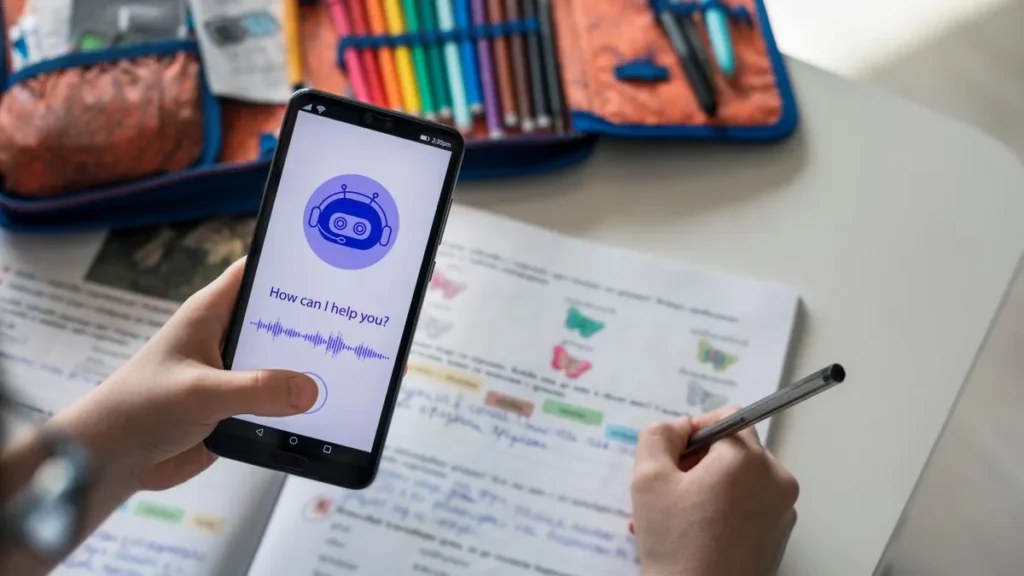
In two districts analyzed by Stanford University, students’ average weekly use of one such tutor was 2.18 minutes and 5.23 minutes, respectively.
Published June 18, 2026
By Anna Merod
The burgeoning field of AI-powered tutoring in K-12 education is facing its first significant empirical scrutiny, with a recent Stanford University study revealing remarkably low student engagement rates. While the promise of personalized learning and supplemental academic support through artificial intelligence has spurred considerable investment and pilot programs across the nation, these initial findings raise critical questions about the practical implementation and ultimate efficacy of these advanced tools. The research, conducted across two distinct school districts, highlights a significant chasm between the potential of AI tutors and their actual utilization by students, suggesting that technological sophistication alone may not guarantee educational impact.
The Stanford study, supported by the university’s SCALE Initiative (Stanford Center for Analysis of Learning and Education), focused on understanding how AI literacy platforms, when used in conjunction with human tutors, performed in real-world educational settings. Researchers meticulously tracked student interactions with an AI tutoring platform over a defined period, analyzing usage patterns and contextual factors within two partner school districts. The findings indicate that in District A, where students in grades 1-5 engaged with the AI tutor as part of five after-school programs with program staff acting as human facilitators, the average weekly usage per student was a mere 2.18 minutes. In District B, which involved students in grades 1-3 utilizing the AI tool during the school day, with middle school students serving as on-site tutors, the average weekly engagement rose slightly to 5.23 minutes per student.
These figures, representing a fraction of a typical school day or even a single lesson, underscore a fundamental challenge: even with the availability of advanced AI tutoring technology, achieving consistent and meaningful student interaction remains a significant hurdle. The Stanford researchers emphasized that the potential benefits of AI tutors, such as personalized instruction and targeted support, are contingent upon students actively and regularly engaging with the platforms. This dependency on consistent use, the study argues, is a critical factor, irrespective of whether the AI tutoring is supplemented by human intervention.
"Discussions about AI tutoring often focus on the quality of the technology itself, but these findings suggest that implementation and student engagement may be equally important determinants of impact," the Stanford study stated. This assertion points to a need for a more holistic approach to integrating AI into educational frameworks, one that prioritizes user adoption and effective pedagogical strategies alongside technological development.
The study’s methodology involved a diverse cohort of students. In District A, the AI literacy platform was integrated into after-school programs, a setting often characterized by voluntary participation and a different motivational dynamic compared to the regular school day. Program staff, acting as tutors, were tasked with guiding students and potentially encouraging their use of the AI tools. In District B, the AI tutoring was embedded within the school day, a more structured environment. The involvement of middle school students as tutors in this context introduces another layer of complexity, involving peer-to-peer learning and supervision dynamics.
An additional observation from the study, detailed within the research cohort demographics, noted that "students who used the AI tutor were less likely to use special education services and more likely to be higher achieving." This demographic insight, while requiring further investigation to establish causality, suggests that current AI tutoring adoption patterns might be skewed towards students who are already performing well academically or who do not require specialized educational interventions. This raises potential equity concerns, as the most vulnerable student populations may be the least likely to benefit from these technologies if engagement remains low.
The trend of exploring AI tutoring is not isolated to these two districts. A handful of states have actively experimented with AI tutoring pilots in their K-12 classrooms in recent years, signaling a broader national interest in leveraging artificial intelligence for educational purposes.

A Timeline of AI Tutoring Initiatives
The momentum towards AI-powered education has been building steadily, with several states launching significant initiatives:
- October 2025: The Arizona Department of Education announced that approximately 170,000 students, representing 16% of all public school students in the state, were utilizing AI tutoring through Khanmigo, a product of Khan Academy. This initiative was bolstered by a $1.5 million investment from the state in 2024.
- 2024: The Iowa Department of Education initiated a year-long, $3 million project aimed at deploying an AI-powered personalized reading tutoring program named Amira for elementary students. This program sought to provide targeted reading support through advanced technology.
- 2023-24 School Year: The Indiana Department of Education supported a high-dosage AI tutoring program across 112 schools. This initiative was part of the state’s broader "AI-Powered Platform Pilot Grant" and was designed as a one-year program. However, reports from Indiana indicated that actual usage of the AI tutoring tools fell short of the schools’ initial requests. This discrepancy was attributed, in part, to a rapid implementation timeline and delays in some schools completing necessary vendor training, highlighting logistical challenges in deploying new technologies.
- 2024-25 and 2025-26 School Years: The Maryland Department of Education launched a two-year pilot program featuring Khanmigo’s AI tutor, allocating 4,350 student licenses for use during these academic years.
- April 2026: Virginia enacted a new state law requiring the implementation of its own pilot program that will incorporate AI for tutoring and instruction, indicating a legislative push towards integrating AI into the state’s educational landscape.
These state-level efforts underscore a significant financial and strategic commitment to exploring AI’s potential in education. However, the findings from the Stanford study serve as a crucial counterpoint, suggesting that the success of these ambitious programs may depend heavily on factors beyond initial investment and technological availability.
Broader Implications and Future Considerations
The low engagement rates reported by Stanford are particularly significant given the growing body of research that, while still nascent, has begun to question the efficacy of AI tutoring tools. A recent analysis by K12 Dive highlighted the limited research and evidence available on the effectiveness of these tools, even as their adoption grows. This gap between implementation and empirical validation presents a challenge for educators, administrators, and policymakers seeking to make informed decisions.

Furthermore, the broader landscape of technology in schools is evolving rapidly, with policy momentum building to potentially "limit ed tech," including AI tools, particularly for younger students. This evolving regulatory environment adds another layer of complexity to the adoption and deployment of AI tutoring platforms. Schools and districts must navigate not only the practical challenges of engagement but also the evolving ethical and pedagogical considerations surrounding the use of artificial intelligence in education.
The Stanford researchers’ conclusions carry significant weight for educational leaders and policymakers. As districts weigh the decision to adopt AI tutoring platforms, they must look beyond the technical capabilities of the software. The study strongly suggests that factors such as how the technology is introduced, the training provided to educators and students, the integration into existing curricula, and the overall school culture surrounding technology use will be paramount.
The implication is that simply providing access to an AI tutor is insufficient. Effective implementation requires a strategic approach that fosters student buy-in, addresses potential barriers to access and understanding, and integrates the AI tool seamlessly into the learning process. This could involve more extensive professional development for teachers, clear communication with students and parents about the purpose and benefits of AI tutors, and ongoing evaluation of usage patterns and student outcomes.
The study’s emphasis on implementation and student engagement as key determinants of impact suggests that future research and development should focus on strategies to enhance these aspects. This might include designing AI tutors with more engaging user interfaces, developing curriculum-aligned activities that naturally incorporate AI support, or exploring incentive structures that encourage regular use.
In conclusion, while AI tutoring platforms hold considerable promise for revolutionizing education, the Stanford University study serves as a vital reminder that their ultimate success hinges on more than just technological advancement. The minimal student engagement observed in initial studies underscores the critical importance of thoughtful implementation, robust support systems, and a deep understanding of student behavior and motivation. As states and districts continue to invest in these emerging technologies, the lessons learned from this research will be instrumental in shaping more effective and equitable approaches to AI-integrated learning.