


A comprehensive report released by the Standing Committee on Citizenship and Immigration has issued a stark call to action for the Canadian government, urging a robust crackdown on fraud within the international student program and the immediate implementation of clear penalties for universities and colleges found to be issuing misleading documents. The committee’s findings paint a critical picture of an immigration department that has struggled with provincial and territorial collaboration and mishandled the introduction of a study permit cap implemented in January 2024.
The report, tabled yesterday, arrives on the heels of a critical assessment by Auditor General Karen Hogan, which also scrutinized the study permit cap’s implementation and the department’s perceived shortcomings in investigating potential fraud. This dual scrutiny highlights a growing concern within parliamentary circles and public discourse regarding the integrity and management of Canada’s international education sector, a sector that was a significant economic contributor prior to recent policy shifts.
A Thriving Sector Facing Scrutiny
In 2023, Canada welcomed a staggering one million international students, a testament to its global appeal as an educational destination. Prior to the introduction of the study permit cap, the international education sector was a powerhouse, contributing an impressive $38.6 billion to the nation’s Gross Domestic Product (GDP). This economic engine not only bolstered the national economy but also supported a vast ecosystem of educational institutions, ancillary services, and employment opportunities across the country.
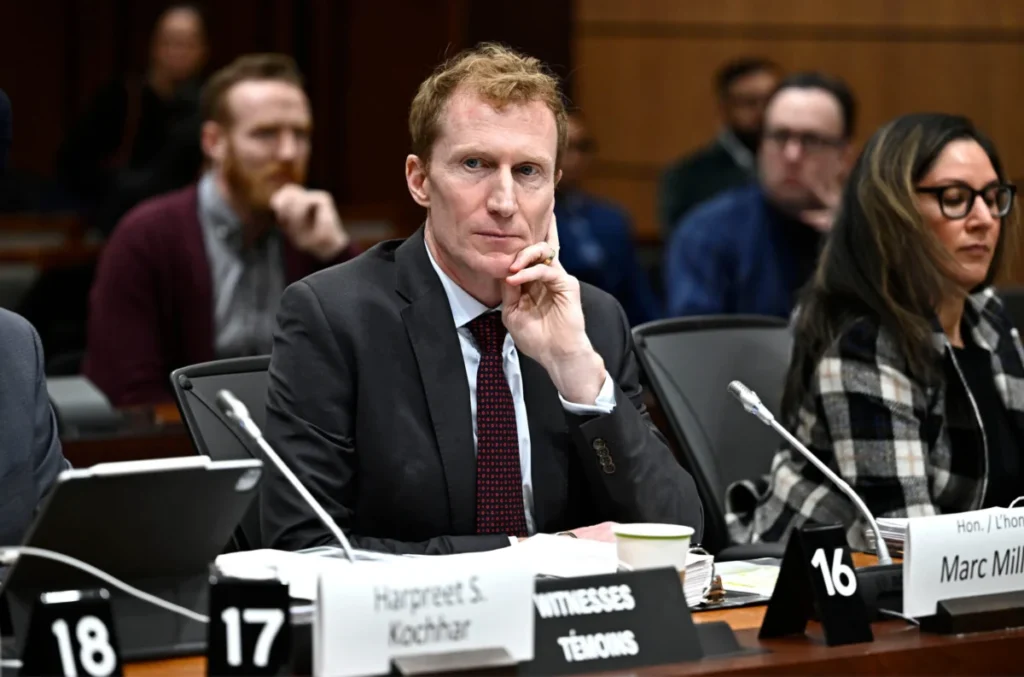
However, this thriving landscape began to face significant headwinds in early 2024. Citing evidence of widespread fraud and abuse within the system, then Immigration, Refugees and Citizenship Canada (IRCC) Minister Marc Miller took the decisive step of implementing a cap on the number of study permits issued annually. At the time, Minister Miller characterized the situation at some institutions as akin to "puppy mills," suggesting a commercialization of education that prioritized enrollment numbers over genuine academic pursuit. This drastic measure signaled a turning point, shifting the narrative from growth and economic contribution to concerns about systemic integrity and national resource strain.
Committee’s Key Recommendations for Reform
The House of Commons committee’s report elaborates on these concerns, proposing a series of targeted recommendations aimed at rectifying the identified deficiencies. A central tenet of their proposal is the imperative for IRCC to thoroughly investigate every alleged case of international study permit fraud. The committee specifically highlights the need for a detailed report on 153,324 individuals who received study permits but whose attendance at classes is questionable.
The current capacity of IRCC to undertake such investigations is a significant point of concern. The Auditor General’s report revealed that the department possessed the resources to probe only one percent of the identified issues, with inquiries often being abandoned if a student failed to respond to requests for additional information. The committee’s recommendation aims to bolster this investigative capacity and ensure accountability. Furthermore, the report strongly urges that individuals found to have entered Canada on fraudulent grounds should not be eligible for study permit extensions, a measure designed to deter and penalize fraudulent activity.
Enhanced Oversight for Designated Learning Institutions (DLIs)
A significant focus of the committee’s recommendations is the implementation of a more rigorous oversight mechanism for Designated Learning Institutions (DLIs) – the more than 1,500 universities, colleges, and other post-secondary establishments that host international students. The committee advocates for the introduction of random audits for these institutions to verify that enrolled students are actively attending classes and that all documentation is in order. Crucially, the report calls for the establishment of clearly defined penalties for DLIs that fail to adhere to these regulations.
The Auditor General’s report provided specific data underscoring the need for such measures. While the vast majority of DLIs complied with reporting requirements, approximately 50 institutions failed to submit the necessary enrolment reports. These non-compliant institutions collectively hosted around 10,000 international students, raising questions about the oversight of their operations and the academic integrity of the programs offered.
The Complex Federal-Provincial Jurisdiction
The report also delves into the intricate jurisdictional landscape governing international education in Canada. Under the International Student Program, the federal government is responsible for issuing study permits, while provinces and territories bear the responsibility for regulating educational institutions. The committee’s commentary points out a significant imbalance in this relationship, stating, "Although education and the regulation of learning institutions fall under provincial and territorial jurisdiction, the federal government was responsible for issuing an unsustainable number of study permits and allowing the system to be abused." This highlights a failure in coordination and a lack of proactive federal engagement in overseeing the quality and integrity of institutions it was enabling through permit issuance.
During the years leading up to the study permit cap, a notable trend emerged: a substantial influx of international students, particularly at colleges in Ontario, was driven by institutions seeking to offset budget shortfalls. This financial imperative, coupled with a seemingly less stringent federal oversight, created an environment ripe for potential exploitation.
The Impact and Fallout of the Study Permit Cap
The introduction of the 2024 study permit cap by Minister Miller was justified by concerns that a high volume of international students was exacerbating pressures on Canada’s housing and healthcare services. However, the policy’s implementation had a more profound and immediate impact than anticipated. Confidence among prospective international students plummeted, leading to a sharper-than-expected decline in both study permit applications and approvals.
The aftermath of the cap’s enactment saw a significant number of student spaces remain unfilled. According to the Auditor General’s findings, IRCC approved less than half of the projected new study permits for 2024. This trend has continued into 2025, with only slightly over 50,000 of the anticipated 255,000 permits authorized by December. This dramatic undershoot indicates a substantial miscalculation in the government’s approach to managing student numbers.
The unintended consequences of the cap have reverberated throughout the Canadian post-secondary education sector. Larissa Bezo, president of the Canadian Bureau for International Education (CBIE), voiced concerns about the broader reputational damage. "We cannot speak about (DLIs as) ‘puppy mills’ and not damage the perceived quality of Canada’s educational system," she stated. Following the committee’s report release, Ms. Bezo elaborated to University Affairs: "Annual caps were followed by plummeting approval rates, drastically increased processing times and increased applicant requirements. We may have successfully addressed a numbers issue, but Canada is no longer competitive in attracting global talent."
The financial strain on institutions has been considerable. Ms. Bezo testified to the committee that the cap has resulted in significant losses of international student tuition revenue, leading to widespread institutional cuts. These include 35 site closures, the suspension of 863 programs, and the loss of 10,000 jobs.
David Robinson, executive director of the Canadian Association of University Teachers (CAUT), echoed these sentiments, lamenting the impact on Canadian academic staff. "Across the country, we’re seeing the most significant round of hiring freezes, program cuts and job losses in a generation," Mr. Robinson told University Affairs. He attributed this crisis to a "litany of mistakes" by the federal government, coupled with the underfunding of post-secondary education by provinces and territories, and the institutions’ own strategic decisions. "Now that the international student revenue stream has been turned off, it’s the people who work in universities who are paying the price," he added.
The damage to Canada’s international reputation has been particularly acute in certain regions. Christian Blanchette, rector of Université du Québec à Trois Rivières, reported to the committee that his institution has only been able to recruit one-third of the student quota allowed under the cap since 2024, with similar challenges faced by other Quebec universities. "This has resulted in tragedy for many of the country’s universities," he testified. The House committee concluded its assessment by noting, "After two years of caps, the 2024 policy changes seem to have reduced new study permit applications and enrolments much more than IRCC planned – and much more than provinces, territories and Designated Learning Institutions expected."
Concerns Over Asylum Claims and National Consensus
Beyond the economic and institutional repercussions, the committee also expressed concern about a subset of international students who allegedly leverage study permits as a pathway to claim asylum in Canada. The report calls for an investigation into 110 asylum seekers who purportedly entered Canada using fraudulent documents to obtain study permits. To address this, MPs proposed establishing limits on the number of international students admitted from countries with the highest rates of asylum claims, specifically identifying India, the Republic of Guinea, and Nigeria as nations of concern based on the report’s data.
In a notable dissenting opinion, Conservative MPs, led by Michelle Rempel Garner, strongly criticized the Liberal government’s handling of the international student program. They argued that the government’s actions have eroded Canadian support for immigration, describing the program as "a headstone on the grave of Canada’s immigration consensus, and the mistakes must never be repeated." The Conservatives further alleged that the government acted with "naked self-interest, with a maximum of willful blindness and the knowledge that their actions were morally wrong to Canadians and the students coming from abroad."
Conversely, Liberal MPs on the committee issued a statement emphasizing the importance of not blaming international students for broader societal challenges. "It is vitally important that international students are not blamed for the housing shortage and strains on other services," their comment read.
A Call for a New Approach and Future Competitiveness
In the wake of the 2024 policy changes, Ms. Bezo is advocating for a fundamental recalibration of Canada’s international education strategy. She warned University Affairs that "The changes represent a serious over-correction that risks further eroding Canada’s international reputation. Without action, there will be continued damage inflicted on our educational institutions, labour markets, economic prospects and competitiveness. Canada’s future prosperity and growth hinges on those who choose to study in Canada and ultimately make this country home."
This sentiment underscores the complex balancing act Canada faces: addressing legitimate concerns about program integrity and national resources while safeguarding its standing as a premier destination for global talent. The committee’s report serves as a critical diagnostic, identifying systemic weaknesses and proposing a path toward a more transparent, accountable, and sustainable international student program. The coming months will likely see further debate and policy adjustments as the government grapples with these multifaceted challenges.