

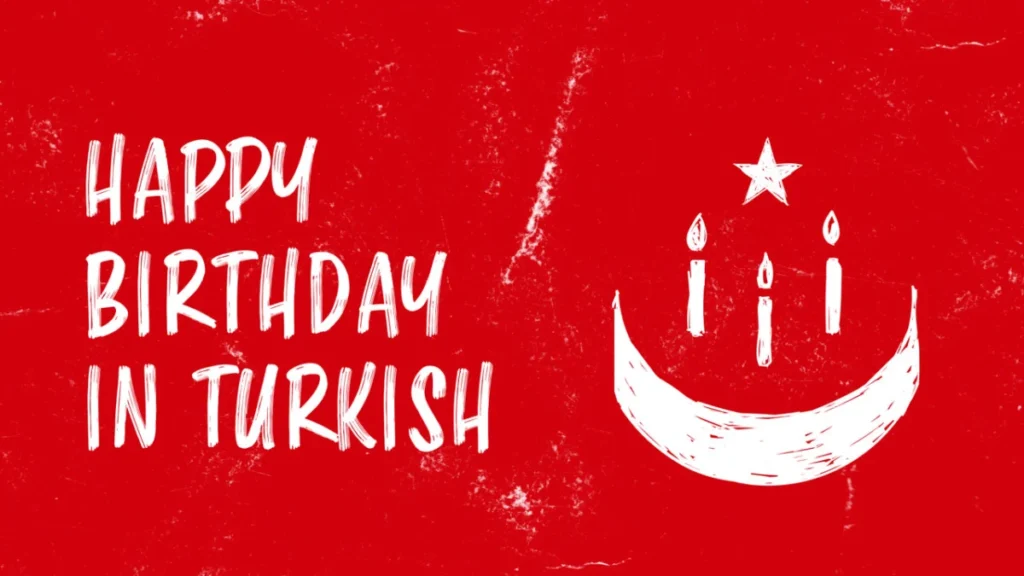
The practice of celebrating birthdays in the Republic of Turkey represents a sophisticated intersection of ancient linguistic roots, religious heritage, and modern Western influence. As the Turkish language continues to gain global prominence—driven largely by the international success of Turkish television exports and a burgeoning tourism sector—understanding the nuances of social etiquette, specifically birthday greetings, has become essential for expatriates, diplomats, and international professionals. Turkish birthday greetings are not monolithic; they offer a spectrum of expressions ranging from the deeply formal and spiritual to the modern and colloquial, reflecting the country’s diverse social fabric.
The Primary Linguistic Framework of Turkish Celebrations
The most standardized and widely accepted phrase for "Happy Birthday" in the Turkish language is Doğum günün kutlu olsun. To understand the weight of this expression, one must analyze its literal translation: "May your day of birth be blessed." The word kutlu (blessed or sacred) elevates the greeting beyond a simple wish for happiness, imbuing it with a sense of solemnity and significance. While often shortened to simply Kutlu olsun in casual passing, the full phrase remains the gold standard for written cards and formal speeches.
In recent years, the digital landscape has transformed this traditional greeting. Among the younger demographic and on social media platforms such as Instagram and WhatsApp, the acronym "DGKO" has emerged as a ubiquitous shorthand. Similar to the English "HBD," DGKO represents the modernization of Turkish social interactions, where efficiency often supersedes traditional linguistic formality.
Navigating Social Hierarchies: Formal vs. Informal Expressions
Turkish culture places a significant emphasis on social hierarchy and the relationship between the speaker and the recipient. Choosing the correct birthday greeting requires an understanding of these dynamics.
For close friends, family members, or romantic partners, the phrase İyi ki doğdun is frequently preferred. Translating to "It is good that you were born," this expression carries an emotional intimacy that Doğum günün kutlu olsun lacks. It focuses on the person’s existence rather than the calendar event itself. Linguists note that this phrase is almost always paired with the sentiment İyi ki varsın, which means "I am glad you exist." This combination is considered the pinnacle of affectionate birthday wishes in Turkish social circles.
Conversely, for professional settings or when addressing elders, more traditional or neutral phrases are utilized. Mutlu yıllar (Happy years) serves as a versatile greeting that is appropriate for both birthdays and New Year celebrations. Similarly, Nice senelere and Nice yıllara both translate to "To many more years," expressing a wish for longevity. These phrases are particularly useful when the speaker wishes to remain polite without assuming an inappropriate level of intimacy.
The Evolution of Birthday Traditions in the Republic of Turkey
Historically, birthday celebrations were not as prevalent in Ottoman society as they are in the modern Turkish Republic. Traditional observances were often linked to religious milestones rather than the anniversary of one’s birth. However, following the reforms of the 1920s and 30s and the adoption of the Gregorian calendar, Western-style birthday celebrations began to permeate urban centers like Istanbul and Ankara.
This cultural shift is reflected in the phrase Hayırlı yaşlar, which translates to "Blessed new ages." This expression retains a traditional, often religious undertone, wishing the recipient a life that is "Hayır" (auspicious or beneficial in a spiritual sense). Data suggests that while younger generations in cosmopolitan areas favor "Mutlu" (Happy), older generations and those in more conservative provinces continue to utilize "Hayırlı" as their primary celebratory adjective.
Linguistic Nuances: The Interplay of ‘Sene’ and ‘Yıl’
A unique aspect of the Turkish language is the coexistence of words with Turkic roots and those of Arabic or Persian origin. This is perfectly exemplified in the words for "year": yıl and sene. While both are used interchangeably in modern Turkish, they offer a glimpse into the language’s history.
- Yıl: Of Turkic origin, often used in official contexts and modern phrases like Mutlu yıllar.
- Sene: Of Arabic origin, frequently used in more traditional or established idioms like Nice senelere.
In the context of birthdays, both are acceptable. However, a speaker’s choice between Nice senelere and Nice yillara can sometimes indicate their educational background or the linguistic style of their household. In contemporary usage, Nice senelere is slightly more common in spoken Turkish, while Nice yıllara is frequently seen in formal literature.
The ‘Pasta’ Paradox and Essential Birthday Vocabulary
For international observers, the Turkish word for cake, pasta, often causes confusion. Unlike the Italian culinary staple, pasta in Turkish refers exclusively to cake or pastry. This linguistic "false friend" is a remnant of European influence on Turkish cuisine during the late 19th century.
To navigate a Turkish birthday party (or parti), several key terms are essential:
- Hediye: Gift. The exchange of gifts is a central component of Turkish hospitality.
- Mum: Candle. The act of "blowing out the candles" is referred to as Mumları üflemek.
- Davet: Invitation. Turkish celebrations are often large, inclusive affairs where the "Davet" may extend to extended family and neighbors.
- Kutlama: Celebration. This encompasses the entirety of the event, from the meal to the music.
The Impact of Turkish Media Exports on Global Language Acquisition
The global rise of Turkish "Dizi" (television dramas) has led to a measurable increase in the study of the Turkish language. According to data from various language-learning platforms, Turkish has seen a 20% to 30% increase in active learners in regions such as Latin America, the Middle East, and the Balkans over the last five years.
As a result, phrases like İyi ki doğdun have become recognizable to international audiences who may not be fluent in the language but have become familiar with Turkish social customs through media consumption. This "soft power" has normalized Turkish celebratory rituals, making the "Happy Birthday" song—sung to the same melody as the English version but with the lyrics Mutlu yıllar sana—a globally recognized tune.
A Chronology of the Turkish Birthday Experience
A typical birthday celebration in a Turkish urban household follows a specific chronological order that blends local hospitality with international customs:
- Morning Salutations: The day begins with a flurry of digital messages. It is considered polite to send a "DGKO" message or a more formal greeting as early as possible.
- The Family Gathering: Lunch or dinner is usually reserved for family. Traditional Turkish dishes are served, emphasizing the importance of communal dining.
- The Cake Ceremony: The "Pasta kesmek" (cutting the cake) is the highlight of the evening. The Turkish version of the birthday song is sung, often followed by rhythmic clapping (Alkışlamak).
- The Wish: Before blowing out the candles, the individual makes a "dilek" (wish). Friends will often say, Umarım tüm dileklerin gerçek olur (I hope all your wishes come true).
- Gift Opening: Gifts are typically opened in front of the guests, and the recipient expresses gratitude with phrases like Kesene bereket (a traditional way to thank someone for their spending/generosity) or a simple Teşekkür ederim.
Analysis of Implications: Language as a Cultural Bridge
The variety of ways to say "Happy Birthday" in Turkish serves as more than just a linguistic curiosity; it is a reflection of the nation’s identity. The shift from Hayırlı to Mutlu mirrors the country’s secularization and modernization, while the persistence of phrases like İyi ki varsın highlights the enduring value placed on interpersonal relationships and emotional presence.
For the international community, mastering these phrases is a sign of deep cultural respect. In a country where hospitality (misafirperverlik) is a core national value, the effort to wish someone a happy birthday in their native tongue—and in the correct social register—is often met with significant appreciation. It breaks down barriers and fosters a sense of belonging, whether in a corporate office in Levent or a traditional tea garden in Erzurum.
In conclusion, the Turkish birthday greeting is a multifaceted tool of social cohesion. From the formal Doğum günün kutlu olsun to the intimate İyi ki doğdun, these expressions provide a window into the soul of a culture that remains deeply committed to celebrating life, longevity, and the importance of the individual within the community. As Turkey continues to play a pivotal role on the world stage, these linguistic nuances will remain vital for anyone seeking to engage authentically with its people.