



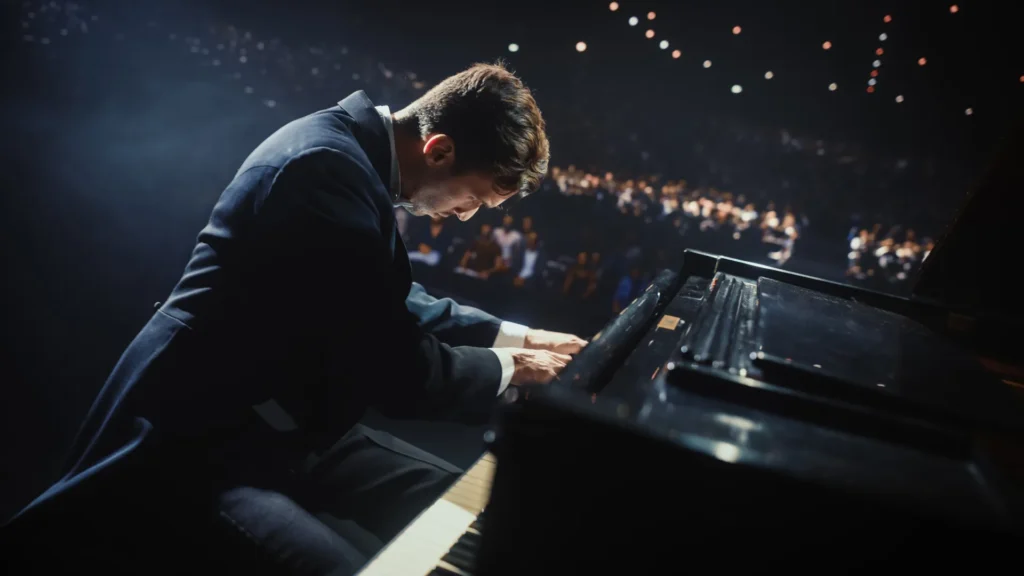
The seminal research, spearheaded by Dr. Shinichi Furuya of the NeuroPiano Institute and Sony Computer Science Laboratories, Inc., harnessed cutting-edge ultra high-speed sensing technology to meticulously decode the intricate, often imperceptible movements underlying expressive piano playing. Their groundbreaking findings, formally published in the esteemed Proceedings of the National Academy of Sciences (PNAS), conclusively demonstrate that the minute, precise motions of a pianist’s fingers and hands exert a tangible influence on how listeners perceive fundamental sonic attributes such as brightness, heaviness, and clarity within individual musical notes. This revelation not only validates an intuition held by countless musicians for over a century but also opens new vistas for understanding the complex interplay between motor control, perception, and aesthetic experience in music.
Unraveling a Century-Old Musical Mystery
The core question—can a pianist truly alter the timbre of a note through touch, independent of loudness or duration?—has been a subject of intense academic and artistic contention since the early 20th century. Prominent physicists and acousticians, armed with early recording technologies and an understanding of basic string vibration mechanics, often argued that the initial impact velocity of the hammer on the string was the sole determinant of a note’s spectral content (i.e., its timbre). They contended that any perceived tonal variations beyond changes in dynamics (loudness) or articulation (timing) were either purely psychological phenomena or subtle artifacts of these more easily measurable parameters. This perspective often clashed with the lived experience of virtuosos and music teachers, who consistently observed and taught that different "touches" yielded distinct "colors" or "qualities" of sound, essential for expressive performance. Legendary pianists like Sergei Rachmaninoff, Vladimir Horowitz, and Glenn Gould, despite their vastly different styles, all spoke of manipulating tone through nuanced physical approaches to the keyboard, a skill considered central to their artistry.
The new research directly confronts and ultimately refutes this skeptical paradigm. The interdisciplinary team developed a custom-engineered, noncontact sensing system, ingeniously named HackKey, designed to capture the dynamic interactions between fingers, keys, and the piano mechanism with unprecedented fidelity. This system was capable of recording the movements of all 88 piano keys at an astonishing rate of 1,000 frames per second, achieving microscopic spatial precision. Such a level of detail was crucial to detect the subtle, rapid movements that previous technologies might have missed or averaged out.
For the experimental phase, twenty internationally acclaimed pianists were recruited, each renowned for their expressive capabilities. These virtuosos were tasked with a seemingly simple yet profoundly challenging exercise: to play individual notes while intentionally striving to produce contrasting tonal qualities. Specifically, they were asked to articulate notes perceived as "bright" versus "dark," and "light" versus "heavy." This deliberate manipulation of intended timbre was central to isolating the effects of touch.
Following the performance recordings, a series of listening tests were conducted. Participants, comprising both individuals with extensive musical training and those with no formal background in music, were asked to identify the intended timbres (e.g., whether a note sounded bright or dark, light or heavy). The results were remarkably consistent: listeners, regardless of their musical expertise, reliably recognized the tonal qualities the pianists intended to produce. Professional pianists participating in the listening tests demonstrated an even higher degree of sensitivity and accuracy in distinguishing these subtle differences, underscoring the perceptual reality of these touch-induced timbral variations. This empirical validation of listener perception, directly linked to specific performance intentions, provided a critical piece of evidence in the long-running debate.
The Hidden Choreography of Musical Expression
The deeper scientific breakthrough lay in correlating these perceived timbral changes with the physical movements captured by the HackKey system. The researchers discovered that only a select number of extremely precise movement features were strongly and consistently linked to the changes in perceived timbre. These included minute variations in key acceleration, the precise timing of key descent and release, and the intricate synchronization between the movements of different fingers or hands, even when playing a single note or chord. For instance, a "bright" sound might correlate with a slightly faster key acceleration at a specific point in the key descent, while a "dark" sound might involve a more sustained pressure profile.
Crucially, the study went beyond mere correlation. One of the most significant findings was the demonstration that altering even a single, isolated movement feature could reliably and causally change how listeners described the sound. This provided direct, unambiguous evidence that the pianist’s physical touch itself plays a causal role in shaping timbre, rather than simply being a correlated byproduct or accompaniment to other musical effects like loudness or tempo. This finding systematically dismantles the long-held skeptical argument, proving that the physical act of playing influences the very sonic character of the instrument in ways previously dismissed as subjective or illusory.
The study characterized these subtle gestures not as arbitrary actions but as components of a highly refined motor skill, meticulously developed and honed through years of rigorous, advanced piano training. This implies that the artistry behind shaping piano tone is not merely a metaphorical concept or a subjective interpretation. Instead, it is firmly grounded in measurable, repeatable physical actions and motor programs. Dr. Furuya articulated this profound convergence, stating that the research successfully "helps bring a long-standing artistic intuition into the realm of science." He further emphasized that the findings not only affirm what countless pianists have instinctively believed for decades but also offer an unprecedented, clearer scientific understanding of precisely how skilled human movement translates into the rich tapestry of emotional and aesthetic experiences within music.
Implications Far Beyond the Concert Hall
The ramifications of this research extend far beyond the confines of concert halls and music conservatories, promising to reshape various scientific and technological fields.
Transforming Music Education: One of the most immediate and profound impacts is anticipated in music pedagogy. For centuries, piano teachers have relied on qualitative, often metaphorical language to guide students in developing expressive touch – phrases like "play warmer," "use a lighter touch," or "find a singing tone." While effective for many, such instructions can be ambiguous and difficult for some students to internalize. The new discoveries suggest a future where music education could be revolutionized. Imagine training systems equipped with advanced sensors and real-time feedback, capable of visualizing the exact physical movements associated with specific tonal qualities. Students could receive objective, data-driven feedback, comparing their finger and hand kinematics to those of master pianists producing desired timbres. This could accelerate learning, make expressive techniques more accessible, and potentially reduce the frustration associated with subjective interpretation, creating a more efficient and scientifically grounded approach to developing artistry.
Advancing Neuroscience and Rehabilitation: The study’s insights into advanced motor control and its influence on perception are particularly valuable for neuroscience and rehabilitation science. It offers a unique window into how the human brain integrates complex movement commands with sensory feedback to achieve specific perceptual outcomes. Understanding how pianists execute these incredibly subtle, yet perceptually significant, movements could shed light on broader principles of sensorimotor learning, motor planning, and neural plasticity. In rehabilitation, therapies focused on improving dexterity, coordination, and fine motor skills could be redesigned using musical movement as a highly engaging and effective modality. For individuals recovering from stroke or injury, practicing specific piano gestures linked to distinct tonal outcomes could provide a motivating and measurable pathway to restoring motor function, leveraging the brain’s inherent musicality.
Pioneering Robotics and Human-Computer Interaction: The findings also hold immense promise for the fields of robotics and human-computer interaction. Researchers are already exploring technologies inspired by expressive musical performance. The ability to precisely quantify the physical movements behind nuanced timbre offers a blueprint for creating more sophisticated and expressive digital instruments. Future robotic systems or AI-driven musical interfaces could be engineered to not only reproduce notes but also to imbue them with the subtle, human-like expressive qualities previously thought unattainable. This could lead to more realistic virtual musical performances, intelligent training tools that adapt to a user’s unique motor patterns, and even robotic systems capable of performing music with genuine emotional depth, a significant leap from current purely mechanical reproductions. Recent work in AI and music technology has already begun to model timbre and generate realistic piano motion; this study provides critical data to refine such models.
The Science of Creativity and Dynaformics
Beyond these practical applications, the research makes a profound contribution to the nascent scientific effort to understand the very essence of creativity. For many decades, scientific inquiry into music perception primarily focused on easily quantifiable elements such as pitch, loudness, and rhythm. Timbre, however, has always presented a greater challenge, largely because it involves higher-level sensory interpretation, complex cognitive processing, and a strong connection to emotional response. By successfully identifying the specific physical actions that are causally linked to timbre perception, the researchers have opened a crucial door. They have established a concrete, measurable link between the physical body, the brain’s motor and perceptual systems, and the emergent quality of artistic expression. This framework allows for a more empirical exploration of how subjective aesthetic experiences arise from objective physical interactions.
The work is a cornerstone of a burgeoning interdisciplinary field often referred to as "dynaformics," which aims to apply scientific rigor to the study of music performance. Proponents of dynaformics believe that this scientific understanding of musical movement could empower musicians to train more efficiently, optimize their technique to avoid common performance-related injuries, and even overcome physical limitations that often accompany years of intense, repetitive practice. By demystifying the physical mechanisms behind expressive touch, this research promises to enhance both the art and science of piano playing.
The palpable excitement surrounding these findings stems from more than just the resolution of a long-standing musical enigma. It illuminates a fundamental aspect of human perception and creation: that some of the deepest emotional power and aesthetic richness of music may emanate from movements so infinitesimally small they are almost invisible to the naked eye, yet so exquisitely precise that the human ear and mind can perceive, interpret, and feel their profound difference. This study stands as a testament to the intricate dance between human intent, physical execution, and the transcendent beauty of sound.