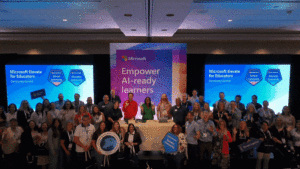




The global education landscape is undergoing a fundamental shift as artificial intelligence moves from a theoretical novelty to a core pedagogical tool. In a major strategic expansion aimed at redefining the intersection of technology and pedagogy, Microsoft has unveiled "Microsoft Elevate for Educators." This initiative represents a multifaceted commitment to providing school systems, faculty, and students with the infrastructure, training, and specialized software necessary to navigate the AI-driven shift in modern instruction. The announcement, timed alongside the upcoming Bett UK 2026 conference, signals a significant escalation in the competition between major technology providers to define the "AI classroom" of the future.
Microsoft Elevate for Educators is not a single product but a comprehensive ecosystem designed to address the primary barriers to AI adoption in schools: lack of training, security concerns, and the need for education-specific tools. By connecting educators with a global peer network, professional development modules, and localized AI utilities, the program seeks to move beyond general-purpose chatbots toward highly specialized assistants capable of handling the nuanced demands of K-12 and higher education environments.
The Technological Core: Specializing AI for the Classroom
At the heart of this announcement are three distinct AI-powered tools designed for specific user groups within the academic community. The most prominent of these is "Teach," a specialized module integrated into the Microsoft 365 Copilot app. Unlike standard generative AI, Teach is engineered specifically for instructional design. It allows educators to generate lesson plans aligned with specific curriculum standards, develop grading rubrics, and create quizzes instantly. A key feature of the tool is its ability to "level" content—taking a complex scientific text, for example, and automatically rewriting it for multiple reading levels within a single classroom. This capability addresses one of the most time-consuming tasks in modern teaching: differentiation for diverse learners.
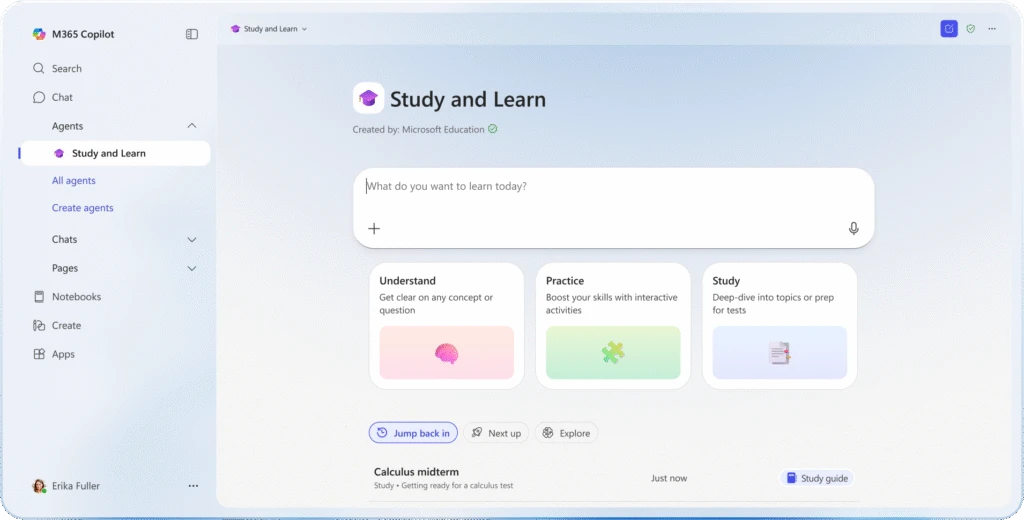
For the student body, Microsoft has introduced the "Study and Learn Agent." Built on established learning science principles, this agent is designed to function as a tutor rather than a simple answer engine. For students aged 13 and older, the agent provides adaptive exercises, flashcards, and guided study sessions. The goal is to foster critical thinking by prompting students to explain their reasoning, rather than merely providing the solution to a problem. This reflects a broader industry trend toward "guardrailed" AI that supports academic integrity while still offering the benefits of personalized instruction.

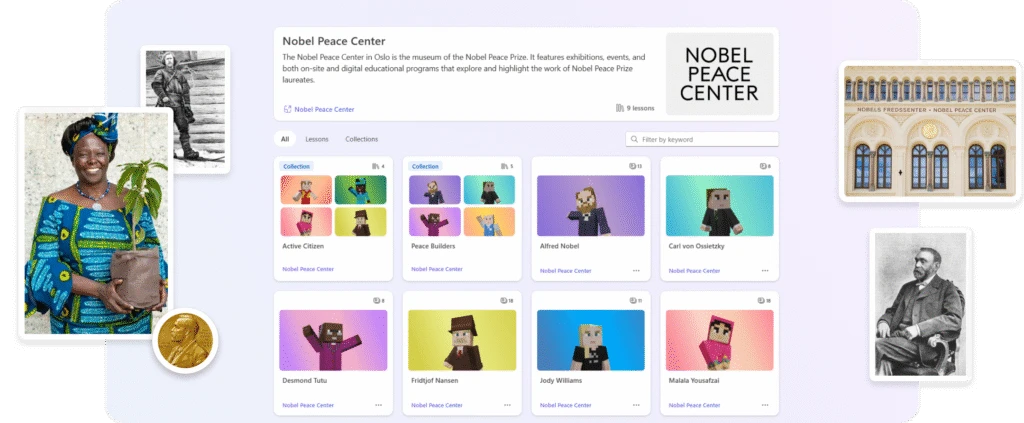
The third pillar of this technological rollout is the "Microsoft Learning Zone," an application specifically optimized for Copilot+ PCs. By utilizing on-device NPU (Neural Processing Unit) intelligence, the app allows for interactive learning experiences that do not rely entirely on cloud processing. The Learning Zone features content from high-profile partners, including NASA, the Nobel Peace Center, and Minecraft Education. Educators can use these resources to create personalized activities that provide students with immediate, automated feedback. The inclusion of the Nobel Peace Center’s curriculum on human rights, featuring the stories of Malala Yousafzai and Wangari Maathai, highlights Microsoft’s intent to marry advanced technology with global citizenship and social-emotional learning.
Scaling AI Literacy: The 20 Million Person Goal
Microsoft Elevate for Educators is part of a broader corporate commitment to bridge the digital divide in the AI era. The company has set an ambitious target to help more than 20 million people worldwide acquire in-demand AI skilling credentials over the next two years. This initiative is a response to the growing "AI gap," where the rapid pace of technological advancement has outstripped the capacity of traditional professional development cycles.
In the higher education sector, Microsoft is expanding its support through the AI Skills Navigator and the Microsoft Student Ambassadors program. These initiatives provide faculty with "Microsoft Official Courseware," ensuring that the AI being taught in universities remains current with industry standards. To further support career readiness, Microsoft is offering eligible higher education students 12 months of free access to Microsoft 365 Premium and LinkedIn Premium Career. This move is designed to create a seamless transition from academic success to professional placement, giving students the tools to optimize their resumes and connect with recruiters in an increasingly automated job market.
Security and Institutional Strategy
As schools integrate AI, concerns regarding data privacy and cybersecurity have become paramount. To mitigate these risks, Microsoft has introduced the "Microsoft Education Security Toolkit." This resource provides a blueprint for institutional leaders to harden their cybersecurity posture against AI-augmented threats while ensuring that student data remains protected under local regulations such as GDPR or FERPA.
Complementing the security toolkit is the "Microsoft Education AI Toolkit," which offers a practical framework for responsible AI adoption. This includes case studies from early adopters such as Brisbane Catholic Education in Australia and the Coquitlam School District in Canada. These real-world examples serve as a "Blueprint for AI-Ready Schools," a concept further explored in a newly released IDC White Paper sponsored by Microsoft. The research suggests that successful AI integration requires a top-down strategic approach that prioritizes teacher agency and ethical safeguards over mere software deployment.
Chronology of the AI Evolution in Education
The launch of Microsoft Elevate for Educators is the culmination of a multi-year trajectory that began with the explosion of generative AI in late 2022.
- Late 2022 – Early 2023: The emergence of large language models (LLMs) created an immediate crisis in education, centered largely on plagiarism and the disruption of traditional essay-based assessment.
- Late 2023: Microsoft and other tech giants began integrating AI into productivity suites (e.g., Microsoft 365 Copilot), leading to experimental "pilot" programs in select school districts.
- July 2025: Microsoft announced the broader "Microsoft Elevate" commitment, establishing the financial and social goal of training 20 million people in AI literacy.
- January 2026: The announcement of the "Elevate for Educators" program and the specific suite of tools (Teach, Learning Zone, Study and Learn Agent) marks the transition from general AI support to specialized, purpose-built educational infrastructure.
This timeline illustrates a shift from reactive technology management to proactive pedagogical transformation. Microsoft’s strategy appears to be focused on "reclaiming time" for educators—automating administrative and preparatory burdens so that teachers can focus on the human elements of instruction.
Analysis of Global Impact and Market Implications
The introduction of these tools represents a significant move in the "platform wars" of the education sector. For decades, Microsoft, Google, and Apple have vied for dominance in the classroom. By deeply integrating AI into the Windows 11 and Microsoft 365 ecosystems, Microsoft is positioning itself as the indispensable partner for "AI-Ready" institutions.
From a pedagogical perspective, the implications are profound. The "Teach" app’s ability to generate differentiated content at scale could potentially alleviate the burnout crisis currently affecting the global teaching workforce. According to industry data, teachers spend upwards of 10 to 15 hours per week on lesson planning and administrative tasks. If AI can reduce this load by even 30%, it represents a massive shift in the resource allocation of school systems.
Furthermore, the focus on "on-device intelligence" through Copilot+ PCs suggests a move toward more sustainable and private AI. By processing data locally on the NPU, schools can reduce latency and minimize the amount of sensitive student data sent to the cloud. This technical distinction may become a key selling point for privacy-conscious administrators in Europe and North America.
However, the success of Microsoft Elevate for Educators will ultimately depend on the "human in the loop." While the software can generate a rubric or a lesson plan, the efficacy of those tools relies on the teacher’s ability to vet, edit, and implement them effectively. Microsoft’s focus on community and professional development suggests an acknowledgment that technology alone is not a panacea for educational challenges.
Looking Ahead: Bett UK 2026 and Beyond
The next phase of this rollout will take place at Bett UK 2026, scheduled for January 21–23 in London. As one of the world’s largest education technology exhibitions, Bett will serve as the testing ground for these new tools. Microsoft is expected to demonstrate the full capabilities of the Learning Zone and the Teach assistant to thousands of global educators and policy-makers.
As AI continues to evolve, the distinction between "educational technology" and "education" itself is blurring. Microsoft’s latest initiative is a clear indicator that the future of learning will be defined by a hybrid model: one where human expertise is amplified by machine intelligence, and where the "AI-ready" school becomes the standard rather than the exception. By providing the tools, the training, and the security frameworks simultaneously, Microsoft is attempting to build the foundation for this new era of global instruction.