

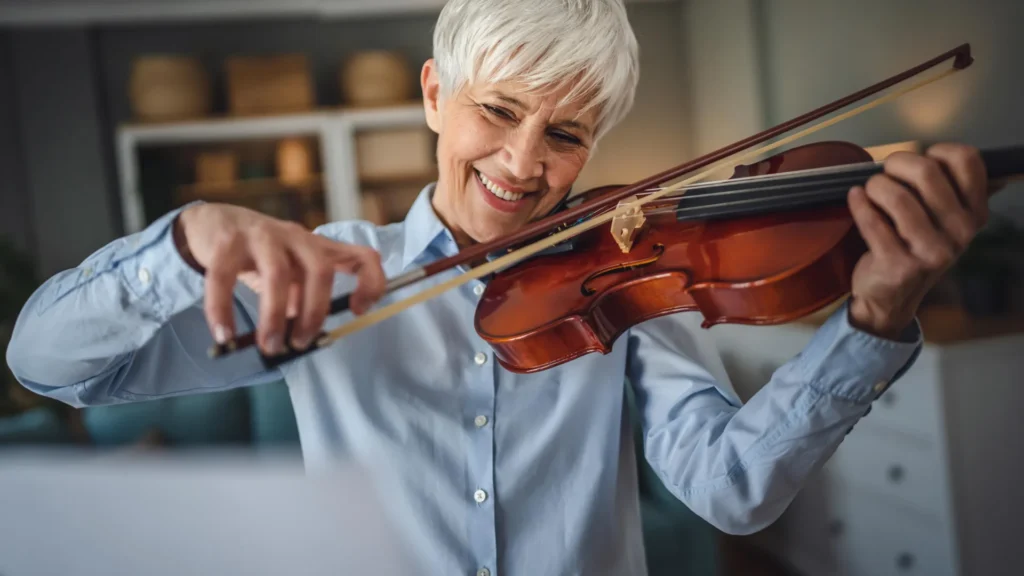
Living longer often comes with changes in cognitive abilities, and working memory is among the mental skills most vulnerable to age-related decline. The ability to temporarily hold and manipulate information is crucial for daily tasks, decision-making, and overall independence. Researchers have long believed that both physical exercise and mentally stimulating activities can help support brain health as people grow older, a hypothesis that underpins numerous public health initiatives aimed at promoting active aging. Recent groundbreaking research from Kyoto University has provided compelling evidence, demonstrating that taking up and consistently practicing a musical instrument in later life can offer significant, long-term protection against cognitive decline, specifically impacting key brain regions vital for memory and motor control.
The Intricacies of Age-Related Cognitive Decline and Brain Vulnerability
As individuals age, the brain undergoes various structural and functional changes. These changes can manifest as reduced processing speed, difficulties with multitasking, and, notably, a decline in working memory. While some degree of cognitive slowing is considered a normal part of aging, understanding and mitigating its more pronounced effects is a significant focus of modern neuroscience and gerontology. The economic and social burden of age-related cognitive impairment, including conditions like mild cognitive impairment (MCI) and dementia, is immense globally, driving a fervent search for accessible and effective preventative strategies.
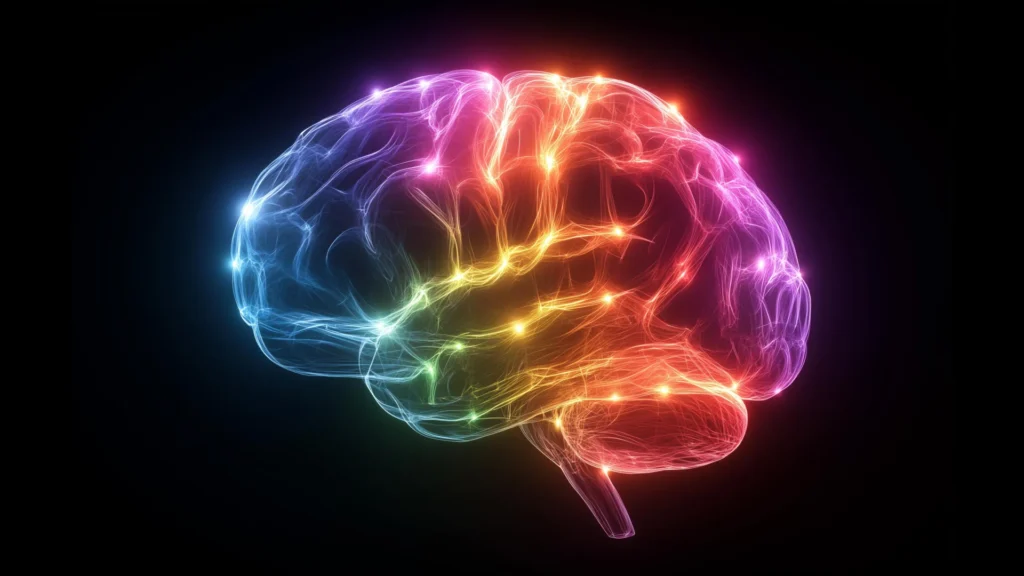
Two specific brain regions that commonly shrink and become less active with age are the putamen and the cerebellum. These areas are not merely passive bystanders in the aging process; they play critical roles in a wide array of functions. The putamen, part of the basal ganglia, is deeply involved in motor control, procedural learning (the learning of skills and habits), and even some aspects of cognitive processing, including working memory and reward-related behaviors. Its integrity is crucial for smooth, coordinated movements and efficient cognitive function. The cerebellum, often referred to as the "little brain," is renowned for its role in motor coordination, balance, and fine-tuning movements. However, decades of research have also unveiled its extensive involvement in higher-order cognitive functions, including language processing, attention, spatial reasoning, and emotional regulation. Given their multifaceted roles, the age-related atrophy and reduced activity in these regions can have broad implications for an individual’s physical and cognitive independence.
Intriguingly, neuroscience studies have also identified these same putamen and cerebellum areas as being particularly responsive to musical instrument training. This observation has fueled a substantial body of research exploring the link between music and brain plasticity. However, much of the existing research has predominantly focused on younger people or individuals who began playing music during childhood, making it challenging to extrapolate these benefits directly to older adults without prior musical experience. The question of whether the adult brain, particularly in later life, retains enough plasticity to reap similar benefits from new musical training remained a critical unanswered question until recently.
Pioneering Research from Kyoto University: A Timeline of Discovery
To explore whether older adults could gain similar cognitive benefits, researchers at Kyoto University embarked on a series of studies examining what happens when people take up a musical instrument later in life. Their work provides a crucial timeline in understanding the long-term impact of such an intervention.
Phase 1: The Initial Four-Month Intervention (2020 Study)
The journey began with an initial study, first reported in 2020, which served as a foundational investigation. The research team recruited a cohort of older adults with an average age of 73, none of whom had any prior experience playing a musical instrument. These participants committed to a structured four-month period of musical instrument practice. The choice of instrument, while not explicitly detailed in the follow-up, typically involves instruments like keyboards or basic percussion, which allow for a clear learning curve and engagement of motor and auditory systems.
At the conclusion of this initial training period, the researchers observed promising results. The older adults who had practiced a musical instrument for the first time showed measurable improvements in memory performance. Crucially, functional magnetic resonance imaging (fMRI) scans revealed enhanced activity and function within the putamen, suggesting a direct neural correlate to the observed cognitive gains. These findings were significant because they demonstrated that even in later life, the brain retains a remarkable capacity for plasticity and can respond positively to novel, complex learning experiences like musical training. The 2020 study challenged the long-held notion that significant neuroplastic changes were primarily limited to younger brains, opening new avenues for interventions in healthy aging.
Phase 2: The Four-Year Longitudinal Follow-Up Study
Encouraged by those initial findings, the Kyoto University researchers, led by corresponding author Kaoru Sekiyama, recognized the critical need to determine whether these benefits could be sustained over the long term. Short-term gains are valuable, but for any intervention to be truly impactful for public health, its effects must persist. This led to the design of the groundbreaking new study, which followed the same participants from that earlier 2020 project over an extended period.
The study design was elegant and robust. After completing the initial four-month training period in 2020, the original cohort naturally diverged into two distinct groups based on their post-study activities. Approximately half of the participants enthusiastically continued practicing their musical instrument for more than three years, integrating music into their daily routines. The other half, while having completed the initial training, stopped playing and pursued different hobbies or activities instead. This natural division allowed for a powerful quasi-experimental comparison, providing insights into the "use it or lose it" principle in cognitive aging.
Four years later, the researchers invited all participants back for a comprehensive follow-up assessment. This phase was meticulously designed to capture both neurological and cognitive changes. Participants underwent detailed MRI scans, with a particular focus on the putamen and cerebellum, to assess changes in gray matter volume and neural activity. Gray matter volume is a key indicator of neuronal health and density, and its reduction is often associated with cognitive decline. In parallel, participants completed several standardized cognitive assessments, including a verbal working memory test, which directly measured one of the mental skills most vulnerable to age-related decline and the one initially showing improvement.
Brain Scans Reveal Divergent Trajectories After Four Years
The results of the four-year follow-up were stark and compelling, painting a clear picture of the long-term benefits of sustained musical engagement. At the beginning of the original 2020 study, there were no significant differences between the two groups (those who would later continue practicing and those who would stop) in either brain structure (specifically the putamen and cerebellum) or baseline cognitive performance. This crucial control confirmed that any observed differences at the four-year mark could be attributed to the continued musical practice.
After four years, however, clear and statistically significant differences had emerged between the groups:
- Participants who stopped practicing music showed measurable declines in verbal working memory performance. More critically, their MRI scans revealed a significant reduction in gray matter volume within the right putamen. This reduction is a hallmark of age-related neural atrophy and is strongly correlated with cognitive decline.
- In stark contrast, those who continued playing their instruments did not show the same drop in verbal working memory performance. Their cognitive abilities in this crucial domain were largely preserved. Furthermore, their putamen did not exhibit the same degree of shrinkage; the gray matter volume in the right putamen was maintained, indicating a protective effect of sustained musical activity against age-related structural brain changes.
Beyond the putamen, the researchers also found another significant neurological difference related to the cerebellum. Participants who continued practicing their instruments displayed greater activity across broader areas of both cerebellums compared with those who had stopped. This increased cerebellar activity suggests enhanced neural engagement and functional connectivity, reflecting the continued cognitive and motor demands placed on the brain by musical performance. The cerebellum’s role in fine motor control, timing, and integrating sensory information makes it a natural beneficiary of musical practice, and its sustained activity underscores the comprehensive brain engagement offered by instrumental training.
Corresponding author Kaoru Sekiyama articulated the significance of these findings: "We were surprised to find that the effects on the brains of elderly people who start and continue practicing an instrument were also concentrated in these two areas of the brain, and that this was an effective way to prevent age-related decline." This statement highlights the specificity of the brain regions impacted and reinforces the idea that targeted, complex activities can indeed act as a buffer against the natural processes of aging.
Music as a Potent Tool for Healthy Brain Aging: Broader Implications
The findings from Kyoto University’s longitudinal study carry profound implications for promoting healthy aging and for public health strategies worldwide. They strongly suggest that learning and continuing to play a musical instrument may help delay or significantly reduce some of the cognitive changes associated with normal aging. Perhaps most powerfully, the results definitively indicate that people can benefit immensely even when they begin learning later in life, dispelling the myth that brain plasticity for complex skills diminishes entirely with age.
"It’s never too late to start playing an an instrument, and starting in old age may have major benefits," Sekiyama emphasized. This message is a powerful one for an aging global population. With demographic shifts indicating a growing proportion of older adults, interventions that promote cognitive health and independence are not merely desirable but essential for societal well-being and sustainability.
Supporting Data and Contextual Relevance:
The global prevalence of cognitive decline and dementia is a significant public health challenge. According to the World Health Organization (WHO), over 55 million people worldwide live with dementia, with nearly 10 million new cases every year. While musical training is not a cure for dementia, the ability to mitigate or delay age-related cognitive decline has immense implications. Even a few years’ delay in the onset of significant cognitive impairment can vastly improve quality of life for individuals and reduce the burden on healthcare systems and caregivers. The Kyoto study adds a valuable piece to the puzzle of building "cognitive reserve"—the brain’s ability to cope with neurological damage and maintain function—through mentally stimulating activities.
Musical training is unique in its capacity to engage multiple cognitive domains simultaneously. Playing an instrument requires fine motor skills, auditory processing, visual-spatial processing (reading sheet music), memory (recalling melodies, rhythms, and techniques), attention, and emotional regulation. This multi-modal engagement is believed to contribute to enhanced neural connectivity and efficiency, thereby bolstering the brain’s resilience against age-related degradation. Other studies have shown that lifelong musicians often exhibit superior auditory processing, working memory, and executive functions compared to non-musicians, but the Kyoto study extends this to late-life learners.
Accessibility and Inclusivity: An Alternative Path to Brain Health
Sekiyama also notes that music may be especially valuable for people who have difficulty participating in physical exercise. Physical activity is a well-established pillar of brain health, but various physical limitations, chronic pain, or mobility issues can prevent many older adults from engaging in sufficient levels of exercise. In such scenarios, musical instrument training presents an accessible and enjoyable alternative.
"For those who struggle to engage in physical activity due to body pain or other problems, playing musical instruments can be a great alternative. How fortunate that practicing music has such a positive impact on the brain and cognitive function!" says Sekiyama. This perspective underscores the inclusive nature of musical engagement as a brain-health intervention. It offers a pathway for cognitive enrichment that can be adapted to various physical capabilities, ensuring that a broader segment of the older adult population can access its benefits. Community music programs, senior centers, and even online tutorials could leverage these findings to create engaging and effective brain-training opportunities.
Future Research Directions and Broader Impact:
While the Kyoto University study provides compelling evidence, it also paves the way for further research. Future studies could explore:
- Larger and more diverse cohorts: Replicating these findings across different cultural backgrounds and larger populations would strengthen their generalizability.
- Specific instrument effects: Do certain instruments (e.g., piano, guitar, violin) offer distinct cognitive benefits due to their unique motor and cognitive demands?
- Optimal practice parameters: What is the ideal duration, frequency, and intensity of musical practice to maximize cognitive benefits?
- Neurobiological mechanisms: Deeper investigations into the precise molecular and cellular changes underlying the observed structural and functional improvements in the putamen and cerebellum.
- Therapeutic applications: Exploring the potential of late-life musical training as an adjunctive therapy for individuals with mild cognitive impairment (MCI) or early-stage neurodegenerative diseases.
The implications extend beyond individual brain health. A cognitively robust older population contributes significantly to society through continued engagement, mentorship, and economic participation. By offering an enjoyable and effective means to maintain cognitive function, musical instrument training can empower older adults to lead more independent, fulfilling, and connected lives, ultimately benefiting society as a whole. The Kyoto University research serves as a powerful testament to the brain’s lifelong capacity for learning and adaptation, offering a harmonious path to healthy aging.